Finding the right slim frame glass door aluminum profile manufacturers in China can feel overwhelming when dozens of factories claim top quality but few deliver on time.
The top 10 slim frame glass door aluminum profile manufacturers in China for 2026 are ZMR Windows & Doors, OPPEIN, YY Windows, Doorwin Group, Superhouse, HOGLAD, Weiye Aluminium, WANJIA, Mingqi Door & Window, and HIMOLON Windows & Doors — selected for their certifications, ultra-narrow frame technology, export experience, and customization depth.
Below, I break down how to evaluate these suppliers across structural quality, customization, delivery reliability, and international compliance. Whether you source for EPC projects, wholesale distribution, or commercial fit-outs, this guide gives you the practical criteria you need.
How do I evaluate the structural quality and finish of these slim frame aluminum profiles?
One lesson I keep relearning is that a beautiful sample means nothing if the production batch cannot match it. In our cable tray production, we run in-line dimensional checks every 30 minutes — and I apply the same scrutiny when evaluating any aluminum extrusion supplier for a project.
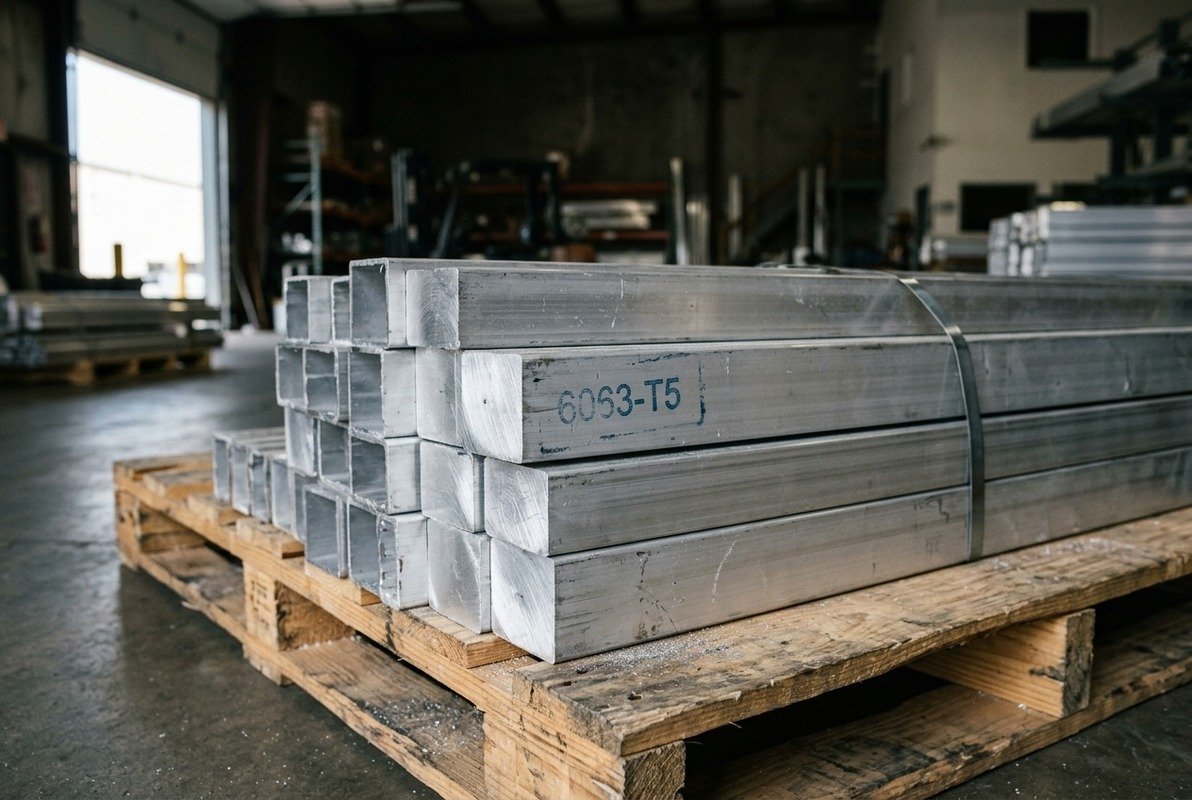
Evaluate structural quality by checking the aluminum alloy grade (6063-T5 or 6061-T6), wall thickness consistency, surface treatment certification (Qualicoat or AAMA), and thermal break integration. Request cross-section samples, salt spray test reports, and powder coating adhesion data before committing to any order.

Start With the Alloy and Temper
The alloy is the backbone. For slim frame glass door profiles, 6063-T5 is the industry standard because it balances extrudability with strength. aluminum alloy grade 1 If your project demands higher load-bearing — say a large sliding door systems panel over 3 meters — ask for 6061-T6. The "T" number tells you the temper, which directly affects hardness and tensile strength.
When I source materials for our own cable management systems, I always ask for the mill certificate. Do the same here. A mill certificate confirms the alloy composition and mechanical properties. If a supplier hesitates to provide one, walk away.
Wall Thickness and Dimensional Tolerance
Narrow frame doors look elegant, but the slimmer the profile, the more critical wall thickness becomes. A frame width under 20mm with inconsistent wall thickness will flex under the weight of tempered glass 2. Ask for the dimensional tolerance range — reputable Foshan manufacturers typically hold ±0.1mm on critical dimensions.
| Quality Metric | What to Request | Acceptable Range |
|---|---|---|
| Alloy Grade | Mill certificate | 6063-T5 or 6061-T6 |
| Wall Thickness | Cross-section sample + caliper measurement | ±0.1mm of spec |
| Surface Hardness | Pencil hardness test report | ≥3H for powder coating |
| Coating Adhesion | Cross-cut adhesion test (ISO 2409) | Grade 0 or Grade 1 |
| Corrosion Resistance | Salt spray test report | ≥1,000 hours for coastal use |
| Thermal Break | Section cut showing polyamide strip 3 | PA66 with 25% glass fiber |
Surface Finish: More Than Appearance
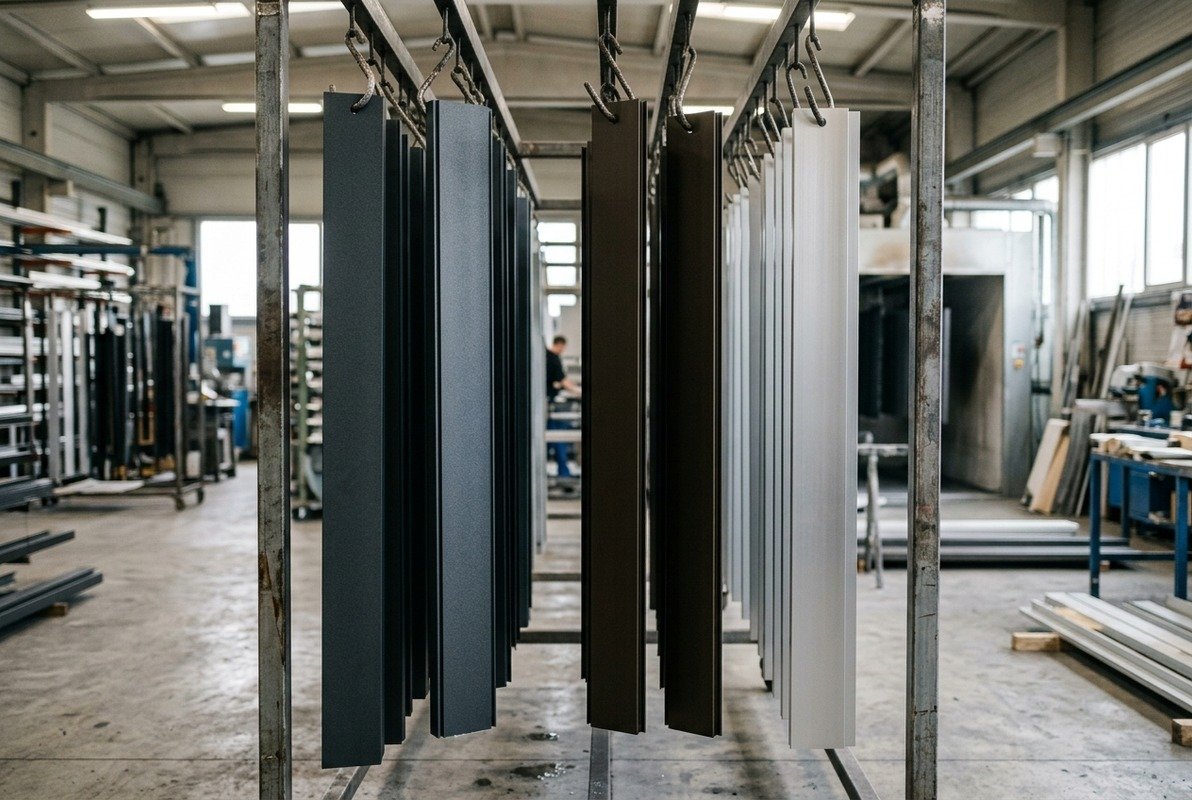
Powder coating is the dominant finish for architectural aluminum profiles used in interior glass doors and exterior applications alike. But not all powder coatings are equal. Qualicoat certification 4 means the coating has passed standardized weathering, adhesion, and thickness tests. For anodized finishes, look for a minimum 15-micron oxide layer for indoor use and 20 microns for outdoor.
I have seen suppliers deliver profiles with beautiful finishes that peeled within six months in tropical climates. The root cause was usually inadequate pre-treatment — the chromating or phosphating step was skipped to save cost. Always request the pre-treatment process description alongside the coating spec.
Thermal Break Technology
The industry has shifted to thermal break aluminum systems 5 as the default for energy-efficient buildings. Even in slim profiles, a polyamide strip (PA66 with glass fiber reinforcement) should separate the interior and exterior aluminum faces. This is not optional in markets like Europe or Australia. Manufacturers like Doorwin and Superhouse have earned Passive House (PHI) certification, which signals elite thermal performance. Passive House certification 6
Check whether the thermal break is a true "pour and debridge" or a strip-insertion type. Strip insertion is more common in slim profiles and performs well when done correctly. Ask for a U-value test report 7 if thermal performance matters to your project.
Can I customize the profile dimensions and colors to fit my specific glass door designs?
A buyer from Southeast Asia once sent us a sketch on WhatsApp — just a hand-drawn cross-section with dimensions scribbled in pen. That informal start turned into a fully engineered custom aluminum profile within two weeks. The point is: customization is standard practice, not a special favor, among serious Chinese manufacturers.
Yes, most top-tier Chinese manufacturers offer full customization of profile dimensions, colors, finishes, glass grooves, and hardware integration. Expect to provide a technical drawing or sample, confirm tolerances, and approve a die (mold) before mass production. Custom die costs typically range from USD 300 to USD 1,500 depending on complexity.
The Custom Die Process
Every unique cross-section requires a custom extrusion die 8. This die is a hardened steel tool that shapes molten aluminum into your specific profile. The die cost is a one-time fee. Simple profiles with symmetrical shapes cost less. Complex profiles with multiple chambers, snap-fit channels, or integrated gasket grooves cost more.
Here is a typical timeline for custom profile development:
| Stage | Duration | Your Action Required |
|---|---|---|
| Drawing Submission | Day 1 | Provide CAD file or sketch with dimensions |
| Die Design & Quotation | Days 2–5 | Review and approve die drawing |
| Die Manufacturing | Days 7–15 | Wait; some manufacturers expedite for a fee |
| Trial Extrusion | Days 16–18 | Receive trial samples for approval |
| Surface Treatment Samples | Days 19–25 | Approve color, finish, and texture |
| Mass Production | Days 26–45 | Monitor via QC reports or factory visit |
Color and Finish Flexibility
The color palette for custom aluminum profiles is virtually unlimited. Powder coating can match any RAL color 9. Wood grain transfer printing replicates natural textures — I have seen honeycomb composite panels with wood grain finishes that are indistinguishable from real timber at arm's length. Anodizing offers metallic tones: champagne, bronze, black, and silver are popular for minimalist design projects.
For projects requiring a specific aesthetic — say a matte light grey to match a modern interior — provide the manufacturer with a physical color chip or a Pantone/RAL code. Expect a color sample panel for approval before production begins.
Dimensions: How Slim Can You Go?
Ultra-narrow frames are now under 20mm for maximum transparency. But there are engineering limits. The narrower the frame, the more precise the extrusion must be, and the more carefully the glass must be specified. A 15mm visible frame width still requires a structural depth of 40–60mm to handle the weight of double-glazed tempered glass.
When you discuss dimensions, clarify two things: visible frame width (what you see from the front) and structural depth (the full profile dimension hidden in the wall or floor). Many manufacturers quote the visible width in marketing but the structural depth determines load capacity and glass thickness compatibility.
Glass and Hardware Integration
Customization extends beyond the aluminum. Top manufacturers coordinate glass type (single, double, laminated, Low-E), gasket material (EPDM or silicone 10), and hardware (concealed hinges, soft-close tracks, smart locks). HIMOLON and Apro, for instance, are integrating Matter 2.0 smart home protocols directly into their sliding door systems.
If you are sourcing for wholesale suppliers or EPC projects, negotiate a complete door system package rather than profiles alone. This reduces coordination headaches and ensures compatibility.
How do I ensure my manufacturer meets my project deadlines and avoids shipping delays?
Delivery delays once cost one of our partners a penalty clause on a water treatment project in Africa. The raw materials were ready, but the logistics coordinator booked the wrong container size. That single mistake cascaded into a three-week delay. Since then, I track every shipment with a milestone checklist — and I recommend the same approach for anyone sourcing slim frame glass door profiles from China.
Ensure on-time delivery by confirming production capacity before ordering, locking in a detailed milestone schedule with penalty clauses, pre-booking freight early, and requiring weekly production photos or video updates. Choose manufacturers with proven export experience to your destination country.
Map the Full Timeline Before You Order
Most buyers underestimate the total lead time because they only think about manufacturing. The real timeline includes die making, trial runs, mass production, surface treatment, quality inspection, inland transport, port handling, ocean freight, customs clearance, and last-mile delivery. For slim frame profiles with custom finishes, expect 45–75 days from order confirmation to port of destination.
Build a Milestone Schedule
A milestone schedule breaks the project into checkpoints. At each checkpoint, the manufacturer must provide evidence of progress — photos, inspection reports, or shipping documents. Here is a template I use:
| Milestone | Target Day | Evidence Required | Action if Delayed |
|---|---|---|---|
| Order Confirmation & Deposit | Day 0 | Signed PI + payment receipt | — |
| Die Completion | Day 12 | Photo of die + trial extrusion sample | Escalate to sales manager |
| Trial Sample Approval | Day 18 | Physical sample delivered or high-res photos | Hold production until approved |
| 50% Production Complete | Day 30 | Workshop photos + dimensional QC report | Request daily updates |
| Surface Treatment Complete | Day 40 | Coating thickness report + color match photo | Arrange third-party inspection |
| Final QC & Packing | Day 45 | Full inspection report + packing list | Approve or reject before shipping |
| Container Loading | Day 48 | Loading photos + Bill of Lading draft | Confirm BL details immediately |
| Vessel Departure | Day 50 | Tracking number + ETD confirmation | Monitor vessel tracking |
| Arrival at Destination Port | Day 70–75 | Arrival notice from freight forwarder | Arrange customs clearance |
Choose Manufacturers With Export Infrastructure
Not every factory that makes good profiles can export smoothly. Foshan manufacturers like ZMR, WANJIA, and Weiye Aluminium have dedicated export teams and relationships with freight forwarders. They understand fumigation requirements, container loading optimization, and documentation for different countries.
Ask these questions before you place an order:
- How many containers did you ship last year, and to which countries?
- Do you have an in-house export documentation team?
- What is your average response time to urgent inquiries? (Top-tier suppliers respond within 2–5 hours.)
- Can you provide references from buyers in my target market?
Pre-Book Freight and Understand Incoterms
If you buy FOB, you control the freight — but you also own the risk of booking delays. If you buy CIF or DDP, the manufacturer handles freight, but you pay a premium and lose visibility. For most B2B buyers sourcing aluminum profiles, FOB Foshan or FOB Nansha is the sweet spot. Pre-book your container 2–3 weeks before the estimated production completion date. Peak seasons (September–November) cause port congestion in South China; plan accordingly.
What should I look for in a supplier to guarantee my slim frame profiles meet international standards?
When we prepare cable trays for export to Singapore or South America, our QC team runs every batch through a checklist tied to the destination country's standards. The same logic applies to architectural aluminum: the standard your buyer's country enforces is the standard your supplier must meet — no exceptions, no shortcuts.
Look for suppliers holding ISO 9001 for quality management, Qualicoat for coating durability, and market-specific certifications such as AS2047 (Australia), NFRC and AAMA (North America), or CE (Europe). Verify certificates directly with issuing bodies, and conduct at least one factory audit before your first bulk order.
Certification Is Not Optional — It Is Your Insurance
International standards exist to protect you and your end client. If a profile fails in service — say a sliding door derails or a thermal break delaminates — the first question an insurer or building inspector will ask is: "Was this product certified?"
Here is a breakdown of the key certifications and what they cover:
| Certification | Region | What It Covers | Who Needs It |
|---|---|---|---|
| ISO 9001:2015 | Global | Quality management system | Every buyer (baseline requirement) |
| Qualicoat | Global | Powder coating quality and durability | Buyers specifying coated profiles |
| CE Marking | Europe | Product safety and performance | Exporters to EU markets |
| AS2047 | Australia / NZ | Window and door structural performance | Exporters to Australia |
| NFRC | North America | Energy performance ratings | Exporters to USA / Canada |
| AAMA | North America | Architectural aluminum standards | Exporters to USA |
| CSA | Canada | Product safety certification | Exporters to Canada |
| PHI (Passive House) | Global | Ultra-high thermal performance | Energy-efficient building projects |
How to Verify Certificates
Do not rely on a PDF the supplier emails you. Certificates can be forged. Instead:
- ISO 9001: Check the certificate number on the issuing body's website (e.g., SGS, TÜV, Bureau Veritas).
- Qualicoat: Search the licensee list on qualicoat.net.
- AS2047: Ask for the WERS (Window Energy Rating Scheme) listing or the test lab report.
- CE: Request the Declaration of Conformity (DoC) and the test report from a Notified Body.
Factory Audits: What to Inspect
A factory audit is your most powerful due-diligence tool. You can hire a third-party inspection company (SGS, Intertek, TÜV) or visit yourself. Focus on these areas:
- Raw material storage: Are aluminum billets stored properly, separated by alloy grade, with traceability labels?
- Extrusion presses: What tonnage? Top suppliers use 1,000+ ton presses for consistent quality.
- Surface treatment line: Is the pre-treatment (degreasing, chromating) automated or manual? Automated lines are more consistent.
- QC lab: Does the factory have a spectrometer for alloy verification, a coating thickness gauge, and a tensile testing machine?
- Packing area: Are profiles wrapped individually to prevent scratches? Is export packing (wooden crates, EPE foam) standard?
Sustainability as a Standard
A growing number of international projects require recycled aluminum content and environmentally friendly manufacturing processes. Ask your supplier what percentage of recycled aluminum they use in their billets. Leading manufacturers like Weiye Aluminium and OPPEIN are publishing sustainability reports and targeting 30%+ recycled content. This is not just a feel-good metric — it is becoming a tender requirement in Europe and Australia. For a broader view of how these companies compare on the global stage, see our guide to slim frame glass door aluminum profile manufacturers in the world.
Conclusion
Choosing among the top slim frame glass door aluminum profile manufacturers in China demands careful evaluation of alloy quality, customization capability, delivery discipline, and certified compliance — prioritize factory audits, milestone tracking, and verified certifications to protect your project. If you also want to explore sourcing options beyond manufacturers, our roundup of the top slim frame glass door aluminum profile suppliers in China offers additional perspectives.
Footnotes
1. Provides a comprehensive overview of 6063 aluminum alloy properties and common applications. ↩︎
2. Offers a detailed explanation of tempered glass properties, uses, and manufacturing process. ↩︎
3. Details the role, properties, and benefits of PA66 (polyamide 66) in thermal break aluminum systems. ↩︎
4. Official website for Qualicoat, detailing quality standards for architectural aluminum coatings. ↩︎
5. Explains the function and importance of thermal breaks in metal window and door systems. ↩︎
6. Official website of the Passive House Institute, outlining building standards and certification. ↩︎
7. Explains what U-value is, its importance for window energy efficiency, and how it’s determined. ↩︎
8. Describes the design and manufacturing process of custom plastic extrusion tooling. ↩︎
9. Provides a comprehensive overview of the RAL color matching system for various applications. ↩︎
10. Compares the properties, benefits, and applications of EPDM and silicone gaskets for sealing. ↩︎