Finding reliable slim-frame glass door aluminum profile factories in China keeps getting harder as hundreds of suppliers flood the market with mixed quality levels.
The top 10 slim-frame glass door aluminum profile factories in China for 2026 include ZMR Windows & Doors, OPPEIN, YY Windows, Doorwin Group, Superhouse, HOGLAD, Weiye Aluminium, WANJIA, HIMOLON, and Guangdong Xingfa Aluminium, all based in key manufacturing hubs like Foshan, Guangzhou, and Shandong.
I have spent years sourcing aluminum extrusion profiles and related industrial components from Chinese production hubs ISO9001 certification 1. Through our own supply chain work at LANYE CABLETRAY — where we manage complex B2B orders for cable management systems across Southeast Asia, Africa, and South America — I have learned exactly what separates a world-class aluminum factory from a mediocre one. The lessons translate directly: quality control, on-time delivery, and genuine customization capability matter far more than a flashy website OEM and ODM services 2. Below, I break down each factory, the technical details buyers need, and practical advice drawn from real export experience.
How do I choose the right slim-frame aluminum profile factory for my specific project requirements?
A buyer in Singapore once told me his biggest frustration was not price — it was wasted weeks visiting factories that could not actually fabricate finished custom door systems to his specs freight forwarding 3.
Choose a slim-frame aluminum profile factory by verifying its certifications (AS2047, CE, NFRC), confirming whether it supplies raw profiles or finished doors, checking export experience to your target market, and requesting samples with your exact glass type, hardware, and finish requirements before committing.
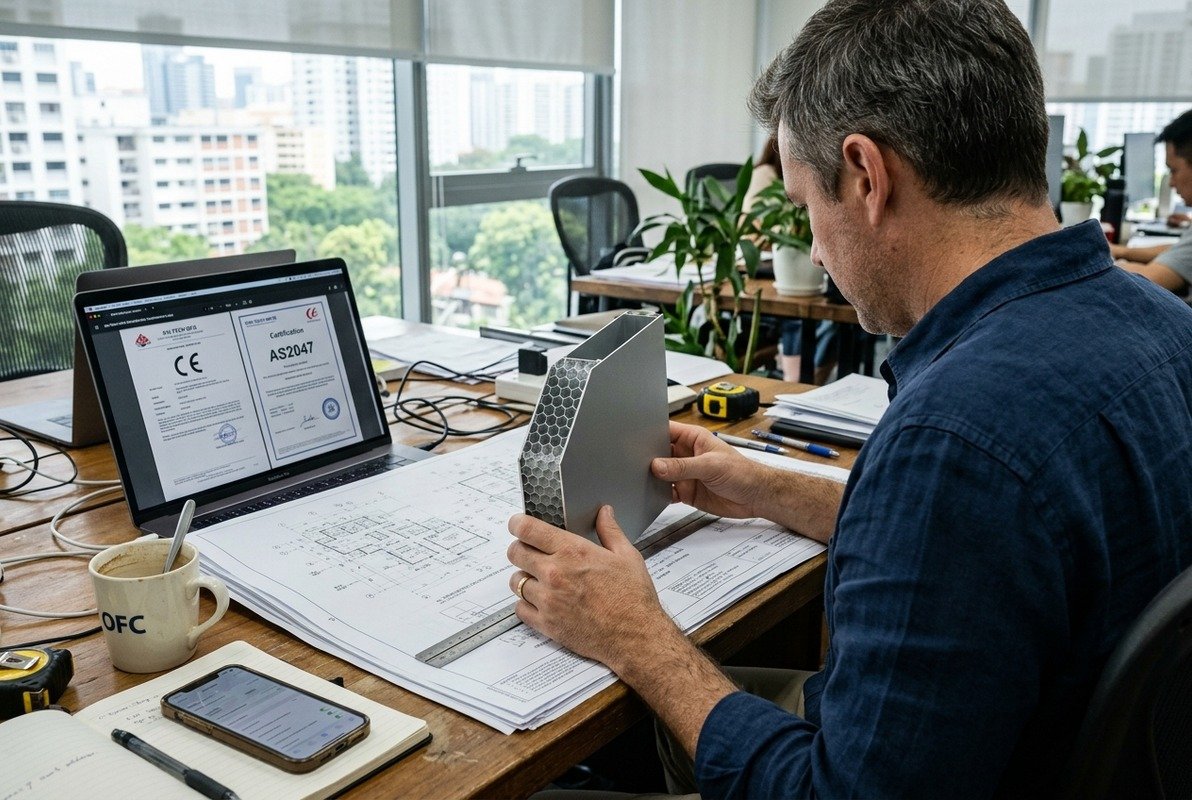
Selecting the right factory is not a simple Google search. You need a structured evaluation process. Let me walk you through the critical steps.
Step 1: Define Your Scope — Profiles or Finished Doors?
This is the single biggest source of confusion. Some factories, like Weiye Aluminium and Guangdong Xingfa Aluminium, are massive aluminum extrusion profiles producers. They supply raw or semi-finished profiles by the ton. Other factories, like HIMOLON or WANJIA, fabricate complete door and window units — glass, hardware, seals, and all.
If you are a project contractor or EPC manager, you likely need finished units. If you are a local fabricator or wholesaler buying wholesale aluminum doors components, raw profiles may suit you. Clarify this before your first inquiry.
Step 2: Match Certifications to Your Export Market
Different markets demand different certifications. Here is a quick reference:
| Export Market | Required Certifications | Key Factories Holding These |
|---|---|---|
| Australia / New Zealand | AS2047 4, NFRC | ZMR, Superhouse, YY Windows |
| Europe | CE, PHI (Passive House) | Doorwin Group, HOGLAD, ZMR |
| North America | NFRC 5, CSA, AAMA | ZMR, WANJIA |
| Middle East / GCC | Saber, GCC | YY Windows |
| General / Multi-market | ISO9001, CE | OPPEIN, Xingfa, Weiye |
Step 3: Evaluate Technical Fit
You need to check profile dimensions, especially visible sightline width. True slim-frame systems offer ultra-narrow sightlines — often under 20mm — to maximize the glass area. Ask for cross-section drawings and compare. Also confirm the aluminum alloy grade. Most top factories use 6063-T5 aluminum alloy 6 for its excellent extrudability and corrosion resistance.
Step 4: Request a Physical Sample
Never skip this. A sample tells you more than any catalog. Check the surface finish quality (powder coating 7 or anodization), the precision of corner joints, and the smoothness of sliding or folding mechanisms. In our own business shipping cable trays to project sites, we learned early that a sample approval step prevents 90% of post-delivery disputes.
Step 5: Confirm MOQ, Lead Time, and Packaging
For custom orders, lead times typically range from 25 to 45 days. Minimum order quantities vary widely. Some factories accept small trial orders; others require container-load volumes. Export packaging — wooden crates, foam padding, and corner protectors — is critical for large glass panels and slim aluminum frames that can dent easily in transit.
Can I request custom OEM designs for my glass door profiles to match my technical specifications?
During a recent project discussion with an EPC contractor, the conversation quickly moved past standard catalogs — he needed a profile cross-section that did not exist in any factory's lineup.
Yes, most top Chinese slim-frame glass door factories offer full OEM and ODM services, allowing you to specify profile dimensions, alloy grade, surface treatment, glass configuration, hardware integration, and branding, with custom extrusion dies typically produced within 7–15 days before production begins.
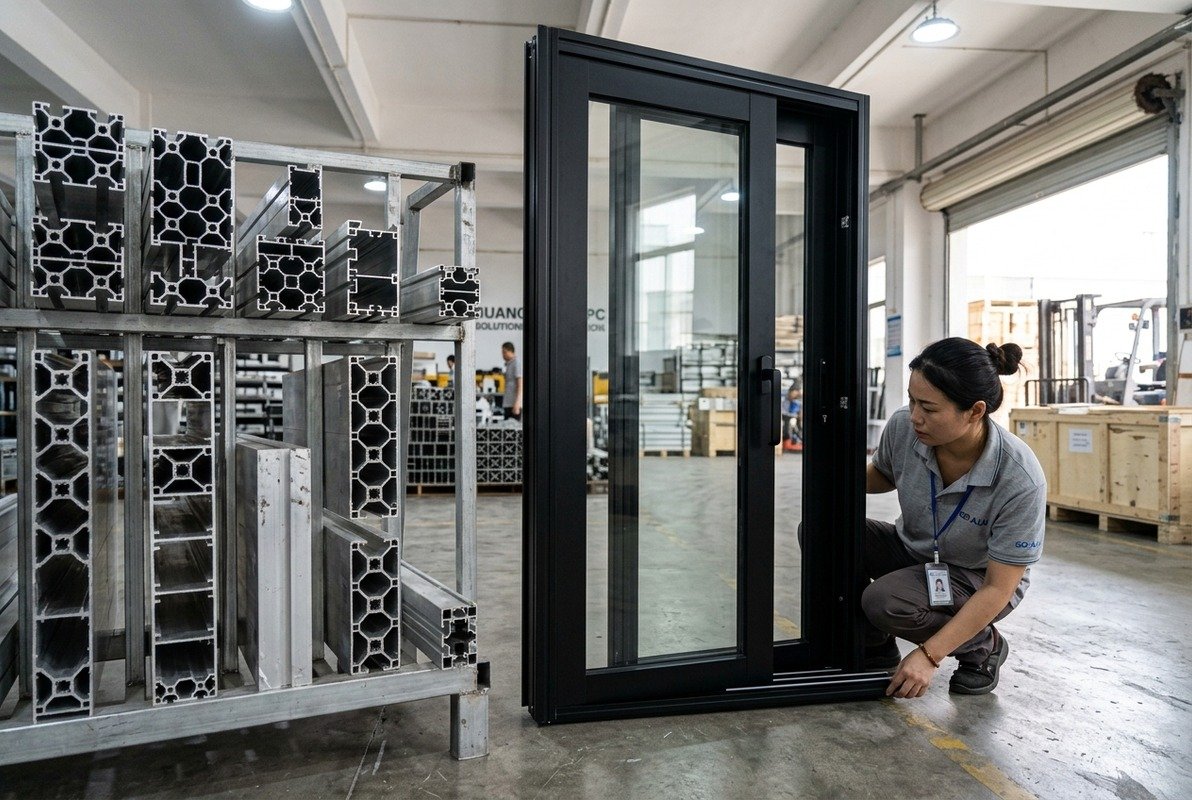
Customization is where China's aluminum door industry truly shines. The ecosystem in Foshan and Guangdong Province is built around flexibility. Here is what you can customize and how the process works.
What Can Be Customized?
Almost everything. Here is a breakdown:
| Customization Area | Options Available | Typical Lead Time Impact |
|---|---|---|
| Profile cross-section | Custom die design, ultra-narrow or wide frames | +7–15 days for new die |
| Alloy grade | 6063-T5 (standard), 6061-T6 (high strength) | Minimal |
| Surface finish | Anodized, powder coated, wood grain transfer, PVDF | +3–5 days |
| Color | RAL colors, custom color matching | +2–3 days for non-standard |
| Glass type | Tempered, laminated, double/triple glazing, Low-E | Depends on glass supplier |
| Hardware | Hidden hardware, smart locks, biometric access | +5–10 days |
| Thermal performance | Thermal break technology 8 (PA66 strips) | Standard in premium lines |
| Branding | Laser-etched logos, custom packaging | Minimal |
The OEM Process Step by Step
- Submit your drawings or specifications. If you only have a concept, factories like Doorwin and HIMOLON have in-house design teams that can develop CAD drawings for you.
- Die approval. For new profile shapes, the factory creates an extrusion die. This costs anywhere from $300 to $1,500 depending on complexity. Many factories waive this fee for large orders.
- Sample production. A small batch of profiles is extruded and finished. You inspect and approve.
- Bulk production. Once approved, the factory runs your order. For narrow frame sliding doors and bifold systems, assembly and glazing happen in-house at full-service factories.
- Quality inspection and packaging. The factory conducts internal QC checks, then packs for export.
A Lesson from Our Own Customization Work
At LANYE CABLETRAY, we handle highly customizable cable tray systems — every project has different dimensions, coatings, and load requirements. The principle is the same for slim-frame door profiles: the more precisely you define your specs upfront, the fewer revisions you face. I always advise buyers to provide a complete technical specification sheet, including tolerances, before requesting quotes. This saves everyone time and prevents the back-and-forth that delays projects.
Smart Integration — The 2026 Edge
Several factories now offer Matter 2.0 smart home integration in their door systems. HIMOLON and OPPEIN, for example, can embed sensors and automated locking mechanisms directly into the slim frame. This is a growing trend in residential and commercial applications, especially luxury villas and high-end showrooms pursuing minimalist design aesthetics.
How can I ensure my aluminum profile order arrives on time to avoid costly project delays?
Late delivery once cost one of our partners a $15,000 penalty on a construction project — and the root cause was not the factory, but a missed detail in shipping documentation.
Ensure on-time delivery by confirming realistic lead times during negotiation, locking in production schedules with a deposit, requiring progress photos at key milestones, pre-booking freight forwarding, and verifying all export documents — packing lists, commercial invoices, and certificates of origin — are prepared in parallel with production.

Delivery delays are the number one pain point I hear from project directors and procurement managers. In our own business exporting cable management systems to Southeast Asia and Africa, we have developed a delivery assurance process that applies equally well to aluminum door profiles.
Why Delays Happen
Most delays fall into a few categories:
- Unclear specifications cause mid-production revisions.
- Surface treatment bottlenecks — custom colors or wood grain finishes take longer than standard silver anodizing.
- Glass sourcing delays — if the factory subcontracts glazing, coordination gaps appear.
- Shipping document errors — a wrong HS code or missing certificate can hold your container at customs for weeks.
- Peak season congestion — Chinese New Year (January–February) and the Canton Fair periods (April, October) slow down production across Guangdong.
A Practical Delivery Timeline
| Phase | Typical Duration | What You Should Do |
|---|---|---|
| Specification confirmation | 3–7 days | Provide complete drawings and specs |
| Die production (if custom) | 7–15 days | Approve die design promptly |
| Sample production and approval | 7–10 days | Inspect within 48 hours of receipt |
| Bulk production | 15–30 days | Request weekly progress photos |
| Quality inspection | 2–3 days | Hire third-party QC if needed |
| Export packing and documentation | 3–5 days | Confirm documents in advance |
| Shipping (sea freight to SE Asia) | 7–14 days | Pre-book freight forwarder |
| Total (custom order) | 44–84 days | Plan with buffer |
Tips That Actually Work
Lock the production slot with a deposit. Factories prioritize paid orders. A 30% deposit upon order confirmation is standard.
Use a shared project timeline. I send every factory a simple Gantt chart showing my delivery deadline and working backward to set milestones. This aligns expectations.
Pre-book your freight forwarder. Do not wait until production is complete. Container availability fluctuates, especially from Foshan and Nansha ports. Book early.
Verify export documents in parallel. Certificates of origin 9, fumigation certificates for wooden packaging, and test reports should be prepared while production is still running. This avoids last-minute scrambles.
In my experience managing shipments to South America, where transit times can exceed 30 days, even a two-day delay at the factory can cascade into a week-long project delay on site. Planning with buffer time is not optional — it is essential.
What quality control measures should I look for when vetting these top Chinese manufacturers?
The first time I visited a Foshan aluminum factory, I was impressed by the showroom — but the real story was on the production floor, where I saw how they handled rejects.
Look for factories with ISO9001 certification, in-house testing labs for profile thickness and tensile strength, third-party inspection acceptance, documented QC checkpoints at extrusion, surface treatment, assembly, and packing stages, and a clear process for handling non-conforming products before shipment.
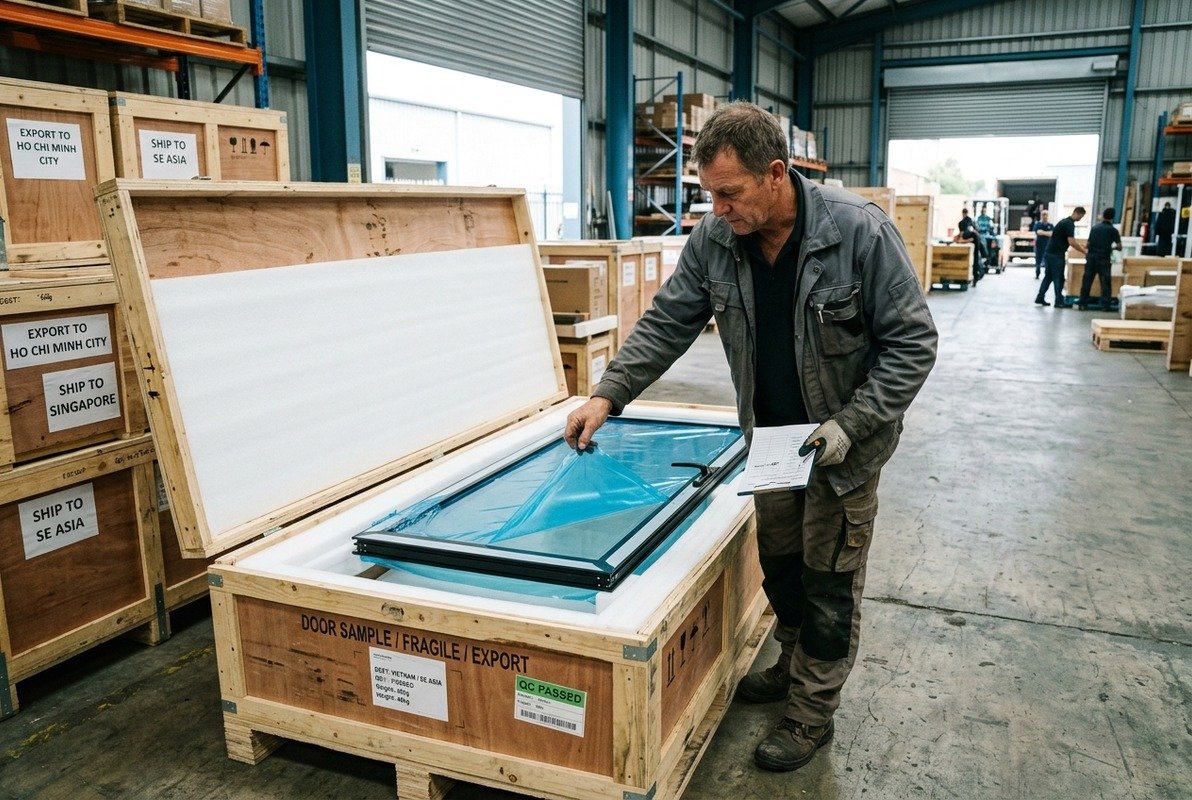
Quality control separates the top 10 factories from the hundreds of mid-tier suppliers. Here is how to evaluate QC capability with confidence.
The Five QC Checkpoints
-
Raw material inspection. Top factories test incoming aluminum billets for alloy composition. For slim-frame profiles, 6063-T5 aluminum alloy must meet specific magnesium and silicon ratios to ensure extrudability and strength.
-
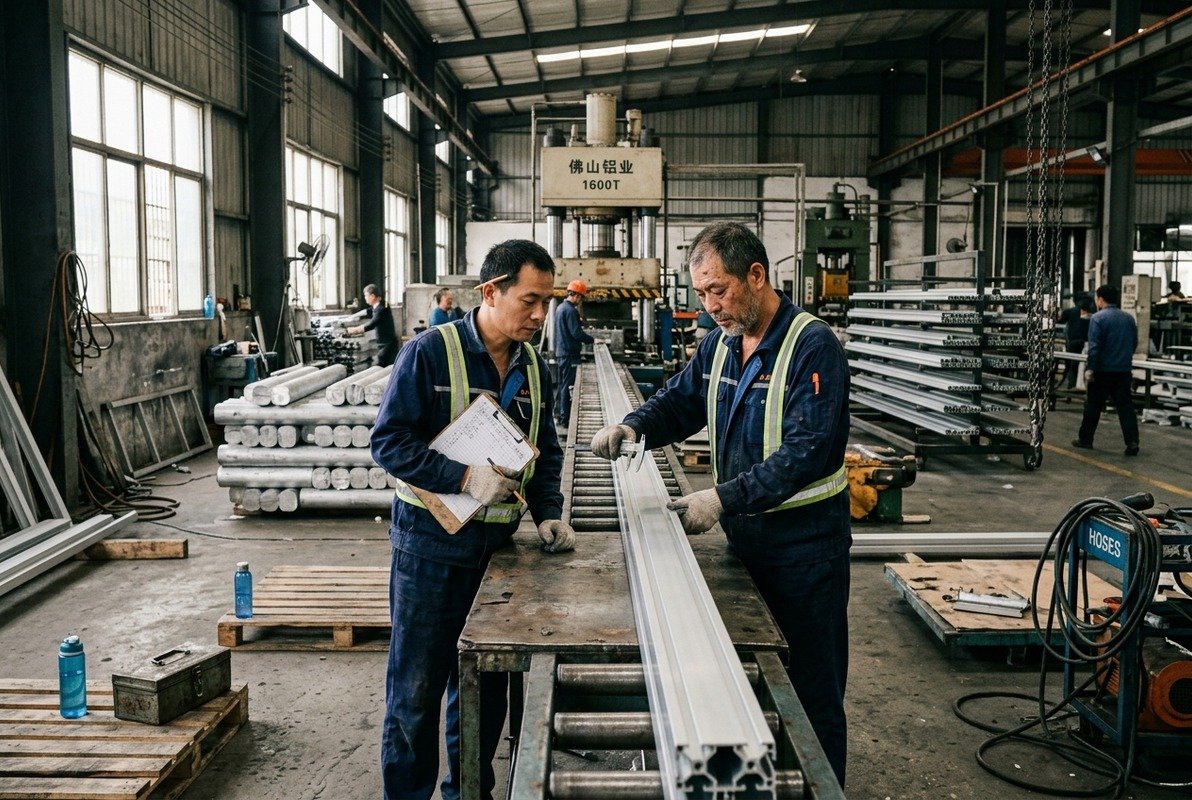
Extrusion line monitoring. During extrusion, profile dimensions are checked against tolerances — typically ±0.1mm for precision slim-frame systems. Factories like Xingfa and Weiye run continuous inline measurement systems.
-
Surface treatment verification. Whether the finish is anodized or powder coated, film thickness must meet standards (typically 40–120 microns for powder coating). Adhesion tests (cross-hatch) and salt spray tests confirm durability.
-
Assembly and glazing inspection. For finished door units, inspectors check glass fit, seal compression, hardware operation, and overall alignment. Hidden hardware systems require especially careful checks since components are not visible after assembly.
-
Final packing audit. Before containers are loaded, a final audit confirms quantities, labels, and packaging integrity. This is where third-party inspection services like SGS or Bureau Veritas add real value.
What Certifications Tell You (and What They Don't)
Certifications are a starting point, not a guarantee. ISO9001 confirms a quality management system exists. But it does not tell you whether the factory actually follows it every day. AS2047 and NFRC certifications confirm that specific products passed performance testing — wind load, water penetration, air infiltration. These are much more meaningful for B2B buyers sourcing for construction projects.
However, certificates can be outdated or applied to different product lines. Always ask for the specific test report that matches your order's profile system and glass configuration.
Red Flags to Watch For
- Factory refuses third-party inspection.
- No written QC procedure or inspection checklist available.
- Sample quality is excellent, but the factory cannot explain its process for maintaining consistency at scale.
- Certifications are only shown as logos on a website, with no downloadable reports or certificate numbers.
How We Handle QC in Our Own Business
At LANYE CABLETRAY, every cable tray order goes through a four-stage inspection process — raw material, fabrication, surface treatment, and packing. We share inspection reports and photos with buyers before shipping. This transparency builds trust and prevents returns. The best aluminum door factories operate the same way. If a factory hesitates to share mid-production photos or inspection data, that is a signal to move on.
Regional QC Strengths
Factories in Foshan and Guangzhou benefit from a mature supply chain ecosystem. Testing labs, hardware suppliers, and glass processors are all within a short drive. This proximity enables tighter quality loops. Shandong-based factories like Doorwin and HOGLAD have invested heavily in passive house testing, giving them an edge in thermal break technology verification for European markets.
For a broader view of leading companies beyond factories alone, you can also explore the top slim-frame glass door aluminum profile companies in China and compare how global slim-frame glass door aluminum profile suppliers stack up against these Chinese manufacturers.
Conclusion
Sourcing slim-frame glass door aluminum profile factories in China demands careful evaluation of certifications, customization scope, delivery processes, and quality control — not just price comparisons.
Footnotes
1. Explains the purpose and scope of ISO 9001 quality management certification. ↩︎
2. Clarifies the meaning and scope of Original Equipment Manufacturer and Original Design Manufacturer services. ↩︎
3. Defines the role and importance of freight forwarding in international logistics. ↩︎
4. Provides context for the Australian/New Zealand standard for windows and doors. ↩︎
5. Explains the National Fenestration Rating Council’s role in product performance ratings. ↩︎
6. Details the properties and common uses of this specific aluminum alloy in manufacturing. ↩︎
7. Provides information on a common surface finishing technique for aluminum profiles. ↩︎
8. Explains the concept of thermal breaks in fenestration for energy efficiency. ↩︎
9. Explains the purpose and significance of certificates of origin in international trade. ↩︎