Finding reliable slim frame glass door aluminum profile companies in China has become one of the biggest headaches I hear from project buyers every quarter.
The top 10 slim frame glass door aluminum profile companies in China for 2026 are ZMR Windows & Doors, OPPEIN, YY Windows, Doorwin Group, Superhouse, HOGLAD, HIMOLON, WANJIA, Weiye Aluminium Factory Group, and Rolansini — leaders in narrow-frame innovation, export certification, and B2B customization for global construction projects.
Below, I break down each company’s strengths and walk you through the exact criteria smart buyers use to pick the right partner CE marking 1. Whether you source for EPC projects in Southeast Asia or commercial fit-outs in Europe, this guide covers the details that matter most.
How do I choose the right slim frame aluminum profile manufacturer for my 2026 projects?
A procurement manager from Singapore once messaged me on WhatsApp at midnight, frustrated because his previous supplier shipped profiles that failed the AS2047 wind-load test 2 on-site — two containers, wasted.
Choose a slim frame aluminum profile manufacturer by verifying international certifications (AS2047, NFRC, CE), confirming in-stock availability for standard profiles, reviewing export packaging history, and requesting sample thermal break profiles before committing to full production orders.
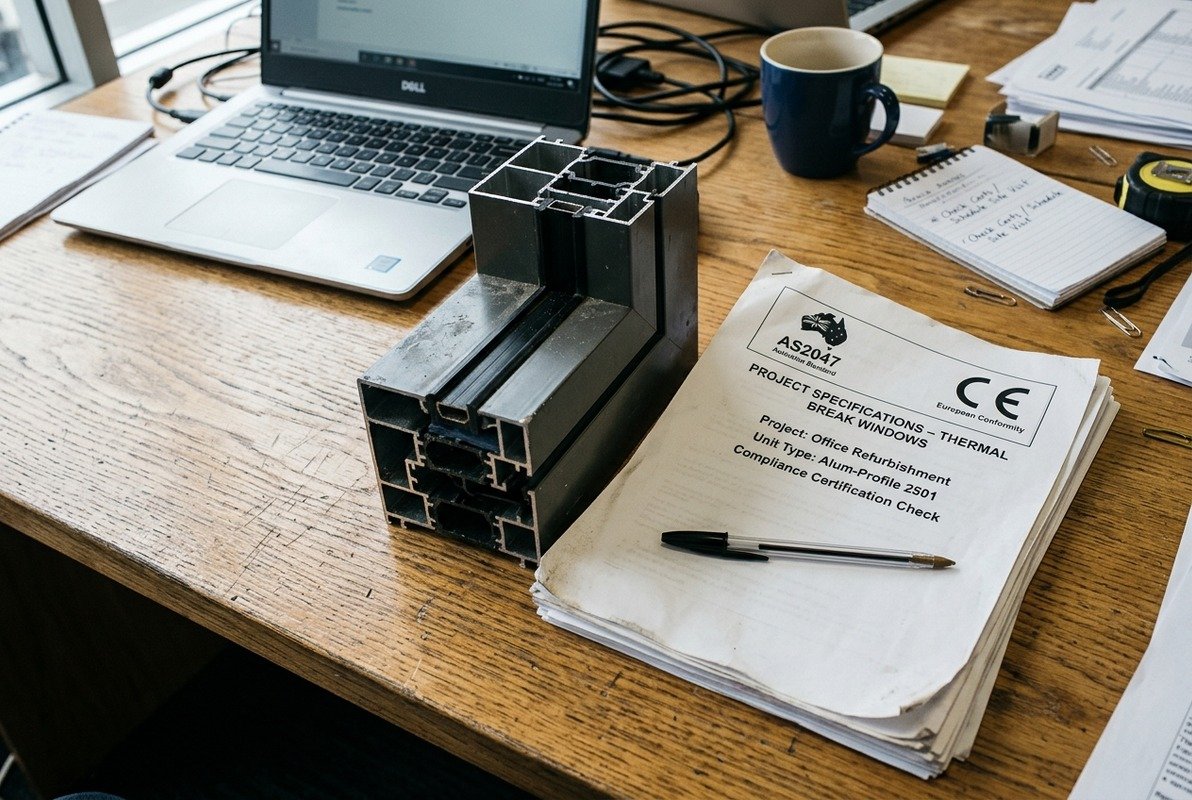
Choosing the right manufacturer is not about finding the lowest price ISO9001 certificates 3. It is about matching your project's technical requirements to a supplier's proven capabilities. Here is how I think about it after years of coordinating shipments across Southeast Asia and Africa 6063-T5 alloy grades 4.
Start with Certifications That Match Your Destination
Every export market has its own compliance gate. If your project is in Australia, you need AS2047. North American jobs require NFRC or AAMA 5. European projects demand CE marking. A company like ZMR holds AS2047, NFRC, CSA, CE, and AAMA — covering nearly every major market. Doorwin Group adds PHI (Passive House Institute) certification 6, which matters for energy-efficiency mandates in northern Europe.
Before you even request a quote, ask: "Which certifications do you hold, and can you send me the original test reports?" If a supplier hesitates, move on.
Evaluate Stock Availability and Production Capacity
One lesson I have learned shipping cable management systems globally is that stock availability changes everything. A supplier with ready-made aluminum extrusion profiles in standard sizes can ship within days. A supplier that only works to order may need six to eight weeks. For 2026, manufacturers like Weiye Aluminium Factory Group and Guangdong Xingfa Aluminium have massive production capacity and automation lines, so they handle large-scale project delivery without bottlenecks.
Compare the Top 10 at a Glance
| Rank | Company | Location | Key Certifications | Best For |
|---|---|---|---|---|
| 1 | ZMR Windows & Doors | Foshan | AS2047, NFRC, CSA, CE, AAMA | Multi-market export, custom OEM aluminum profiles |
| 2 | OPPEIN | Guangzhou | CE, ISO9001 | Whole-house solutions, global distribution |
| 3 | YY Windows | Shanghai | Saber, GCC, CE | Coastal durability, tempered glass doors |
| 4 | Doorwin Group | Shandong | CE, PHI | Passive House, energy-efficient sliding glass door systems |
| 5 | Superhouse | Shanghai | AS2047, NFRC | Commercial and residential systems |
| 6 | HOGLAD | Shandong | NFRC, CE | Long export experience, competitive pricing |
| 7 | HIMOLON | Guangdong | ISO9001, CE | Large-scale projects, thermal break profiles 7 |
| 8 | WANJIA | Foshan | ISO9001 | Robust profiles, Australia and North America |
| 9 | Weiye Aluminium Factory Group | Guangdong | ISO9001 | Raw profiles and finished doors, massive capacity |
| 10 | Rolansini | Foshan | CE | Ultra-minimalist aluminum profiles, narrow frame door suppliers |
Look Beyond the Factory Gate
A good manufacturer also provides export packaging designed for sea freight, clear labeling per container, and a dedicated export sales team that understands Incoterms. When I coordinate shipments to South America, I always confirm that the supplier has handled similar routes before. Experience with customs documentation for your destination country saves weeks of delay.
The best Foshan aluminum suppliers — ZMR, WANJIA, and Rolansini — are clustered in Guangdong province, close to major ports like Shenzhen and Guangzhou. This geographic advantage cuts inland logistics costs significantly. If you are also evaluating suppliers beyond China, our guide to the top slim frame glass door aluminum profile suppliers in the world provides a broader comparison.
Can I request custom OEM specifications for my glass door aluminum profile orders?
Last quarter, a contractor in Jakarta needed a non-standard profile width — 18 mm visible frame — for a luxury hotel lobby. His previous supplier said "impossible." Our experience told us otherwise: the right aluminum extrusion manufacturers can do it.
Yes, most top Chinese slim frame glass door aluminum profile companies offer full OEM customization, including bespoke dimensions, 6063-T5 alloy grades, custom finishes (anodized, powder-coated), specific glass types, hardware integration, and branded packaging — typically with MOQs starting from 200 to 500 units.
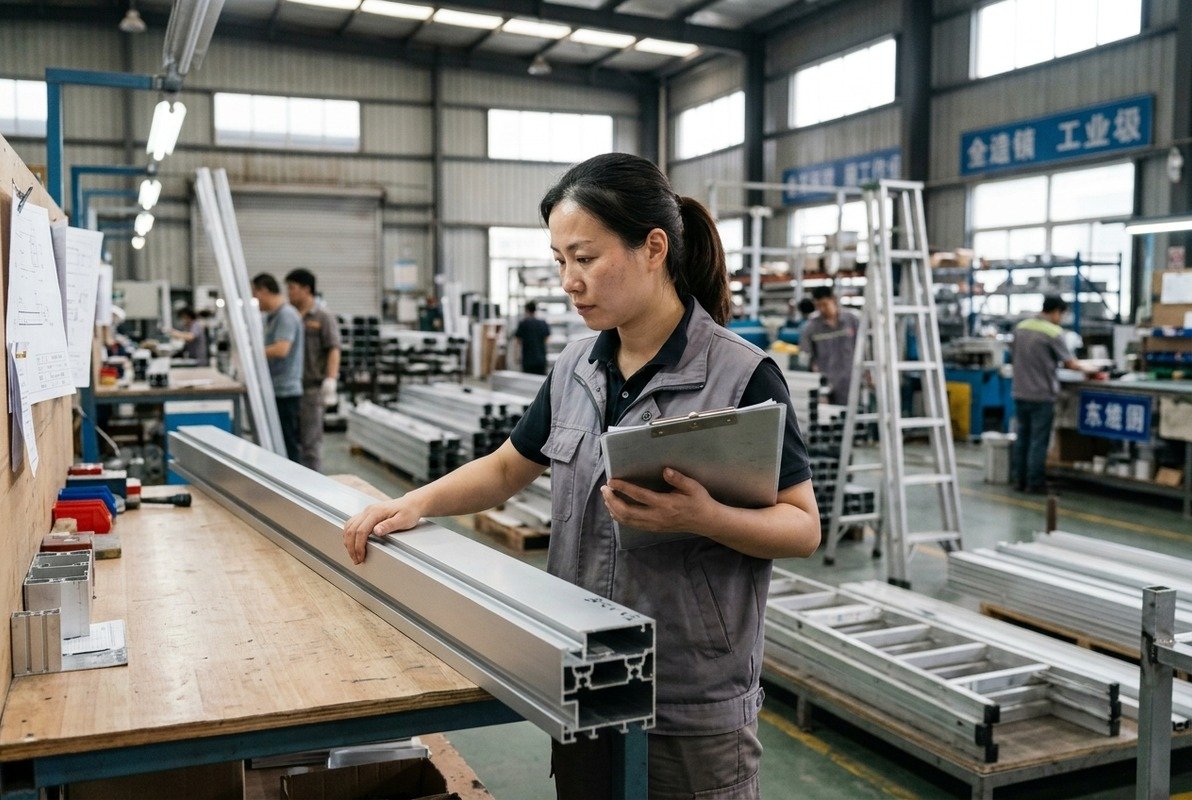
Custom aluminum extrusions are the backbone of China's export advantage. Here is what I have seen work — and what trips buyers up.
What Can You Customize?
The customization scope for architectural aluminum profiles in 2026 goes far beyond color choice. Here is a breakdown:
| Customization Area | Options Available | Typical Lead Time Impact |
|---|---|---|
| Profile dimensions | Width from 15 mm to 45 mm visible frame | +5 to 10 days for new die |
| Alloy grade | 6063-T5 (standard), 6061-T6 (high strength) | No change if in stock |
| Surface finish | Anodized, powder-coated, wood grain transfer, PVDF | +3 to 7 days |
| Glass compatibility | Single, double, or triple glazed; tempered, laminated, Low-E | Depends on glass supplier |
| Hardware | Hidden hinges, German-origin rollers, smart locks, Matter 2.0 integration | +7 to 14 days |
| Packaging | Neutral, branded, project-specific labeling | +2 to 3 days |
The Die Question
Every custom profile starts with an extrusion die 8. If your design matches an existing die in the factory's library, you save time and money. If you need a completely new cross-section, expect die fabrication to take 7 to 15 days and cost between $300 and $800. Companies like ZMR and HIMOLON maintain large die libraries specifically for minimalist aluminum profiles, which means many slim-frame variations are already available.
How to Submit Your OEM Request
I always recommend sending a complete specification package: a CAD drawing or at least a dimensioned sketch, your target certification, the glass type, the finish, and the destination country. The more detail you provide upfront, the faster the factory can quote and prototype. Avoid vague requests like "make it slim" — define exactly what "slim" means for your project in millimeters.
Companies like SGL, ZMR, and HIMOLON explicitly support full customization for B2B buyers. But confirm everything in writing. A signed specification sheet protects both sides.
Smart Home and Premium Features
An emerging trend among narrow frame door suppliers is Matter 2.0 smart home integration. HIMOLON and Apro (Guangzhou) now offer profiles pre-engineered for automated opening mechanisms, smart locks, and sensor housings. If your 2026 project targets high-end residential or hospitality, ask about these options early. Retrofitting smart features into a standard profile is expensive and unreliable.
Honeycomb composite panel inserts — those sandwich-construction panels with aluminum foil lattice cores — are also gaining traction as infill options for oversized door leaves. They cut weight dramatically while maintaining rigidity, which matters for sliding glass door systems wider than three meters. If you are sourcing these panels, our roundup of the top honeycomb panel manufacturers in China covers the leading producers.
How do I verify the quality control standards of my Chinese aluminum profile supplier?
The most painful phone call I ever took was from a project director whose 40-foot container of aluminum profiles arrived with inconsistent wall thickness — some sections were 0.2 mm thinner than spec. That container sat in a warehouse for three months while everyone argued about responsibility.
Verify quality control by requesting ISO9001 certificates, reviewing factory inspection reports, demanding third-party SGS or TÜV testing, conducting a pre-shipment inspection, and checking alloy composition certificates against 6063-T5 or equivalent standards before the container is sealed.
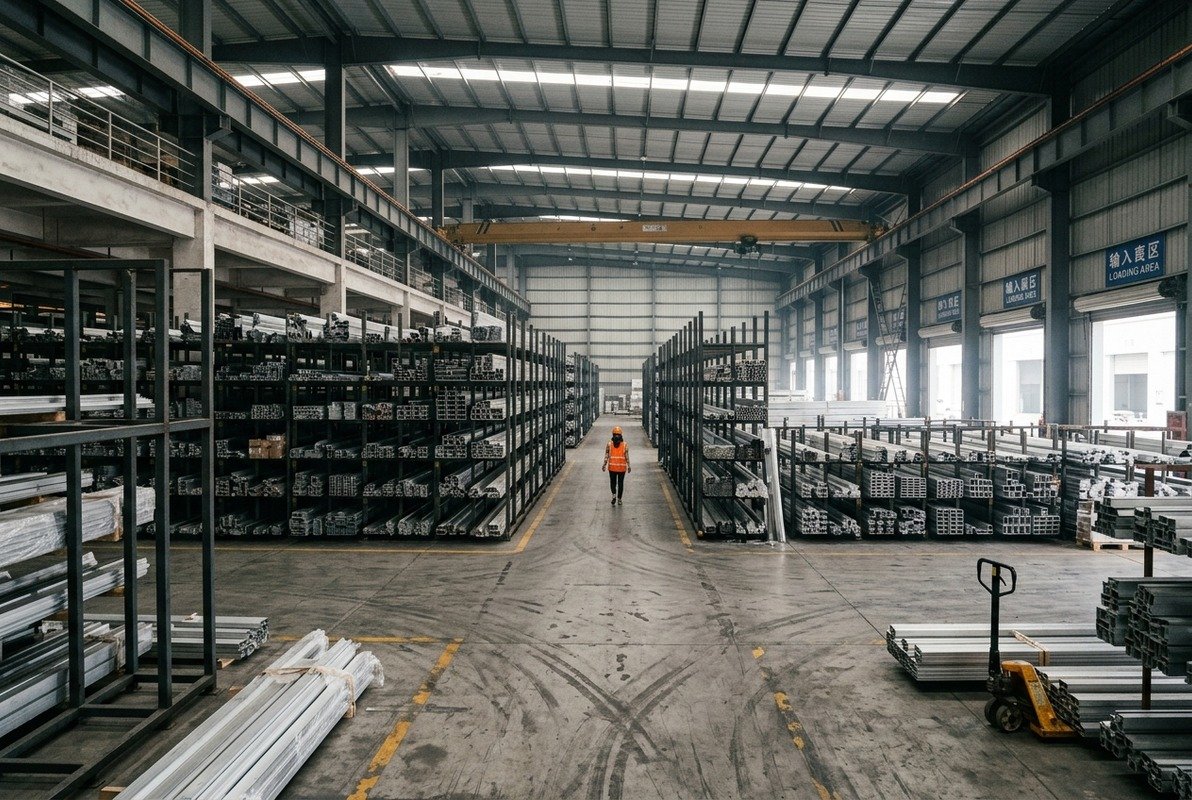
Quality control is not a single checkpoint. It is a chain of verifiable steps from raw billet to loaded container. Here is how I approach it, and what I advise every buyer sourcing architectural aluminum profiles from China.
The Five-Stage QC Chain
- Raw material verification. Ask for the alloy mill certificate. It should confirm 6063-T5 composition. If the supplier cannot provide this, it is a red flag.
- Extrusion tolerance check. Wall thickness, profile straightness, and cross-section accuracy should be within ±0.1 mm. Request the factory's internal inspection report for your specific production run.
- Surface treatment inspection. Anodized coatings should meet 15–25 microns for architectural use. Powder coating should reach 60–80 microns. A coating thickness gauge reading should accompany each batch.
- Assembly and hardware testing. For finished glass door hardware, test cycle counts matter. Premium German-origin rollers should handle 100,000+ open-close cycles. Ask for the test certificate.
- Pre-shipment inspection (PSI). Hire a third-party inspector (SGS, Bureau Veritas, TÜV) to check a random sample before the container is sealed. This is non-negotiable for orders above $10,000. Pre-shipment inspection (PSI) 9
Red Flags vs. Green Flags
| Red Flag | Green Flag |
|---|---|
| Supplier refuses factory visit or video tour | Open-door policy, live production walkthrough |
| No alloy mill certificate available | Mill cert provided per batch with traceable lot numbers |
| Generic ISO certificate with no audit date | Current ISO9001 with recent surveillance audit record |
| "Trust us, quality is good" with no data | Specific test reports, coating thickness readings, cycle test results |
| No export packaging standards | Documented packing spec with foam, corner protectors, and moisture barriers |
Chinese vs. European Quality Perception
There is a common perception that European brands like Schüco or Reynaers automatically deliver superior quality. In thermal break technology and system design, European firms have historically led. But Chinese manufacturers — ZMR, HIMOLON, Doorwin — are rapidly closing that gap, especially at the mid-range price point. The key difference in 2026 is not capability; it is consistency. A good QC system ensures every batch meets spec, not just the sample batch.
When I source components for our own cable tray systems, I apply the same principle: the first sample is always great. The question is whether batch number 50 matches batch number 1. Ask your aluminum profile supplier for batch-to-batch variation data. If they track it, they are serious about quality.
Acoustic and Thermal Performance Testing
Beyond visual and dimensional checks, slim-frame glass doors for urban environments increasingly require acoustic insulation verification. Sound Transmission Class (STC) ratings of 30–38 are common for double-glazed slim profiles. Thermal break profiles should show a Uf value (frame U-value) below 2.0 W/m²K for energy-efficiency compliance in European and Australian markets. Ask for these specific test results — not just a general "energy efficient" claim.
What is the best way for me to manage lead times and avoid shipping delays?
A single week of delay on a construction site can cascade into penalty clauses, idle crews, and angry clients. I learned this firsthand when a shipping line rolled our container twice in succession at Shenzhen port during peak season.
Manage lead times by confirming production schedules in writing, booking freight early during peak seasons (September–January), using a freight forwarder experienced with aluminum products, staging pre-shipment inspections to avoid last-minute rejections, and maintaining buffer stock of standard profiles.
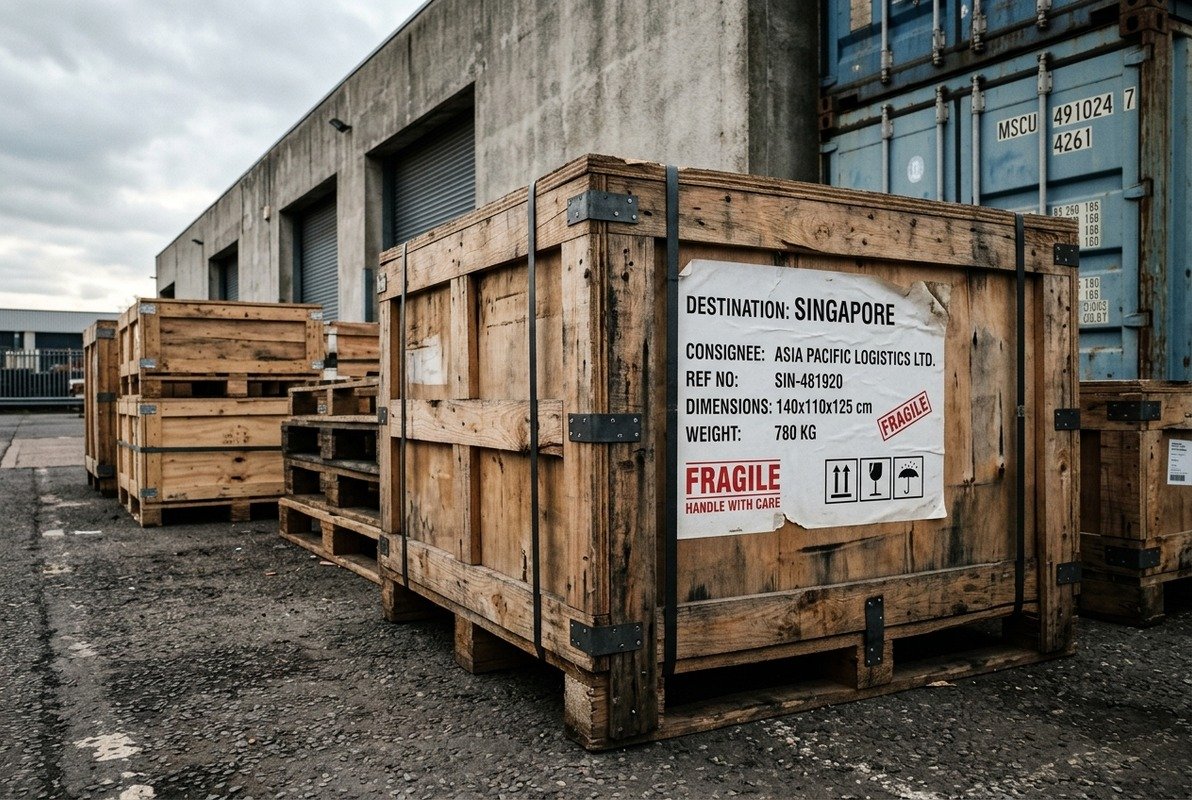
Lead time management is where many international buyers lose money. The factory finishes on time, but the shipment arrives late. Or the shipment arrives on time, but the profiles fail inspection and need rework. Here is a practical framework.
Break Down the Total Lead Time
Most buyers think "lead time" means factory production time. It does not. Total lead time is the sum of several stages:
| Stage | Typical Duration | Your Action |
|---|---|---|
| Order confirmation and deposit | 1–3 days | Pay promptly; delays here delay everything |
| Die fabrication (if custom) | 7–15 days | Use existing dies when possible |
| Extrusion and surface treatment | 15–25 days | Confirm weekly progress updates |
| Quality inspection and packing | 3–5 days | Schedule third-party PSI in advance |
| Inland transport to port | 1–3 days | Confirm port of loading with forwarder |
| Sea freight (e.g., Shenzhen to Singapore) | 5–8 days | Book vessel 2 weeks before cargo ready date |
| Sea freight (e.g., Shenzhen to Durban) | 20–28 days | Book vessel 3–4 weeks early during peak |
| Customs clearance at destination | 2–7 days | Prepare documents before vessel arrives |
Total lead time for a custom slim frame glass door aluminum profile order shipped to Southeast Asia is typically 35 to 55 days. For Africa or South America, add another 10 to 20 days for longer transit.
Peak Season Planning
September through January is peak shipping season from China. Vessel space tightens. Rates spike. Containers get rolled. I always advise buyers to place orders for Q1 installation projects no later than early October. For mid-year projects, order by March.
Buffer Stock Strategy
If you run recurring projects with standard profile sizes, consider keeping a buffer stock at a bonded warehouse near your market. Companies like WANJIA and Weiye, with their massive production capacity, can produce standard minimalist aluminum profiles in bulk at lower per-unit costs. You draw from stock as projects come in, and the factory replenishes on a rolling schedule.
Communication Cadence
Set a clear communication rhythm with your supplier. I use a simple rule: weekly photo updates during production, a video call at the halfway mark, and a full inspection report before packing. WhatsApp works well for quick updates. Email works better for formal confirmations and document exchange.
Modular and prefabricated slim frame glass door systems are also helping reduce on-site installation time. If your supplier offers pre-assembled door units with glass and hardware already fitted, you save days of field labor. This is especially valuable for large-scale residential and commercial developments where HIMOLON and WANJIA have proven track records. For a deeper look at how the top slim frame glass door aluminum profile manufacturers compare globally, see our dedicated manufacturer ranking.
Conclusion
China's top slim frame glass door aluminum profile companies in 2026 offer world-class innovation, certifications, and customization. Verify quality, plan lead times, and choose partners with proven export reliability to protect your projects.
Footnotes
1. Indicates product conformity with EU health, safety, and environmental protection standards. ↩︎
2. Explains the mandatory Australian standard for windows and external glazed doors. ↩︎
3. Global standard for quality management systems, ensuring consistent product and service quality. ↩︎
4. Authoritative Wikipedia page providing detailed information on the 6063 aluminum alloy, including its composition and T5 temper. ↩︎
5. Official body for energy performance ratings of windows, doors, and skylights. ↩︎
6. Provides international certificates for highly energy-efficient buildings and retrofits. ↩︎
7. Explains the technology used to improve energy efficiency in window and door frames. ↩︎
8. Explains the tool used to shape aluminum profiles during the manufacturing process. ↩︎
9. Authoritative government source from the International Trade Administration explaining Pre-shipment Inspection (PSI) and the WTO Agreement. ↩︎