Finding reliable honeycomb panel suppliers in China has been one of the toughest sourcing challenges I’ve seen our EPC clients face—wrong choices mean delayed projects, failed inspections, and costly returns.
The top 10 honeycomb panel suppliers in China for 2026 include Nanbeiwang, Liming, Winsom, Beessun, Huayuan, Holycore, Huarui Honeycomb, SHUANGOU, Aluloyal, and Zhongshan Fude—all recognized for certified quality, strong production capacity, and proven export capability across architectural cladding and industrial applications.
Below, I break down what makes each supplier stand out, how to verify their quality, and what to watch for before you place your order ISO 9001 certificates 1. Whether you need sandwich composite panels 2 for building exterior decoration or lightweight composite materials for specialized projects, this guide covers everything a procurement manager needs to know.
China now accounts for roughly 41% of the global aluminum honeycomb panel market 3. The market is projected to exceed RMB 22.27 billion by 2032, growing at a CAGR of about 2.4–2.5%. That means the supplier landscape is expanding fast—and so is the risk of choosing the wrong partner AAMA 2605 compliance 4. Here is an overview of the ten suppliers worth your attention.
| Rank | Supplier Name | Location | Key Focus |
|---|---|---|---|
| 1 | Guangdong Nanbeiwang Smart Home Co., Ltd. | Foshan, Guangdong | Architectural & industrial honeycomb panels |
| 2 | Foshan Liming Honeycomb Composite Materials Co., Ltd. | Guangzhou/Foshan, Guangdong | Industrial & architectural composite panels |
| 3 | Winsom (Xiamen) Building Materials Industry Co., Ltd. | Xiamen, Fujian | Aluminum honeycomb, composite, and single panels |
| 4 | Suzhou Beessun Honeycomb Materials Co., Ltd. | Suzhou, Jiangsu | Honeycomb cores and panels for furniture, packaging, construction |
| 5 | Shanghai Huayuan Composite New Materials Co., Ltd. | Shanghai | Fireproof aluminum-plastic composite & honeycomb panels |
| 6 | Hangzhou Holycore Composite Material Co., Ltd. | Hangzhou, Zhejiang | Thermoplastic honeycomb panels (HolyPan®) |
| 7 | Huarui Honeycomb | China | Aluminum honeycomb panels for construction & interiors |
| 8 | SHUANGOU | China | High-quality aluminum honeycomb panels |
| 9 | Guangzhou Aluloyal Decorative Materials Co., Ltd. | Guangzhou, Guangdong | R&D and production of decorative honeycomb panels |
| 10 | Zhongshan Fude Aluminum Composite Panel Co., Ltd. | Zhongshan, Guangdong | Large-scale production, international certifications |
Most of these composite panel manufacturers cluster in Guangdong Province—particularly Foshan, Guangzhou, and Zhongshan—making the Pearl River Delta a natural sourcing hub OEM specifications 5. Others in Shanghai, Jiangsu, Zhejiang, and Fujian offer specialized strengths in areas like Nomex honeycomb alternatives, thermoplastic cores, and fire resistant panels for aerospace applications. For a broader look at how these companies compare on the manufacturing side, see our guide to the top 10 honeycomb panel manufacturers in China.
How do I verify the quality and international certifications of these top honeycomb panel manufacturers?
A lesson I learned early in our cable tray export business applies perfectly here: never trust a supplier's word alone on certifications—always request the original test reports and cross-check with the issuing lab.
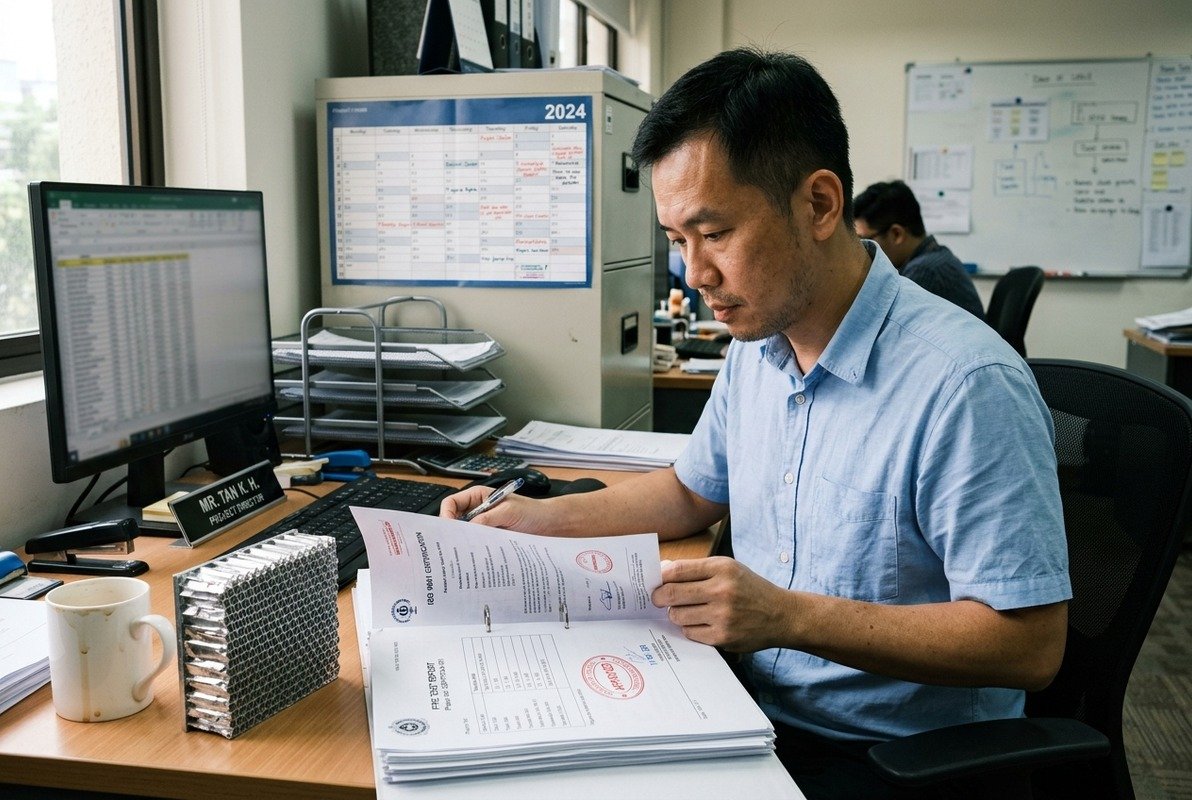
Verify quality by requesting ISO 9001 certificates, CE marks, and original test reports from accredited labs like China's National Building Materials Testing Center. Cross-check wind pressure, fire rating, salt spray, and temperature cycling data. Third-party factory audits add another essential layer of assurance.
Why Certifications Matter More Than Ever
In 2026, tightening fire safety regulations and green building standards mean that uncertified panels can get your entire project rejected at inspection. I've seen this happen to contractors sourcing cable management systems without proper documentation—the same risk applies to honeycomb panels. Class A2 fire resistance 6 is now a baseline requirement for many commercial buildings, not a luxury feature.
What to Request from Each Supplier
Start with the basics. Ask for these documents before any negotiation:
- ISO 9001 Quality Management System certificate — confirms repeatable production processes.
- CE marking — required for export to Europe.
- Fire test reports — look for Class A2 or B1 ratings from nationally accredited labs.
- Salt spray test results — critical for coastal projects; 1,000+ hours is a strong benchmark.
- Temperature cycling data — the standard range to verify is -40°C to 80°C.
- AAMA 2605 compliance — the gold standard for fluorocarbon coating 7 on architectural cladding.
How to Cross-Check
Do not just accept a PDF. Call or email the testing lab directly to confirm the report number. When I source materials for projects in Southeast Asia and Africa, our team always verifies the certificate number against the issuing body's database. It takes 15 minutes and can save months of headaches.
Third-Party Factory Audits
If your order exceeds 10,000 m², consider hiring a third-party inspection firm. They will verify production capacity, raw material traceability, and whether the factory actually runs the automated composite lines it claims to have. A minimum of two fully automated lines is the benchmark for suppliers capable of handling large-scale orders.
| Certification / Test | What It Proves | Minimum Benchmark |
|---|---|---|
| ISO 9001 | Consistent quality management | Current, annually renewed |
| CE Mark | Meets EU safety standards | Mandatory for EU export |
| Fire Rating (A2/B1) | Fire resistance of panel | A2 for commercial buildings |
| Salt Spray Test | Corrosion resistance | ≥ 1,000 hours |
| Temperature Cycling | Thermal stability | -40°C to 80°C |
| AAMA 2605 | Fluorocarbon coating durability | 20-year color retention |
A Quick Note on Surface Finishes
The aluminum honeycomb core is only half the story. Surface finishing determines long-term performance. Fluorocarbon coatings meeting AAMA 2605 offer a 20-year warranty against color fading. Anodized finishes also carry long warranties but behave differently in humid climates. Always match the finish to the project environment—what works in a dry inland city may fail on a coastal high-rise.
Can I get custom OEM specifications and finishes for my specific project needs?
One of the most common questions our overseas buyers ask—whether they're ordering cable trays or sourcing building materials—is whether Chinese suppliers can truly customize to spec, or if "custom" just means picking from a catalog.
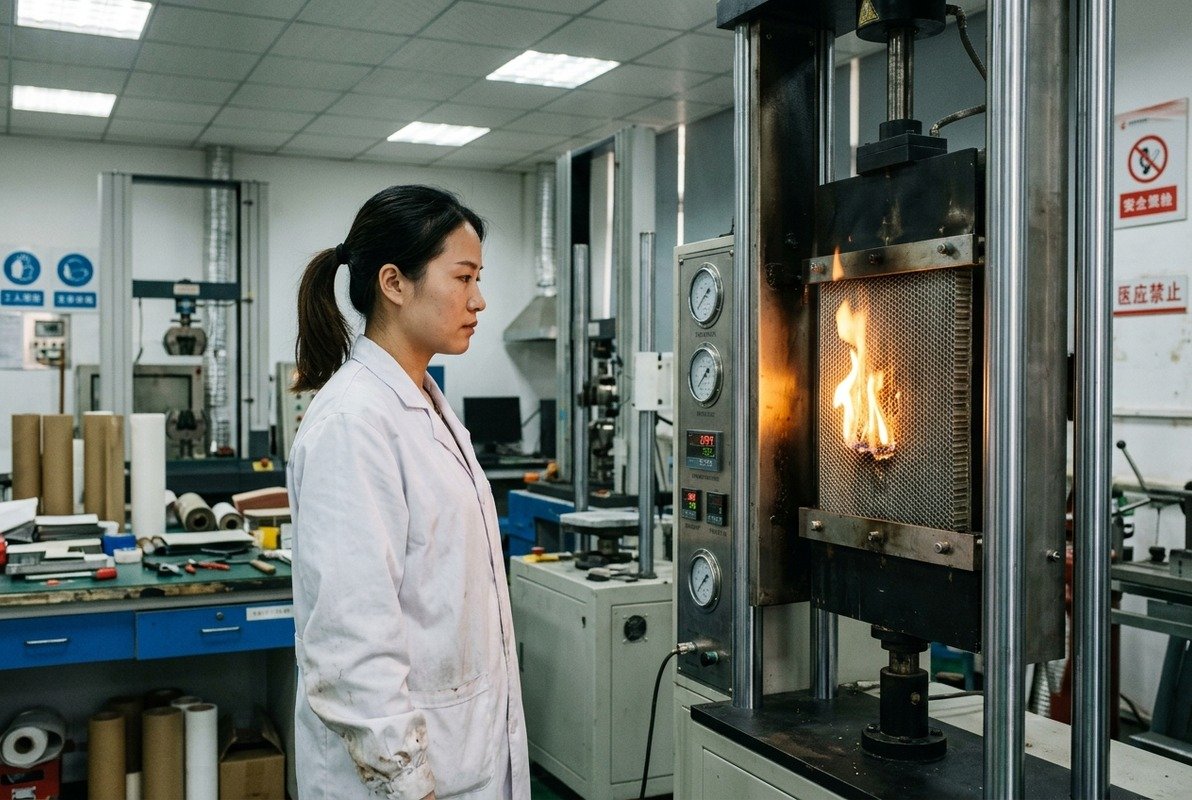
Yes, most top Chinese honeycomb panel suppliers offer full OEM and custom honeycomb fabrication services, including bespoke panel dimensions, aluminum honeycomb core densities, surface finishes like wood grain or solid PVDF colors, and special edge profiles. Minimum order quantities and lead times vary by supplier.
What "Custom" Really Means in Practice
Custom honeycomb fabrication covers a wide range. At the basic level, you can specify panel length, width, and thickness. At the advanced level, you can dictate core cell size, skin material (aluminum, FRP, or thermoplastic), coating type, edge banding method, and even embedded hardware for installation.
For example, Hangzhou Holycore offers their HolyPan® thermoplastic honeycomb panels 9 in custom sizes for furniture and interior applications. Nanbeiwang and Liming both provide architectural panels with fluorocarbon or powder-coated finishes in RAL color matching. Beessun in Suzhou specializes in custom aluminum honeycomb core configurations for packaging and specialized industrial uses.
Common OEM Customization Options
Here is a breakdown of what you can typically request:
| Customization Area | Options Available | Typical Lead Time Impact |
|---|---|---|
| Panel Dimensions | Any length/width within machine limits (up to ~6000mm) | Minimal |
| Core Cell Size | 3mm, 5mm, 6mm, 8mm, 10mm+ | Minimal |
| Core Material | Aluminum, Nomex honeycomb, PP thermoplastic | +3–7 days |
| Surface Finish | PVDF/fluorocarbon, powder coat, anodized, wood grain laminate, stone texture | +5–10 days |
| Edge Treatment | Folded, sealed, open, U-channel | Minimal |
| Structural Rigidity Enhancements | Thicker skins, reinforced edges, embedded steel inserts | +7–14 days |
| Fire Rating Upgrade | A2 core, fire-retardant adhesive | +5–10 days |
Tips for Communicating Custom Specs
From years of managing OEM orders in our own cable tray business, I know that clear documentation prevents 90% of custom order disputes. Provide your supplier with:
- Detailed CAD drawings with tolerances marked (aim for ±0.5mm precision).
- Material specifications — do not just say "aluminum." Specify alloy grade (e.g., 3003, 5052).
- Finish samples or RAL/Pantone codes for color matching.
- Performance requirements — fire rating, wind load, thermal insulation properties.
- Packaging and labeling instructions for your destination market.
Most reputable suppliers will produce a sample panel within 7–15 days. Always approve a physical sample before committing to bulk production. This is especially important for sandwich composite panels where the bond between the skin and the aluminum honeycomb core must be tested under stress.
Special Applications
The market is moving fast. Demand for lightweight composite materials now extends beyond building exterior decoration into new energy vehicle battery enclosures, 5G base station housings, and even commercial satellite structures. If your project sits in one of these emerging fields, work with suppliers like Huayuan or Holycore who have R&D teams experienced in non-standard applications.
What should I look for to ensure my order arrives on schedule without shipping delays?
Delivery delays are the number-one pain point I hear from project directors like our clients in Singapore and Southeast Asia. When a 50,000 m² panel order arrives two weeks late, the entire construction schedule collapses—and the penalties fall on the buyer, not the supplier.
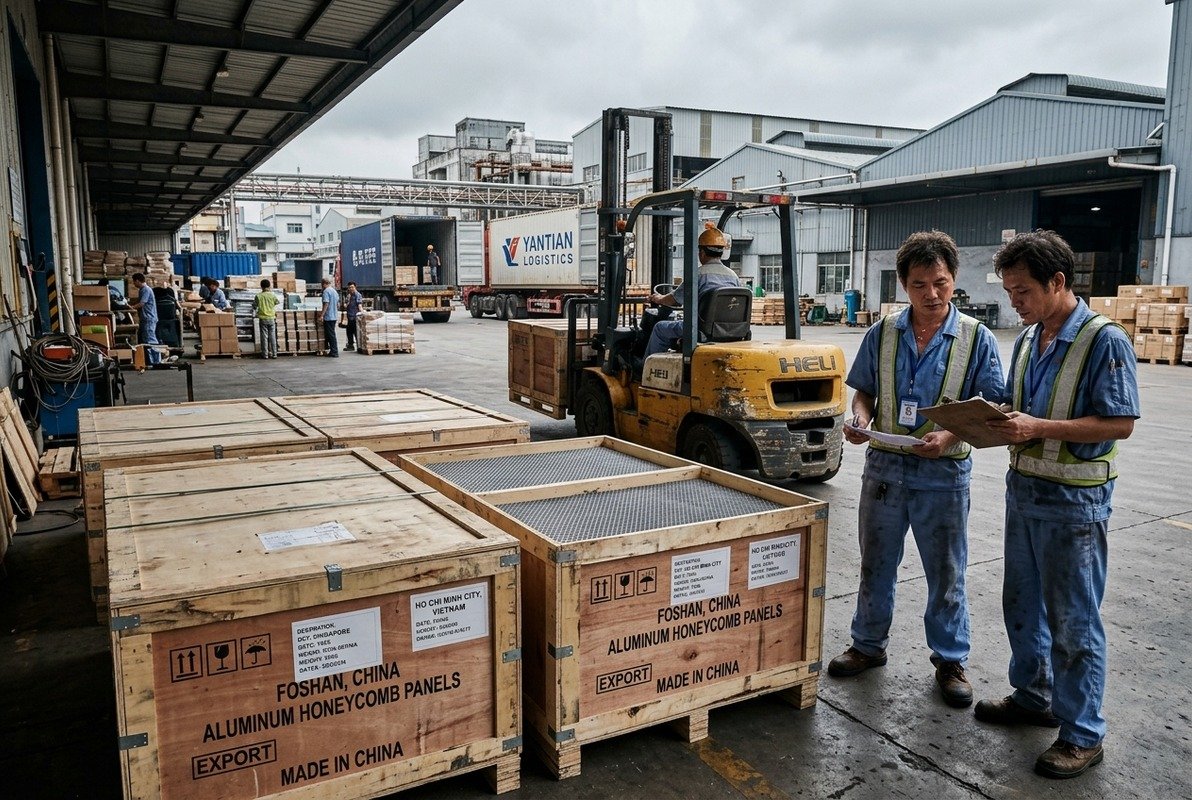
To avoid shipping delays, verify the supplier's actual production capacity (minimum two automated lines), confirm raw material inventory levels before ordering, lock in shipping bookings early, and build a 10–15 day buffer into your project timeline. Staged inspections at 30%, 60%, and 100% completion catch problems before they cause delays.
Why Delays Happen
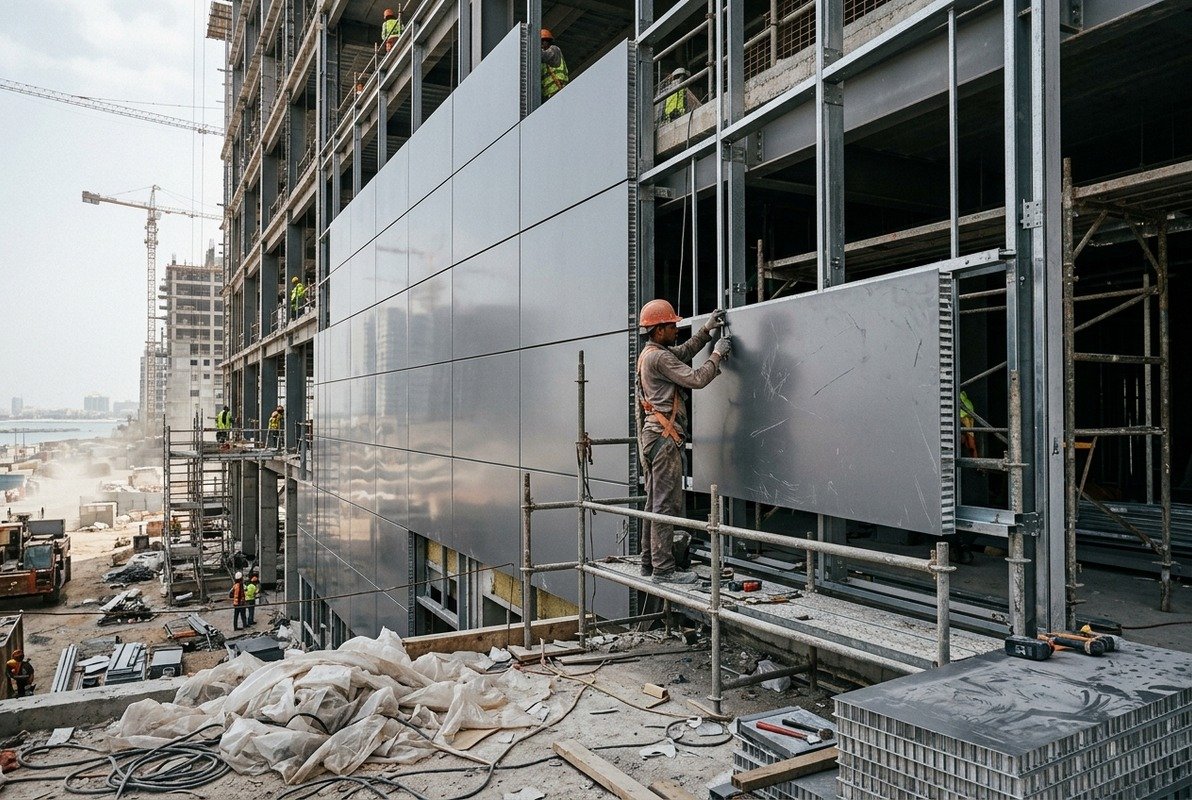
In my experience coordinating international shipments of cable management systems to Africa and South America, delays almost never come from a single cause. They stack up. The factory runs behind on a previous order. Raw aluminum coil is out of stock. The container booking gets bumped. Customs paperwork has an error. Each small issue adds days.
For honeycomb panels, the risk is even higher because of the multi-step production process: core expansion, skin preparation, bonding, curing, finishing, and quality inspection. Any bottleneck in this chain ripples downstream.
A Practical Delivery Assurance Checklist
Rather than relying on promises, use this process:
- Audit production capacity. Ask for photos or video of the factory floor. Count the composite lines. A supplier claiming 50,000 m² monthly capacity should have at least two fully automated lines running.
- Check raw material inventory. Before signing the contract, ask the supplier to confirm they have the aluminum coil, adhesive, and coating materials in stock—or a confirmed delivery date from their sub-suppliers.
- Request a detailed production schedule. A serious supplier will provide a Gantt chart or milestone schedule with dates for core fabrication, bonding, finishing, QC, packing, and loading.
- Book shipping early. Container space from Chinese ports (especially Foshan, Guangzhou, and Shanghai) can be tight during peak seasons. Book at least 2–3 weeks before the estimated production completion date.
- Stage your inspections. Do not wait until 100% completion. Inspect at 30% (raw materials and core), 60% (bonding and finishing), and 100% (final QC and packing). This catches issues early enough to correct without delaying the ship date.
- Build a buffer. Add 10–15 days to whatever timeline the supplier gives you. This is not pessimism—it is standard practice for cross-border procurement.
Regional Port Advantages
Where the supplier is located affects shipping time. Guangdong-based suppliers (Nanbeiwang, Liming, Aluloyal, Fude) ship from Nansha or Shekou ports, which have frequent sailings to Southeast Asia, Africa, and the Middle East. Shanghai-based Huayuan has direct access to Yangshan Deep Water Port. Xiamen-based Winsom benefits from a less congested port with competitive freight rates.
Understanding these logistics realities helps you plan more accurately. If your project is in Southeast Asia and speed matters, a Guangdong supplier with Nansha port access may save you 3–5 days compared to a Shanghai-based factory shipping from Yangshan.
How do I evaluate which supplier offers the best balance of mid-range pricing and high durability?
The trade-off between cost and quality is something I think about every day in our cable tray business. Our clients in South America and Africa need durable products—but they don't have the budgets of European contractors. The same tension exists in the honeycomb panel market.
Evaluate mid-range pricing against durability by comparing unit cost per square meter alongside fire rating, coating warranty, core density, and salt spray test hours. Request quotes from at least three suppliers, normalize specs to identical parameters, and weight long-term maintenance costs against upfront price differences.
Why Cheapest Is Almost Never Best
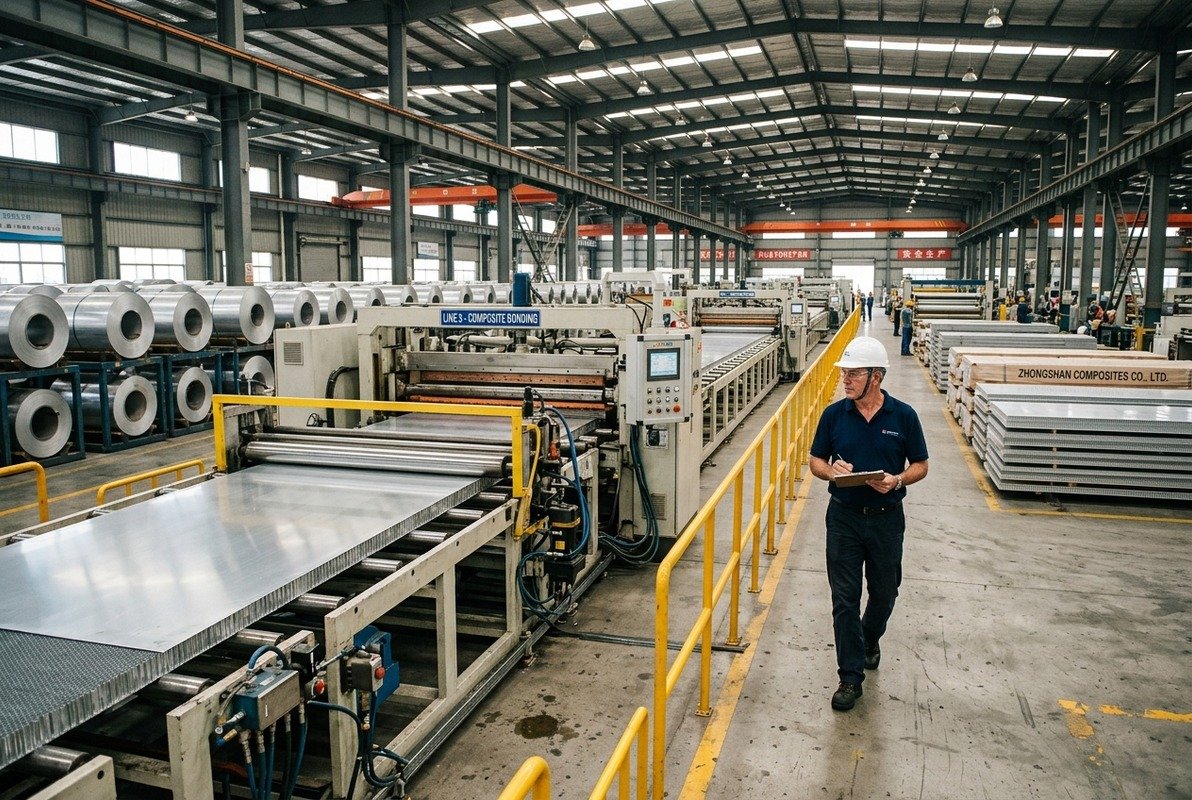
Price competition in China's honeycomb panel market is fierce. Some factories cut costs by using thinner aluminum skins, lower-density cores, or cheaper adhesives. These panels look identical to premium ones on delivery day. The difference shows up 3–5 years later when delamination, color fading, or corrosion starts.
I've learned this lesson firsthand. When we source raw materials for our cable tray production, switching to a marginally cheaper steel coil once resulted in corrosion complaints within 18 months. The "savings" cost us far more in replacements and reputation damage. The same principle applies to sandwich composite panels.
How to Normalize Quotes for Fair Comparison
When you receive quotes from multiple composite panel manufacturers, they are rarely apples-to-apples. One supplier quotes a 4mm panel with 0.5mm skins. Another quotes a 4mm panel with 0.3mm skins. The second is cheaper—but structurally weaker.
Create a standardized specification sheet and send it to all suppliers:
- Panel thickness: e.g., 20mm
- Skin thickness: e.g., 0.5mm 3003-H24 aluminum
- Core cell size: e.g., 6mm
- Surface finish: e.g., PVDF fluorocarbon, RAL 7035
- Fire rating: e.g., A2
- Minimum salt spray: e.g., 1,000 hours
Now you can compare prices fairly.
A Sample Comparison Framework
| Evaluation Criteria | Weight | Supplier A | Supplier B | Supplier C |
|---|---|---|---|---|
| Unit Price (USD/m²) | 25% | $38 | $32 | $45 |
| Fire Rating | 20% | A2 | B1 | A2 |
| Coating Warranty | 15% | 20 years | 10 years | 20 years |
| Salt Spray Hours | 15% | 1,500 hrs | 800 hrs | 2,000 hrs |
| Core Density (kg/m³) | 10% | 55 | 40 | 60 |
| Production Capacity | 10% | 60,000 m²/mo | 30,000 m²/mo | 80,000 m²/mo |
| Certifications (ISO, CE) | 5% | Both | ISO only | Both |
In this example, Supplier B is cheapest but falls short on fire rating, coating warranty, and salt spray resistance. Supplier C offers the best specs but at a premium. Supplier A hits the mid-range sweet spot—competitive pricing with strong durability metrics.
The Hidden Cost of Low Durability
A panel that fails in 5 years instead of 20 does not just cost you the replacement material. It costs labor for removal and reinstallation, scaffolding rental, project downtime, and potential liability claims. For building exterior decoration on high-rises, re-cladding a facade can cost 3–5 times the original panel price.
When evaluating structural rigidity and thermal insulation properties, think in terms of total cost of ownership 10 over the building's design life—not just the purchase order amount. This is especially critical for projects in harsh coastal or tropical environments where corrosion and UV exposure accelerate degradation. If you're also evaluating suppliers beyond China, our ranking of the top 10 honeycomb panel suppliers in the world provides a useful global benchmark.
Eco-Friendly Considerations
By 2026, environmental regulations and ESG evaluation systems are pushing the industry toward recyclable materials. Aluminum honeycomb panels are nearly 100% recyclable, which gives them an edge over some alternatives. Suppliers who can document their environmental compliance and recyclability credentials add long-term value to your project—particularly if your end client is a green-building-certified development.
Conclusion
Choosing among the top honeycomb panel suppliers in China for 2026 comes down to verifying certifications, securing true customization, managing delivery timelines, and balancing price with long-term durability for your specific project.
Footnotes
1. Details the international standard for quality management systems. ↩︎
2. Explains the composition and applications of these layered panels. ↩︎
3. Provides an overview of the global market for aluminum honeycomb panels. ↩︎
4. Describes the specification for high-performance organic coatings on architectural aluminum. ↩︎
5. Clarifies the concept of Original Equipment Manufacturer specifications and manufacturing. ↩︎
6. Defines the fire classification for building materials under the Euroclass system. ↩︎
7. Describes the properties and applications of fluorocarbon coatings. ↩︎
8. Explains the mandatory European conformity marking for products. ↩︎
9. Provides information on a specific type of thermoplastic honeycomb panel. ↩︎
10. Explains the comprehensive financial consideration beyond initial purchase price. ↩︎