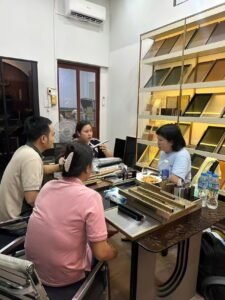
Finding reliable honeycomb panel manufacturers is a challenge I know well — sourcing partners for complex projects means filtering through hundreds of suppliers worldwide.
The top 10 honeycomb panel manufacturers in 2026 include Hexcel Corporation, Plascore, The Gill Corporation, 3A Composites, Euro-Composites, Alcoa, Morishin Industrial, Foshan Liming, Winsom Xiamen, and Suzhou Beessun — spanning the USA, Europe, China, and Japan with specializations from aerospace to architectural cladding.
Below, I break down how to evaluate these companies, what certifications matter, and how to navigate custom orders and international logistics aramid cores 1. Let me walk you through every detail.
How do I choose the right honeycomb panel manufacturer for my specific project needs?
A procurement manager from Singapore once told me his biggest regret was choosing a supplier based on price alone — the panels warped during installation, and the project stalled for weeks ISO 9001 quality management certification 2.
Choose the right honeycomb panel manufacturer by evaluating five dimensions: production capacity and delivery speed, verified project case studies, independent testing reports, surface finishing standards, and on-site installation support — then match these against your project's specific structural and aesthetic requirements.

Selecting from the top honeycomb panel manufacturers requires more than a quick price comparison. Each project — whether it involves aerospace applications 3, architectural cladding, or transportation industry solutions — demands a different set of capabilities from the supplier. Here is how I approach this decision, drawing on years of working with global supply chains for industrial infrastructure.
Start with Your Application
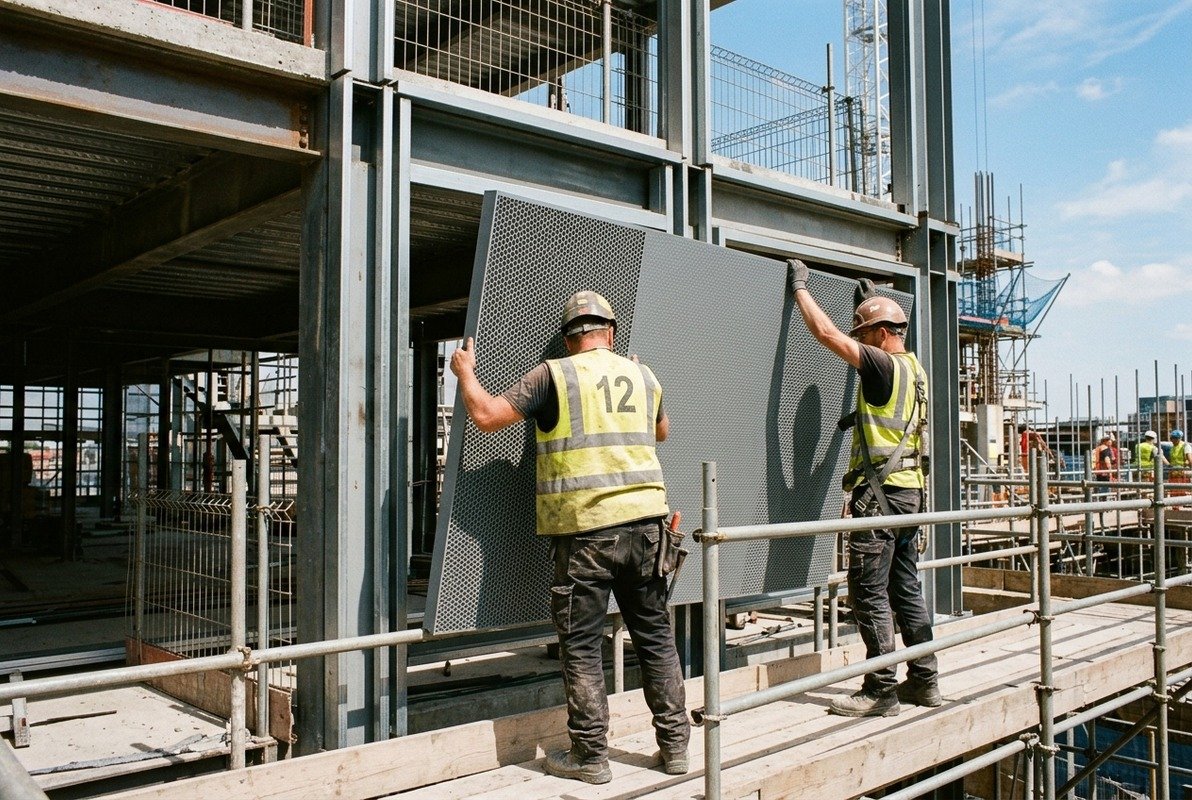
The first question is simple: what will the panels do? Aluminum honeycomb panels for a high-rise curtain wall face very different stresses than composite panels used inside an aircraft fuselage. Aerospace applications demand Nomex honeycomb 4 or aramid cores with extreme tolerances. Architectural projects need flatness, weather resistance, and decorative finishes. Transportation industry solutions sit somewhere in between — they need a high strength-to-weight ratio and vibration damping but at a more accessible price point.
The 5-Dimension Evaluation Framework
I recommend using this structured approach when shortlisting manufacturers:
| Evaluation Dimension | What to Check | Why It Matters |
|---|---|---|
| Production Capacity | Number of automated lines, annual output (m²) | Determines if they can meet your volume and urgent deadlines |
| Case Studies | Completed projects similar to yours (photos, references) | Proves real-world capability, not just catalog promises |
| Testing Reports | Wind pressure, temperature cycling (-40°C to 80°C), salt spray, fire resistance | Validates performance claims with independent data |
| Surface Finishing | AAMA 2605 fluorocarbon 5, anodizing with 20-year warranty | Ensures long-term durability and aesthetic consistency |
| Installation Support | On-site guidance, node design drawings, technical team availability | Reduces risk of costly errors during project execution |
Western Innovation vs. Chinese Scale
There is a real divide in the market. Western manufacturers like Hexcel and Plascore invest heavily in R&D, fire safety certifications, and automated production. They charge more, but the engineering depth is proven. Chinese manufacturers like Foshan Liming and Winsom Xiamen offer scale advantage and cost efficiency. China accounts for approximately 41% of global production share. The trade-off is clear: you pay more for cutting-edge innovation with Western firms, or you get competitive pricing and fast turnaround from Chinese firms — but you must verify quality control more rigorously.
Match Manufacturer to Market Segment
Here is a quick reference showing which top manufacturers align with which industries:
| Manufacturer | Headquarters | Primary Strength | Best For |
|---|---|---|---|
| Hexcel Corporation | USA | High-performance composites | Aerospace, defense |
| Plascore Inc. | USA | Fire-retardant honeycomb cores | Transportation, marine |
| The Gill Corporation | USA | Structural panels | Aircraft interiors, transit |
| 3A Composites | Switzerland | Aluminum composite panels | Architecture, signage |
| Euro-Composites S.A. | Luxembourg | High-end industrial panels | Architecture, rail |
| Alcoa | USA | Structural aluminum honeycomb | Construction, aerospace |
| Morishin Industrial | Japan | Precision honeycomb for satellites | Space, defense |
| Foshan Liming | China | Architectural/industrial panels | Curtain walls, interiors |
| Winsom (Xiamen) | China | Metal composite panels | Building construction materials |
| Suzhou Beessun | China | Furniture, packaging, construction | Cost-sensitive projects |
In my work coordinating supply chains for infrastructure projects across Southeast Asia and Africa, I have found that the best outcomes come from matching the manufacturer's proven track record to the exact demands of the project — not from chasing the lowest quote.
What quality certifications should I verify before partnering with a global supplier?
One lesson I learned the hard way: a supplier showed us an ISO certificate during negotiation, but the certificate had expired two years earlier. That single oversight cost weeks of re-inspection and nearly derailed a delivery to a water treatment project in South America.
Before partnering with any honeycomb panel manufacturer, verify current ISO 9001 quality management certification, fire resistance test reports (ASTM E84 or EN 13501), surface coating standards like AAMA 2605, and any industry-specific approvals such as aerospace AS9100 or marine DNV certifications relevant to your end application.
Certifications are not just paperwork. They are proof that a manufacturer's processes, materials, and finished products meet defined standards. When I evaluate suppliers for our B2B projects, I treat certification verification as the single most important gatekeeping step. Here is why, and what specifically to look for.
Core Certifications Every Buyer Should Check
ISO 9001 is the baseline. It confirms that the manufacturer has a quality management system in place. But do not stop there. For honeycomb core materials used in building construction materials, fire resistance ratings are critical. Look for ASTM E84 6 (USA) or EN 13501 (Europe) fire classification reports. These tell you exactly how the panel performs under flame spread and smoke development conditions.
For architectural cladding 7 projects, the surface finish matters enormously. AAMA 2605 is the gold standard for fluorocarbon (PVDF) coatings. It requires rigorous testing for color retention, chalk resistance, gloss retention, and chemical resistance over a minimum of 10 years. Some Chinese manufacturers now offer anodized finishes with 20-year warranties — but always request the third-party lab report, not just the manufacturer's own claim.
Industry-Specific Certifications
Different sectors require different stamps of approval:
| Industry | Required Certification | What It Covers |
|---|---|---|
| Aerospace | AS9100 8, NADCAP | Quality management for aviation, space, defense supply chains |
| Construction | ISO 9001, EN 13501 9, AAMA 2605 | Quality systems, fire safety, coating durability |
| Transportation | ECE R118, FMVSS 302 | Flammability standards for vehicle interiors |
| Marine | DNV GL 10, Lloyd's Register | Structural and fire performance for marine environments |
| General Industrial | ISO 9001, ISO 14001 | Quality management and environmental management |
How to Verify — Not Just Collect
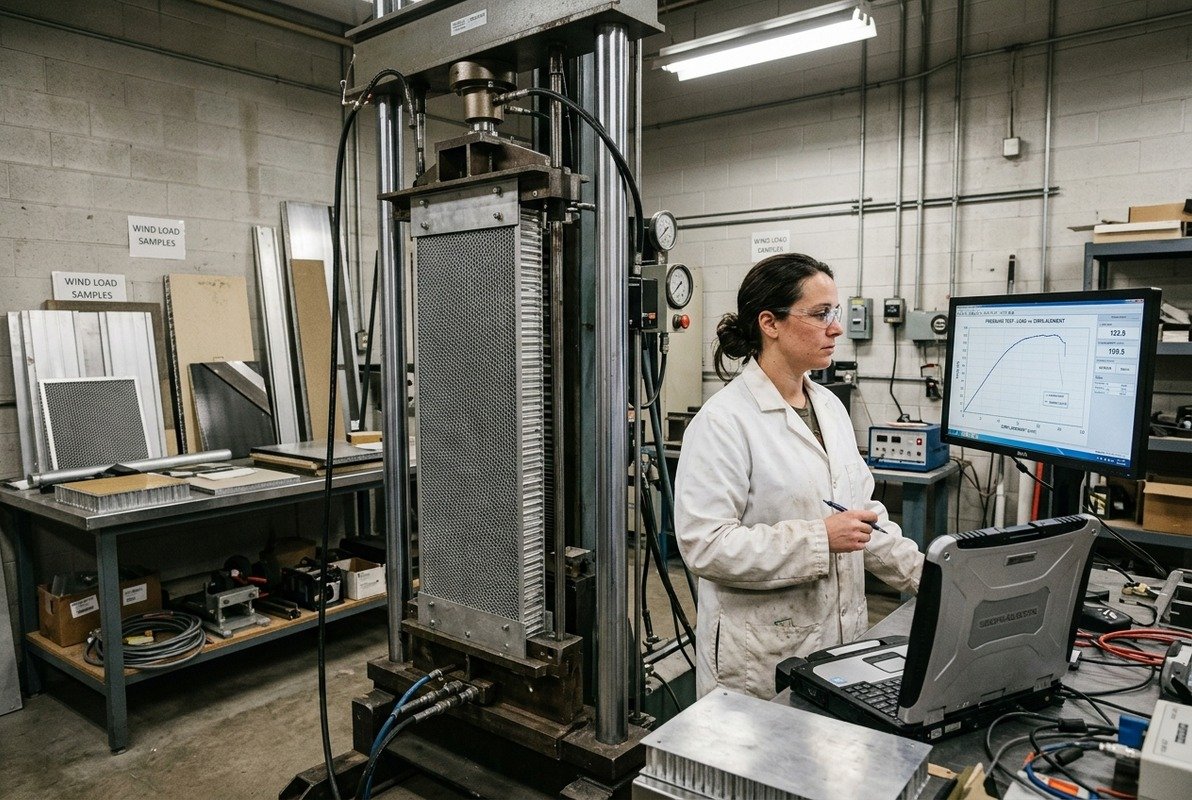
I always recommend three steps. First, ask for the certificate directly and check the expiration date. Second, cross-reference the certificate number on the issuing body's website. Third, request recent third-party test reports — not just the certificate itself. Test reports for wind pressure resistance, salt spray testing (especially for coastal projects), and temperature cycling (-40°C to 80°C) reveal whether the panels will actually hold up in real conditions.
Western manufacturers like Hexcel and Euro-Composites typically have deep certification portfolios and transparent audit trails. Chinese manufacturers have improved dramatically — Foshan Liming and Winsom Xiamen both hold ISO 9001 and provide fire resistance documentation — but the onus remains on the buyer to verify independently. This is not a knock on Chinese suppliers. It is simply good procurement practice anywhere in the world.
The Hidden Risk: Expired or Mismatched Certificates
A common mistake is accepting a certificate that covers one product line but not the specific panel you are ordering. Sandwich panel construction for architectural use may be covered, but a specialty lightweight structure for transportation might not be. Always confirm the certificate scope matches your exact product and application.
Can I request custom dimensions and OEM services from these top-tier companies?
When we develop cable management solutions for EPC projects, every millimeter counts — I have seen the same principle apply when specifying honeycomb panels for a metro station facade where standard sizes simply do not fit.
Yes, nearly all top honeycomb panel manufacturers offer custom dimensions and OEM services. Leading companies like 3A Composites, Foshan Liming, and Plascore operate automated production lines capable of producing panels in non-standard sizes, thicknesses, core densities, and surface finishes tailored to your project's exact specifications.
Customization is no longer a luxury in the honeycomb panel industry. It is a baseline expectation. The global market has shifted from "low-price-wins-all" to a competition based on technology, environmental compliance, and delivery capability. Here is what you need to know about requesting custom work from these manufacturers.
What Can Be Customized?
The short answer: almost everything. Panel dimensions (length, width, thickness), core cell size, core material (aluminum, Nomex honeycomb, paper, thermoplastic PP), skin material (aluminum sheet, stainless steel, fiber-reinforced polymer), surface coatings, and edge treatments are all configurable. For architectural cladding, you can specify curved panels, perforated patterns, or custom RAL colors. For aerospace applications, manufacturers like Hexcel and Morishin Industrial can adjust cell geometry and bond strength for weight-critical or vibration-sensitive environments.
OEM vs. ODM: Know the Difference
OEM means the manufacturer produces panels to your exact design and specification. ODM means the manufacturer contributes their own design or engineering input to develop a product collaboratively. Most top-tier firms offer both. In my experience coordinating collaborative development with overseas partners, the ODM approach works best when the buyer has the performance requirements but lacks the detailed engineering knowledge of honeycomb core materials. The manufacturer fills that gap.
Minimum Order Quantities and Lead Times
Custom orders come with MOQ and lead time considerations. Here is a general guide based on publicly available information and industry norms:
| Manufacturer Type | Typical MOQ (Custom) | Typical Lead Time | Notes |
|---|---|---|---|
| Large Western (Hexcel, Plascore) | Varies by program | 6–12 weeks | Aerospace programs may have longer qualification cycles |
| European Mid-Size (Euro-Composites, 3A) | Project-dependent | 4–8 weeks | Strong in architectural custom work |
| Chinese (Foshan Liming, Winsom, Beessun) | Often lower, 200–500 m² | 2–5 weeks | Faster turnaround, especially for aluminum honeycomb panels |
| Japanese (Morishin) | Program-based | 8–16 weeks | Precision satellite-grade work requires extended timelines |
Real-World Customization Examples
Foshan Liming has delivered custom aluminum honeycomb panels for irregular high-rise facades and metro stations across China and export markets. Winsom Xiamen specializes in architectural metal composites with custom finishes for airport terminals. Suzhou Beessun focuses on furniture and packaging applications where custom dimensions are the norm, not the exception.
The key takeaway: do not assume a manufacturer cannot accommodate your non-standard request. The industry's shift toward automated, flexible production lines means that even complex geometries and lightweight structures are achievable. Just make sure to discuss tolerances, sampling, and quality sign-off procedures before committing to a full production run.
How do these leading manufacturers handle my international shipping and delivery timelines?
A delayed shipment does not just cost money — it stalls an entire project. I have watched contractors in Southeast Asia lose weeks because a container was held up at customs with incomplete documentation. That experience shaped how I evaluate every supplier's logistics capability.
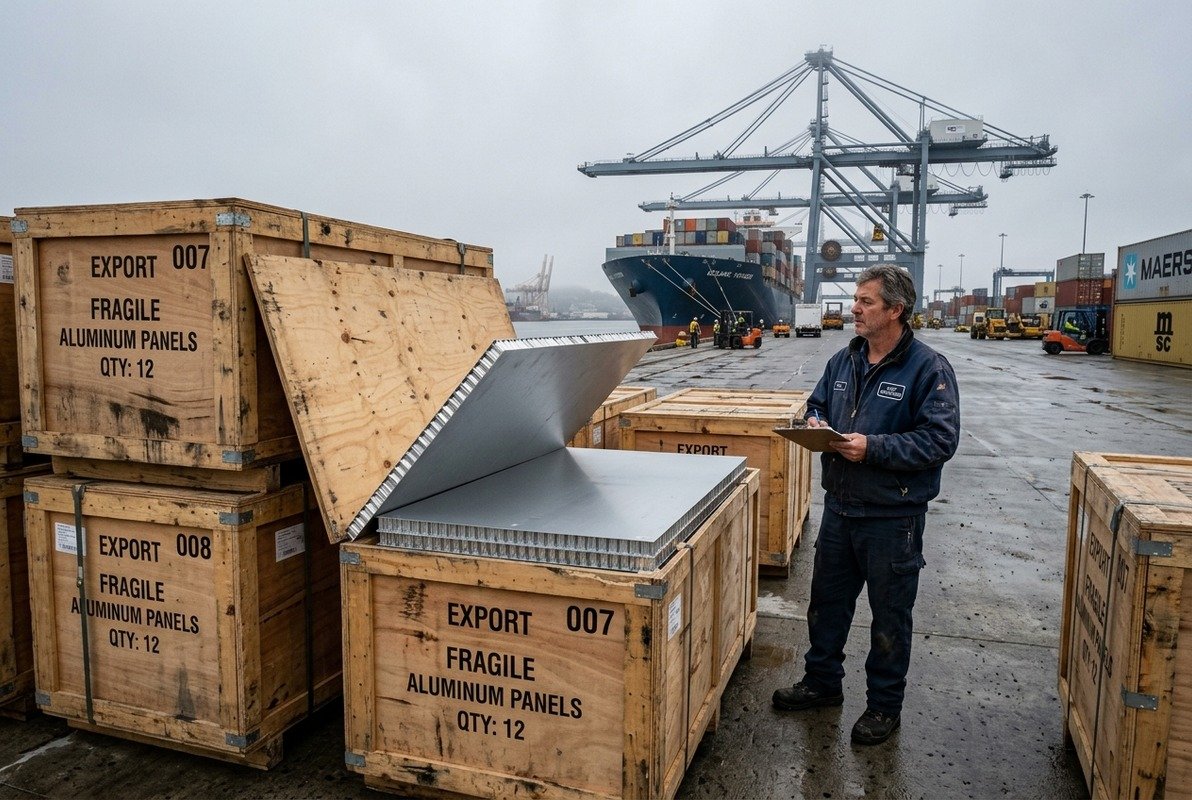
Leading honeycomb panel manufacturers handle international shipping through established freight partnerships, export-grade packaging, and dedicated logistics teams. Most offer FOB, CIF, or DDP terms, with typical sea freight timelines of 2–6 weeks depending on destination, and many Chinese manufacturers maintain faster turnaround due to proximity to major shipping ports.
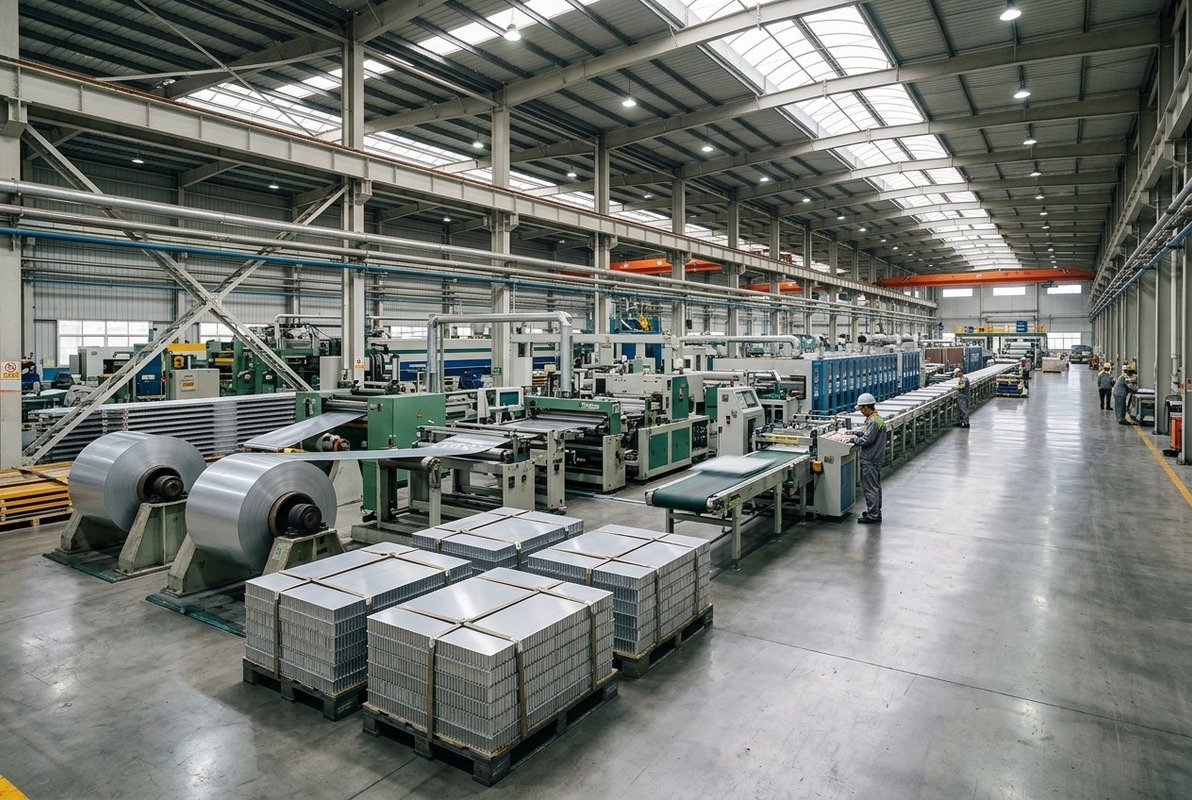
Delivery reliability separates a good manufacturer from a great one. The global honeycomb panel market is projected to grow from roughly RMB 18.83 billion in 2025 to over RMB 22.27 billion by 2032. The North America segment alone is expected to reach USD 3.20 billion by 2033, growing at a CAGR of 7.8%. With demand scaling up, supply chain efficiency becomes a make-or-break factor. Here is how the top manufacturers manage it.
Packaging and Protection
Honeycomb panels — especially those with decorative surface finishes for architectural use — are vulnerable to scratches, dents, and moisture during transit. Leading manufacturers use PE protective film on panel surfaces, corner protectors, moisture barrier wrapping, and custom wooden crates or steel frames for container loading. For composite panels and sandwich panel construction products, some suppliers also use vacuum-sealed packaging for moisture-sensitive core materials.
Shipping Terms and Options
Most top manufacturers are comfortable with standard Incoterms:
- FOB (Free on Board): The manufacturer delivers to the port. You handle ocean freight and insurance. Common for experienced importers.
- CIF (Cost, Insurance, Freight): The manufacturer arranges shipping and insurance to your destination port. You handle customs clearance.
- DDP (Delivered Duty Paid): The manufacturer handles everything to your door. Higher cost but zero hassle for the buyer.
Chinese manufacturers like Foshan Liming and Winsom Xiamen are particularly well-positioned for export. Their proximity to major Chinese ports (Foshan to Nansha/Shenzhen, Xiamen port directly) means shorter inland transit and more frequent container vessel schedules. This is a practical advantage for projects in Southeast Asia, Africa, and South America — regions where I regularly coordinate shipments.
Delivery Timeline Benchmarks
From order confirmation to arrival at destination port, here is what to expect:
| Destination Region | Production Time | Sea Freight | Total Estimated Timeline |
|---|---|---|---|
| Southeast Asia | 2–4 weeks | 1–2 weeks | 3–6 weeks |
| Africa (East/West) | 2–4 weeks | 3–5 weeks | 5–9 weeks |
| South America | 2–4 weeks | 4–6 weeks | 6–10 weeks |
| North America | 3–5 weeks | 2–4 weeks | 5–9 weeks |
| Europe | 3–5 weeks | 3–4 weeks | 6–9 weeks |
These are general estimates. Actual timelines depend on order complexity, customization, port congestion, and customs procedures. Western manufacturers like Hexcel or Euro-Composites may have longer production lead times due to stringent quality protocols, but their logistics networks are mature and predictable.
How to Protect Yourself Against Delays
Three practical steps I always recommend. First, build a buffer into your project timeline — add at least two weeks beyond the quoted delivery date. Second, request production progress updates at defined milestones (material procurement, core bonding, surface finishing, packaging). Third, confirm all export documentation — commercial invoice, packing list, certificate of origin, material test certificates, and any required fumigation certificates for wooden packaging — before the container ships. Incomplete paperwork is the number one cause of customs delays I have encountered across multiple markets.
The global market trends point toward tighter delivery expectations. Manufacturers that invest in automated production lines and integrated logistics are winning more business. Whether you source from a Japanese precision specialist like Morishin Industrial or a Chinese volume leader like Suzhou Beessun, the logistics conversation should happen early — not as an afterthought. If you are also evaluating distributors and trading companies alongside direct manufacturers, our companion guide on top honeycomb panel suppliers in the world covers the broader supply chain landscape.
Conclusion
The top 10 honeycomb panel manufacturers in 2026 span the USA, Europe, China, and Japan — each offering distinct strengths in innovation, scale, and specialization. Choose wisely by matching certifications, customization depth, and logistics reliability to your project's exact needs.
Footnotes
1. Describes aramid fiber honeycomb core material, its properties, and benefits. ↩︎
2. Official source detailing the requirements and purpose of the ISO 9001 quality management system standard. ↩︎
3. Explains the critical role and applications of honeycomb panels in the aerospace industry. ↩︎
4. Explains what Nomex honeycomb is, its properties, and common applications. ↩︎
5. Details the AAMA 2605 standard for high-performance architectural fluorocarbon coatings. ↩︎
6. Official ASTM standard for surface burning characteristics of building materials. ↩︎
7. Provides a comprehensive overview of cladding in construction, its purpose, and materials. ↩︎
8. Explains AS9100 as the quality management system standard for the aerospace industry. ↩︎
9. Explains the European standard for fire classification of construction products and materials. ↩︎
10. Official DNV page explaining their certification services for marine components and systems. ↩︎