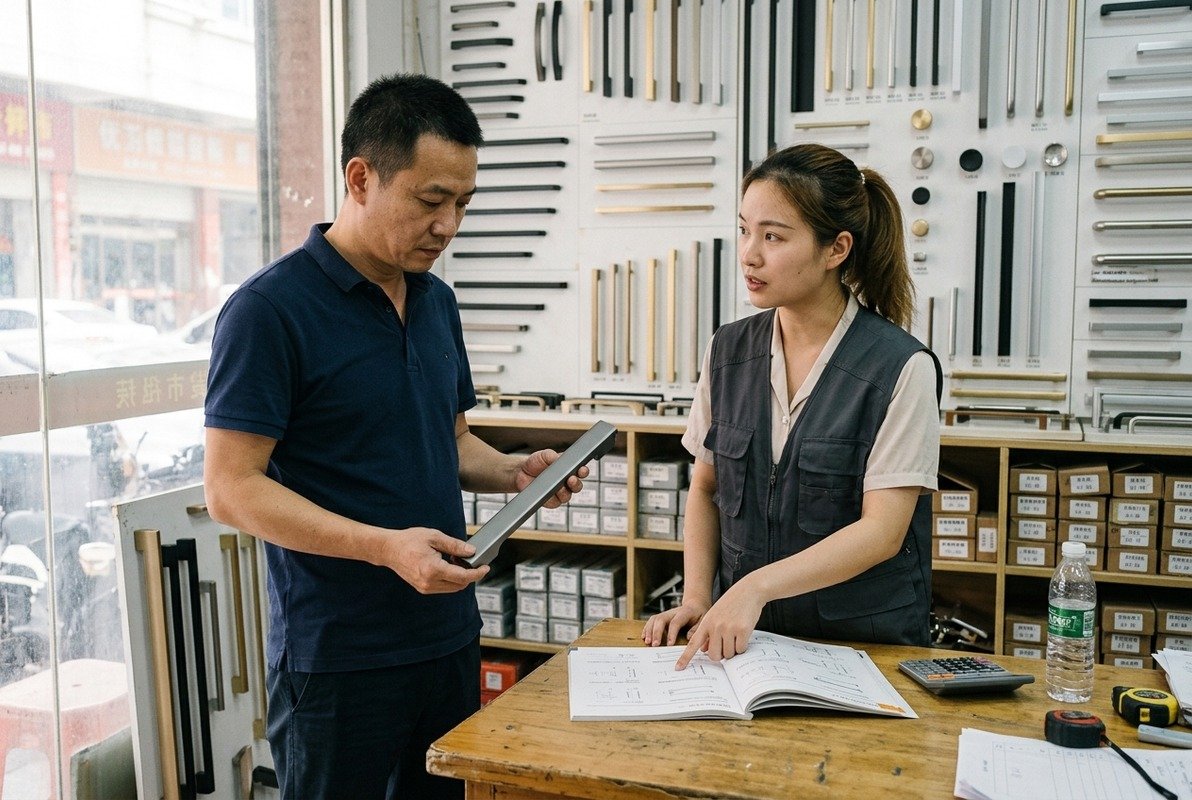
Finding reliable aluminum furniture handle suppliers in China used to keep me up at night—missed deliveries, inconsistent anodized finishes 1, and wasted samples cost real money.
The top 10 aluminum furniture handle suppliers in China for 2026 include Fosun Hardware, Hutlon Tech, Kingslam, JINSHENG, SAB Hardware, FUTONG, KUKA Hardware, YOUCAN, Tianjin Huayu, and Shanghai Huiyu—each selected for certified quality, competitive wholesale pricing, and proven export track records in furniture hardware China markets.
This guide breaks down each supplier with hard data—certifications, pricing benchmarks, and product specialties freight forwarder 2. I also cover market trends, quality verification steps, and logistics strategies so you can place your next bulk order with confidence. Let me walk you through everything I have learned from years of sourcing industrial components and managing cross-border supply chains 3.
Before we dive into the individual supplier profiles, here is a quick-reference ranking table to orient you:
| Rank | Supplier | Location | Key Strength | Certifications |
|---|---|---|---|---|
| 1 | Fosun Hardware | Foshan | Advanced die-casting 4 & CNC, lifetime warranty | ISO 9001 5, CE, SGS, TÜV Rheinland |
| 2 | Hutlon Tech | Foshan | Diverse hardware portfolio, strong brand | ISO 9001, CE |
| 3 | Kingslam | Shenzhen | Direct factory, project/wholesale focus | ISO 9001, SGS |
| 4 | JINSHENG Hardware | Foshan | Durable minimalist aluminum alloy handles | ISO 9001 |
| 5 | SAB Hardware | Suzhou | Stainless steel & aluminum profile handles | ISO 9001, CE |
| 6 | FUTONG Hardware | Foshan | Modern pull handles, rapid prototyping | ISO 9001 |
| 7 | KUKA Hardware | Foshan | Integrated flush handle designs | ISO 9001 |
| 8 | YOUCAN Hardware | Foshan | Custom finishes & modular systems | ISO 9001, SGS |
| 9 | Tianjin Huayu Hardware | Tianjin | Cost-effective bulk supply | ISO 9001 |
| 10 | Shanghai Huiyu Hardware | Shanghai | High-end interior fixtures | ISO 9001, CE |
Several of these manufacturers sit in Foshan and Shenzhen—China's powerhouse regions for die-casting and CNC infrastructure. Pricing for wholesale furniture handles typically lands between US$1.60 and US$1.80 per unit at 5,000+ pieces, with higher per-unit costs around US$1.80 for orders between 2,000 and 4,999 pieces. The best suppliers offer stock availability, stable quality, strong reputations, and fast delivery—qualities I personally prioritize when recommending partners to project contractors.
The 2026 market is shifting fast. Integrated flush horizontal handles are now the default for wardrobes and kitchen cabinets in hotel and commercial fit-outs. Aluminum alloy handles are winning over zinc and brass alternatives because they resist corrosion, weigh less, and accept anodized finishes or powder coatings 6 beautifully. Sustainable manufacturing—recycled aluminum, eco-friendly surface treatments—is no longer optional for suppliers targeting global buyers.
One more thing worth noting: the China Import and Export Fair in Guangzhou (March 28–31, 2026) is a prime opportunity to meet these suppliers face to face. If you can attend, bring your drawings and negotiate MOQs on the spot.
Now, let us tackle the four biggest questions buyers ask me about sourcing aluminum handles from China.
How can I verify the quality control processes of these aluminum handle manufacturers before placing my order?
Last year, a project contractor in Southeast Asia told me he lost three weeks because his drawer pulls arrived with uneven powder coating. That single batch failure nearly derailed an entire hotel fit-out—and it started because nobody verified the supplier's QC line before signing the PO.
You can verify quality control by requesting factory audit reports, asking for ISO 9001 and SGS certifications, ordering pre-production samples, and hiring a third-party inspection agency to check surface finish consistency, dimensional tolerances, and packaging before shipment.
Start with Certifications—But Do Not Stop There
Certifications like ISO 9001:2015, CE, and TÜV Rheinland are your baseline filter. They tell you the factory has documented quality management systems. But a certificate alone does not guarantee your specific order will be flawless. I have seen factories hold valid ISO certificates while still shipping inconsistent batches. The certificate proves the system exists; your job is to verify that the system is actually running.
Request a Virtual or On-Site Factory Tour
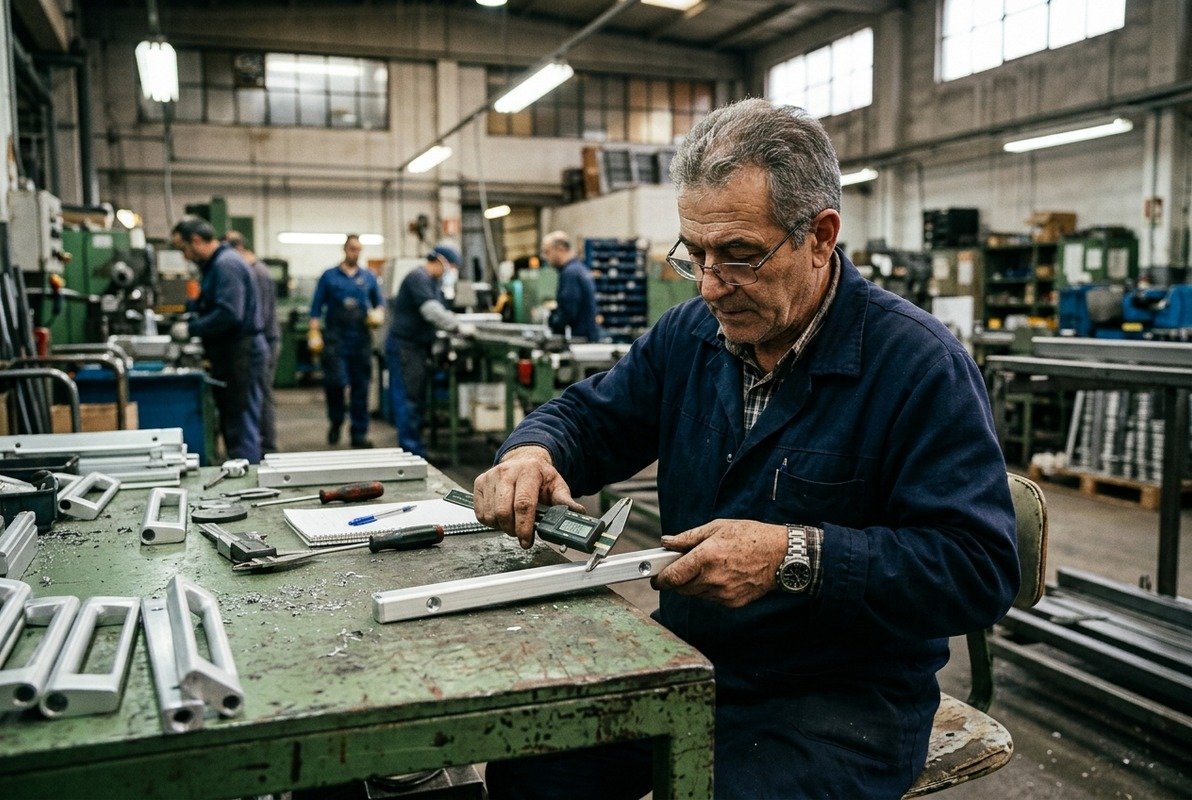
Many top aluminum furniture handle suppliers now offer live video tours of their production floors. Ask to see the raw material warehouse (look for labeled aluminum alloy ingots with grade markings), the die-casting or extrusion line, the CNC machining 7 stations, and the anodizing or powder-coating booths. Pay attention to how they handle work-in-progress parts. Are extruded aluminum handles stored on padded racks, or tossed into bins where edges get scratched?
Use a Pre-Production Sample Protocol
Before committing to bulk, request samples from the actual production tooling—not hand-finished showroom pieces. Check these against your CAD drawings. Measure hole spacing, handle length, and wall thickness with calipers. Test the anodized finishes with a simple adhesion test (cross-hatch tape pull). If the supplier resists sending production-line samples, that is a red flag.
Hire Third-Party Inspection
For orders above 5,000 pieces, a third-party inspection 8 is cheap insurance. Agencies like SGS, Bureau Veritas, or AsiaInspection can visit the factory before shipment. They will pull random samples, check dimensional accuracy, run surface finish tests, and photograph any defects. The cost is typically US$250–$400 per inspection day—a fraction of the loss from a rejected container.
| QC Verification Step | What It Tells You | Estimated Cost |
|---|---|---|
| Certificate review (ISO, CE, SGS) | Factory has a documented QC system | Free |
| Pre-production samples (5–10 pcs) | Tooling accuracy, finish quality | US$50–$150 (plus shipping) |
| Virtual factory tour | Real-time production conditions | Free |
| Third-party pre-shipment inspection | Batch-level conformance | US$250–$400 per day |
| Material test report (aluminum alloy grade 9) | Raw material compliance | Usually provided free by supplier |
My Personal Checklist
When I evaluate any hardware supplier—whether for cable management systems or modern cabinet handles—I look for three green flags: the factory shares test reports without hesitation, they have a dedicated QC team (not just the line supervisor wearing two hats), and they welcome third-party inspectors. If all three check out, you are dealing with a serious operation.
What steps should I take to ensure my custom furniture handle designs are produced accurately by an OEM supplier?
A few months ago, one of our long-term partners sent us a sketch for a custom aluminum profile handle with a hidden mounting system. The tolerances were tight—0.1 mm on the slot width. Getting that right required close collaboration from day one, not just a file upload and a prayer.
To ensure accurate custom handle production, provide detailed 2D/3D CAD files with tolerances, confirm material grade and finish specifications in writing, approve a T1 tooling sample before mass production, and maintain weekly communication with the supplier's engineering team throughout the run.

Define Every Detail in Writing
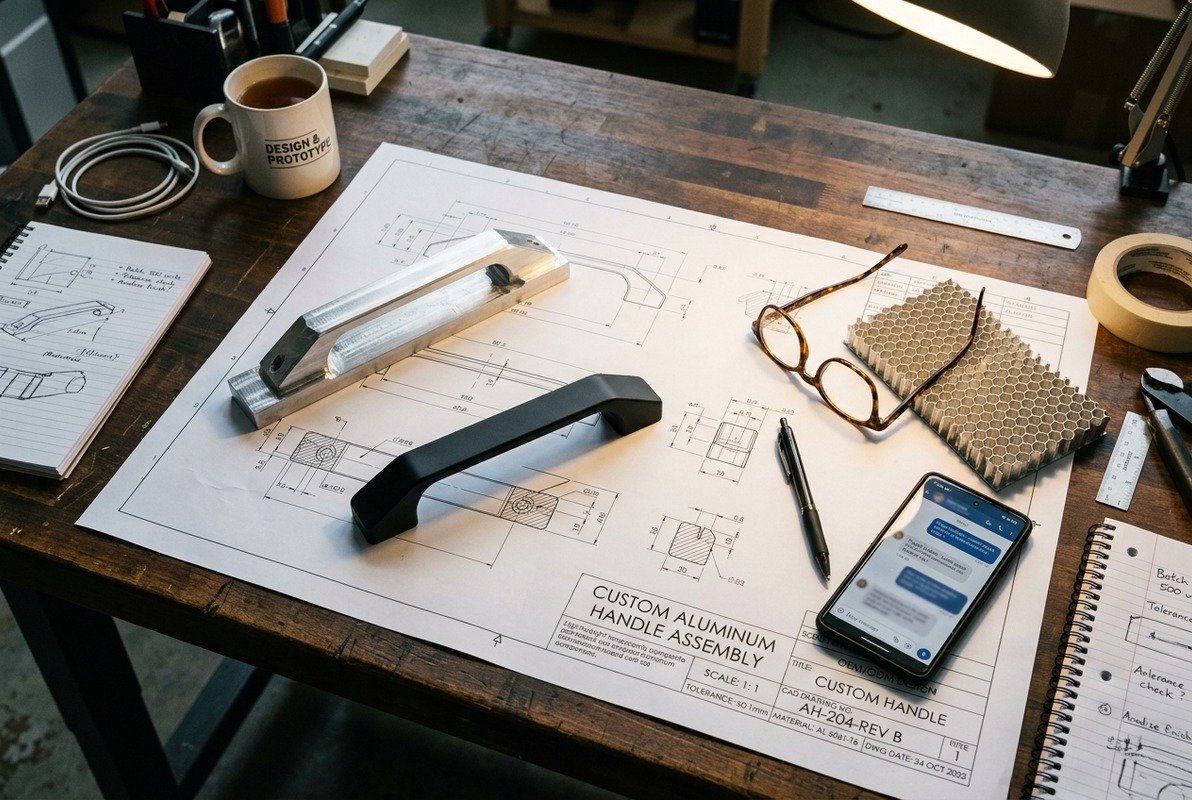
Verbal agreements cause disputes. Put everything in a written specification sheet: aluminum alloy grade (6063-T5 for extruded handles, ADC12 for die-cast), surface treatment (anodized, powder-coated, brushed), color code (RAL or Pantone), hole center distance, screw size, and packaging requirements. The more specific your spec sheet, the fewer surprises at the dock.
The Sample Approval Workflow
Here is the process I recommend based on how we manage custom cable tray orders—it translates directly to custom aluminum handles:
- Design review — Send your CAD files 10. The supplier's engineers check manufacturability and suggest modifications if needed.
- Quotation lock — Agree on unit price, tooling cost, MOQ, and lead time. Get it in a proforma invoice.
- T1 sample — The factory produces the first sample from actual tooling. You measure, test, and provide written feedback.
- T2 sample (if needed) — Corrections are made. A second sample is sent for approval.
- Golden sample sealed — Both parties sign off on a reference sample. The factory keeps one; you keep one.
- Mass production — The golden sample is the benchmark for the entire run.
Communication Rhythm
Set a weekly check-in—WhatsApp works well for China-based suppliers. Ask for photos at key stages: raw material receipt, after extrusion or casting, after CNC machining, after surface finishing, and after packing. This is not micromanagement; it is proactive risk control. I have found that suppliers who share production photos willingly tend to deliver on spec.
Protecting Your IP
If your custom design is proprietary, sign a mutual NDA before sharing files. Some buyers also register their designs in China through the local patent office. This adds a layer of legal protection, especially for unique wardrobe handles or integrated flush pull designs headed for commercial projects.
| Step | Your Action | Supplier's Action | Timeline |
|---|---|---|---|
| Design submission | Send CAD + spec sheet | Review & DFM feedback | Day 1–3 |
| Quotation | Review & negotiate | Issue proforma invoice | Day 4–7 |
| T1 sample | Inspect & provide feedback | Produce from tooling | Day 14–21 |
| Golden sample approval | Sign off in writing | Seal reference sample | Day 25–30 |
| Mass production | Monitor weekly updates | Produce & inspect | Day 30–55 |
| Pre-shipment inspection | Arrange 3rd party or self-inspect | Prepare goods for QC | Day 55–58 |
How do I manage logistics to avoid delivery delays for my bulk aluminum handle imports from China?
The single most common complaint I hear from project directors—especially those managing hotel or commercial fit-outs—is late delivery. One delayed container of kitchen cabinet handles can cascade into weeks of idle carpenters on site. I know this pain firsthand; in our cable tray export business, we have refined a logistics playbook that prevents most of these headaches.
To avoid delivery delays, book freight early during peak seasons, confirm production and packing timelines in the purchase contract, use a reliable freight forwarder experienced in Chinese exports, and build a 10–15 day buffer into your project schedule for customs clearance and last-mile delivery.
Understand the Timeline Components
A typical bulk order of aluminum alloy handles from China involves several time blocks. Each one can slip if you do not manage it.
- Production lead time: 25–40 days depending on volume and customization complexity.
- Inland transport to port: 1–3 days (Foshan/Shenzhen factories are close to Nansha or Yantian ports).
- Port handling and customs export clearance: 2–5 days.
- Ocean freight: 7–35 days depending on destination (Southeast Asia is fast; South America takes longer).
- Destination customs clearance: 3–10 days depending on the country.
- Last-mile delivery: 1–5 days.
Peak Season Awareness
Chinese factories slow down or shut down during Chinese New Year (late January to mid-February) and Golden Week (early October). If your project deadline falls within six weeks of these holidays, place your order at least 60 days in advance. Freight rates also spike from August through October due to pre-holiday restocking worldwide.
Freight Mode Comparison
| Freight Mode | Transit Time (to SE Asia) | Cost per CBM (approx.) | Best For |
|---|---|---|---|
| Full Container Load (FCL) | 7–12 days | US$80–$150 | Orders filling 15+ CBM |
| Less than Container Load (LCL) | 12–20 days | US$150–$250 | Smaller orders under 10 CBM |
| Air freight | 3–5 days | US$4–$8 per kg | Urgent samples or small batches |
| Rail (to Central Asia/Europe) | 15–20 days | US$100–$180 per CBM | Mid-weight, mid-urgency |
Build Buffer Into Your Schedule
I always advise our buyers to add a 10–15 day buffer between the expected arrival date and the date handles are actually needed on site. This accounts for port congestion, customs inspections, and trucking delays. It sounds conservative, but it has saved multiple projects from costly standstills.
Choose the Right Freight Forwarder
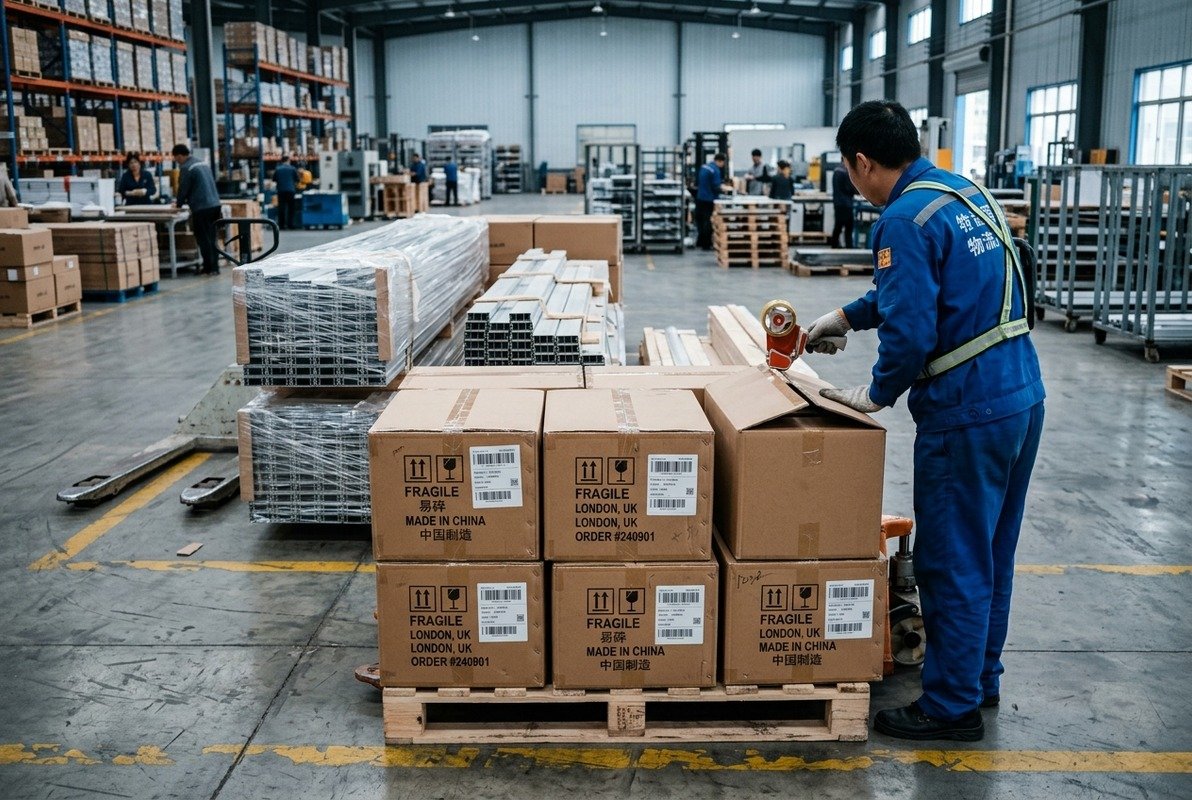
Work with a forwarder who has experience in Chinese hardware exports. They should handle export documentation (commercial invoice, packing list, bill of lading, certificate of origin) and coordinate with the supplier's shipping department. A good forwarder will also alert you to any regulatory changes at your destination port—tariff adjustments, new labeling rules, or restricted import windows.
Can I find a supplier that balances mid-range pricing with the high durability I need for my large-scale projects?
This is the question I get most often from EPC contractors and procurement managers. They are fitting out hundreds of rooms or thousands of cabinet units. They need drawer pulls and wardrobe handles that will not corrode, loosen, or fade—but they cannot pay premium European brand prices across the entire project.
Yes—several Chinese aluminum handle suppliers offer mid-range pricing (US$1.60–$1.80 per piece at 5,000+ units) with high durability, backed by ISO 9001 certification, lifetime or five-year warranties, and advanced surface treatments like anodizing and powder coating that resist corrosion and wear.
The China vs. Global Brand Debate
Global brands like Blum and Hettich have earned their reputation for precision and after-sales support. But their pricing reflects European labor costs, brand marketing budgets, and multi-tier distribution markups. For a 500-room hotel project, the cost difference between a European-branded handle and a certified Chinese-made equivalent can reach tens of thousands of dollars—without a proportional difference in functional performance.
That said, Chinese suppliers vary enormously. The top-tier factories in Foshan and Shenzhen invest in the same CNC machines, the same anodizing lines, and the same aluminum alloy grades (6063-T5, 6061-T6) used by global brands. The gap is narrowing every year, especially for extruded aluminum handles and modern cabinet handles in the minimalist flush style.
What Drives Durability in Aluminum Handles
Durability comes down to three factors:
- Alloy grade — 6063-T5 is standard for extruded profiles; ADC12 is common for die-cast handles. Both are corrosion-resistant.
- Surface treatment — Anodized finishes (15–25 microns) outperform paint. Powder coating (60–80 microns) adds impact resistance.
- Structural design — Handles with sufficient wall thickness and properly engineered mounting points withstand years of daily use.
Price vs. Quality Matrix
| Price Tier | Typical Per-Unit Cost (5,000+ pcs) | Surface Treatment | Warranty | Best Suited For |
|---|---|---|---|---|
| Budget | US$0.80–$1.20 | Basic paint or thin anodize | 1 year | Low-traffic residential |
| Mid-range | US$1.60–$1.80 | Anodized (20μm) or powder-coated | 5 years to lifetime | Hotels, offices, commercial projects |
| Premium (global brands) | US$3.00–$6.00+ | Multi-layer anodize or PVD | Lifetime | Luxury residential, flagship showrooms |
For most large-scale projects, the mid-range tier delivers the best return. Suppliers like Fosun Hardware and Kingslam operate in this sweet spot. They maintain TÜV Rheinland and SGS certifications, offer custom aluminum handles with rapid prototyping, and provide lifetime warranties on select product lines.
Sustainability and Smart Features
The 2026 market is also pushing suppliers toward sustainable manufacturing. Leading factories now use recycled aluminum and water-based surface treatment chemicals. A few are even integrating subtle smart features—touch-sensitive activation or antimicrobial coatings—into their premium handle lines. These innovations add a small cost premium but can differentiate your project in competitive commercial bids.
How I Evaluate Mid-Range Suppliers
From our own experience managing supply chains for infrastructure projects, I look at five signals: consistent lead times (under 35 days for standard items), transparent pricing with volume breaks, willingness to share material test reports, a real QC team (not outsourced), and references from completed projects of similar scale. When a supplier checks all five boxes, you have found your partner. If you are also evaluating manufacturers beyond China, our guide to the top 10 aluminum furniture handle suppliers in the world provides a broader comparison. For a deeper look at which Chinese factories lead in production capability rather than just supply, see our ranking of the top 10 aluminum furniture handle manufacturers in China.
Conclusion
Choosing the right aluminum furniture handle suppliers in China comes down to verified certifications, clear custom design workflows, disciplined logistics planning, and finding that mid-range pricing sweet spot that does not sacrifice durability.
Footnotes
1. Explains the electrochemical process that enhances aluminum’s durability and appearance. ↩︎
2. Defines a freight forwarder’s role in coordinating international shipping and logistics. ↩︎
3. Provides a comprehensive definition and explanation of supply chain management. ↩︎
4. Comprehensive overview of the die-casting manufacturing process and its applications. ↩︎
5. Official information on ISO 9001 certification and its role in quality management systems. ↩︎
6. Explains the process, benefits, and application of powder coating on aluminum. ↩︎
7. Replaced with an authoritative Wikipedia article providing a comprehensive overview of CNC machining. ↩︎
8. Describes the role of independent organizations in evaluating product quality and compliance. ↩︎
9. Replaced with an authoritative Wikipedia article detailing aluminum alloys, their classifications, and uses. ↩︎
10. Explains the importance of CAD files as digital blueprints in engineering design. ↩︎