
Finding reliable aluminum furniture handle manufacturers is a problem I know too well — our supply chain team has spent years vetting hardware partners for cable management projects that also require matching cabinet pulls and decorative hardware across entire facility buildouts.
The top aluminum furniture handle manufacturers in 2026 include Richelieu Hardware, Top Knobs, Atlas Homeware, KRC Aluminum Profiles, Mebel-alu, Hafele, Hettich, Emtek, Berenson Hardware, and Liberty Hardware — each offering premium extruded aluminum profiles, OEM customization, and modern anodized finishes for global wholesale and project buyers.
This guide breaks down each manufacturer’s strengths, the 2026 design trends driving the market, and practical steps you can take to choose the right supplier ISO 9001 1. Whether you need drawer handles for a single project or bulk cabinet hardware for distribution, the insights below will help you make a confident decision.
How do I choose the best aluminum furniture handle manufacturer for my specific project requirements?
A lesson I learned early in our export business — choosing a hardware partner based on price alone almost always leads to regret, especially when you need custom handle solutions for large-scale infrastructure projects across Southeast Asia and Africa OEM development 2.
Choose the best aluminum furniture handle manufacturer by evaluating five factors: product range, customization depth, quality certifications, export experience, and delivery track record. Prioritize suppliers who offer OEM development, provide physical samples, and demonstrate consistent communication throughout the order cycle.

Start With Your Project Scope
Before you contact any manufacturer, define what you actually need salt spray and abrasion resistance tests 3. Are you sourcing kitchen cabinet hardware for a residential renovation? Or do you need thousands of modern cabinet pulls for a commercial fitout Third-party inspection services 4? The answer changes everything.
A manufacturer like Richelieu Hardware, for example, holds the largest functional and specialty hardware catalog in the woodworking industry. They serve both small cabinet makers and large furniture factories. But if you need a very specific extruded aluminum profile — say, an integrated flush horizontal handle for a wardrobe line — a specialist like KRC Aluminum Profiles may be a better fit. They focus deeply on precision aluminum handles and modern pull handle designs.
Match the Manufacturer to Your Market
Your target market matters. If you sell into Europe, you need a supplier familiar with EU finish standards and packaging requirements. If your projects are in South America or Africa, as many of ours are, you want a partner who understands freight logistics and can handle variable port conditions.
Here is a comparison table to help you evaluate manufacturers based on common project requirements:
| Evaluation Criteria | What to Look For | Why It Matters |
|---|---|---|
| Product Range | Handles, pulls, knobs, profile handles | Reduces need for multiple suppliers |
| Customization | Custom lengths, finishes, packaging | Matches your project specs exactly |
| MOQ Flexibility | Low MOQ for samples, scalable for bulk | Supports both trial and production runs |
| Export Experience | Familiarity with your destination country | Fewer customs and logistics issues |
| Quality Certifications 5 | ISO 9001, SGS, or equivalent | Proves repeatable quality standards |
| Communication Speed | Replies within 24 hours | Prevents costly project delays |
Narrow Down With Samples
Never commit to a bulk order without samples. When we source any component for our cable tray systems, we always request physical samples first. I recommend you do the same for aluminum handles. Check the weight, the finish quality, the mounting hole alignment, and how the handle feels in your hand.
A good manufacturer will send samples within 7–10 days. If they take longer or resist the request, that is a warning sign.
Consider the 2026 Trend Alignment
The 2026 furniture hardware trends favor minimalism, integrated flush designs, and premium aluminum alloy finishes. Manufacturers who already produce these styles — like Atlas Homeware with their Essence G handle — are ahead of the curve. Their brushed aluminum finish embodies the clean lines and subtle curves that modern furniture design demands.
If a manufacturer's catalog looks outdated or heavy on stainless steel handles with no aluminum options, they may not be investing in the direction the market is heading.
Why should I prioritize OEM and customization capabilities when selecting my global handle supplier?
One of the most common requests we receive at our Tai'an facility is for fully customized cable tray dimensions — and I see the exact same need in the furniture hardware world, where every cabinet maker and project contractor has unique specs for their drawer handles and cabinet pulls.
Prioritize OEM and customization capabilities because standard catalog handles rarely fit every project. Custom handle solutions — including unique lengths, finishes, profiles, and branding — allow you to differentiate your product, meet exact architectural specifications, and reduce on-site modification costs.

Why Off-the-Shelf Handles Fall Short
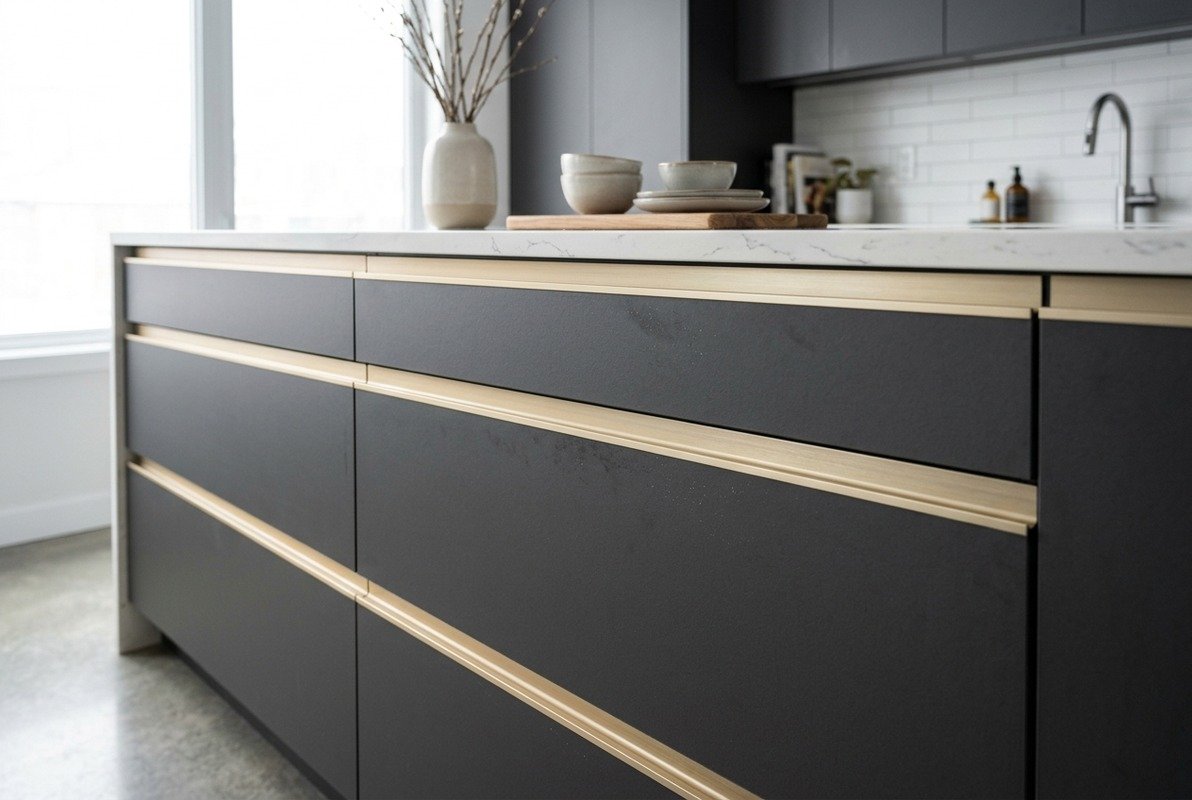
Standard handles work for basic applications. But real-world projects are messy. A wardrobe manufacturer in Singapore might need a 450mm flush horizontal handle in brushed champagne gold. A cabinet maker in Brazil might require an anodized matte black pull at 280mm with a specific hole spacing. These are not catalog items.
Without OEM capability, you are stuck modifying standard parts — or worse, compromising your design. That adds labor cost and delays.
What True OEM Capability Looks Like
Not every manufacturer who claims "OEM" actually delivers it. True OEM capability means:
- Custom extrusion dies: The manufacturer can create new aluminum extrusion profiles from your drawings.
- Finish flexibility: They offer anodized finishes 6, powder coating, brushed treatments, and electrophoresis — not just one or two options.
- Packaging customization: Your brand, your box, your barcode.
- Engineering support: They can suggest improvements to your design based on production feasibility.
KRC Aluminum Profiles, for instance, positions itself as a precision-focused partner. They emphasize collaborative development — working with buyers to refine handle designs before tooling begins. This kind of partnership reduces errors and speeds up the process.
OEM vs. ODM: Know the Difference
Many buyers confuse these terms. Here is a quick breakdown:
| Model | Who Designs | Who Manufactures | Best For |
|---|---|---|---|
| OEM | You (the buyer) | The manufacturer | Buyers with their own handle designs |
| ODM | The manufacturer | The manufacturer | Buyers who want to select from existing designs and add branding |
| Custom Modification | Both collaborate | The manufacturer | Buyers who need changes to existing catalog items |
For the 2026 market, the integrated flush horizontal style is a strong ODM opportunity. Many aluminum handle manufacturers already produce these profiles. You can select a base design, customize the length and finish, and add your own branding.
Customization Drives Competitive Advantage
If you are a wholesale hardware supplier, custom handle solutions set you apart from competitors who simply resell catalog items. When you offer a unique brushed aluminum pull that no one else carries, you own that market segment. This is especially true for decorative hardware in the premium residential segment, where architects and designers demand exclusivity.
The 2026 "Modern Heritage" trend — blending traditional shapes with updated finishes — also creates demand for custom work. A cup pull in deep bronze aluminum, for example, requires specific anodizing parameters that only a capable OEM facility can deliver.
How can I verify the quality and durability of aluminum handles before I commit to a bulk order?
A buyer from a water treatment project once told me that a batch of fittings he sourced looked perfect in photos but failed within three months of installation — and that conversation changed how we approach quality verification for every component we supply, including hardware.
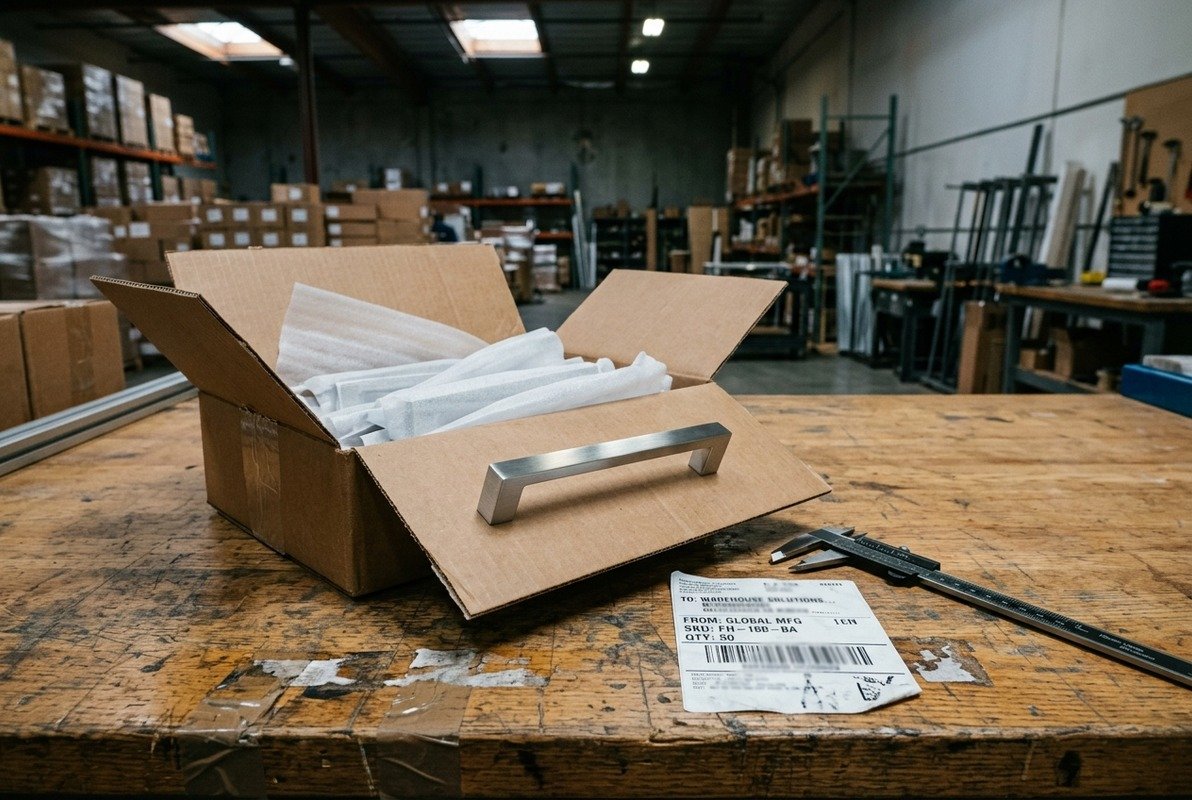
Verify aluminum handle quality before bulk orders by requesting certified material test reports, conducting salt spray and abrasion resistance tests on samples, checking dimensional tolerances with calipers, and inspecting surface finish consistency under direct light. Third-party inspection services add an additional layer of assurance.
The Hidden Risk of Skipping Quality Checks
Aluminum handles look simple. But the difference between a handle that lasts ten years and one that corrodes in six months comes down to alloy grade, surface treatment depth, and manufacturing precision. You cannot see these differences with your eyes alone.
When we inspect cable tray materials at our facility, we use specific instruments and protocols. The same approach applies to aluminum furniture handles. Here is what to check:
Material Verification
Ask your manufacturer for the aluminum alloy grade. For furniture handles, 6063-T5 is the most common alloy for extruded aluminum profiles 8. It offers a good balance of strength, corrosion resistance, and surface finish quality. Some manufacturers use lower-grade alloys to cut costs. A material test certificate from a third-party lab confirms what you are actually getting.
Surface Treatment Testing
The finish is where most quality problems appear. Anodized finishes should meet a minimum thickness standard — typically 10–15 microns for interior furniture applications. Powder-coated handles need proper adhesion testing.
Here are the key tests and what they reveal:
| Test | What It Measures | Acceptable Standard | How to Perform |
|---|---|---|---|
| Salt Spray Test | Corrosion resistance | 200+ hours for interior use | Expose sample to salt fog chamber |
| Cross-Cut Adhesion | Finish adhesion to aluminum | Grade 0–1 (ISO 2409) | Score a grid pattern, apply tape, pull |
| Abrasion Resistance | Surface wear durability | No visible wear after 500 cycles | Taber abrasion tester |
| Thickness Measurement | Anodize or coating depth | 10–15 microns minimum | Eddy current gauge |
| Dimensional Tolerance | Accuracy of handle dimensions | ±0.2mm for hole spacing | Digital calipers |
Visual and Tactile Inspection
Hold the handle under strong, direct light. Look for pitting, streaks, color inconsistency, or rough spots. Run your finger along the edges. A quality extruded aluminum handle should feel smooth with no burrs. The mounting holes should be clean and centered.
Third-Party Inspection
For bulk orders — especially those shipping internationally — I strongly recommend hiring a third-party inspection company. Services like SGS, Bureau Veritas, or TÜV can inspect at the factory before shipment. They check a random sample from your production batch and issue a detailed report. This costs a few hundred dollars but can save you thousands in returns and rework.
Sustainability and Material Traceability
The 2026 market increasingly values eco-friendliness. Aluminum handles are inherently recyclable, which is a selling point. But verify that your manufacturer uses traceable, recycled aluminum where possible. Some buyers now require environmental compliance documentation as part of their procurement standards.
What steps should I take to ensure my furniture hardware delivery arrives on time and without defects?
Delivery delays are the single biggest pain point I hear from project contractors — in fact, our typical customer profile includes a project director in Singapore whose top concern is exactly this: on-time delivery with zero quality issues on arrival.
Ensure on-time, defect-free furniture hardware delivery by establishing clear production milestones, requiring in-process inspection photos, scheduling pre-shipment third-party inspection, confirming packaging standards for export, and using reliable freight forwarders with tracking capabilities for your specific destination.
Why Delivery Problems Happen
Most delivery failures trace back to one of three causes: unclear production timelines, poor packaging, or logistics mismanagement. When I coordinate shipments of cable management systems to Africa and South America, I have learned that proactive communication eliminates most problems before they start.
The same principles apply to aluminum furniture handle shipments. Here is a step-by-step process.
Step 1: Lock Down the Production Schedule
Before your order begins, agree on a detailed production timeline with your manufacturer. This should include:
- Order confirmation date
- Raw material procurement period
- Extrusion and machining start and end dates
- Surface treatment completion date
- Packaging and labeling completion date
- Factory inspection date
- Shipment date
Get this in writing. A professional manufacturer will provide a Gantt chart or at least a written schedule with milestones.
Step 2: Request In-Process Updates
Do not wait until the end of production to check on your order. Ask for photos or short videos at key stages: after extrusion, after anodizing or powder coating, during packaging. This is standard practice for reputable wholesale hardware suppliers.
Step 3: Pre-Shipment Inspection
This is your last chance to catch problems before the container is sealed. A pre-shipment inspection covers:
- Quantity verification
- Random sample quality checks (dimensions, finish, weight)
- Packaging integrity (carton strength, inner protection, labeling accuracy)
- Pallet configuration for container loading
Step 4: Packaging for Export
Aluminum handles are relatively durable, but anodized finishes scratch easily during transit. Proper export packaging 9 includes:
- Individual polybag wrapping for each handle
- Foam or cardboard dividers inside cartons
- Carton edge protectors
- Shrink-wrapped pallets with corner boards
If your handles are headed to a humid destination, silica gel packets inside cartons prevent moisture damage during ocean freight.
Step 5: Choose the Right Freight Method
| Freight Method | Best For | Transit Time | Cost Level |
|---|---|---|---|
| Sea Freight (FCL) | Large bulk orders (5+ CBM) | 20–45 days | Low |
| Sea Freight (LCL) | Smaller orders (1–5 CBM) | 25–50 days | Medium |
| Air Freight | Urgent or sample shipments | 3–7 days | High |
| Rail Freight | Central Asia, Europe | 15–25 days | Medium |
For most aluminum handle orders going to Southeast Asia, sea freight FCL offers the best balance of cost and speed. For urgent sample runs to project sites, air freight is worth the premium.
Step 6: Track and Communicate
Once the shipment is on the water, track it. Share the tracking information with your end customer. If there are port delays or schedule changes, communicate immediately. In our experience shipping to multiple continents, the buyers who stay informed are the ones who avoid project disruptions.
The 2026 market expects faster turnaround. Manufacturers like Hafele and Hettich have invested heavily in regional warehousing to shorten lead times. If delivery speed is your top priority, ask whether your manufacturer has regional stock or distribution centers near your market.
Conclusion
Choosing among the top aluminum furniture handle manufacturers in 2026 requires clear evaluation of customization, quality testing, and delivery reliability — the three pillars that separate dependable partners from risky suppliers. For a complementary perspective focused on sourcing rather than manufacturing, you can also explore our guide to the leading aluminum furniture handle suppliers worldwide.
Footnotes
1. Official source for information on the ISO 9001 quality management system standard. ↩︎
2. Defines Original Equipment Manufacturer (OEM) and its role in manufacturing. ↩︎
3. Describes the purpose and methodology of salt spray testing for material corrosion resistance. ↩︎
4. Provides a comprehensive definition, process, and benefits of third-party inspection. ↩︎
5. Highlights the importance and benefits of quality certifications in manufacturing. ↩︎
6. Authoritative source (Aluminum Anodizers Council) explaining the anodizing process and its benefits as a finish. ↩︎
7. Explains the creation and function of custom dies in aluminum extrusion. ↩︎
8. Explains the fundamental process of manufacturing aluminum extrusion profiles. ↩︎
9. Provides essential guidelines and considerations for packaging goods for international export. ↩︎