
Every week, our sales team in Foshan fields calls from first-time buyers who feel overwhelmed by handle catalogs full of unfamiliar terms, cryptic spec codes, and dozens of finish options alloys like 6063 and 6061 1. The confusion is real — and the cost of ordering the wrong handle type, the wrong hole spacing, or the wrong surface treatment can mean delayed projects, wasted inventory, and frustrated end customers. After 18 years of producing aluminum profiles 2 and furniture handles on our own production lines, we have seen these mistakes repeat themselves often enough to know exactly where new buyers get stuck.
To source aluminum furniture handles effectively, a novice should focus on four areas: handle type classification (pull, profile, knob, hidden, arc), key dimensional specifications (length, hole center-to-center distance, projection), surface finish options (anodized, powder-coated, brushed), and the supplier’s ability to balance ready stock with custom OEM production.
This guide walks you through each of those four areas in plain language. By the end, you will know how to read a supplier spec sheet, pick the right handle for your project, and ask the questions that separate a confident buyer from a confused one. Let us start with the basics.
How Do I Distinguish Between the Different Types and Material Grades of Aluminum Handles for My Furniture Projects?
When we first started exporting handles to Vietnam and the Middle East, many of our buyers told us they had no idea there were so many handle categories. They just wanted "a handle." But the type you choose affects installation, aesthetics, cost, and even the furniture panel design.
Aluminum furniture handles are classified by form factor — pull/bar handles, profile handles, knobs, arc pulls, and hidden/recessed handles — and by material grade, with alloys like 6063 and 6061 being the most common for extruded furniture hardware due to their excellent finish quality and corrosion resistance.
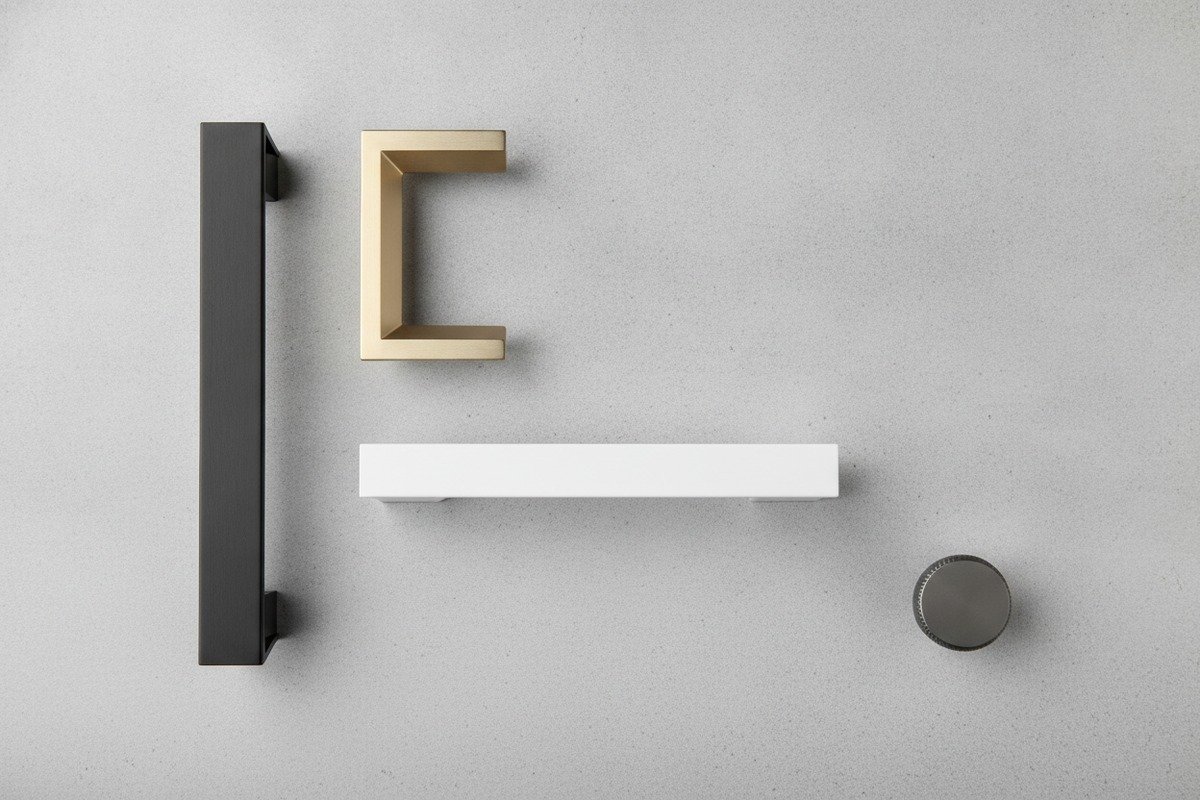
The Five Main Handle Form Factors
Understanding form factor is the fastest way to narrow your search. Each type serves a different design intent and installation method.
Pull / Bar Handles are the most popular. They are straight or slightly curved bars fixed at two points with screws. You see them on kitchen drawers, wardrobe doors, and bathroom vanities. They are easy to install and easy to grip.
Profile Handles are long aluminum extrusions that mount along the top or bottom edge of a cabinet door. They create a seamless, integrated look. In modern kitchens and wardrobes, profile handles — sometimes called Gola profiles — are replacing traditional pulls because they hide the grip line and give a clean, minimal façade.
Knob-Style Handles use a single mounting point. They are compact and often chosen for small doors or decorative accent pieces. They work well on nightstands and side cabinets.
Arc / Curved Pulls have a gentle bow shape. They feel softer in the hand and suit transitional or contemporary furniture that wants warmth without ornamentation.
Hidden / Recessed Handles sit flush with or behind the furniture surface. On our production line, we extrude these with a deep geometric channel so the user's fingers slide in from underneath. They are ideal for high-end contemporary interiors where visual clutter must be minimized. The product images you may have seen — slim rectangular forms in matte white, charcoal grey, black, champagne gold, and light beige — are examples of this category.
How Material Grade Affects Your Choice
Not all aluminum is the same. The alloy and temper determine strength, corrosion resistance, and how well the handle accepts surface finishing.
| Alloy | Common Temper | Key Traits | Typical Use |
|---|---|---|---|
| 6063 | T5 / T6 | Excellent extrudability, smooth surface, good anodizing 3 response | Profile handles, recessed pulls, decorative trims |
| 6061 | T6 | Higher strength, good corrosion resistance | Heavy-duty bar handles, industrial furniture |
| 7075 | T6 | Very high strength, harder to finish | Rarely used for furniture; more common in aerospace |
| ADC12 (die-cast) | — | Complex shapes possible, moderate surface quality | Knobs, decorative handles with intricate geometry |
For most furniture handle applications, 6063-T5 is the go-to alloy. It extrudes cleanly, accepts anodizing beautifully, and provides more than enough strength for daily cabinet use. When buyers ask our engineering team for a recommendation, 6063 is almost always the answer unless the project demands something unusual.
Extrusion vs. Die-Casting
The manufacturing method also matters. Extruded handles 4 are made by pushing heated aluminum through a die to create a continuous profile, which is then cut to length. This method is ideal for linear designs — bar pulls, profile handles, and recessed pulls. Die-casting 5, on the other hand, forces molten aluminum into a mold. It suits complex, three-dimensional shapes like ornate knobs or handles with curves in multiple planes.
Extruded handles generally cost less per unit at volume because the tooling is simpler. Die-cast handles require expensive molds but allow more creative shapes. As a novice buyer, knowing this distinction helps you understand why a supplier quotes differently for a simple bar pull versus an intricate knob.
What Are the Essential Measurements and Specifications I Need to Understand Before Placing My First Order?
Our export team processes hundreds of purchase orders each month, and the number-one cause of returns or disputes is a mismatch in dimensions — specifically, the hole center-to-center distance. Getting the specs right before you order is not optional. It is the foundation of a successful purchase.
The essential specifications for aluminum furniture handles are overall length, hole center-to-center (CTC) distance, projection (how far the handle sticks out), cross-section height, wall thickness, and mounting screw size. Of these, CTC distance and overall length are the two most critical numbers to verify first.
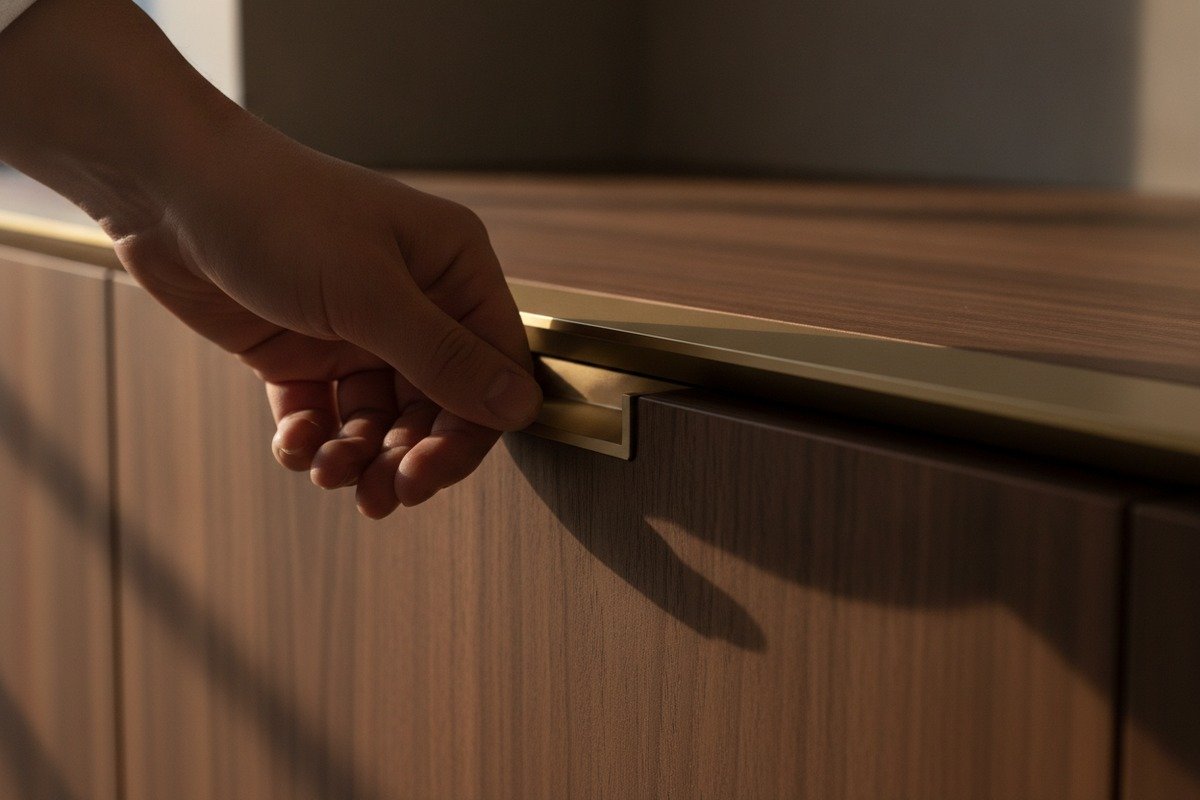
Breaking Down the Key Dimensions
Let us define each measurement so you can read any supplier spec sheet with confidence.
Overall Length is the total end-to-end measurement of the handle. It determines the visual proportion on the furniture front. A 128 mm handle looks right on a small drawer. A 600 mm or 1200 mm profile handle suits a tall wardrobe door.
Hole Center-to-Center (CTC) Distance is the spacing between the centers of the two mounting screw holes. This is the single most important number for replacement and compatibility. Common CTC values include 64 mm, 96 mm, 128 mm, 160 mm, 192 mm, 256 mm, and 320 mm. If you are replacing existing handles, measure the old CTC first.
Projection is how far the handle extends from the cabinet surface. A low-projection recessed handle might be only 15–20 mm. A standard bar pull could project 30–40 mm. Higher projection generally means easier gripping but more visual bulk.
Cross-Section Height describes the handle's vertical dimension as viewed from the side. For profile handles, this affects how much of the cabinet edge is covered.
Wall Thickness is the thickness of the aluminum material in the handle's cross-section. On our production line, we typically produce handles with a 2.5–3.0 mm wall thickness for a solid feel. Thinner walls reduce material cost but can feel flimsy. One useful comparison: a 3 mm aluminum wall provides a robust feel similar to a 1.2 mm stainless steel handle, but at lower weight.
Tolerance: Why ±0.1 mm Matters
In industrial sourcing, tolerance 8 refers to the acceptable deviation from the stated dimension. For aluminum handle profiles, a typical tolerance range is ±0.1 mm to ±0.3 mm. This might sound tiny, but when you are installing 50 handles across a kitchen project and every hole must align perfectly, even 0.5 mm of inconsistency can cause visible misalignment.
When you request samples, check them with a caliper. If the supplier's tolerance is loose, your installation team will struggle.
A Quick Reference Spec Table
| Specification | What It Means | Why It Matters | Typical Range |
|---|---|---|---|
| Overall Length | End-to-end handle length | Visual proportion, design fit | 64 mm – 1200 mm+ |
| CTC Distance | Hole center spacing | Must match existing holes or planned drilling | 64 mm – 320 mm (standard) |
| Projection | Distance from surface | Grip comfort, visual profile | 15 mm – 45 mm |
| Wall Thickness | Aluminum material thickness | Durability, tactile weight | 1.5 mm – 3.0 mm |
| Tolerance | Dimensional accuracy | Alignment across multiple units | ±0.1 mm to ±0.3 mm |
| Screw Size | Mounting screw diameter and length | Compatibility with furniture panels | M4 × 20–30 mm (common) |
Common Mistakes New Buyers Make
First, they focus on appearance and forget to check the CTC. A beautiful handle is useless if it does not fit the holes already drilled in the cabinet door.
Second, they overlook screw length. The mounting screw must pass through the door panel and thread securely into the handle. If your panel is 18 mm thick, you need a screw that accounts for that plus the handle's threaded depth. Too short, and the handle wobbles. Too long, and the screw tip pokes through the handle.
Third, they assume all handles of the same "style" share the same dimensions. They do not. Always confirm exact numbers, not just visual similarity.
Which Surface Treatment Options Should I Choose to Ensure the Quality and Durability of My Aluminum Profiles?
On our finishing lines in Foshan, we process thousands of handles per day through anodizing baths, powder coating booths, and brushing 9 stations. The finish is where a raw aluminum extrusion becomes a finished product — and it is where quality differences become most visible to the end customer. Choosing the wrong finish for the wrong environment is one of the most expensive mistakes a new buyer can make.
The main surface treatment options for aluminum handles are anodizing (for a thin, hard, corrosion-resistant oxide layer), powder coating (for a thicker, color-flexible protective layer), and mechanical finishes like brushing or polishing. Anodizing suits modern metallic looks; powder coating offers the widest color range; brushing hides fingerprints best.

Anodizing: The Industry Standard for Aluminum Handles
Anodizing is an electrochemical process that converts the aluminum surface into a hard aluminum oxide layer. This layer is part of the metal itself — it does not peel or flake like paint. Anodized finishes are scratch-resistant, corrosion-resistant, and excellent at maintaining color consistency across large batches.
Common anodized colors for furniture handles include natural silver, champagne gold, light bronze, and black. The champagne gold finish you may have seen on precision-engineered extruded profiles — with a smooth, matte texture — is a classic example of anodizing done well. The finish feels premium, resists wear, and does not chip.
Anodizing thickness typically ranges from 10 to 25 microns for furniture hardware. Thicker coatings offer better durability but can slightly alter dimensions, which matters for tight-tolerance profile handles.
Powder Coating: Maximum Color Freedom
Powder coating sprays dry powder onto the aluminum surface and then cures it in an oven. The result is a thick, uniform, and highly durable coating. It resists chipping, scratching, and fading better than liquid paint.
The biggest advantage of powder coating is color range. You can match almost any RAL color or custom tone. Matte white, matte black, charcoal grey, and soft beige — all of these can be achieved with powder coating. For buyers who need handles that match a specific kitchen or wardrobe color scheme, powder coating is often the best route.
However, powder coating adds a thicker layer (typically 60–120 microns) than anodizing. For recessed or profile handles where fit tolerance is tight, this thickness must be accounted for in the base extrusion dimensions.
Brushing and Polishing: Mechanical Finishes
Brushing creates fine, parallel lines on the aluminum surface. It gives the handle a tactile, satin-like texture that hides fingerprints and minor scratches. For handles used in kitchens, where greasy fingers are common, a brushed finish is far more practical than a mirror polish.
Polishing produces a high-gloss, reflective surface. It looks striking but shows every fingerprint, water spot, and smudge. Polished handles demand more maintenance and are better suited for low-touch decorative applications.
Finish Comparison at a Glance
| Finish Type | Thickness | Fingerprint Resistance | Color Range | Durability | Best For |
|---|---|---|---|---|---|
| Anodizing | 10–25 µm | Good (especially matte) | Limited (metallic tones) | Excellent | Modern metallic looks, humid environments |
| Powder Coating | 60–120 µm | Good (matte versions) | Very wide (any RAL color) | Excellent | Color-matched projects, custom schemes |
| Brushing | N/A (surface texture) | Very good | N/A (applied before anodizing or clear coat) | Good | Kitchens, high-touch areas |
| Polishing | N/A (surface texture) | Poor | N/A | Moderate | Decorative, low-touch accents |
| Electrophoresis (E-coating) | 15–25 µm | Good | Limited | Very good | Bathroom and high-humidity areas |
Matching Finish to Environment
For kitchens, we recommend brushed anodized or matte powder-coated handles. They resist moisture, hide fingerprints, and clean easily with a damp cloth.
For bathrooms, anodized finishes perform well because the oxide layer resists humidity and water exposure. Powder coating also works, but the coating edges must be sealed properly to prevent moisture ingress.
For wardrobes and bedrooms, the choice is more aesthetic than functional. Glossy, matte, metallic, or colored finishes all work because humidity and grease exposure are low.
For high-traffic commercial furniture, thicker anodized coatings or industrial-grade powder coatings provide the best long-term performance.
One more thing worth noting: haptic feedback matters. The way a handle feels in the hand — smooth, textured, warm, cool — is influenced heavily by the finish. Brushed aluminum feels warmer and more tactile than polished aluminum. Powder-coated surfaces feel slightly softer than bare metal. These sensory details influence end-user satisfaction more than most buyers realize.
How Can I Find a Supplier That Offers the Right Balance of Ready-to-Ship Stock and Custom OEM Capabilities for My Business?
When we built our warehouse and stocking strategy in Foshan, it was specifically to solve a problem our buyers kept describing: they needed fast delivery for popular items but also wanted the flexibility to order custom designs for special projects. Finding a supplier that can do both is not easy, and many new buyers do not know what questions to ask.
The right supplier balances ready-to-ship stock for fast fulfillment of standard items with proven OEM/ODM capabilities for custom designs. Key evaluation criteria include in-stock inventory volume, sample turnaround time, minimum order quantities, customization range (finish, length, alloy), quality consistency, and clear communication throughout the process.
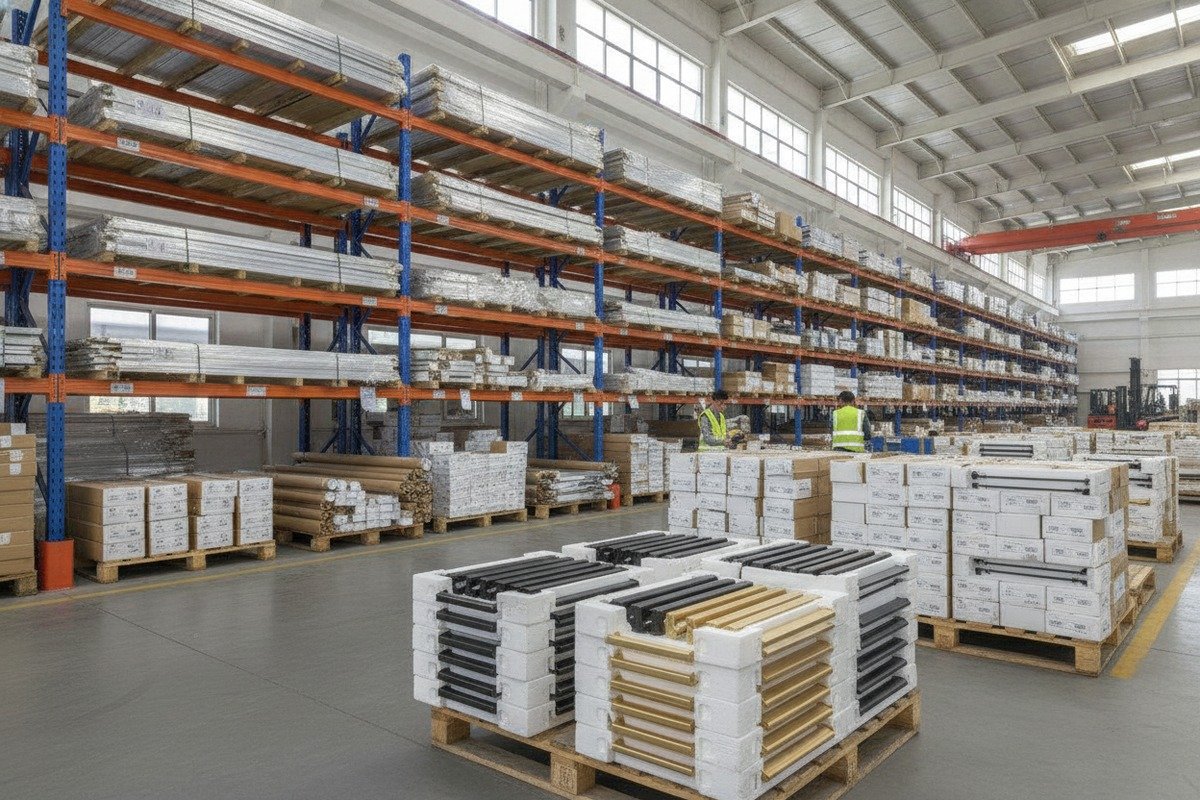
Why Stock Availability Matters More Than You Think
If you are a wholesaler, your customers expect fast delivery. They do not want to hear that a standard matte black bar pull takes 30 days because it has to be produced from scratch. A supplier with deep ready-to-ship inventory — in our case, we maintain roughly 300 tons of stock — can ship popular handle styles within 48 hours. That speed becomes your competitive advantage downstream.
But stock alone is not enough. Furniture trends change. Your clients will eventually ask for a handle that is 50 mm longer, in a special bronze tone, or with a custom cross-section. If your supplier can only ship what they already have, you are stuck.
What to Look for in OEM/ODM Capability
OEM means the supplier manufactures handles to your specification using your brand. ODM means the supplier also helps design the product. For a new buyer, ODM support can be extremely valuable because you gain access to engineering knowledge without hiring your own design team.
Here is what to evaluate:
Tooling and extrusion capability. Can the supplier create new extrusion dies for custom profiles? What is the die cost and lead time? In our facility, new die development typically takes 3–7 days, which keeps custom projects moving fast.
Finishing flexibility. Can they anodize, powder coat, brush, and polish in-house? A supplier that outsources finishing loses control over quality and timeline.
Sample process. How quickly can you get a physical sample? Fast sample turnaround — ideally within a week — lets you validate fit, finish, and feel before committing to a production run.
MOQ flexibility. Some factories require 5,000 pieces minimum. Others will produce 200 pieces for a first order. For a new buyer testing a market, lower MOQs reduce risk.
Supplier Evaluation Checklist
Ask these questions before placing your first order:
- What standard handle models do you have in stock right now?
- What is your typical lead time for stock items versus custom orders?
- Can you provide the exact alloy and temper of the aluminum used?
- What surface finishes can you do in-house?
- What is your MOQ for standard items? For custom items?
- Can I get a sample within one week?
- How do you package handles to prevent scratches during shipping?
- Do you provide technical drawings with full dimensional specs?
- What is your tolerance standard?
- Can you support my branding requirements on packaging or product?
Red Flags to Watch For
A supplier who cannot name the alloy they use is a concern. A supplier who quotes a lead time without asking about your finish or quantity is guessing. A supplier who refuses to send samples — or charges an unreasonable fee — may not be confident in their own product quality.
Also watch for inconsistency between samples and production runs. This is one of the biggest pain points we hear about from buyers who switched to us from other suppliers. The sample looks perfect, but the bulk order arrives with color variation, rough edges, or loose tolerances. A reliable supplier has quality control systems 10 that ensure batch-to-batch consistency.
Balancing Cost and Value
Mid-to-high-end pricing does not mean overpaying. It means you are paying for consistent alloy quality, precise tolerances, durable finishes, protective packaging, and responsive communication. The cheapest handle on the market often costs more in the long run when you factor in returns, re-orders, and lost customer trust.
Think of your handle supplier as a long-term partner, not a one-time vendor. The best sourcing relationships are built on mutual understanding of specs, quality standards, and delivery commitments.
Conclusion
Sourcing aluminum furniture handles starts with understanding classifications, mastering key specifications, choosing the right finish, and partnering with a capable supplier. Focus on these fundamentals, and your first order will be a confident one.
Footnotes
1. Details the properties and common uses of aluminum alloys 6063 and 6061. ↩︎
2. Provides a general overview of aluminum profiles and their applications. ↩︎
3. Explains the electrochemical process of anodizing aluminum and its benefits. ↩︎
4. Describes the characteristics and applications of 6063 aluminum extrusions. ↩︎
5. Provides a comprehensive overview of the die-casting manufacturing process. ↩︎
6. Explains the specific properties, advantages, and applications of 6063-T5 aluminum. ↩︎
7. Describes the powder coating process and its advantages as a surface finish. ↩︎
8. Defines engineering tolerance and its significance in manufacturing. ↩︎
9. The Aluminum Association provides information on various aluminum finishes, including mechanical finishes like brushing. ↩︎
10. ISO 9001 is a globally recognized standard for quality management systems in manufacturing. ↩︎