
Running multiple development projects in Vietnam at the same time, our production team sees the same chaos repeat itself Salt spray resistance 1. Different architects pick different handle specs. Timelines clash. Finishes don’t match. Small hardware items like aluminum pulls become surprisingly big headaches when nobody coordinates them from the start.
To coordinate centralized aluminum handle procurement across multiple Vietnam projects, developers should build a master specification framework, consolidate demand into a single supplier agreement, phase production to match each site’s schedule, and enforce strict quality gates — preserving project-level flexibility without losing volume leverage or finish consistency.
This guide walks through the exact steps we recommend to our project developer clients in Vietnam. Each section tackles a real coordination challenge and gives you a practical system to solve it. Let’s start with the foundation: how to turn scattered specs into one clean order.
How can I consolidate different handle specifications from multiple projects into a single bulk order for my Vietnam developments?
Every week at our Foshan factory, we receive inquiries from Vietnam developers who manage three, five, even eight projects at once. The specs arrive in different formats. Some are PDFs, some are photos, some are just verbal descriptions. The result is confusion and wasted time.
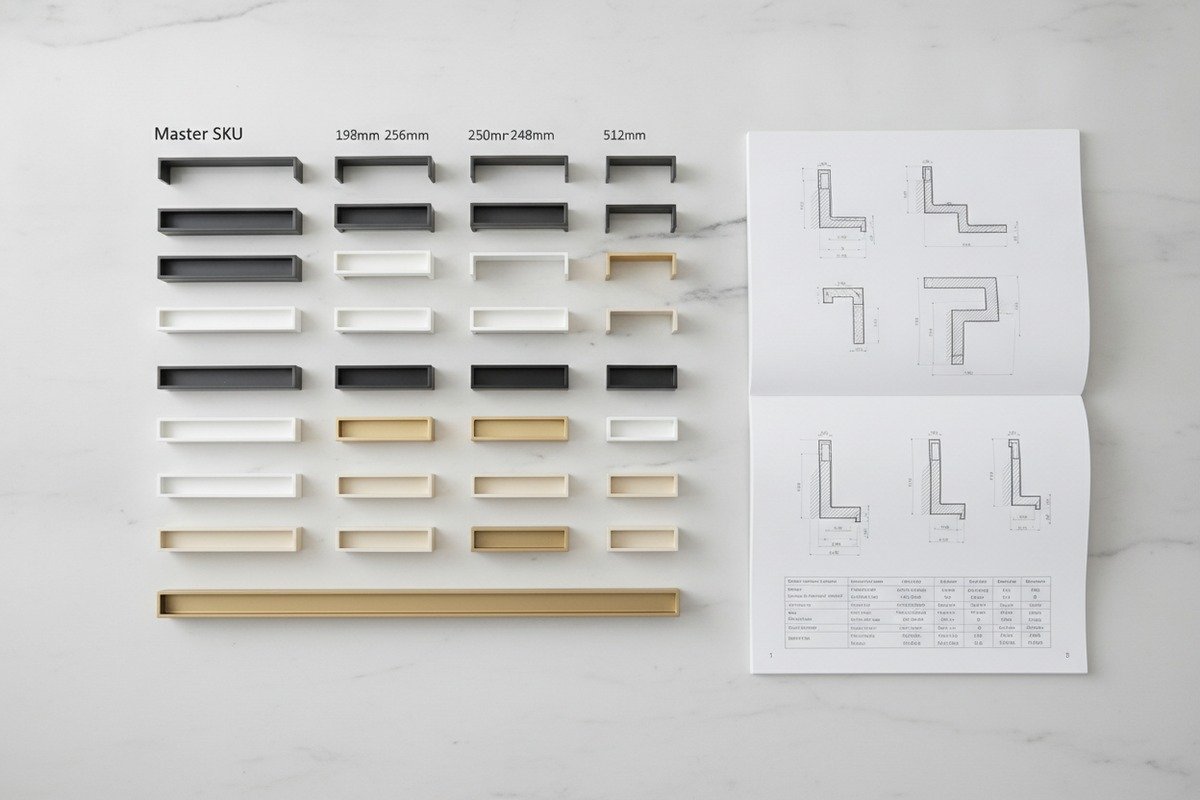
You consolidate by creating a master SKU library — a single approved list of handle families, dimensions, finishes, and tolerances that all projects must choose from. Each project then selects its handles from this pre-vetted catalog and issues purchase orders under one framework agreement.
Start With a Demand Audit
Before you place any order, gather the handle requirements from every active and upcoming project. List the handle type, quantity, finish, dimensions, and installation deadline. This raw data becomes your demand map.
Most developers skip this step. They let each project manager buy independently. That kills your volume leverage and opens the door to mismatched finishes across buildings that share the same brand identity.
Build Your Master SKU Library
Once you have the demand map, group similar handles together. You will usually find that 70–80% of your projects need handles from the same three or four families. The differences are mostly finish color or length. The core profile, alloy grade, and mounting method are identical.
Lock down a master technical sheet for each handle family. Include the alloy grade (typically 6063-T5 2 for furniture handles), cross-section drawing, surface treatment process, acceptable dimensional tolerance, and packaging standard.
| Specification Element | What to Standardize | What to Allow Per Project |
|---|---|---|
| Alloy grade | 6063-T5 across all projects | None — keep uniform |
| Profile cross-section | One approved drawing per handle family | None |
| Length | 2–3 approved lengths (e.g., 128mm, 256mm, 512mm) | Project selects from approved list |
| Surface finish | Anodizing or electrophoresis process | Project selects color from approved palette |
| Finish color | Approved palette (black, champagne gold, charcoal grey, white, light beige) | Project picks from palette only |
| Mounting hole spacing | Standardized per length | None |
| Packaging | Standard carton with foam dividers | Custom project labels allowed |
Issue One Framework Agreement, Multiple POs
Sign a framework agreement 3 with your supplier that covers pricing tiers, quality standards, lead-time commitments, and dispute resolution. Then each project issues its own purchase order under that umbrella. This way, your total volume counts toward better pricing, but each project controls its own delivery date and finish selection.
From our side, we find this approach cuts lead times significantly. When we already have the die, the alloy spec, and the process locked in, producing a new batch in a different color from the same family takes days instead of weeks.
Freeze Designs Early
The biggest enemy of consolidation is late design changes. Set a hard cut-off date for handle specification changes — typically 4–6 weeks before production. After that date, any change triggers a formal review with cost and schedule impact analysis. This single rule prevents more procurement failures than any other.
What is the best way to manage custom OEM designs alongside standard stock items when sourcing from a Foshan manufacturer?
When we ship handles to Vietnam, roughly 60% of orders are standard stock items and 40% involve some level of OEM customization 4. The challenge for developers is keeping these two streams organized so one does not delay the other.
The best way is to separate your order into two production tracks — a fast-ship stock track for standard items and a custom OEM track with its own timeline, sample approval gate, and tooling budget. Both tracks run under the same framework agreement but follow different production and QC schedules.

Understand the Two Tracks
Standard stock items are handles we already produce in volume. They sit in our 300-ton ready inventory. We can ship these within 48 hours. No new tooling, no sample rounds, no surprises.
OEM custom designs are different. They require new die development 5 or modification, surface treatment trials, sample approval, and a dedicated production run. Typical turnaround is 3–7 days for simple modifications, longer for entirely new profiles.
Mixing these two tracks into one order without clear separation is where projects get stuck. The custom item holds up the entire shipment, and the standard items that could have arrived weeks earlier sit in the warehouse waiting.
Set Up a Dual-Track Order System
| Order Track | Items Included | Lead Time | Sample Required? | Tooling Cost? |
|---|---|---|---|---|
| Stock Track | Standard catalog handles in approved finishes | 48 hours to ship | No — pre-approved | None |
| OEM Track | Custom profiles, unique finishes, new lengths | 3–7 days (simple) / 15–25 days (new die) | Yes — mandatory approval | Yes — amortized over order volume |
Lock the OEM Process Early
For OEM items, the sample approval step is non-negotiable. Here is the process we follow:
- Developer sends drawing or reference sample.
- Our engineering team reviews feasibility and confirms alloy, tolerance, and finish options.
- We produce 2–3 samples and ship them for approval.
- Developer signs off on the approved sample. This becomes the production reference.
- Mass production begins only after sign-off.
Never skip step 4. We have seen developers rush to production without formal sample approval, and the result is always a dispute about finish tone or dimensional fit.
Protect the Stock Track From OEM Delays
Ship standard items as soon as they are ready. Do not hold them for the custom batch. This means your urgent project sites get handles on time while the OEM items go through their proper development cycle. Tag every shipment with the project name and site code so nothing gets mixed up at the receiving end.
If a custom handle is critical for an early project phase, start the OEM process 8–12 weeks before the site needs it. Treat OEM lead time as a hard constraint in your construction schedule, not an afterthought.
How do I ensure my aluminum handle supplier can meet the staggered delivery schedules of my various construction sites?
Our Vietnam clients rarely need everything at once. One project is at the cabinet installation phase in March. Another won't reach that stage until July. A third is still in design. Shipping all handles in one batch creates storage problems and cash flow pressure.
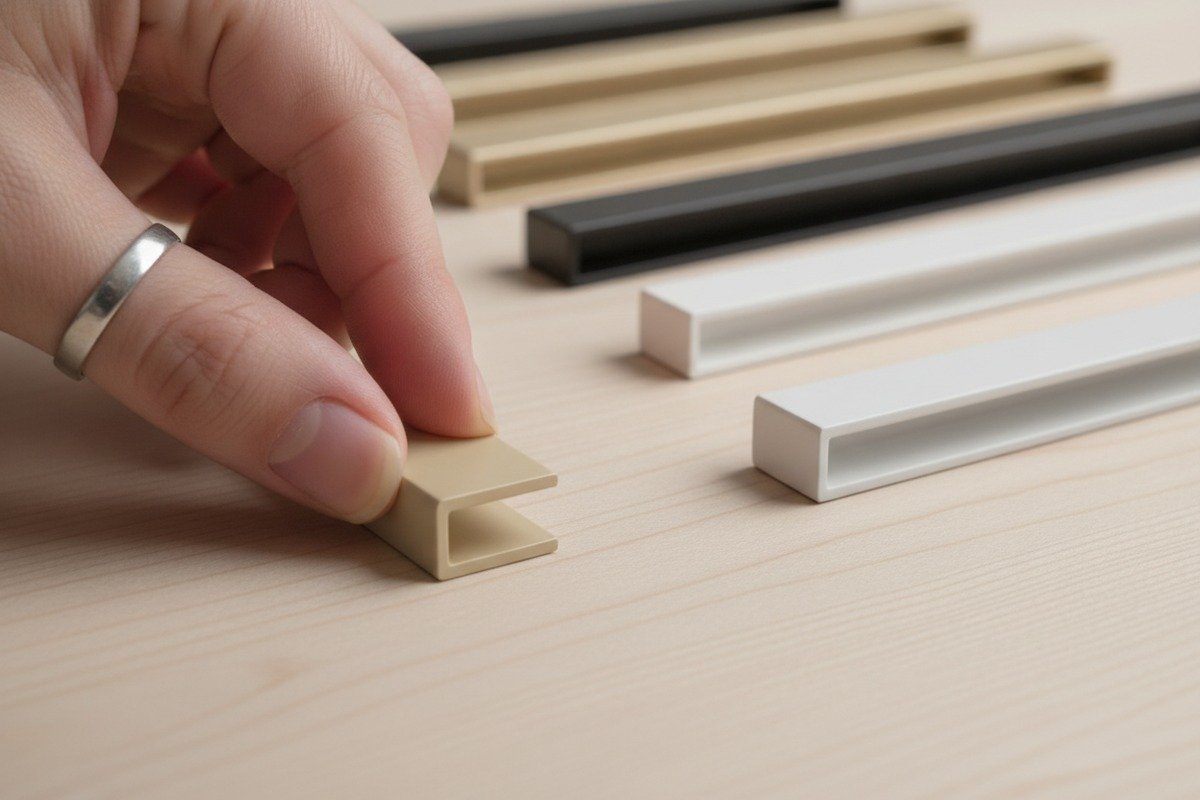
Ensure staggered delivery by building a consolidated rollout calendar that maps each project's installation date, then work backward to set production start dates and shipping windows. Share this calendar with your supplier so they can plan capacity, reserve materials, and phase production without bottlenecks.
Build the Rollout Calendar
Sit down with every project manager and confirm the date when handles must arrive on site — not when construction starts, but when cabinet or furniture installation actually begins. Add a 2-week buffer for customs clearance, inland transport, and site receiving.
Work backward from that date:
- Shipping and customs: 7–14 days (Foshan to Vietnam by sea) or 3–5 days by land transport.
- Pre-shipment inspection: 1–2 days.
- Production: 3–7 days for stock or simple custom; 15–25 days for new OEM.
- Sample approval (if needed): 7–14 days including shipping samples.
Use Milestone-Based Production Tracking
Once production starts, do not wait for the final shipment to check on progress. Set milestones:
| Milestone | When | What to Verify |
|---|---|---|
| Material confirmation | Day 1 of production | Alloy grade, billet quality |
| Extrusion complete | Day 2–3 | Profile dimensions, straightness |
| Surface treatment complete | Day 4–5 | Finish color, coating thickness, adhesion |
| Assembly and packaging | Day 5–6 | Mounting hardware, carton labeling, project codes |
| Pre-shipment QC | Day 6–7 | AQL sampling, visual inspection, fit test |
| Shipping | Scheduled date | Bill of lading 6, container loading photos |
Our team sends progress updates at each milestone. For time-sensitive projects, we provide daily photo and measurement reports. This level of transparency is what prevents delivery surprises.
Stagger Without Losing Volume Leverage
Some developers worry that splitting one large order into smaller, phased shipments will lose them volume pricing. The solution is simple: commit the total annual volume in the framework agreement. Then release individual POs as each project approaches its installation window. The supplier sees the full volume commitment and prices accordingly. You get phased delivery without paying small-order premiums.
Plan for the Unexpected
Construction schedules shift. A project might accelerate by a month or delay by three. Build flexibility into your supplier relationship:
- Keep a buffer stock of your highest-volume standard handles at the factory or at a Vietnam-side warehouse.
- Negotiate priority production slots for urgent top-ups.
- Establish a fast-track shipping option (air freight or express land transport) for emergencies, with pre-agreed cost sharing.
We maintain 300 tons of ready inventory partly for this reason. When a client's schedule suddenly moves up, we can ship standard items within 48 hours instead of restarting a production cycle.
How can I maintain consistent quality and finish across all my projects when ordering different handle styles from one supplier?
Finish consistency is the issue that keeps our quality team up at night — and it should concern developers too. When a homeowner walks through two different buildings by the same developer and sees handles that are supposed to be the same champagne gold but look slightly different, it damages the brand. Our anodizing and electrophoresis 7 lines are calibrated to prevent this, but it requires discipline on both sides.
Maintain consistency by locking a master color reference sample for each finish, requiring AQL-based inspection at every production batch, specifying coating thickness and adhesion standards in the PO, and using the same supplier and surface treatment process across all projects to eliminate process variation.

Why Finish Variation Happens
Aluminum handle finishes vary for three main reasons:
- Process differences. Anodizing and electrophoresis produce different results even on the same alloy. If one project's handles are anodized and another's are electrophoresis-coated, the tones will differ.
- Batch variation. Even within the same process, slight differences in bath chemistry, temperature, or timing can shift the color. This is normal in manufacturing. The question is whether the variation stays within tolerance.
- Alloy inconsistency. Different batches of 6063 aluminum can have trace element variations that affect how the surface accepts color. Using a single verified billet source reduces this risk.
Set the Standard Before Production
Before any mass production run, approve a physical master sample for each finish. This sample becomes the reference standard for every future batch. Both the developer and the factory keep one. During production, the QC team compares every batch to this reference under standardized lighting conditions.
Specify the following in your PO or framework agreement:
- Finish type (anodizing, electrophoresis, powder coating)
- Color code and approved reference sample number
- Minimum coating thickness (e.g., 10–15 microns for anodizing)
- Adhesion standard (cross-cut tape test per ASTM D3359 8)
- Salt spray resistance (minimum hours for corrosion protection)
- Acceptable color deviation (Delta E 9 ≤ 1.5 for critical finishes)
Implement a Three-Stage QC Protocol
| QC Stage | When | What to Check | Who Checks |
|---|---|---|---|
| Incoming material | Before extrusion | Alloy certificate, billet surface quality | Factory QC team |
| Mid-production | After surface treatment | Color match to master sample, coating thickness, adhesion | Factory QC + developer's inspector (if assigned) |
| Pre-shipment | After packaging | AQL 2.5 sampling 10, visual defects, scratch check, dimensional spot-check, carton labeling | Factory QC + third-party inspector (recommended) |
Use One Supplier, One Process Line
The most reliable way to maintain consistency is to keep all your handles on the same production line, using the same anodizing or electrophoresis bath, from the same supplier. The moment you split orders across two factories — even with identical specs — you introduce process variation that is almost impossible to eliminate.
If you absolutely need a backup supplier, pre-qualify them with a production trial. Compare their output side-by-side with your primary supplier's master sample under identical lighting. Only approve them if Delta E stays within your tolerance.
Handle Defect Escalation Clearly
Agree on a defect classification system upfront. Minor surface blemishes on a concealed face might be acceptable. A visible scratch on the grip channel is not. Define what constitutes a critical, major, or minor defect and set rejection criteria by AQL level.
When defects are found, the process should be: stop production, identify root cause, correct, reproduce samples, get re-approval, then continue. This discipline adds a day or two but prevents thousands of defective handles from reaching your sites.
We use this exact system for our Vietnam developer clients. It works because it turns quality from a vague promise into a measurable, auditable process.
Conclusion
Centralized aluminum handle procurement across multiple Vietnam projects is a process design challenge, not just a purchasing task. Build one master spec, consolidate volume under a framework agreement, phase deliveries to match each site, and enforce quality gates at every stage. That system saves money, prevents mismatches, and keeps your construction timelines on track. If you need a partner who already operates this way, reach out to us at Al**************@********************************************te.com — we are ready to help you build it.
Footnotes
1. Explains the salt spray test as a standardized method for checking corrosion resistance of materials and coatings. ↩︎
2. Found an authoritative Wikipedia page detailing 6063 aluminum alloy, including the T5 temper. ↩︎
3. Replaced with a comprehensive and authoritative Wikipedia article on framework agreements. ↩︎
4. Clarifies the concept of Original Equipment Manufacturing (OEM) and its implications for customization. ↩︎
5. Describes the process and importance of aluminum extrusion die development in manufacturing. ↩︎
6. Defines the Bill of Lading and its crucial functions as a receipt, contract, and title document in shipping. ↩︎
7. Compares anodizing and electrophoresis as surface treatment processes for aluminum, highlighting their differences. ↩︎
8. Provides the official standard for assessing adhesion of coating films using tape tests on metallic substrates. ↩︎
9. Defines Delta E as a standardized metric for measuring the visible difference between two colors. ↩︎
10. Found an authoritative source from QIMA, a quality control company, explaining AQL and sampling. ↩︎