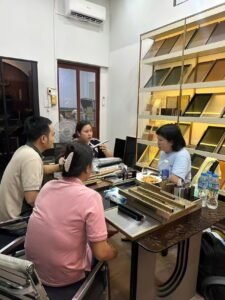
Every hotel renovation project we ship handles for teaches us the same lesson: the hardware guests touch every day defines how premium the entire room feels.
To choose aesthetic and durable aluminum furniture handles for a Vietnam hotel renovation, prioritize corrosion-resistant finishes like anodizing or powder coating, match handle profiles to your hotel’s design language, and partner with a supplier offering OEM customization, batch consistency, and fast replenishment from ready stock.
Handles seem like a small detail on a spec sheet architectural window frames 1. But in hospitality, they are the most touched surface in any guestroom. The wrong choice shows wear within months. The right choice keeps rooms looking fresh for years T5 temper 2. This guide walks you through material selection, finish performance, design direction, and sourcing strategy so your next Vietnam hotel project gets hardware right from day one.
How can I identify high-quality aluminum handles that will last in a high-traffic hotel environment?
When our production team tests handle samples before a hospitality shipment, we focus on one thing first: can this handle survive thousands of daily pulls without loosening, fading, or corroding PVD (Physical Vapor Deposition) 3?
High-quality aluminum handles for hotels use 6xxx-series aluminum alloy, feature anodized or powder-coated finishes at least 60 microns thick, pass salt spray testing for 48+ hours, and maintain grip stability after 50,000 pull cycles without mechanical failure.
Why Material Grade Matters More Than You Think
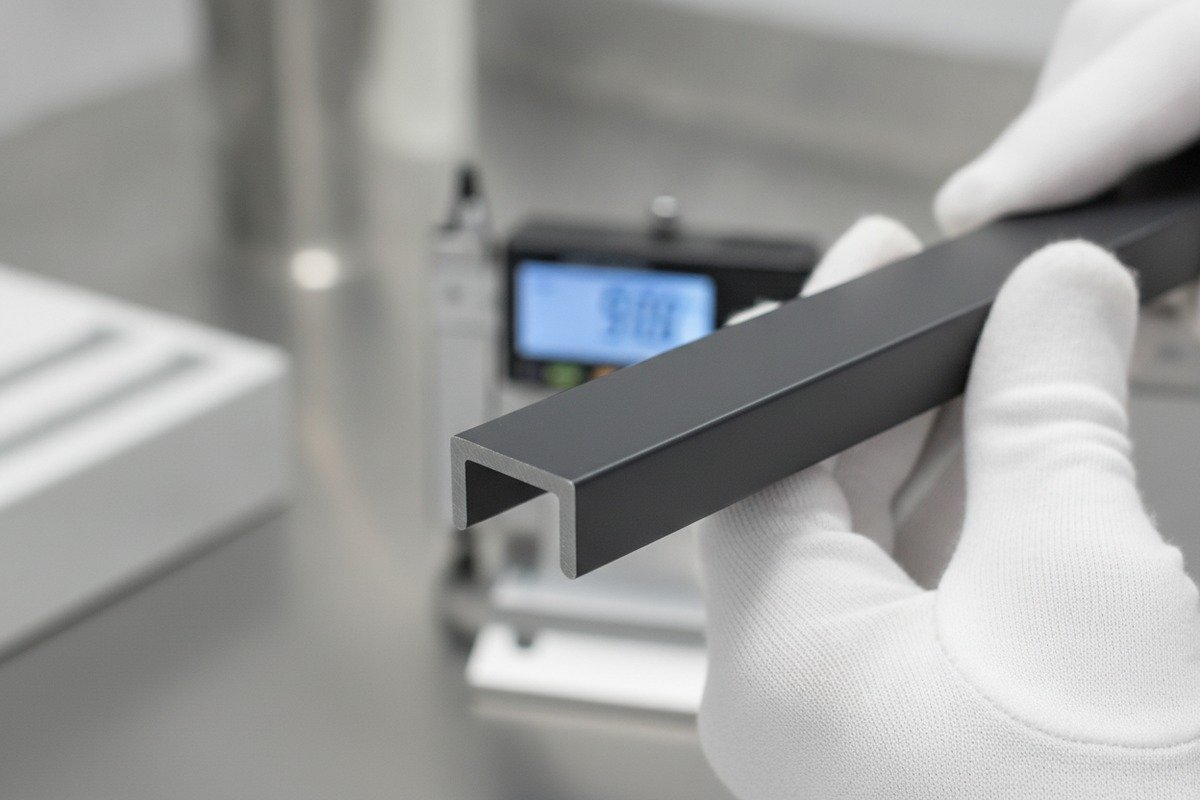
Not all aluminum is the same. The alloy series determines how the handle performs under stress, humidity, and repeated use. For hotel environments, 6063 aluminum 4 — the same grade used in architectural window frames — offers an excellent balance of extrudability, surface finish quality, and corrosion resistance 5. Some suppliers cut costs by using recycled scrap aluminum with inconsistent alloy composition. The result is handles that look fine on arrival but pit, discolor, or weaken within a year.
When we extrude handles at our Foshan facility 6, we use certified 6063-T5 billets. The T5 temper means the aluminum is artificially aged after extrusion, giving it higher hardness and better dimensional stability. For a hotel wardrobe handle that gets pulled 20 or 30 times a day across hundreds of rooms, that mechanical consistency matters.
Key Quality Indicators to Check Before Ordering
Here is a practical checklist you can use when evaluating handle samples from any supplier:
| Quality Indicator | What to Look For | Why It Matters in Hotels |
|---|---|---|
| Alloy grade | 6063-T5 or 6061-T6 marked on spec sheet | Ensures consistent strength and corrosion resistance |
| Finish thickness | Anodizing 7 ≥ 15 microns; powder coating ≥ 60 microns | Thinner coatings wear through under cleaning chemicals |
| Salt spray test | 48+ hours without visible corrosion | Critical for coastal resorts and bathroom-adjacent furniture |
| Pull cycle test | 50,000+ cycles without loosening | Hotels see high daily usage across years of operation |
| Edge finish | Smooth, deburred, no sharp corners | Prevents guest injuries and fabric snagging |
| Screw hole tolerance | ±0.1 mm consistency across batch | Ensures fast, uniform installation across hundreds of units |
The Hidden Cost of Cheap Handles
A hotel with 200 rooms and four handles per room needs 800 identical handles. If 5% fail within the first year due to finish peeling or screw-hole misalignment, that is 40 handles to replace. The replacement cost is not just the handle price. It includes procurement time, shipping, labor to disassemble and reinstall, and potential guest complaints during the process. Spending slightly more per unit on proven quality saves far more in total project lifecycle cost.
Corrosion Resistance: The Non-Negotiable for Vietnam
Vietnam's climate is humid year-round, and many resort hotels sit near the coast. Aluminum naturally forms a thin oxide layer that resists corrosion, but this passive layer is not enough for hospitality use. Anodizing thickens that oxide layer deliberately, creating a hard, porous surface that can also accept color dyes. Powder coating 8 adds a separate polymer barrier. Both methods dramatically extend handle life in humid and salt-air environments. Always ask your supplier which coating method they use and request the test certificate.
Where can I find a Chinese supplier that offers both 48-hour shipping and custom OEM services for my Vietnam project?
Shipping delays have killed more hotel renovation timelines than bad design decisions. From our warehouse in Foshan, we learned early that Vietnam-bound projects need two things at once: deep ready stock for standard items and fast custom turnaround for unique design requests.
Look for a Foshan-based aluminum hardware manufacturer with at least 300 tons of ready inventory for 48-hour dispatch on stock items, a 3–7 day turnaround for custom OEM orders, and proven export experience to Vietnam with full supply chain documentation and packaging suited for large-scale hospitality rollouts.
Why Foshan Is the Right Sourcing Hub
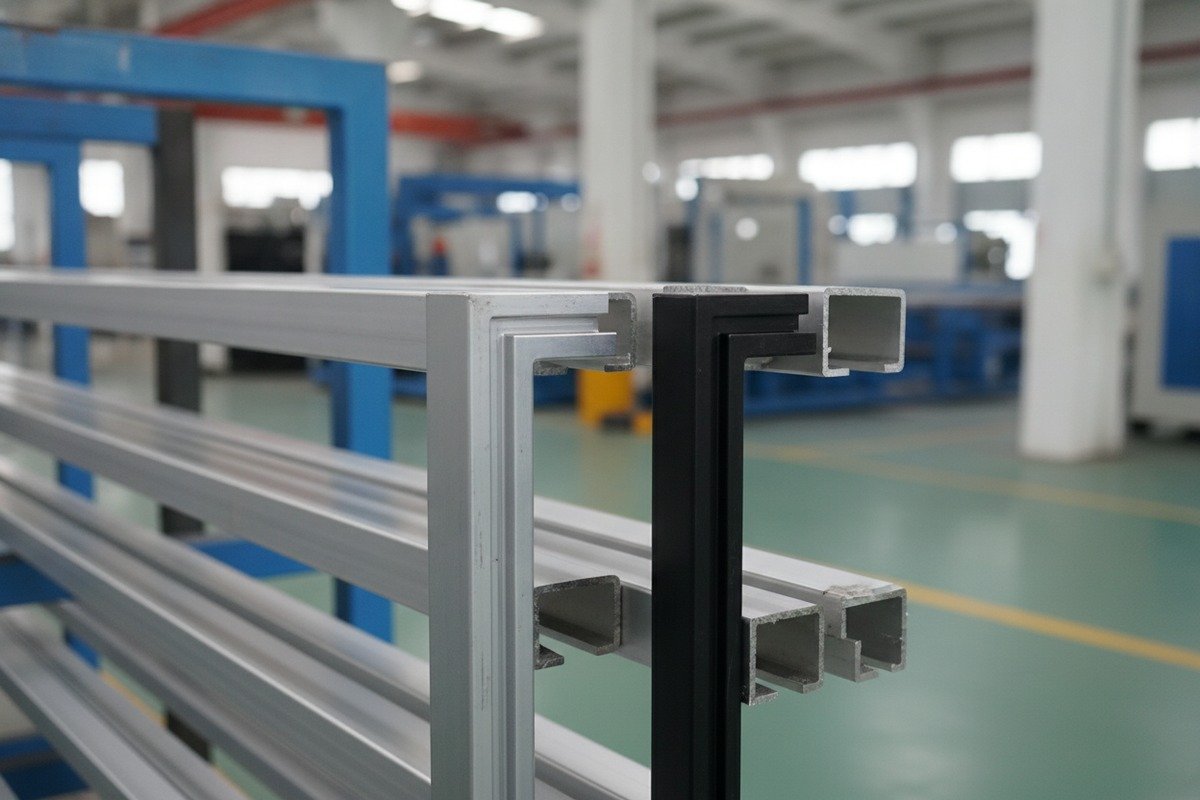
Foshan is China's aluminum hardware capital. The city concentrates raw material suppliers, extrusion plants, anodizing and powder coating lines, and packaging facilities within a tight radius. This concentration means shorter internal lead times and lower logistics costs. For a Vietnam hotel project, Foshan also offers a geographic advantage: shipping to Ho Chi Minh City or Hai Phong takes just a few days by sea, and overland routes through Guangxi province are even faster for urgent orders.
The Two-Speed Supply Model
Hotel renovation projects rarely follow a single procurement rhythm. The initial bulk order covers hundreds of rooms with standard handle designs. But mid-project changes happen constantly — the designer tweaks the wardrobe pull, the owner upgrades the suite hardware, or a new restaurant space gets added to the scope. You need a supplier who can handle both speeds.
| Supply Mode | Typical Lead Time | Best For | What to Confirm |
|---|---|---|---|
| Ready stock dispatch | 48 hours from order confirmation | Standard profiles, common finishes, urgent replacements | Verify actual inventory levels, not just catalog claims |
| Custom OEM production | 3–7 days for simple modifications; 15–20 days for new tooling | Unique profiles, special finishes, branded engravings | Request a sample before bulk production; confirm MOQ |
| Full custom development | 20–30 days including mold development | Completely new handle designs exclusive to your project | Agree on tooling ownership and IP protection terms |
What to Verify Before Committing
Many suppliers claim fast shipping. Fewer can actually deliver it consistently. Here is what to check:
- Actual warehouse photos — ask for dated images of inventory, not just stock photos.
- Export documentation capability — your supplier should handle packing lists, commercial invoices, certificates of origin, and fumigation certificates without delays.
- Packaging quality — handles shipped to a hotel renovation site need individual protection. Scratched handles arriving on-site waste time and money. Ask for foam-lined cartons or blister packing.
- Communication responsiveness — for Vietnam projects, WhatsApp response within a few hours during business days is a reasonable expectation. Slow communication during sampling means slower communication during production.
OEM Customization That Actually Works
OEM is not just about putting your logo on a handle. For hotel projects, meaningful customization includes adjusting handle length to match specific cabinet widths, selecting a finish color from RAL or Pantone references to match your interior palette, modifying screw spacing to fit your furniture factory's drilling patterns, and creating exclusive profiles that differentiate your hotel brand. A capable supplier will have in-house design support that can translate your architect's rendering into a producible extrusion die within days.
Our team handles this exact workflow regularly for Vietnam furniture factories. The key is having an engineering team that speaks both the language of design and the language of aluminum extrusion tolerances.
Which aluminum handle finishes will best complement my hotel's aesthetic while resisting wear and tear?
When we develop finish samples for hospitality clients, the first question is never "what looks good?" It is "what will still look good after two years of daily housekeeping cleaning and thousands of guest touches?"
The best aluminum handle finishes for hotel renovations are matte anodized champagne gold, brushed black anodized, and textured powder-coated charcoal — all offering strong scratch resistance, fingerprint concealment, chemical cleaning tolerance, and a contemporary luxury appearance that ages gracefully under heavy use.
Understanding the Three Main Finish Technologies
Each finish technology creates a different surface behavior. The choice impacts not only how the handle looks on day one, but how it performs over thousands of cleaning cycles.
Anodizing converts the aluminum surface into a hard aluminum oxide layer. This layer is integral to the metal — it cannot peel off like paint. Anodized surfaces resist scratches, accept color dyes, and tolerate most commercial cleaning agents. For hotel handles, anodizing is ideal when you want a metallic sheen with depth and warmth.
Powder coating sprays dry polymer powder onto the handle surface, then cures it at high temperature. The result is a thick, uniform, and highly durable coating available in virtually any color. Powder coating is excellent for bold colors, matte textures, and applications near moisture. It is the go-to finish for bathroom vanity handles and outdoor-adjacent furniture.
PVD (Physical Vapor Deposition) deposits a thin metallic film onto the surface in a vacuum chamber. PVD creates an extremely hard, wear-resistant layer with a premium metallic look. It is the most expensive option but offers the best scratch resistance and color stability. PVD is worth considering for high-visibility suite hardware or signature public-area pieces.
Finish Selection by Hotel Zone
| Hotel Zone | Recommended Finish | Why This Finish Works Here |
|---|---|---|
| Standard guestroom wardrobes and drawers | Matte anodized champagne gold or brushed silver | Hides fingerprints, resists daily cleaning, warm luxury tone |
| Bathroom vanities and wet-area cabinets | Powder-coated matte black or charcoal | Maximum moisture resistance, conceals water spots |
| Suite and premium room casegoods | PVD bronze or satin gold | Highest perceived luxury, exceptional scratch resistance |
| Public-area restaurant and lobby furniture | Powder-coated dark bronze or textured grey | Handles heavy traffic and aggressive cleaning schedules |
| Poolside and outdoor-adjacent furniture | Marine-grade powder coating (polyester-based) | Resists UV degradation, salt air, and humidity |
How Cleaning Chemicals Affect Handle Finishes
Hotel housekeeping teams use commercial cleaning agents daily. Some of these agents contain bleach, ammonia, or acidic compounds. A poorly coated handle will show finish degradation within months. Anodized finishes generally tolerate neutral to mildly alkaline cleaners well. Powder-coated finishes resist a broader range of chemicals but can be damaged by strong solvents. PVD finishes offer the highest chemical resistance.
Always ask your supplier to provide chemical resistance data for the specific finish system they use. Better yet, request a sample and test it yourself with the exact cleaning products your hotel's housekeeping team will use.
Design Directions That Work for Vietnam Hotels
Vietnam's hotel market spans ultra-modern city towers in Ho Chi Minh City, tropical luxury resorts in Da Nang, and boutique heritage properties in Hoi An. Each style calls for a different handle aesthetic.
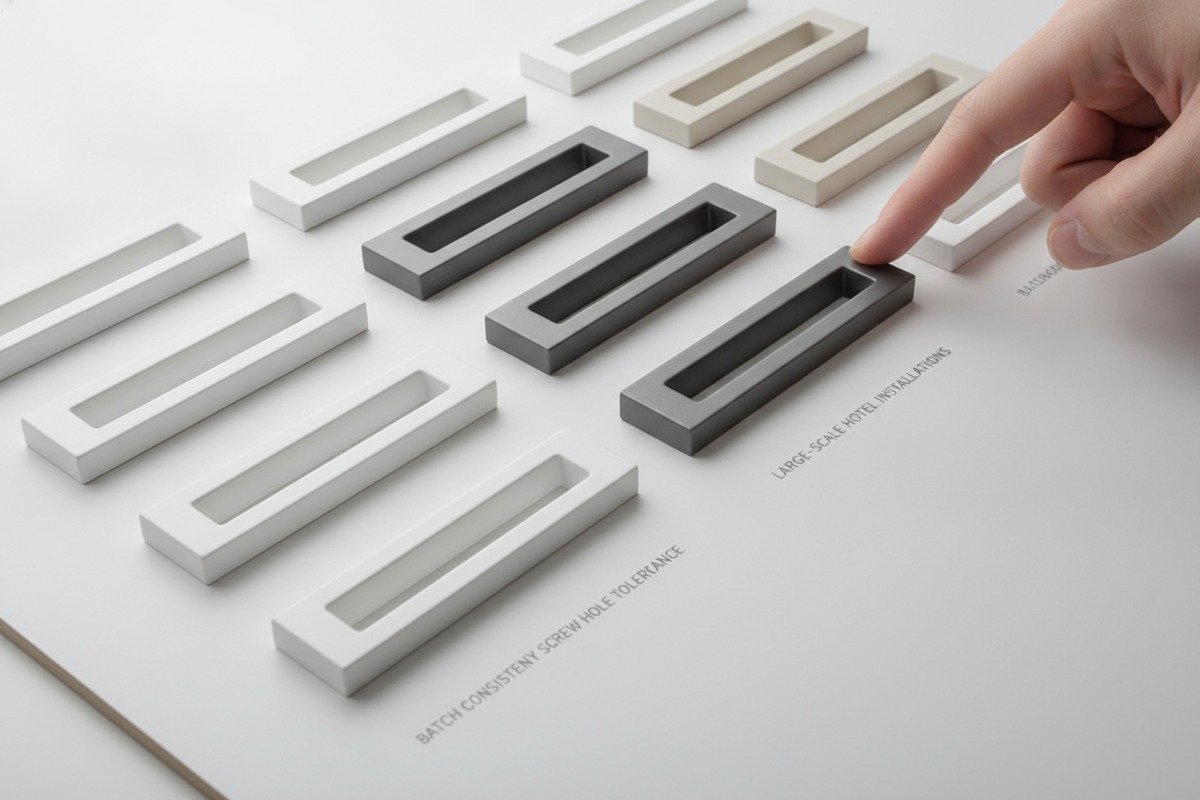
For contemporary urban hotels, concealed recessed handles in matte charcoal or black create a seamless, minimalist look. The sleek, architectural profile with a deep geometric channel for finger grip delivers clean lines that disappear into the furniture face.
For tropical resorts, champagne gold or light bronze anodized profiles evoke warmth and natural luxury. These finishes complement wood-tone furniture and organic interior palettes beautifully.
For boutique properties, consider brushed or textured finishes that add tactile interest. A handle with a slightly rough, sandblasted surface feels distinctive under the hand and signals craftsmanship.
The key principle is consistency. Every handle in a guestroom — wardrobe, minibar, dresser, bathroom vanity — should share the same finish and design language. Batch consistency across large orders is therefore critical. This is where working with a manufacturer who controls the entire finishing process in-house, rather than outsourcing it, makes a real difference.
How do I choose a reliable B2B partner who can provide full supply chain support for my large-scale furniture hardware needs?
Over eighteen years of exporting aluminum hardware from our Foshan base, we have seen hotel renovation projects succeed or stall based on one factor above all others: whether the hardware supplier functions as a true supply chain partner 9 or just a product vendor.
Choose a B2B aluminum hardware partner with at least 10 years of hospitality export experience, in-house extrusion and finishing capabilities, dedicated project coordination, transparent quality control processes, and the capacity to manage phased deliveries, mid-project design changes, and after-sale replenishment for your renovation timeline.

What Separates a Supplier from a Partner
A supplier sends you a price list and ships boxes. A partner understands your project timeline, coordinates with your furniture factory, adjusts production schedules when your renovation phases shift, and maintains reserve stock for post-opening replacements. For a 200-room hotel renovation, you might need 3,000 to 5,000 individual handles across multiple styles and finishes. Managing that volume requires more than a catalog — it requires a system.
The Evaluation Framework
When we onboard new hospitality clients, they often ask us what they should look for. Here is the framework we recommend:
| Evaluation Criteria | What to Ask the Supplier | Red Flags to Watch For |
|---|---|---|
| Production capability | Do you extrude and finish in-house or outsource? | Suppliers who only trade and do not manufacture cannot control quality or timelines |
| Batch consistency | Can you guarantee color match across multiple production runs? | Vague answers or refusal to provide Delta E color tolerance commitments |
| Project coordination | Will I have a dedicated project manager or just a salesperson? | Rotating contacts with no single owner of your account |
| Inventory strategy | Do you hold safety stock for my project during rollout? | No willingness to reserve inventory or manage phased shipments |
| Quality documentation | Can you provide test reports, finish thickness certificates, and inspection photos? | Suppliers who resist sharing production-stage documentation |
| After-sale support | Can I reorder small quantities for post-opening maintenance? | High MOQs that make replacement orders impractical |
| Communication | What is your typical response time, and through which channels? | More than 24-hour response gaps during active projects |
Why In-House Manufacturing Matters
When your supplier owns the extrusion press, the anodizing line, and the powder coating booth, every variable stays under one roof. If a finish shade drifts slightly between batches, the team catches it immediately. If a dimensional tolerance needs tightening for your furniture factory's CNC drilling pattern, the die can be adjusted the same day. Outsourced production introduces handoff delays, communication gaps, and finger-pointing when something goes wrong.
Our facility in Foshan runs the complete process from billet to boxed handle. That vertical integration is not a marketing point — it is the reason we can offer 3-to-7-day custom turnarounds and maintain the finish consistency that hospitality projects demand.
Phased Delivery and Renovation Logistics
Hotel renovations rarely happen all at once. Floors are completed in phases. Public areas often follow a different schedule than guestrooms. Your hardware partner needs to support phased delivery without charging premium rush fees every time. Discuss the delivery schedule at the quoting stage. A good partner will propose a shipment plan aligned with your construction milestones and hold buffer stock in their warehouse.
Sustainability and Lifecycle Thinking
More hotel brands now require suppliers to document their environmental practices 10. Aluminum is inherently recyclable — it can be remelted and reused with only 5% of the energy needed to produce primary aluminum. If your hotel group has sustainability targets, ask your supplier about recycled content percentages in their billets and whether they operate closed-loop scrap recovery. This is increasingly relevant for green building certifications and ESG reporting in the hospitality sector.
Building Trust Before the First Bulk Order
Start with samples. Order a small quantity in your target finish and install them on a test cabinet under real conditions. Have your housekeeping team clean them daily for two weeks using the hotel's standard products. Check for fingerprint visibility, cleaning ease, and finish durability. This small investment of time eliminates costly surprises at scale.
If possible, visit the factory — or at minimum, request a live video tour of the production floor, finishing line, and quality inspection area. Seeing the actual process tells you more than any brochure.
Conclusion
Choosing aluminum furniture handles for a Vietnam hotel renovation is a decision that touches aesthetics, durability, guest experience, and procurement efficiency. Specify by room type first, demand proven finishes, and partner with a manufacturer who can deliver consistency at scale. When you are ready to discuss samples, reach out to our team at Al**************@********************************************te.com.
Footnotes
1. Details standards and common alloys for aluminum architectural window frames. ↩︎
2. Explains the T5 temper process and its impact on aluminum properties. ↩︎
3. Defines PVD coating as a vacuum deposition method for thin, durable films. ↩︎
4. Explains properties and common uses of 6063 aluminum alloy. ↩︎
5. Explains the natural oxide layer and mechanisms of aluminum corrosion resistance. ↩︎
6. Describes Foshan as a global hub for aluminum manufacturing and extrusion. ↩︎
7. Describes the electrochemical process of anodizing aluminum and its benefits. ↩︎
8. Explains the powder coating process and its advantages for aluminum. ↩︎
9. Highlights the benefits and importance of collaborative supply chain partnerships. ↩︎
10. Defines sustainable manufacturing and outlines key environmental practices for businesses. ↩︎