
Every week, our production floor ships thousands of aluminum handles to furniture factories and distributors worldwide product specification 1. Yet the most common complaint we hear from new procurement managers is not about quality — it is about internal chaos: mismatched specs, unapproved substitutions, and orders placed without anyone’s sign-off.
To standardize aluminum furniture handle procurement, start by documenting a fixed product specification, then build a simple multi-step approval workflow with clear gates, create an approved supplier list with transparent qualification criteria, and enforce receiving inspections against the spec. This repeatable system reduces errors, speeds up ordering, and improves supplier accountability.
This guide walks you through the entire process step by step, from defining your handle specifications to tracking performance metrics supplier approval system 2. Whether you buy 500 handles a month or 50,000, the framework stays the same. Let us start with the workflow itself.
How can I design a step-by-step procurement workflow that ensures my company always receives high-quality aluminum handles?
When we onboard new wholesale partners, the first question we ask is simple: "Who in your company is allowed to place an order, and what do they check before they do?" Most of the time, the answer is a long pause. That silence is the root cause of almost every quality complaint we see Inventory turnover ratio 3.
Design a procurement workflow with five clear gates: need identification, specification verification, budget approval, purchase order issuance, and receiving inspection. Each gate requires a designated reviewer and a standardized form, so no order moves forward until the previous step is complete and documented.

Why Aluminum Handles Are a "Small Part, Big Risk" Category
Aluminum furniture handles have a low unit cost. A single recessed pull in a matte champagne gold finish might cost less than two dollars. But when you order 10,000 of them for a batch of kitchen cabinets, the total spend is significant. More importantly, a wrong finish, a mismatched hole center distance, or a slightly different profile will be visible on every single cabinet door. The cost of rework dwarfs the cost of the handle itself.
That is why treating handle procurement as a repeatable program — not a series of one-off buys — matters so much.
The Five-Gate Workflow
Here is a practical workflow you can adapt to your company size.
| Gate | Action | Responsible Person | Key Document |
|---|---|---|---|
| Gate 1 | Requester submits need with quantity, use case, and timeline | Department head or project manager | Purchase Request Form |
| Gate 2 | Procurement verifies the request against the approved specification sheet | Procurement officer | Specification Compliance Checklist |
| Gate 3 | Finance or budget owner confirms available budget | Finance team or budget owner | Budget Approval Form |
| Gate 4 | Procurement issues a formal purchase order 4 to an approved supplier | Procurement officer | Purchase Order |
| Gate 5 | Warehouse or quality team inspects incoming goods against the spec | Receiving inspector | Receiving Inspection 5 Checklist |
Mapping It Visually
Before you write any policy documents, draw this workflow on a whiteboard or a simple flowchart tool. Walk through it with your team. Ask where delays happen. Ask who currently makes buying decisions and whether they check specs before ordering. Visual mapping exposes bottlenecks you cannot see in a text document.
Standardized Forms Beat Policy Memos
In our experience shipping to furniture factories across Vietnam and the Middle East, the companies with the fewest quality disputes are not the ones with the longest policy manuals. They are the ones with the simplest forms. A one-page purchase request form that forces the requester to fill in handle style, finish code, hole center distance, quantity, and delivery date prevents more mistakes than a ten-page procurement policy that nobody reads.
Start with three forms: a purchase request, a purchase order checklist, and a receiving inspection checklist. You can always add more later.
Define Your Scope First
Before the workflow can function, write a short scope statement. Keep it under five lines. For example:
- Product type: Aluminum furniture handles (recessed pulls, bar pulls, edge profiles)
- Use cases: Cabinets, drawers, wardrobes, office storage, custom furniture
- Buying method: Approved catalog or approved suppliers only
- Exceptions: One-off custom designs require a separate review and sign-off
This scope statement tells everyone in the company what falls inside your standardized process and what requires a different path.
What criteria should I include in my supplier approval system to verify the manufacturing capabilities of my aluminum handle partners?
Our factory in Foshan has been through hundreds of supplier audits from overseas buyers over the past 18 years. The buyers who ask the sharpest questions during qualification are the ones who rarely have problems later. The buyers who skip qualification and jump straight to price negotiation almost always run into trouble within the first three orders.
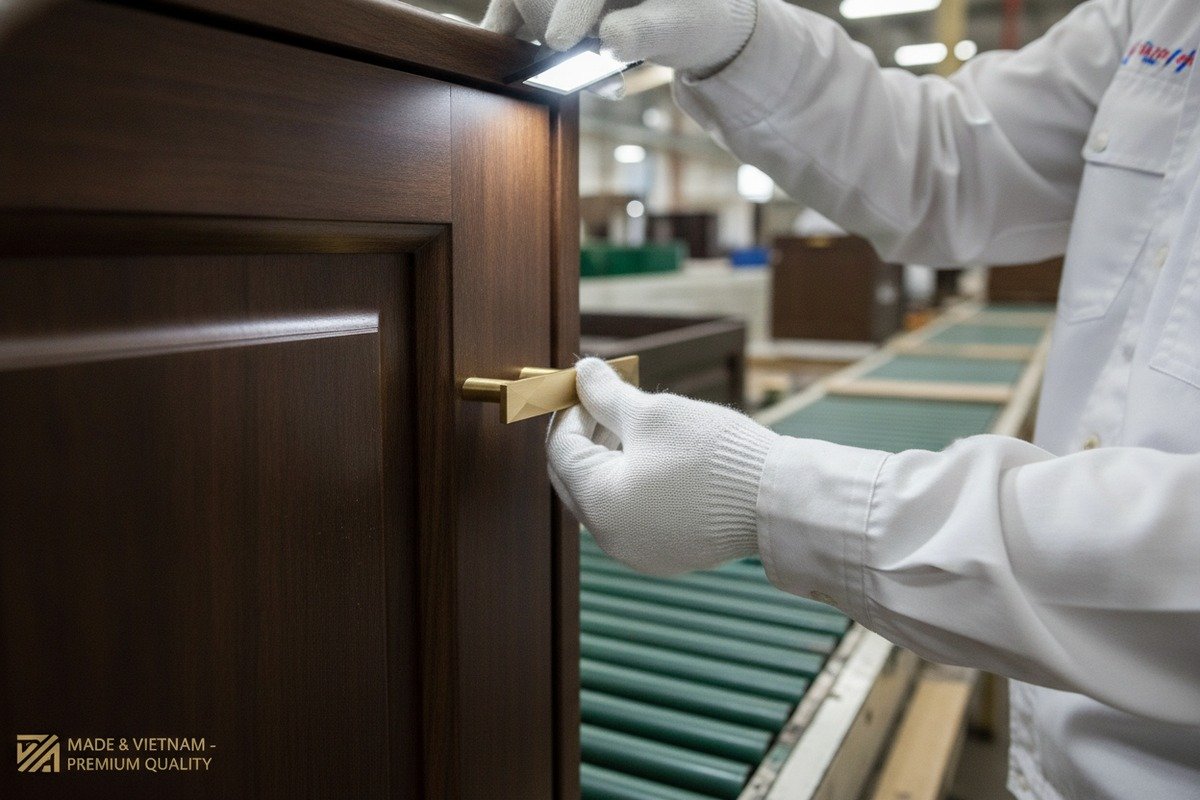
Your supplier approval system should evaluate manufacturing capacity, quality control processes, lead time reliability, sample accuracy, surface treatment capabilities, certifications, warranty terms, replacement policy, and track record with similar buyers. Score each criterion, set a minimum threshold, and only add suppliers who pass to your approved vendor list.
Why an Approved Supplier List Matters
An approved supplier list 6, sometimes called an AVL, is one of the simplest tools a novice can use. It limits routine purchases to a short list of vetted partners. This makes ordering faster, reduces spec mismatches, gives you stronger negotiating leverage, and makes quality tracking much easier.
Without an AVL, different people in your company will source handles from different suppliers. You will end up with five slightly different shades of champagne gold on the same furniture line. We see this problem regularly.
Core Evaluation Criteria
Here is a scoring table you can use during vendor qualification.
| Criterion | What to Check | Weight |
|---|---|---|
| Manufacturing capacity | Monthly output, equipment list, extrusion and finishing capabilities | High |
| Quality control process 7 | Incoming material inspection, in-process checks, final inspection, testing equipment | High |
| Sample accuracy | Physical sample matches the approved specification sheet exactly | High |
| Surface treatment capability | Anodizing, powder coating, electrophoresis, PVD — whichever finishes you need | High |
| Lead time reliability | Historical on-time delivery rate, stock availability, production turnaround | Medium |
| Certifications | ISO 9001 8, RoHS, REACH, or market-specific certifications | Medium |
| Warranty and replacement policy | Clear terms for defective goods, replacement lead time, cost sharing | Medium |
| Price consistency | Stable pricing with transparent cost drivers, not volatile quote-to-quote | Medium |
| References | Verifiable customers in similar industries or markets | Low |
| Communication responsiveness | Speed and clarity of responses during the evaluation period | Low |
How to Score and Set Thresholds
Assign each criterion a score from 1 to 5. Multiply by the weight. Set a minimum total score — for example, 70 out of 100 — to qualify. Any supplier below that threshold stays off the list until they improve.
Conduct a Physical Sample Review
Never approve a supplier based on catalog photos alone. Request physical samples of your most common handle profiles. Check the finish under different lighting. Measure the hole center distance with calipers. Test the grip feel. Compare two or three samples from the same supplier to verify consistency. From our production line, we always recommend buyers request at least three identical pieces so they can check batch uniformity.
Lifecycle Cost Thinking
Do not evaluate suppliers on unit price alone. A handle that costs 10% less but has a 5% defect rate will cost you far more in returns, rework, and customer complaints. Consider durability, corrosion resistance, replacement frequency, and the administrative cost of managing quality issues. A slightly higher price from a reliable supplier often delivers a lower total cost of ownership.
Red Flags to Watch
- Supplier cannot provide a clear alloy grade or surface treatment specification
- Lead times change dramatically between quotes
- No written warranty or replacement policy
- Samples look different from production batches
- Reluctance to share factory photos, equipment lists, or references
How do I build a formal quality inspection and sample sign-off process into my internal procurement system?
When we develop a new handle profile — say, a slim recessed pull with a deep geometric channel in matte charcoal grey — our quality team runs through over a dozen checkpoints before the first box leaves the warehouse. Yet many of our buyers do not have a single documented inspection step on their receiving end. That gap is where most quality disputes begin.
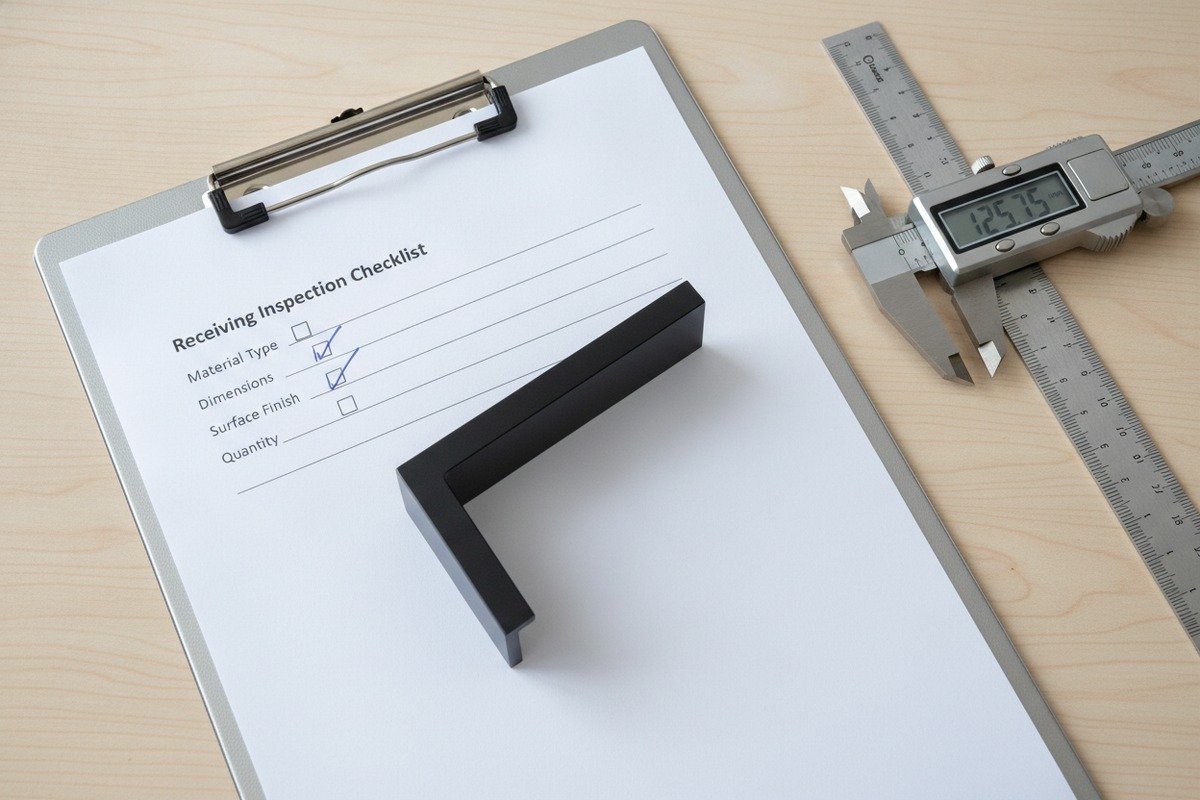
Build quality inspection into your procurement system at three stages: pre-production sample approval, in-process verification for large orders, and receiving inspection at your warehouse. Use a written specification sheet as the single reference point, require sign-off at each stage, and log every defect for quarterly review.
Stage 1: Sample Sign-Off Before Production
Before any volume order, request a pre-production sample 9. This is your golden reference. Compare it against your specification sheet for every field: profile shape, dimensions, hole center distance, finish code, alloy grade, surface smoothness, and edge sharpness.
The sign-off should be documented. Use a simple form:
| Field | Specification Requirement | Sample Result | Pass / Fail |
|---|---|---|---|
| Handle profile | Recessed slim rectangular pull | Matches | Pass |
| Length | 200 mm ± 0.5 mm | 200.2 mm | Pass |
| Hole center distance | 192 mm ± 0.3 mm | 192.1 mm | Pass |
| Finish | Matte champagne gold anodized | Matches reference swatch | Pass |
| Alloy grade | 6063-T5 | Confirmed by mill cert | Pass |
| Surface defects | None visible under standard lighting | Clean | Pass |
| Edge quality | No burrs, sharp clean edges | Clean | Pass |
| Load test (if applicable) | Withstands 15 kg pull force | Tested at 18 kg | Pass |
Once the sample passes, keep one physical piece as a reference standard. Label it with the date and approval signature. This is the piece you compare future deliveries against.
Stage 2: In-Process Checks for Large Orders
For high-volume orders — say, 20,000 handles or more — ask your supplier whether you can arrange a mid-production check. This is common in export manufacturing. At our facility, we welcome buyer-side inspections during production because catching a finish variation at the anodizing stage is far cheaper than discovering it after packing.
If you cannot visit the factory, ask for dated photos of production batches alongside the approved reference sample. This is not perfect, but it is far better than no check at all.
Stage 3: Receiving Inspection at Your Warehouse
This is the final and most critical gate. Every incoming shipment should be checked before the goods are released to production or distribution.
Your receiving checklist should include:
- Correct quantity matches the purchase order
- Handle profile and dimensions match the approved spec
- Finish matches the reference sample (check under consistent lighting)
- No surface defects: scratches, dents, discoloration, uneven anodizing
- Correct mounting pattern and hole spacing
- Packaging is intact, no transport damage
- Labels, lot numbers, and documentation are included
Handling Defects and Substitutions
If a shipment fails inspection, do not accept it into inventory. Document the defect with photos and measurements. File a nonconformance report and send it to the supplier immediately. This creates a paper trail that protects you during warranty claims and future negotiations.
Substitutions deserve special attention. If a supplier ships a "similar" handle because your exact spec was out of stock, that substitution should require written buyer approval before acceptance. Uncontrolled substitutions are one of the most common failure points in furniture hardware procurement. We always advise our partners: no substitution without a signed exception form.
Log Everything for Continuous Improvement
Keep a simple log of every inspection result. Over time, this data will show you which suppliers have the lowest defect rates, which specs cause the most issues, and where your own internal process has gaps. Review this log quarterly.
What strategies can I use to balance my procurement approval layers with the need for fast shipping and inventory turnover?
One of the biggest frustrations we hear from our wholesale partners is this: "We finally built an approval process, but now every order takes a week to get signed off, and we miss the shipping window." It is a real tension. You need controls to prevent mistakes, but you also need speed to keep your production line running and your customers happy.
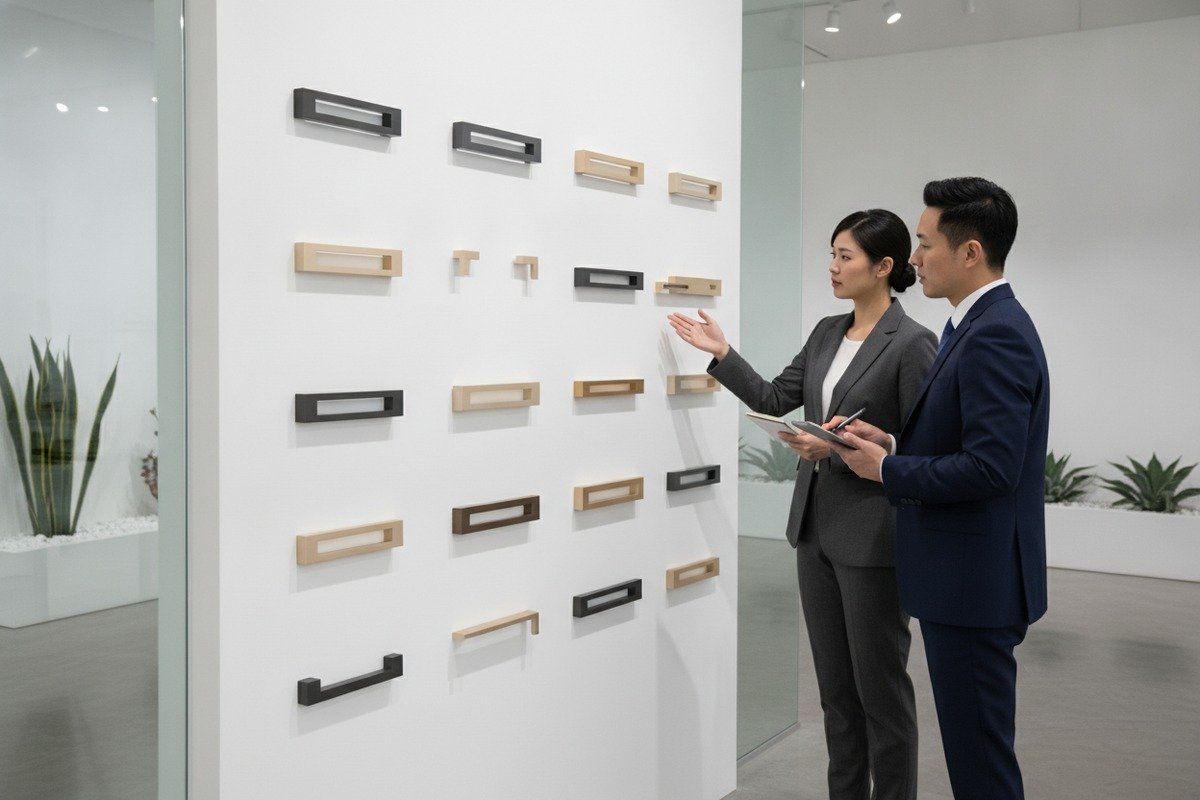
Balance approval layers with speed by creating tiered approval paths: fast-track standard orders through a single procurement sign-off, require multi-level approval only for custom or high-value purchases, pre-authorize blanket orders for recurring items, and maintain safety stock of your highest-volume handle SKUs to absorb lead time delays.
Tiered Approval Based on Risk and Value
Not every purchase needs the same level of scrutiny. A reorder of 2,000 matte black recessed pulls that you buy every month should not require the same approval chain as a first-time order of a custom champagne gold profile for a new furniture line.
Set up tiered approval rules:
| Order Type | Example | Approval Required | Target Turnaround |
|---|---|---|---|
| Standard reorder (approved spec, approved supplier, within budget) | 2,000 pcs matte black recessed pull | Procurement officer only | Same day |
| Modified order (spec change, quantity spike, or new delivery location) | Same handle but in a new finish | Procurement + department head | 1–2 business days |
| New product or new supplier | First order of a new profile from a new factory | Procurement + design/facilities + finance | 3–5 business days |
| Emergency replacement | Urgent restock due to unexpected demand or defective batch | Fast-track: procurement officer with post-review | Same day, documented within 48 hours |
This tiered model keeps routine orders moving fast while applying more scrutiny where the risk is higher.
Pre-Authorized Blanket Orders
For your highest-volume SKUs, consider setting up blanket purchase orders with your approved suppliers. A blanket order pre-authorizes a set quantity over a set time period — for example, 10,000 handles per quarter at an agreed price. Individual releases against that blanket order need only a simple confirmation, not a full approval cycle.
From our side, we offer this arrangement to many of our recurring wholesale partners. With 300 tons of ready-to-ship inventory and 48-hour shipping for stock items, a blanket order combined with our stock availability means our partners can replenish within days instead of weeks.
Safety Stock Strategy
Calculate a safety stock 10 level for your top five handle SKUs. This buffer absorbs demand spikes and protects you when supplier lead times slip. A common formula is:
Safety stock = (maximum daily usage × maximum lead time) – (average daily usage × average lead time)
Even a rough calculation is better than no buffer at all. The goal is to avoid emergency orders, which bypass your approval process and introduce risk.
Collaborate Early with Design and Production Teams
One of the most overlooked strategies for balancing speed and control is early collaboration. If your design team selects a handle profile before consulting procurement, you may end up scrambling to find a supplier who can deliver that exact spec on a tight deadline. But if procurement is involved from the design stage, you can steer the selection toward handles that are already on your approved list and in stock with your suppliers.
At our facility, we encourage buyers to involve their design teams in the sample review process. When designers see the actual production capabilities — available finishes, standard profiles, minimum order quantities — they make selections that are easier and faster to procure.
Track Speed-Related KPIs
To make sure your process stays fast enough, track a few simple metrics:
- Average approval cycle time (from request to PO issuance)
- Percentage of orders using fast-track path
- Number of emergency orders per quarter
- On-time delivery rate from suppliers
- Inventory turnover ratio for handle SKUs
Review these quarterly. If your approval cycle time is creeping up, simplify a gate. If emergency orders are increasing, your safety stock calculation needs adjustment.
Avoid Over-Standardization
A final word of balance. Too many approval layers will slow you down and frustrate your team. Too few will let errors through. The right answer is a default path that is simple and fast for routine orders, with a documented exception process for everything else. Start lean. Add controls only when you see a specific problem that needs one.
Conclusion
Building a standardized procurement system for aluminum furniture handles does not require advanced tools or years of experience. Define your specs, set up clear approval gates, qualify your suppliers, inspect what you receive, and track a few key metrics. Start simple, improve quarterly, and your process will protect your quality and your budget from day one.
Footnotes
1. Defines product specification and its importance in development. ↩︎
2. Details the steps and importance of a supplier approval process. ↩︎
3. Explains the definition, formula, and insights of the inventory turnover ratio. ↩︎
4. Defines a purchase order and its role in the purchasing process. ↩︎
5. Provides a comprehensive guide to the receiving inspection process. ↩︎
6. Explains the definition, process, and best practices for an approved vendor list. ↩︎
7. Explains the systematic approach and elements of a quality control process. ↩︎
8. Replaced HTTP 403 link with a straightforward overview of the ISO 9001 standard from Advisera. ↩︎
9. Replaced HTTP 404 link with a comprehensive explanation of pre-production samples from SCM Solution. ↩︎
10. Provides a clear definition and importance of safety stock in inventory. ↩︎