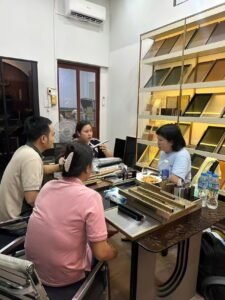
Every year, our team ships hundreds of tons of aluminum handles to Vietnamese projects — and the fire safety question comes up more often than you might expect.
To ensure aluminum furniture handles comply with Vietnamese fire safety standards, project developers must write fire-safety criteria into purchase specifications, collect material declarations and test reports from suppliers, confirm the product’s coating and component composition, and match all documentation to the project’s approved fire-safety design under QCVN 06:2022/BXD before submission to local authorities.
This article walks you through the exact procurement controls, document requirements, and supplier evaluation steps that keep your Vietnamese building project on track PVDF (Polyvinylidene Fluoride) Coating 1. Let’s break it down section by section.
How Can I Verify That My Aluminum Furniture Handle Supplier Provides the Necessary Fire Safety Certifications for the Vietnam Market?
Over the past 18 years, our export team has learned that the biggest compliance headaches rarely come from the metal itself — they come from missing paperwork at the worst possible time.
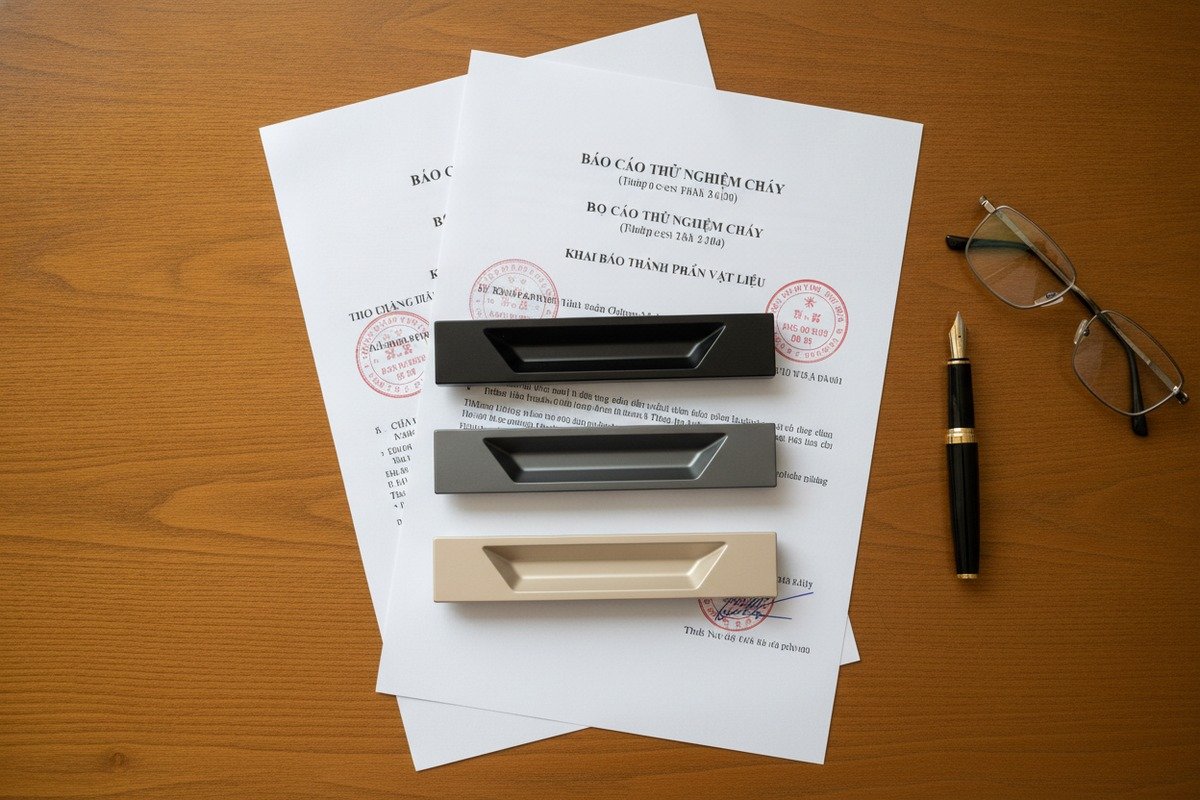
To verify your supplier's fire safety certifications, request a complete documentation package that includes a material composition declaration, fire-relevant test reports from a recognized laboratory, origin certificates, and Vietnamese-language translations of all key documents needed for the project's fire-safety design dossier submission.
Why Documentation Matters More Than Assumptions
Vietnam's fire safety regime has become increasingly dossier-driven. Under Decree 50/2024 and the QCVN 06:2022/BXD code 2, project investors must submit detailed fire-safety design documents for appraisal and approval before putting a building into operation. This means every component — even a small furniture handle — can become a bottleneck if the supporting documents are missing or incomplete.
Aluminum is non-combustible in normal building use. Most people stop there and assume no certification is needed. But the reality on the ground is different. Vietnamese building inspectors review the entire interior finish package. If your handles include plastic inserts, polymer coatings, or decorative layers that are not documented, you risk a rejection that delays the whole project acceptance.
What to Request From Your Supplier
Here is a practical checklist of documents to ask for before placing your order:
| Document | Purpose | Who Issues It |
|---|---|---|
| Material Composition Declaration | Confirms base alloy, coating type, and any non-metal components | Manufacturer |
| Fire Test Report (e.g., GB 8624 or equivalent) | Shows combustibility classification of the complete product | Accredited testing lab |
| Certificate of Origin | Proves manufacturing source for customs and regulatory review | Chamber of Commerce or manufacturer |
| Product Datasheet | Details dimensions, finish, weight, and material specs | Manufacturer |
| Vietnamese Translation of Key Documents | Required for local authority submission | Certified translator |
Red Flags to Watch For
Not every supplier can produce these documents. In our experience working with Vietnamese distributors, the most common red flags include:
- Suppliers who only provide a basic invoice with no material declaration 3.
- Test reports that cover a different product or alloy than what you are ordering.
- Handles marketed as "all aluminum" but containing hidden ABS or nylon bushings with no fire classification.
- Documents only available in Chinese with no offer to provide translated versions.
When we prepare shipments for Vietnamese projects, we include a full material declaration with every order. It lists the aluminum alloy grade 4, the anodizing or powder-coating specification, and whether any non-metal parts are present. This is not optional — it is standard practice for any supplier serious about the Vietnam market.
How to Structure the Verification Process
Start by confirming with your project's fire-safety consultant whether the handle installation location falls within a regulated zone. Then send your supplier a written request listing every document you need. Set a clear deadline. If the supplier cannot provide the documents within a reasonable timeframe, that tells you something important about their capability.
What Specific Material Specifications Should I Look for to Ensure My Aluminum Profiles Meet Local Fire Resistance Standards?
When we develop new handle profiles on our production line in Foshan, the alloy selection and surface treatment are the first two decisions we make — because they directly affect how the product performs under fire-related scrutiny.
Look for handles made from 6063-T5 or 6061-T6 aluminum alloy with a melting point above 600°C, anodized or powder-coated using non-combustible or low-combustibility finishes, and free from unclassified plastic inserts — these specifications align with the non-combustible material requirements referenced in QCVN 06:2022/BXD.

Understanding the Fire-Related Properties of Aluminum Alloys
Aluminum alloys used in furniture handles typically fall into the 6000 series. These alloys have a melting range between approximately 580°C and 650°C. They do not burn, do not produce toxic fumes on their own, and do not contribute to flame spread. This makes them inherently suitable for use in buildings where non-combustible materials 6 are preferred or required.
However, QCVN 06:2022/BXD evaluates fire-related technical characteristics across five dimensions: combustibility, ignitability, flame spread rate, smoke production, and toxic potency. The aluminum base passes easily. The question is whether the surface treatment and any attached components also pass.
Surface Treatment Comparison
Not all finishes behave the same way in fire conditions. Here is a comparison of the most common surface treatments for aluminum furniture handles:
| Surface Treatment | Combustibility | Smoke Production | Typical Thickness | Fire Safety Notes |
|---|---|---|---|---|
| Anodizing (clear or colored) | Non-combustible | None | 10–25 µm | Oxide layer is ceramic-like; excellent fire performance |
| Powder Coating (polyester) | Low combustibility | Low | 60–120 µm | Most polyester powders self-extinguish; check supplier data |
| PVDF Coating | Very low combustibility | Very low | 25–40 µm | Often used in high-rise cladding; strong fire credentials |
| Electrophoretic Coating (E-coat) | Low combustibility | Low | 15–25 µm | Water-based process; generally good fire performance |
| Wood-grain Sublimation Film | Variable | Moderate | Film + powder base | The film layer may be combustible; requires specific fire test data |
Key Specifications to Write Into Your Purchase Order
When you send your RFQ (Request for Quotation) to a supplier, include these material specifications:
- Alloy grade: Specify 6063-T5 or 6061-T6 7. Do not accept unspecified or generic "aluminum alloy."
- Surface treatment type: Name the exact coating process and request the coating manufacturer's fire classification data.
- Non-metal components: Require a declaration of all plastic, rubber, foam, or adhesive materials used in the handle assembly.
- Compliance statement: Ask the supplier to confirm in writing that the product, as delivered, does not contain any component classified above a specified combustibility grade.
What About Composite Handles?
Some modern designs — like the recessed pulls with deep geometric channels featured in our product line — use pure extruded aluminum with no plastic parts at all. These are the simplest to document for fire compliance. But handles that incorporate nylon end caps, silicone gaskets, or decorative resin inlays require additional attention. Each non-metal component should have its own fire classification or test data.
The champagne gold anodized finish on many of our profiles, for instance, is created through an electrochemical oxide layer. This layer is essentially aluminum oxide — a ceramic material. It adds zero combustible mass. That is a very different situation from a wood-grain sublimation film applied over powder coating, which may introduce a thin combustible layer that needs to be tested and declared.
How Do I Evaluate if a Chinese Manufacturer's Production Process Aligns With the Fire Safety Regulations of My Vietnamese Project?
Our factory in Foshan runs three extrusion lines and two anodizing lines. When Vietnamese clients visit, the question they ask most is not about price — it is about process control and traceability.
Evaluate a Chinese manufacturer by auditing their raw material sourcing records, extrusion and surface treatment process controls, quality management certifications such as ISO 9001, batch traceability systems, and their willingness to provide third-party fire test reports for the specific products you are ordering.

Why the Manufacturing Process Matters for Fire Compliance
Fire safety compliance is not just about the final product sitting on a shelf. It traces back to every production decision. The alloy billet supplier, the extrusion temperature, the anodizing chemistry, and the powder coating formulation all affect the finished handle's fire-related properties. If any of these steps are uncontrolled, the product you receive may not match the product that was tested.
Vietnam's regulatory framework under QCVN 06:2022 and Decree 50/2024 puts the burden of proof on the project investor. If a building inspector questions a component, you need to show that the product was manufactured consistently and that the test reports you hold actually represent the product installed in your building. That chain of evidence starts at the factory.
Factory Audit Checklist
Here are the key areas to evaluate during a factory visit or remote audit:
Raw Material Control: Does the factory purchase aluminum billets from certified smelters? Can they show mill certificates for each batch? A reliable manufacturer keeps alloy composition records for every production run.
Extrusion Process: Is the extrusion temperature controlled and logged? Consistent extrusion ensures the mechanical and thermal properties of the profile match the alloy specification.
Surface Treatment Quality: For anodizing, check whether the factory controls oxide layer thickness. For powder coating, ask about the powder supplier and whether the coating formula has fire test data. In our facility, we test oxide layer thickness on every batch using an eddy current gauge.
Assembly and Packaging: If the handle includes any non-metal components, verify that these are sourced from approved suppliers and that their fire classification is on file.
Traceability: Can the factory trace a finished handle back to the original billet batch, the extrusion date, and the surface treatment batch? This is essential if you ever need to prove compliance after delivery.
Certifications That Signal Reliable Process Control
| Certification | What It Covers | Relevance to Fire Safety |
|---|---|---|
| ISO 9001 8 | Quality management system | Ensures consistent production processes and document control |
| ISO 14001 | Environmental management | Indicates controlled chemical processes (anodizing, coating) |
| SGS / TÜV / Intertek Test Reports 9 | Third-party product testing | Provides independent verification of material properties |
| IATF 16949 (if applicable) | Automotive-grade quality | Signals very high process discipline (uncommon but impressive) |
Practical Tips for Remote Evaluation
Not every project developer can visit a factory in person. Here are steps you can take remotely:
- Request a video walkthrough of the production line via WhatsApp or WeChat.
- Ask for photos of quality control equipment, especially thickness gauges and spectrometers.
- Request sample handles with a batch traceability 10 code, then ask the factory to provide the corresponding material records for that code.
- Send a sample to an independent lab in Vietnam or a third-party lab like SGS for verification testing.
When we work with Vietnamese furniture factories and distributors, we often ship samples ahead of the main order with full documentation attached. This gives our clients time to review the paperwork with their fire-safety consultant before committing to the bulk purchase. It saves everyone time and avoids the painful situation where a large shipment arrives but cannot be used because the documentation is incomplete.
Can I Request Custom Fire-Retardant Surface Treatments for My Aluminum Handles to Satisfy Building Inspectors in Vietnam?
On our anodizing and coating lines, we handle custom finish requests every week. Some of the most interesting requests come from Vietnamese high-rise and mixed-use projects where inspectors require extra assurance on every interior component.
Yes, you can request custom fire-retardant surface treatments such as intumescent powder coatings, thicker anodized layers, or PVDF finishes for your aluminum handles. A capable manufacturer will adjust the surface treatment specification to match your project's fire safety requirements and provide the corresponding fire test documentation.
When Standard Finishes Are Not Enough
For most Vietnamese construction projects, a standard anodized or polyester powder-coated aluminum handle meets fire safety requirements without modification. Aluminum is already a non-combustible base material, and standard finishes add minimal fire load.
But there are specific situations where building inspectors or fire-safety consultants demand extra documentation or enhanced treatments:
- Escape routes and corridors: QCVN 06:2022 imposes stricter material requirements in evacuation pathways. Handles installed on doors or cabinets along escape routes may need certified non-combustible finishes.
- High-rise buildings above 28 meters: These projects have elevated fire safety scrutiny for all interior components.
- Mixed-use complexes: When commercial, residential, and industrial functions share a building, fire compartmentation rules tighten, and inspectors look more closely at every material in the fire compartment boundary.
- Factories and warehouses: Especially those storing combustible goods, where interior fittings are expected to be non-combustible throughout.
Custom Treatment Options
Here are the custom surface treatment options we offer and their fire safety implications:
Enhanced Anodizing: By increasing the anodic oxide layer from the standard 10–15 µm to 20–25 µm, we create a thicker ceramic barrier. This adds virtually zero combustible mass and improves wear resistance simultaneously. The champagne gold and light bronze finishes popular in Vietnamese interior design are fully achievable at this thickness.
PVDF (Polyvinylidene Fluoride) Coating: PVDF has exceptional fire resistance. It is widely used on aluminum cladding for high-rise buildings globally. Applying it to furniture handles is less common but entirely feasible. It provides a smooth, matte finish that aligns well with modern minimalist design trends.
Intumescent Powder Coating: This is a specialized coating that swells when exposed to heat, forming an insulating char layer. It is typically used on structural steel, but it can be applied to aluminum handles installed in fire compartment boundaries if the project specification demands it. This is a niche request, but we have fulfilled it for specific projects.
Ceramic Coating: A thin ceramic layer applied via physical vapor deposition (PVD) or sol-gel process. This is fully non-combustible and gives the handle a distinctive metallic sheen.
Cost and Lead Time Considerations
Custom fire-retardant treatments add cost and production time compared to standard finishes. Here is a general comparison:
| Treatment | Cost Premium vs. Standard Anodizing | Additional Lead Time | Best Suited For |
|---|---|---|---|
| Enhanced Anodizing (20–25 µm) | +5–10% | 1–2 days | Escape routes, general upgraded spec |
| PVDF Coating | +20–30% | 3–5 days | High-rise interiors, premium projects |
| Intumescent Powder Coating | +40–60% | 5–7 days | Fire compartment boundaries, industrial |
| Ceramic (PVD) Coating | +50–80% | 7–10 days | Ultra-premium, high-security installations |
For most Vietnamese projects, the enhanced anodizing option provides the best balance of fire performance, aesthetics, cost, and lead time. Our standard turnaround for custom products is 3 to 7 days, and we can typically accommodate enhanced anodizing within that window.
How to Communicate Custom Requirements
When you contact a supplier about custom fire-retardant treatments, be specific. Tell them:
- The exact installation location (escape route, fire compartment boundary, general interior).
- The fire safety standard or clause your consultant referenced.
- Whether you need a fire test report for the specific finish applied to the specific handle profile.
- The quantity, so the factory can plan the treatment batch efficiently.
A good supplier will not just say "yes, we can do it." They will ask follow-up questions about your project context, recommend the most practical option, and provide a clear timeline for both the product and the documentation. That is the level of technical guidance we aim to deliver with every custom order.
The Practical vs. Regulatory Balance
There is a legitimate debate in the Vietnamese construction industry about whether small hardware items like handles justify the cost of specialized fire-retardant treatments. From a purely technical standpoint, a single aluminum handle contributes almost no fire load to a room. The real fire risks come from wall materials, ceiling panels, furniture upholstery, and electrical systems.
But from a regulatory standpoint, Vietnam's approval process is document-driven. If the approved fire-safety design specifies non-combustible interior components in a particular zone, then every component in that zone must be documentable as non-combustible — including the handles. The safest procurement approach is to build documentation and vendor prequalification into your standard process, rather than debating each item after delivery.
Conclusion
Fire safety compliance for aluminum furniture handles in Vietnam is a documentation challenge, not a material challenge. Write fire-safety criteria into your specs, collect the right paperwork, and match every product to your approved design. Reach out to our team at Al**************@********************************************te.com if you need handles with full fire-safety documentation ready for your next Vietnamese project.
Footnotes
1. Provides a review of PVDF coatings, highlighting their chemical resistance and fire properties. ↩︎
2. Official Vietnamese national technical regulation on fire safety for buildings and constructions. ↩︎
3. Defines full material declarations and their importance for product compliance. ↩︎
4. Wikipedia provides a comprehensive overview of aluminum alloys and their classifications. ↩︎
5. Explains the process and requirements for fire safety design documents in Vietnam. ↩︎
6. Explains what non-combustible materials are and their importance in construction. ↩︎
7. Compares properties and applications of 6063-T5 and 6061-T6 aluminum alloys. ↩︎
8. Explains the ISO 9001 standard for quality management systems. ↩︎
9. Describes SGS’s comprehensive product testing and certification services. ↩︎
10. Defines batch traceability and its importance for quality assurance and compliance. ↩︎