
Picking the wrong aluminum handle process can quietly drain your budget or damage your brand reputation in competitive Vietnamese markets.
Die-cast aluminum handles are made by forcing molten metal into steel molds under high pressure, producing complex shapes at scale. Milled handles are cut from solid aluminum blocks using CNC machines, delivering superior strength and precision. Distinguishing them requires inspecting surface texture, seam lines, material density, and edge sharpness.
Both processes have clear strengths and weaknesses initial mold investment 1. The right choice depends on your order volume, design complexity, quality standards, and timeline. Let me walk you through each factor so you can make confident sourcing decisions.
How can I visually identify the difference between a die-cast and a milled aluminum handle?
When our quality control team inspects incoming samples from different suppliers, the first step is always a careful visual and tactile examination of the handle surface.
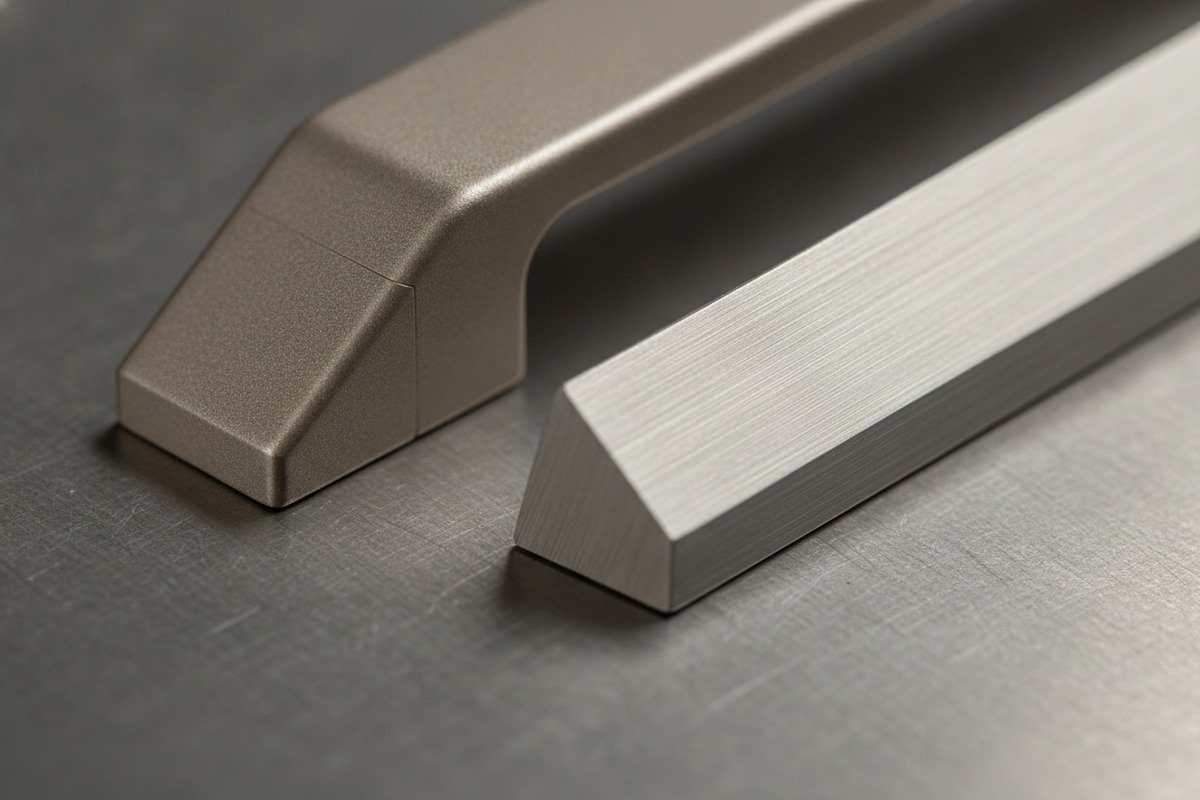
You can identify die-cast handles by their visible parting lines, ejector pin marks, and slightly grainy texture. Milled handles show fine, uniform tool marks, razor-sharp edges, and a denser, smoother feel. Checking for seam lines and edge sharpness is the fastest way to tell them apart.
Surface Texture and Feel
Die-cast handles have a distinct surface character. Because molten aluminum 2 fills a mold cavity under pressures ranging from 1,500 to 25,000 psi, the surface often picks up a slightly grainy or pebbled texture from the mold interior. You may also notice a thin line running along the handle body. This is the parting line 3 — the seam where the two halves of the steel mold meet during casting. On the back or hidden face of the handle, look for small circular marks. These are ejector pin impressions 4 left when the part is pushed out of the mold.
Milled handles look and feel different. Since a CNC machine carves the shape from a solid aluminum block, the surface is typically smoother and more uniform. If you look closely under good lighting, you might see very fine, parallel lines. These are tool marks from the cutting path. The edges on a milled handle are noticeably sharper and more precise. Geometric features like corners and channels have clean, crisp definitions that die-casting struggles to replicate.
Internal Structure and the Bend Test
This is where the differences go deeper — literally. Die-cast aluminum contains microscopic gas pockets trapped during the rapid injection process. This porosity makes the material slightly less dense and more brittle. If you try to bend a die-cast handle with force, it tends to crack or snap. Milled handles come from solid bar stock with a consistent, aligned grain structure. Under the same force, a milled handle will deform and bend before it breaks.
Quick Identification Checklist
| Inspection Point | Die-Cast Handle | Milled (CNC) Handle |
|---|---|---|
| Parting line | Visible seam on the body | No seam line present |
| Ejector pin marks | Small circular marks on back | None |
| Surface texture | Slightly grainy or textured | Smooth with fine tool marks |
| Edge sharpness | Rounded or slightly soft edges | Sharp, precise edges |
| Bend behavior | Cracks or snaps (brittle) | Deforms before breaking (ductile) |
| Weight consistency | Slight variation due to porosity | Very consistent weight |
In our experience shipping handles across Vietnam and the Middle East, buyers who learn these visual cues save themselves weeks of back-and-forth with suppliers. You can spot the process in under a minute once you know what to look for.
Machining Chips Tell the Story
If you ever visit a supplier's factory floor, watch the machining process. When a die-cast part undergoes secondary drilling or trimming, it produces small, brittle flakes — almost like coarse sand. A milled part produces long, curling strips of aluminum. This difference reflects the internal grain structure 5 and confirms the manufacturing method immediately.
Which manufacturing process will provide the best cost-efficiency for my large-scale production needs?
Our production planning team works with Vietnamese furniture factories every week, and the number one question is always about cost — especially when order quantities jump from hundreds to tens of thousands.
For orders exceeding 10,000 units, die-casting delivers the best cost-efficiency because the high initial mold investment is spread across many parts, driving unit costs as low as $0.50–$2.00. Milling is cost-effective only for smaller batches under 1,000 units, where avoiding expensive tooling saves money despite higher per-unit labor costs.
Understanding the Cost Structure
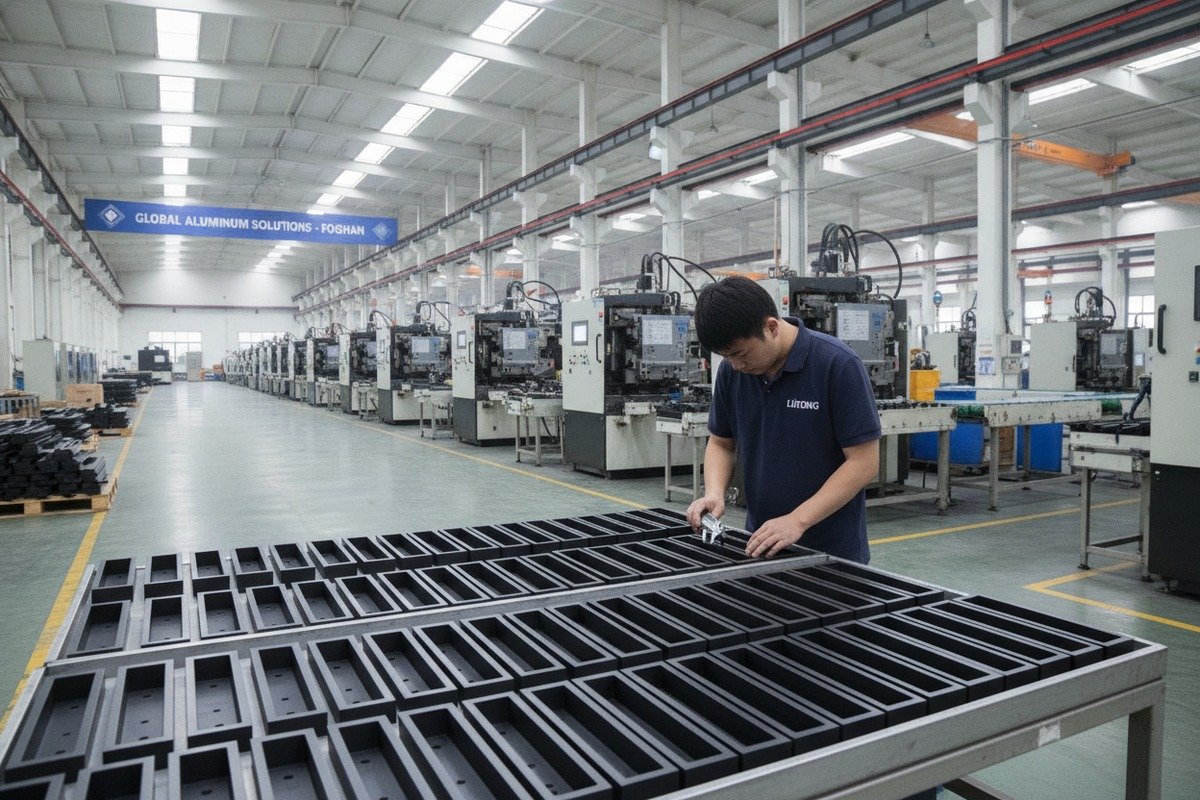
The cost equation for die-casting and milling works in opposite directions. Die-casting requires a significant upfront investment in steel molds 6 — typically $5,000 to $20,000 depending on the complexity and size of the handle. That sounds expensive. But once that mold is ready, each handle costs very little to produce. The cycle time per part is often measured in seconds, not minutes. For a 50,000-unit order, that mold cost gets divided across every piece, making it nearly invisible in your final unit price.
Milling has no tooling cost at all. You pay for the aluminum bar stock, the CNC machine time, and the operator's labor. But each handle takes minutes to machine — not seconds. For a small batch of 200 custom handles, this is perfectly fine. For 50,000 handles, it becomes a financial disaster. You would be paying $10 to $50 per unit instead of $1 to $2.
Cost Breakdown Comparison
| Cost Factor | Die-Casting | Milling (CNC) |
|---|---|---|
| Tooling / mold cost | $5,000–$20,000 | $0 |
| Unit cost at 500 pcs | $8–$15 (tooling amortized) | $10–$50 |
| Unit cost at 10,000 pcs | $1–$3 | $10–$50 |
| Unit cost at 50,000 pcs | $0.50–$2.00 | $8–$40 |
| Secondary machining | Often needed (drilling, polishing) | Minimal post-processing |
| Material waste | Low (near-net shape) | High (subtractive process) |
The Hidden Costs You Should Not Ignore
Many new buyers forget about secondary operations for die-cast parts. Your die-cast handle might come out of the mold looking almost finished, but it often needs extra drilling for screw holes, deburring along parting lines, and surface treatments like chrome plating or powder coating 7 to cover porosity. These secondary steps add cost. We always advise our clients to request a full breakdown that includes post-casting finishing.
For milled handles, the hidden cost is time. CNC machines 8 run slower, and if your design requires multiple setups — flipping the part to machine different faces — the labor hours climb fast. However, milled parts often need less surface treatment because the solid material takes anodizing beautifully without the risk of porosity bubbling through the finish.
The Break-Even Point
Most manufacturers in our network agree that the break-even point between die-casting and milling sits around 3,000 to 5,000 units for a standard furniture handle. Below that number, milling is usually cheaper. Above it, die-casting wins decisively. With our 300-ton ready-to-ship inventory and 3-to-7-day custom turnaround, we help buyers optimize this calculation before they commit to either process.
How do I decide which process is better for my custom OEM designs and lead time requirements?
When we develop new OEM handle designs with our furniture factory partners in Ho Chi Minh City and Binh Duong, the conversation always starts with two questions: how many do you need, and how fast do you need them?
Choose CNC milling for custom OEM designs when you need fast prototyping, frequent design changes, or short lead times with no mold waiting period. Choose die-casting when your OEM design is finalized and you need high-volume production with integrated complex features like ribs, bosses, and mounting holes cast directly into the handle.

Prototyping and Design Iteration
This is where milling dominates completely. Changing a CNC program takes hours — sometimes minutes. Your designer modifies the 3D file, uploads it to the machine, and the next prototype is ready within a day or two. We have turned around prototype handles in 48 hours for urgent OEM projects.
Changing a die-casting mold is a different story. If your client wants the finger groove 2mm deeper or the mounting hole shifted by 3mm, that means modifying a hardened steel mold. This costs thousands of dollars and takes weeks. For the prototyping and design approval stage, CNC milling is the only sensible option.
Design for Manufacturability (DFM) Differences
Each process has its own design rules. Understanding these rules prevents costly mistakes.
Die-casting DFM rules:
- Walls must have draft angles 9 (typically 1–3 degrees) so the part can release from the mold
- Uniform wall thickness prevents sink marks and porosity
- Undercuts require side cores, which increase mold complexity and cost
- Minimum wall thickness is around 1.0–1.5mm for aluminum
Milling DFM rules:
- Internal corners must have a radius matching the cutting tool diameter
- Deep, narrow pockets are difficult and slow to machine
- Thin walls can vibrate during cutting, reducing accuracy
- Tool access dictates which features are possible in a single setup
Lead Time Comparison by Scenario
| Scenario | Die-Casting Lead Time | Milling (CNC) Lead Time |
|---|---|---|
| First prototype (1–5 pcs) | 4–8 weeks (mold creation) | 2–5 days |
| Design revision | 2–4 weeks (mold modification) | 1–2 days |
| Production run (1,000 pcs) | 1–2 weeks (after mold ready) | 3–5 weeks |
| Production run (50,000 pcs) | 3–6 weeks | 3–6 months |
| Reorder (same design) | 1–2 weeks | 3–5 weeks |
Matching Process to Your OEM Scenario
Scenario 1: You are testing five handle designs for a new furniture line. Use CNC milling. You can produce five different prototypes in one week without any mold investment. Once the client approves one design, then consider die-casting if the production volume justifies it.
Scenario 2: Your client has approved a handle design and needs 30,000 pieces per quarter. Use die-casting. Invest in the mold once, and enjoy fast, cheap production for every reorder. The mold typically lasts for hundreds of thousands of cycles.
Scenario 3: You supply boutique hotels with custom handles in batches of 200–500. Use CNC milling. The volumes are too low to justify die-casting tooling, and each hotel project may require a unique design.
Our team regularly helps Vietnamese furniture factories navigate exactly these scenarios. We keep 300 tons of aluminum profiles in stock so that even CNC projects can start immediately without waiting for raw material delivery.
What impact will the choice between die-casting and milling have on my product's final surface quality?
Every time we prepare sample shipments for furniture shows in Vietnam, surface quality is the detail that buyers notice first — before they even ask about pricing or MOQ.
Die-cast handles can achieve good surface finishes but often require plating or powder coating to mask porosity and mold textures. Milled handles from solid aluminum deliver superior surface quality with consistent anodized finishes, sharper details, and no risk of subsurface voids bubbling through the coating over time.
Surface Treatment Options by Process
The raw surface coming out of each process determines which finishing methods work best — and which ones create problems.
Die-cast surfaces often have micro-porosity just below the skin. This is invisible to the naked eye, but it creates real issues during finishing. Anodizing a die-cast part can produce an uneven, blotchy appearance because the anodic layer 10 interacts differently with porous areas. That is why most die-cast handles are finished with plating (chrome, nickel, zinc) or powder coating, which physically covers the surface rather than chemically converting it.
Milled surfaces start as solid, void-free aluminum. This makes them ideal candidates for anodizing — the electrochemical process that creates a hard, corrosion-resistant oxide layer. Anodized finishes on milled 6061 or 7075 aluminum are smooth, uniform, and extremely durable. The champagne gold, matte black, and light bronze finishes that look so clean on modern recessed handles? Those are almost always anodized milled or extruded aluminum profiles.
How Porosity Affects Long-Term Finish Durability
Here is something many buyers learn the hard way. A die-cast handle might look perfect when it arrives from the factory — shiny chrome finish, no visible defects. But six months later, in a humid Vietnamese climate or a coastal Middle Eastern environment, tiny blisters appear under the plating. Moisture has penetrated through microscopic pores in the casting and caused corrosion beneath the surface coating.
Milled handles do not have this problem. The solid material has no internal pathways for moisture. An anodized milled handle can withstand years of exposure without blistering or peeling.
Finish Quality Comparison
| Surface Quality Factor | Die-Cast Handle | Milled (CNC) Handle |
|---|---|---|
| Raw surface smoothness | Moderate (mold texture) | Excellent (tool marks easily polished) |
| Anodizing compatibility | Poor (blotchy, uneven results) | Excellent (uniform, consistent color) |
| Chrome/nickel plating | Good (covers porosity) | Excellent (but often unnecessary) |
| Powder coating | Good (hides surface flaws) | Excellent |
| Long-term durability | Risk of sub-surface corrosion | Very stable, no porosity risk |
| Premium finish options | Limited by porosity | Full range including brushed, mirror, matte anodized |
Material Selection and Its Finish Impact
The aluminum alloy itself plays a major role in the final look. Die-casting typically uses A380 or A383 alloys — chosen for their excellent flow characteristics when molten, not for their surface finish quality. These alloys contain higher silicon content, which can create a dull or inconsistent appearance after finishing.
Milling uses alloys like 6061 and 7075, which were engineered for structural applications. These alloys accept anodizing beautifully and can be polished to a near-mirror finish. For the sleek, architectural recessed handles with champagne gold or matte charcoal finishes that modern Vietnamese furniture demands, 6061 aluminum processed through extrusion or CNC milling is the gold standard.
Practical Advice for Your Quality Assurance Process
When evaluating supplier samples, always ask these questions:
- What alloy was used? (A380 = die-cast, 6061/7075 = likely milled or extruded)
- What finish method was applied? (Plating often hides die-cast flaws)
- Can you provide a salt spray test report? (Reveals long-term corrosion resistance)
- Can you provide an X-ray or ultrasonic test for die-cast parts? (Reveals internal porosity)
We routinely provide these test reports to our buyers because transparency builds trust — and prevents the kind of quality failures that damage business relationships.
Conclusion
Choosing between die-casting and milling comes down to your volume, budget, design stage, and quality expectations — get this right, and your aluminum handles will serve your Vietnamese furniture business well for years.
Footnotes
1. Discusses the significant upfront tooling cost in die casting and its influence on overall project expenses. ↩︎
2. Describes the process of forcing molten aluminum into molds under high pressure in die casting. ↩︎
3. Explains what a parting line is in die casting, where mold halves meet, and its importance. ↩︎
4. Details ejector pin marks in aluminum die casting, their causes, and methods for prevention. ↩︎
5. Provides an engineering guide on how grain structure forms in metals and its impact on mechanical properties. ↩︎
6. Explains what die casting molds are, their construction, and role in manufacturing. ↩︎
7. Defines powder coating as a surface finishing process, explaining its application and benefits. ↩︎
8. Defines Computer Numerical Control (CNC) machines and their function in automated manufacturing processes. ↩︎
9. Explains the importance of draft angles in die casting design for easy part ejection and mold protection. ↩︎
10. Describes the microscopic structure and properties of the anodic layer formed during the anodizing process. ↩︎