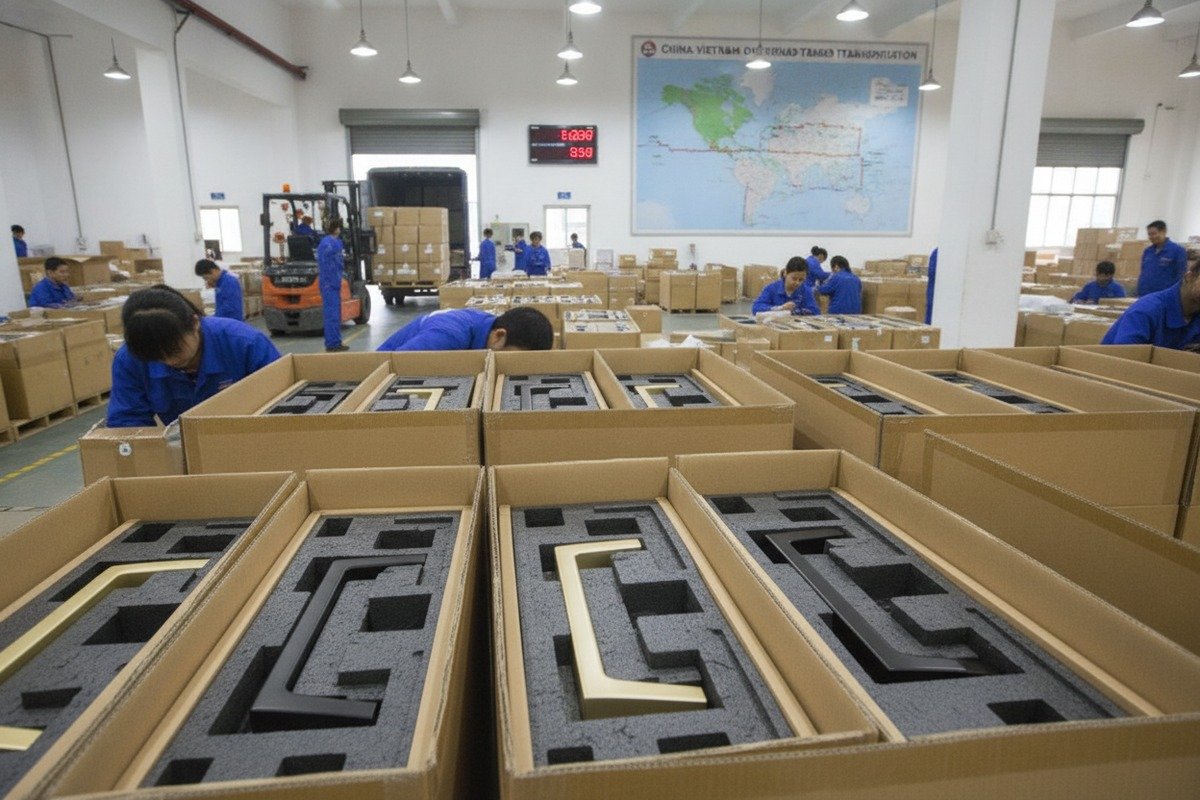
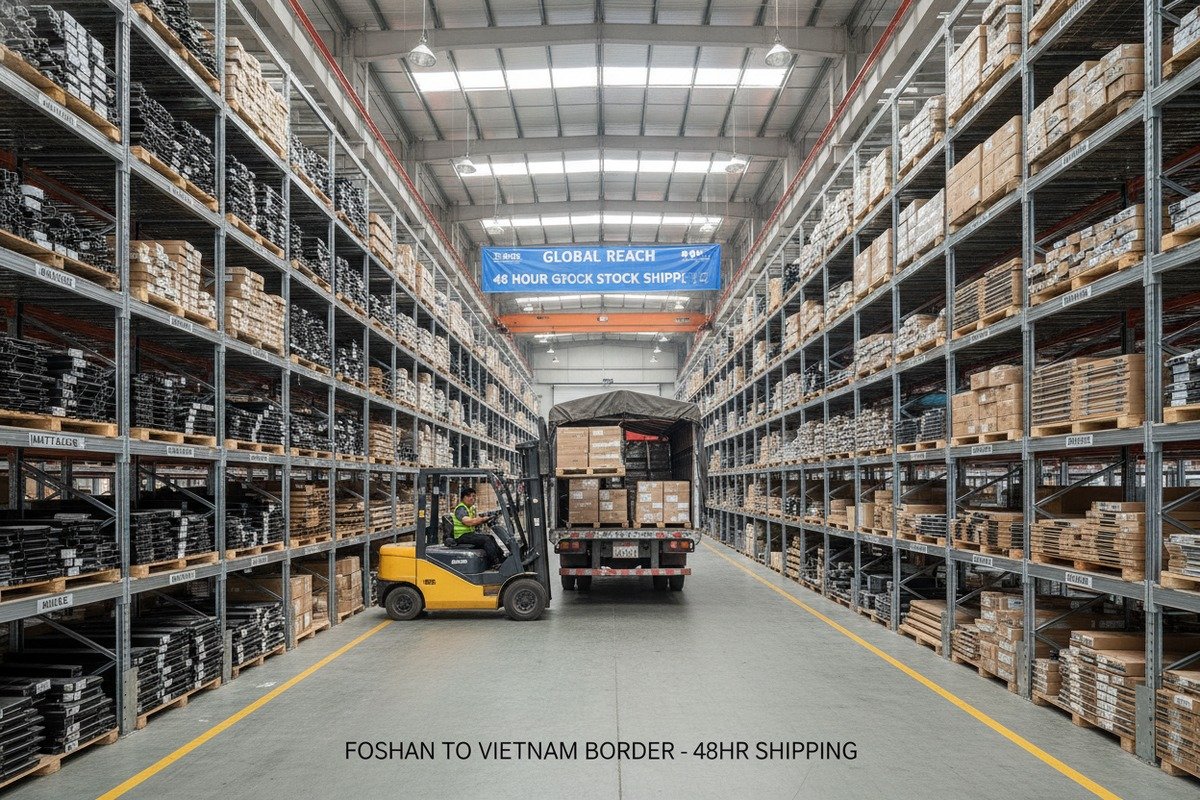
Every week, our warehouse in Foshan dispatches pallets of aluminum furniture handles bound for Vietnam — and the route they take matters more than most buyers realize.
To utilize China-Vietnam border crossings like Pingxiang-Lang Son for land transport customs clearance, you need correct HS codes, complete commercial documentation, a reliable freight forwarder experienced in cross-border trucking, and strict compliance with rules of origin. This corridor offers faster transit than sea freight, typically two to three days, but demands careful paperwork to avoid delays and penalties at the border gate.
Below, we break down the practical steps — from cutting shipping time to calculating landed costs — so you can move aluminum handles across this border with confidence and full compliance.
How can I reduce my shipping time by using land transport through the Pingxiang-Lang Son border?
Long delivery windows kill deals. When our Vietnamese distributors need handles restocked fast, sea freight from Foshan to Ho Chi Minh City can take seven to ten days — and that does not count port congestion correct HS codes 1.
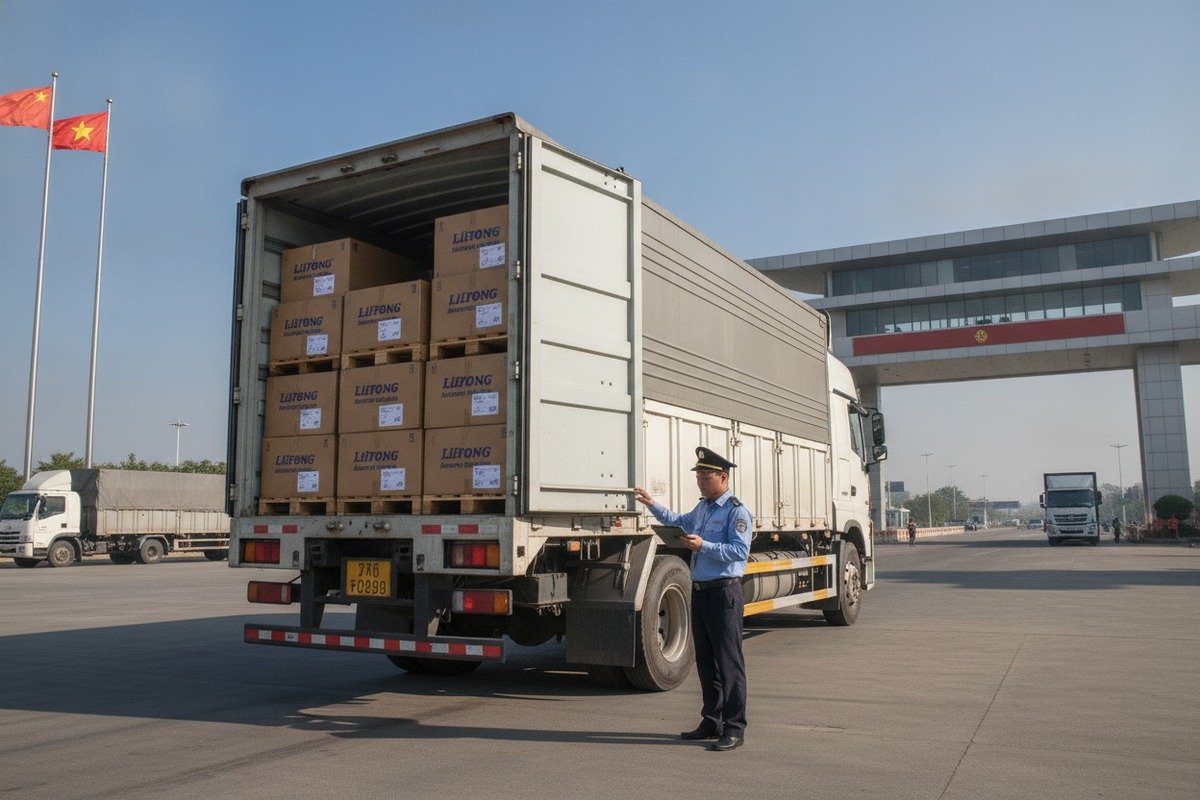
Land transport through the Pingxiang-Lang Son (Hữu Nghị–Youyi Guan) border crossing typically delivers aluminum furniture handles from southern China to northern Vietnam within two to three days, cutting transit time by 50–70% compared to sea freight and offering a more predictable schedule for medium-volume shipments.
Why This Corridor Works for Furniture Hardware
Aluminum furniture handles are small, dense, and high-value relative to their volume total landed cost 2. A single 20-foot truck can carry thousands of pieces. That makes land freight cost-effective when your order size sits between a few hundred kilograms and a full truckload. You do not need to wait for a full container the way you would with ocean shipping.
The Hữu Nghị–Youyi Guan gate 3 in Lang Son province is the most heavily used freight crossing on the China-Vietnam border. It connects directly to China's Guangxi highway network, which links to Foshan, Guangzhou, and other manufacturing hubs in the Pearl River Delta. From our factory, a truck reaches the border in roughly 8–12 hours.
Smart Border Gate Upgrades
Vietnam and China have invested heavily in digitizing this crossing. Recent smart-border projects have introduced automated scanning, digital customs declarations, and biometric driver checks. The reported goal is to increase daily truck capacity from about 1,000 vehicles to 3,300 vehicles once the full upgrade is completed. Some automated clearance steps have reportedly reduced processing from multi-day waits to near-instant verification for pre-cleared cargo.
Transit Time Comparison
| Route | Mode | Typical Transit Time | Best For |
|---|---|---|---|
| Foshan → Hanoi (via Pingxiang-Lang Son 4) | Truck | 2–3 days | Regular restocking, urgent orders |
| Foshan → Hai Phong | Sea freight | 5–7 days | Large bulk orders |
| Foshan → Ho Chi Minh City | Sea freight | 7–10 days | Southern Vietnam distribution |
| Foshan → Hanoi | Air freight | 1–2 days | Samples, emergency orders |
Practical Tips to Cut Time Further
First, use pre-arrival declaration through Vietnam's VNACCS system 5. Your customs broker submits documents before the truck reaches the gate. This alone can save a full day.
Second, avoid peak congestion periods. Lunar New Year, Golden Week, and major Vietnamese holidays create backlogs. We usually advise our customers to ship two to three weeks ahead of these windows.
Third, choose a freight forwarder who runs this route daily. Experienced operators know which lanes move fastest and how to handle last-minute inspection requests without panic. In our experience shipping to Hanoi-based wholesalers, the forwarders who specialize in this corridor consistently deliver one to two days faster than generalists.
Finally, keep your product packaging standardized. Uniform carton sizes and clear labeling speed up physical inspections when they happen. Our team packs handles in standard export cartons with bilingual labels — Chinese and Vietnamese — which border officers appreciate.
What are the essential documents I need for customs clearance when importing hardware by truck?
Paperwork errors are the number one reason trucks sit idle at the border gate. We have seen shipments of aluminum handles delayed by three or four days because one document had a mismatched quantity.
Essential documents for customs clearance of aluminum furniture handles via land transport include a commercial invoice, packing list, truck waybill, customs declaration form, Certificate of Origin (if claiming preferential tariff rates under ACFTA or RCEP), and the correct HS code classification — all of which must be consistent across every document to avoid inspection delays or penalties.
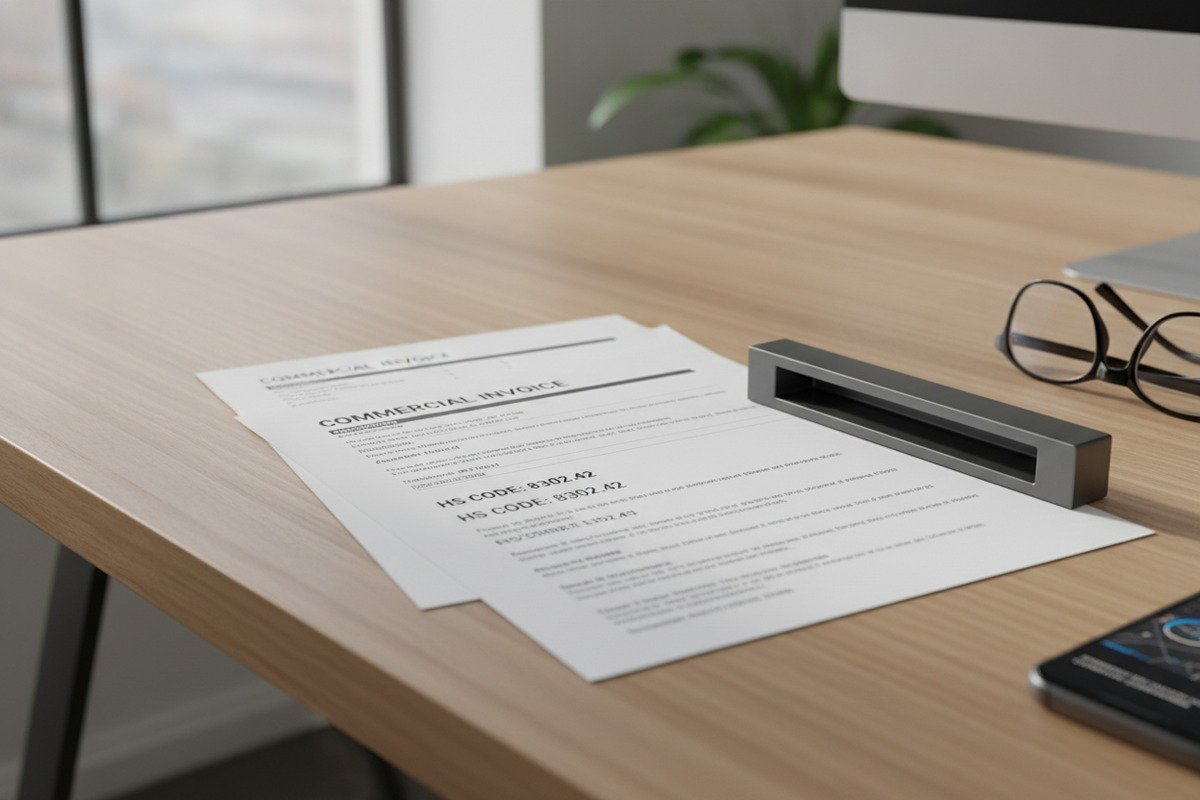
The Core Document Checklist
Here is exactly what you need to prepare before the truck leaves the factory:
| Document | Purpose | Who Prepares It |
|---|---|---|
| Commercial Invoice | States price, quantity, terms of sale | Supplier (exporter) |
| Packing List | Details carton count, weight, dimensions | Supplier (exporter) |
| Truck Waybill / Transport Document | Proves cargo is on a specific vehicle | Freight forwarder / trucking company |
| Customs Declaration (China export side) | Clears goods out of China | Customs broker (China side) |
| Customs Declaration (Vietnam import side) | Clears goods into Vietnam | Customs broker (Vietnam side) |
| Certificate of Origin (Form E for ACFTA or RCEP CO) | Claims preferential duty rate | Supplier or authorized chamber of commerce |
| Sales Contract | Confirms buyer-seller agreement | Both parties |
| Import License (if required for specific goods) | Permits entry of regulated items | Importer |
HS Code Accuracy Matters
Aluminum furniture handles typically fall under HS heading 8302 6 (base metal mountings, fittings, and similar articles suitable for furniture). The exact subheading depends on the handle design — whether it is a pull, a knob, or a recessed grip. Getting this wrong can trigger duty miscalculation or an inspection flag.
Our team always confirms the HS code with the Vietnamese buyer's broker before shipping. A recessed aluminum profile handle and a standard bar pull may look similar but can have different tariff treatments depending on how the importing country classifies them.
Consistency Is Everything
Customs officers on both sides of the border cross-check documents against each other. If your invoice says 5,000 pieces but your packing list says 4,800, the truck gets pulled aside. If your Certificate of Origin says the goods weigh 1,200 kg but the waybill says 1,350 kg, expect questions.
We maintain a pre-shipment document review process where our export team, the freight forwarder, and the Vietnamese buyer's customs broker all verify the same data points before the truck departs. This takes about half a day but prevents multi-day border delays.
Certificate of Origin — Use It Correctly
Under the ASEAN-China Free Trade Agreement 7 (ACFTA), aluminum furniture handles manufactured in China can qualify for reduced or zero import duty when entering Vietnam. The Certificate of Origin Form E 8 is the key document. But it must reflect actual Chinese manufacturing, not just Chinese shipping.
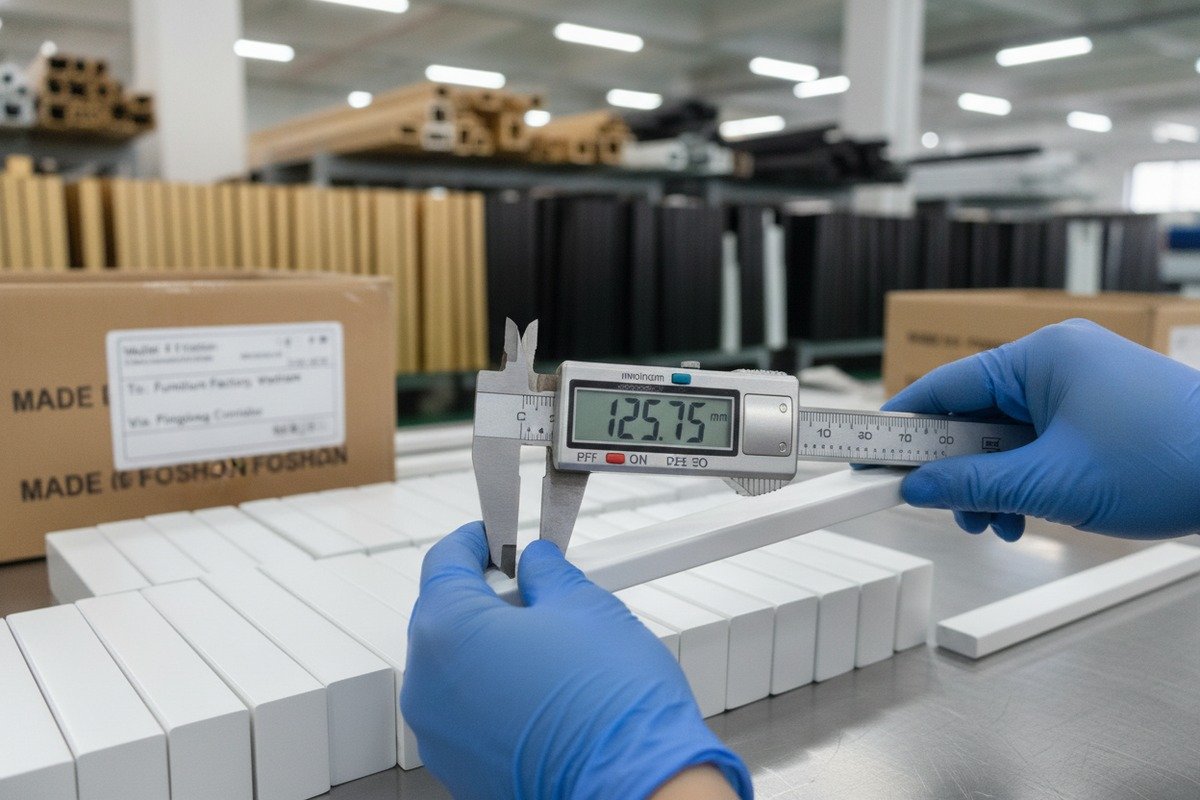
This is where compliance gets serious. If you are claiming the handles were made in China, you need to be able to prove it. Our factory keeps full production records — from aluminum billet sourcing to extrusion, anodizing, cutting, and packing — so that any origin inquiry can be answered with real documentation.
If handles are merely assembled or repackaged in China from components made elsewhere, the origin claim may not hold. The same logic applies in reverse: Chinese-made handles shipped through Vietnam do not become Vietnamese-origin goods just because they crossed the border.
How do I calculate the total landed cost of my aluminum handles using cross-border land transport?
Most buyers focus on the unit price of the handle. But the real number that determines your profit margin is the landed cost — everything from factory gate to your warehouse door.
To calculate the total landed cost of aluminum handles via land transport, add the product cost (FOB or EXW), domestic Chinese trucking to the border, cross-border freight charges, customs duties (based on HS code and applicable FTA rates), VAT in Vietnam, customs brokerage fees, and last-mile delivery to your warehouse — then divide by total units to get your per-piece landed cost.
Breaking Down the Cost Components
Let us walk through a realistic example. Say you are ordering 10,000 recessed aluminum handles from our Foshan factory, each weighing about 120 grams, with a total shipment weight of approximately 1,200 kg.
| Cost Component | Estimated Range (USD) | Notes |
|---|---|---|
| Product cost (EXW Foshan) | $0.80–$1.50 per piece | Depends on finish, size, customization |
| Domestic trucking: Foshan → Pingxiang border | $200–$400 per shipment | Shared or dedicated truck |
| Cross-border freight: Pingxiang → Lang Son | $150–$350 per shipment | Includes border crossing fees |
| Vietnam import duty (ACFTA Form E rate) | 0%–5% of CIF value | Depends on exact HS subheading |
| Vietnam VAT | 10% of (CIF value + duty) | Standard rate for imported goods |
| Customs brokerage (both sides) | $100–$250 total | China export + Vietnam import |
| Last-mile delivery: Lang Son → Hanoi | $80–$150 | Or further south if needed |
| Insurance | 0.1%–0.3% of cargo value | Optional but recommended |
A Sample Calculation
Assume 10,000 handles at $1.00 each (EXW), so the product cost is $10,000.
- Domestic trucking to border: $300
- Cross-border freight: $250
- CIF-equivalent value: roughly $10,550
- Import duty at 0% (ACFTA eligible): $0
- VAT at 10%: $1,055
- Customs brokerage: $180
- Last-mile to Hanoi: $100
- Insurance: $30
Total landed cost: approximately $11,915
Per-piece landed cost: approximately $1.19
Compare this to shipping by sea to Hai Phong, where ocean freight alone might cost $400–$600 for a small consolidated shipment, plus port handling fees, longer transit, and potential demurrage. For orders in this volume range, land transport often comes out equal or cheaper — and much faster.
When Sea Freight Wins
Land transport is not always the best choice. If your order fills a full 20-foot container (roughly 8,000–12,000 kg of aluminum handles), sea freight from Foshan to Hai Phong typically costs less per kilogram. The break-even point varies, but as a general rule, shipments under 3,000 kg favor land transport, and shipments over 5,000 kg favor sea freight.
Hidden Costs to Watch
Do not forget about potential storage fees if your truck arrives at the border during a congestion period and has to wait. Also factor in currency exchange costs if you are converting between CNY, VND, and USD at different stages. And always budget for at least one unexpected inspection per year — it will happen eventually, and having clean documentation makes the cost minimal rather than catastrophic.
Can my supplier handle the documentation and logistics for my land transport shipments to Vietnam?
Coordinating between a Chinese factory, a freight forwarder, and a Vietnamese customs broker sounds complicated. Many buyers wonder if their supplier can just take care of everything.
Yes, an experienced Chinese supplier can handle most documentation and logistics for land transport to Vietnam, including preparing commercial invoices, packing lists, Certificates of Origin, and coordinating with freight forwarders — but the Vietnamese import declaration and duty payment must be managed by the buyer or their local customs broker, since only a registered Vietnamese entity can clear goods into the country.
What Your Supplier Can Do
A capable supplier handles the China side of the equation. At our facility, here is what we routinely manage for Vietnamese buyers:
- Prepare all export documents — commercial invoice, packing list, sales contract, and export customs declaration.
- Obtain the Certificate of Origin — we apply for Form E through the authorized local chamber of commerce, ensuring every detail matches the invoice and packing list.
- Coordinate with the freight forwarder — we book the truck, schedule pickup, and confirm the border crossing date.
- Provide factory inspection records — if the buyer or customs authority requests proof of manufacturing origin, we supply production photos, material certificates, and quality test reports.
- Track the shipment — we share real-time location updates via WhatsApp so the buyer knows exactly when the truck will reach the border.
What You Need to Handle on the Vietnam Side
Your supplier cannot clear goods into Vietnam on your behalf. Vietnamese customs law requires a registered Vietnamese entity 9 — either the buying company directly or an authorized customs broker — to file the import declaration, pay duties and VAT, and receive the goods.
This is not a limitation of the supplier. It is a legal requirement. The good news is that experienced customs brokers in Lang Son handle hundreds of these shipments monthly. They know the process, the officers, and the common issues. A broker who specializes in the Hữu Nghị gate will cost you $50–$150 per shipment and save you far more in avoided delays.
The Division of Responsibility
Here is a clear breakdown of who does what:
| Task | Supplier (China Side) | Buyer / Broker (Vietnam Side) |
|---|---|---|
| Commercial invoice & packing list | ✔ | Reviews for accuracy |
| Certificate of Origin (Form E) | ✔ | Submits to Vietnam customs |
| Export customs declaration | ✔ | — |
| Freight booking & truck coordination | ✔ (or shared) | Confirms delivery address |
| Import customs declaration | — | ✔ |
| Duty & VAT payment | — | ✔ |
| Physical inspection response | Provides supporting documents | Handles on-site |
| Last-mile delivery from border | — | ✔ (or freight forwarder) |
Choosing a Supplier Who Understands This Route
Not every Chinese hardware factory ships regularly to Vietnam by land. Some only know sea freight to distant markets. When evaluating a supplier, ask these questions:
- Have you shipped to Vietnam via Pingxiang-Lang Son before?
- Can you provide Form E Certificates of Origin?
- Do you have a freight forwarder who runs this border route?
- Can you share tracking updates in real time?
- Will you coordinate directly with my Vietnamese customs broker?
Our team ships to Vietnam every week. We have standing relationships with freight companies that operate the Foshan-to-Lang Son corridor, and we routinely communicate with our buyers' brokers in Hanoi and Lang Son to resolve document questions before the truck moves. This kind of coordination is what separates a smooth two-day delivery from a frustrating five-day border hold.
A Warning About Origin Compliance
One critical point: your supplier should never offer to mislabel goods. If you are buying Chinese-made aluminum handles, they are Chinese-origin products. Period. Some suppliers may suggest labeling them as Vietnamese-made to help you avoid duties in a third country. This is origin fraud. Vietnam customs and international trade authorities have intensified enforcement against exactly this practice. The penalties include seized goods, fines, and blacklisting.
The correct approach is to use the border crossing as a legitimate logistics corridor — not as an origin-laundering shortcut. A trustworthy supplier will tell you this upfront.
Conclusion
The Pingxiang-Lang Son border crossing is a powerful logistics tool for sourcing aluminum furniture handles from China — fast, cost-effective, and increasingly automated. Use it with clean documentation, correct origin claims, and the right partners.
Footnotes
1. Explains the Harmonized System (HS) codes, their structure, and importance in international trade. ↩︎
2. Defines landed cost and outlines its components for accurate calculation in logistics. ↩︎
3. Replaced 404 Vietnamese customs link with the Wikipedia page for Friendship Pass, which includes the Hữu Nghị–Youyi Guan gate. ↩︎
4. Replaced 404 Wikipedia link with the correct and active Wikipedia page for Friendship Pass, which is also known as Pingxiang-Lang Son. ↩︎
5. Official information about the VNACCS/VCIS customs clearance system from the General Department of Vietnam Customs. ↩︎
6. Provides information on the Harmonized System, under which heading 8302 is classified. ↩︎
7. Official overview of the ASEAN-China Free Trade Area (ACFTA) from the ASEAN Secretariat. ↩︎
8. Explains the purpose and importance of Form E for preferential tariffs under the ACFTA. ↩︎
9. Details import requirements for Vietnam, including the necessity of a registered local entity for customs clearance. ↩︎
10. Replaced 404 PDF link with an authoritative overview page on Rules of Origin from the World Customs Organization (WCO). ↩︎