
Choosing an aluminium kitchen cabinet handles factory feels straightforward until you're dealing with color mismatches three weeks before your project deadline. After 18 years managing supply chains for furniture hardware, I've watched buyers make the same mistake repeatedly: they compare prices and delivery promises, but they never ask the questions that reveal whether a factory can actually handle their specific risk profile. The problem isn't finding a supplier—it's finding one whose capabilities match your real operational needs without learning the hard way through delayed shipments or quality complaints.
An aluminium kitchen cabinet handles factory isn't just a material supplier—it's a risk management partner. The right factory matches your specific needs across three dimensions: material specification vs. actual durability performance, customization timeline vs. budget constraints, and stock availability vs. delivery reliability. Custom furniture factories need different validation than wholesale distributors, and project buyers face entirely different risks than both. Understanding which factory model fits your supply chain requirements—and asking the right qualification questions during inquiry—determines whether you avoid costly material failures, unexpected MOQ barriers, or delivery delays that cascade through your entire project schedule.
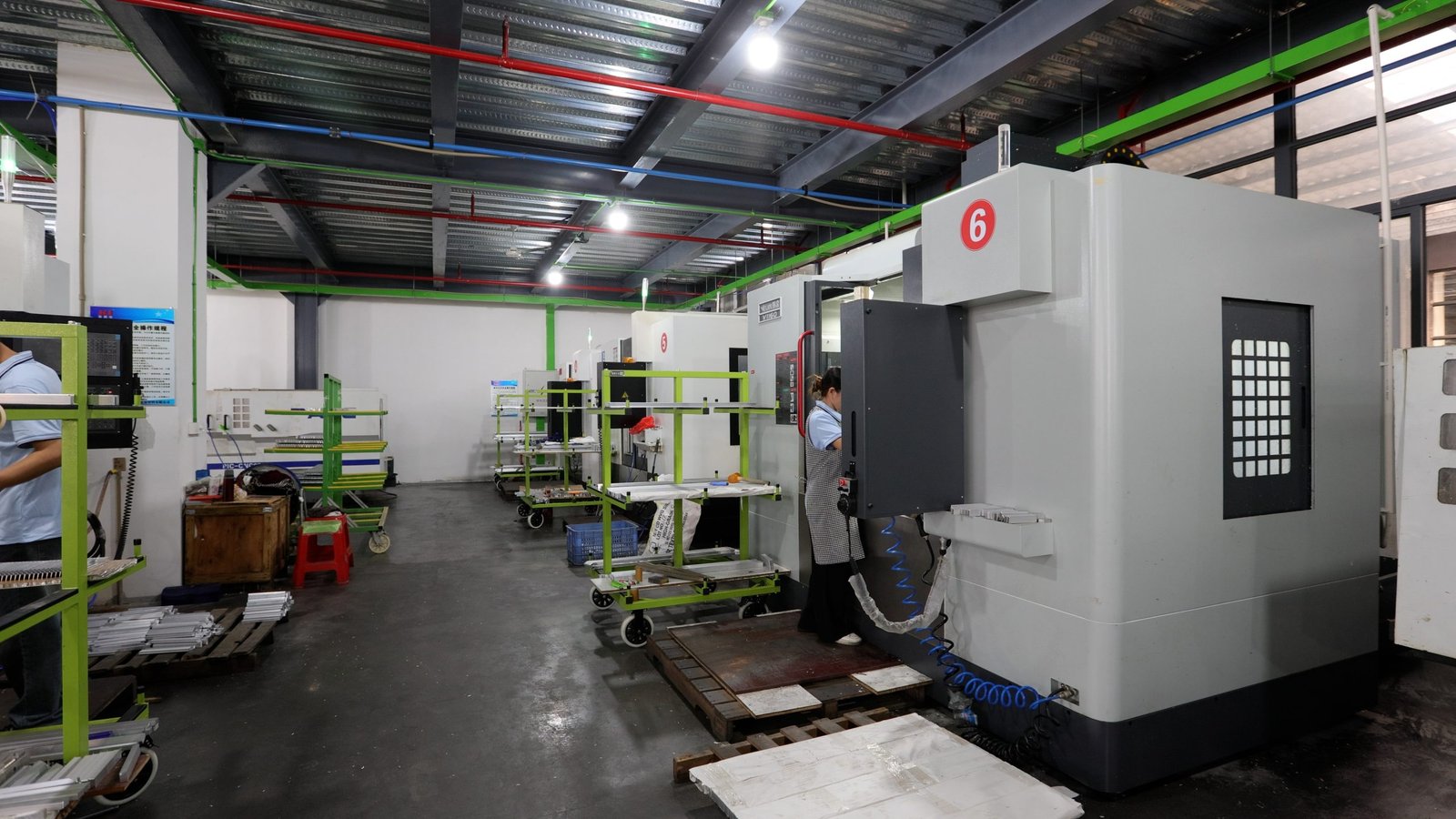
Most buyers I talk with approach factory selection backward. They start with "what's your price for 6063-T5 handles?" without understanding that alloy grade is only one variable in a much larger equation. The real question should be: "What supply chain model does this factory operate under, and does it match my risk tolerance?" Because the factory promising both 300 tons of ready stock and full custom capability is either misrepresenting their model or charging you for infrastructure you don't need.
What Makes an Aluminium Handle Factory Different from General Hardware Suppliers?
Walking into factory selection thinking all suppliers operate the same way is how buyers end up with 8-week lead times when they expected 2-week delivery.
The difference between an aluminium handle factory and a general hardware supplier isn't just product focus—it's the entire business model and supply chain structure they've built around that focus.
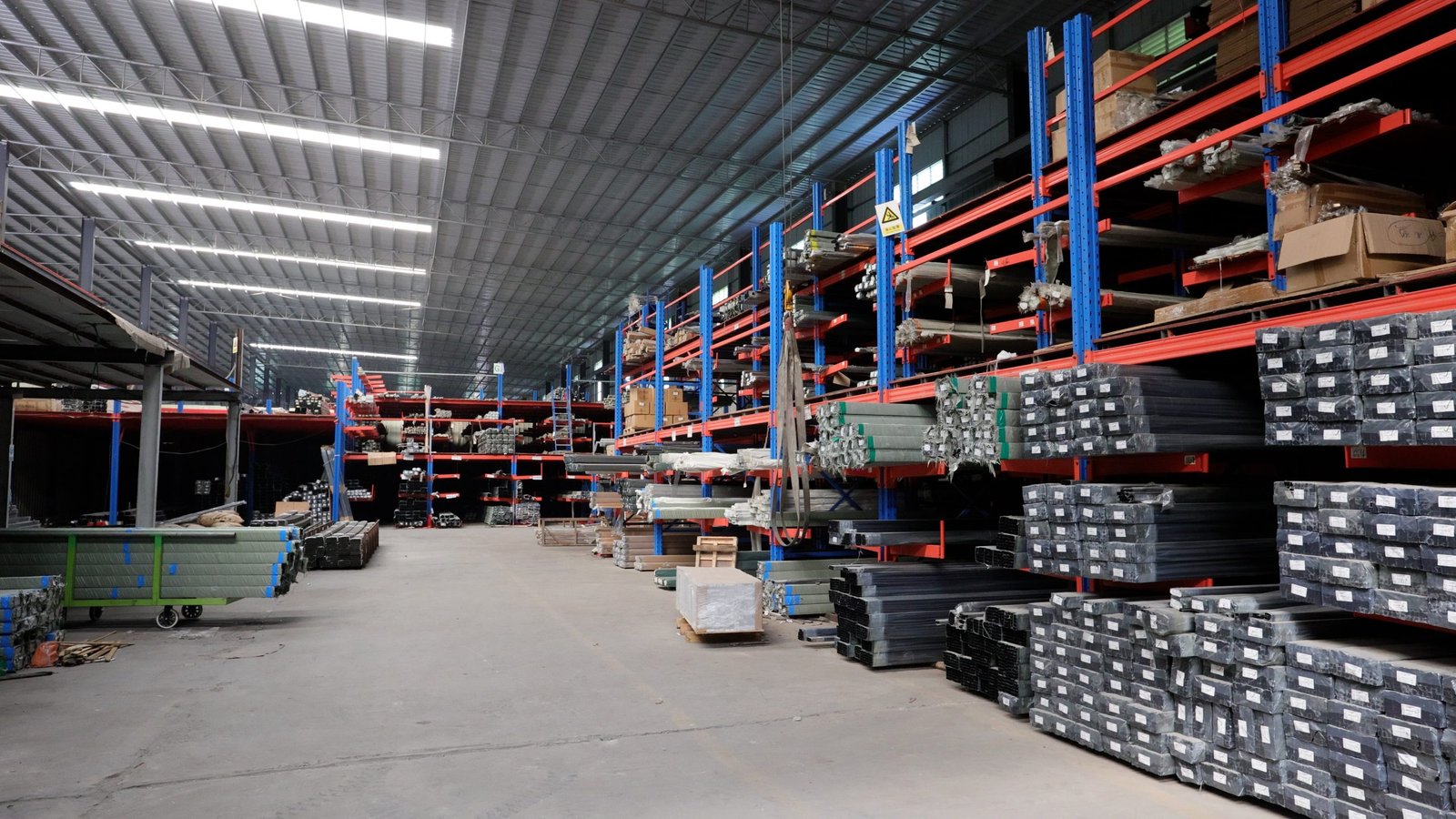
An aluminium handle factory operates on a vertical integration model that general suppliers don't justify economically. We maintain relationships with aluminium extrusion mills, stock different alloy grades in bulk (6063-T5 for standard applications, 6061-T6 when clients specify higher strength requirements), and invest in dedicated surface treatment lines—anodizing, powder coating, electroplating—that require minimum batch volumes to run efficiently.
This specialization creates three tangible differences:
Material knowledge depth translates to real problem-solving during specification. When a Vietnamese furniture factory tells me they're having corrosion issues with handles near kitchen sinks, I know to ask about their current anodizing thickness (it's usually 8-10 microns when coastal humidity environments need 15+ microns) rather than just recommending a different alloy. General suppliers know product codes; specialized factories understand application environments.
Tooling investment structure affects your customization options more than most buyers realize. We maintain mold libraries for common profile shapes—different widths, mounting distances, cross-sections—which is why our "3-7 day custom delivery" works for dimensional modifications within existing tooling. A general supplier ordering from third-party manufacturers faces 15-30 day lead times even for simple size adjustments because they're coordinating across separate production facilities.
Stock depth legitimacy is the third differentiator. When we claim 300 tons of ready stock, it represents calculated risk across our most-moved SKUs based on historical order patterns from wholesale distributors. A general supplier's "stock" often means they have access to inventory, not that they hold it—which matters when you need 5,000 pieces shipped within 48 hours.
But here's what I tell buyers who think "specialized factory equals better": specialization matches certain buyer profiles and fails for others. If you're a project buyer needing 50 handles in a unique finish with full certification documentation, you might actually get better service from a diversified supplier who routes special orders to appropriate manufacturers rather than trying to force a volume-focused factory to accommodate small custom runs.
How Stock-Based vs. Custom-Focused Factories Operate Differently
The fundamental misunderstanding I see in inquiries is buyers requesting "large stock availability plus full custom capability" as if they're complementary features.
They're actually competing business models with different cost structures:
| Factory Model | Inventory Philosophy | MOQ Logic | Lead Time Promise | Ideal Buyer Profile |
|---|---|---|---|---|
| Stock-Based Factory | 300+ tons across bestselling SKUs | Low (100-500 pieces per SKU) | 48-hour shipping for stock items | Wholesale distributors, urgent replacement orders |
| Custom-Focused Factory | Minimal safety stock, tooling library | Higher (1000+ pieces to justify setup) | 3-7 days for dimensional modifications, 15-30 days for new tooling | Furniture factories with brand consistency needs |
| Hybrid Model (our approach) | Strategic stock + tooling flexibility | Variable based on modification scope | Tiered: 48hr stock / 3-7 day modifications / 15-30 day new development | Mid-volume buyers who need both speed and customization |
Stock-based factories minimize SKU variety to maximize turnover. They're betting that 80% of buyer demand concentrates in 20% of handle styles, so they stock deep in those profiles. When you request a size modification, they either redirect you to the closest stock option or quote you the custom-focused factory's timeline because they're outsourcing the work.
Custom-focused factories minimize inventory carrying costs by producing to order. Their competitive advantage is design flexibility and color matching precision, not immediate availability. When you ask for "quick delivery," they're mentally calculating whether your order volume justifies interrupting their production schedule.
The hybrid model—which is what we've built after watching both approaches fail different customer segments—maintains calculated stock positions in highest-velocity items while investing in tooling libraries that enable fast customization within defined parameters. It works when you correctly segment which products belong in which category, and it fails when you try to treat everything as customizable or everything as stock.
Quality Control Systems That Actually Matter
Buyers ask about quality control like it's a checkbox: "Do you have ISO certification?" What they should ask is: "What specific quality failure modes have you systematically addressed in your production process?"
Because quality control in aluminium handle manufacturing isn't about perfect material—it's about controlling the variables that cause the top five customer complaints: color inconsistency across batches, anodizing layer thickness variation, dimensional tolerance drift in high-volume runs, surface defects from contamination during finishing, and mechanical strength degradation from improper heat treatment.
Here's what meaningful quality control looks like in practice:
Incoming material verification beyond alloy certification. We batch-test hardness on received extrusions because T5 vs. T6 temper designation on paperwork doesn't guarantee the material actually achieved proper heat treatment. I've seen "6063-T5" material test closer to T4 hardness levels because the supplier shortened cooling time. This matters because under-hardened aluminium deforms during drilling for mounting screws—your customer's installation complaint that "the handle bent during assembly."
In-process surface treatment monitoring with actual measurements, not visual inspection. Color consistency complaints trace back to anodizing current density variation during the same production run. We spot-check coating thickness every 500 pieces using eddy current gauges—tedious, but it catches the drift before an entire batch falls below spec. When a buyer from Hanoi complained about handles "looking different under LED lighting compared to natural light," the root cause was 3-micron thickness variation creating interference color shifts.
Post-treatment dimensional verification specifically for hole positioning. Powder coating adds 60-80 microns thickness; anodizing adds 10-15 microns. If you're drilling mounting holes before surface treatment without accounting for final dimensions, the holes don't align with standard cabinet drilling patterns. This is a rookie mistake that reveals a factory's experience level—whether they adjust drilling jigs based on final finish or just drill nominal dimensions and hope it fits.
Mechanical load testing for critical applications isn't standard procedure, but it should be for anyone supplying handles above 200mm length. We randomly sample 1% of production runs for pull-force testing (minimum 50kg before deformation) because long handles create mechanical advantage—a child yanking a 300mm handle applies far more bending moment than an adult pulling a 96mm knob.
The validation question you should ask any factory: "Walk me through what happens when you discover a quality issue mid-production run." Their answer reveals whether they have actual corrective action processes or just inspection theater. A factory that says "we inspect everything carefully" is hiding their real defect management system. A factory that explains "we halt production, measure 10 units before and after the detected defect to bracket the affected range, quarantine that batch, and adjust the process parameter that drifted" is demonstrating operational maturity.
How Do Material Specifications Translate to Real Kitchen Durability?
I lose count of how many buyers specify "6063-T5 aluminium" during inquiry without knowing what problem they're trying to solve.
Material specification matters, but only when you understand the actual failure mode you're preventing in your specific application environment.
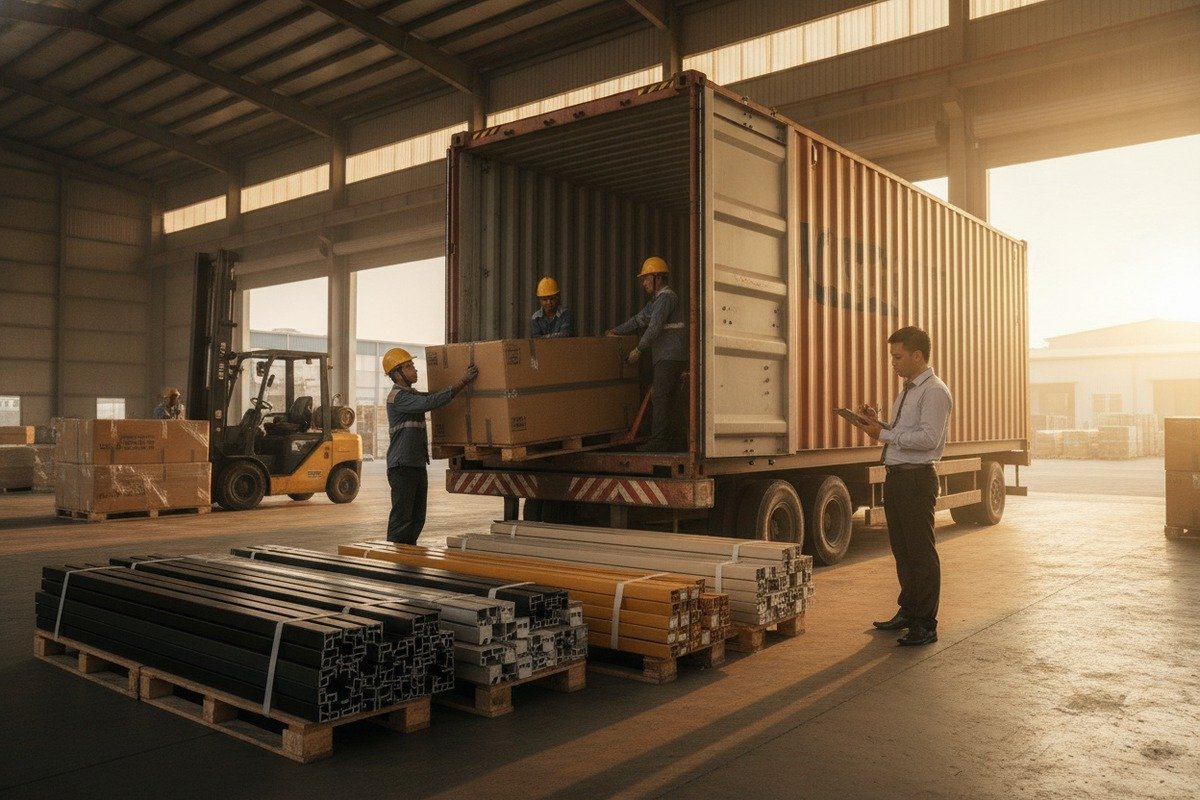
The specification confusion starts because buyers conflate alloy grade with final handle performance when surface treatment and installation quality often matter more. A 6063-T5 handle with properly executed 15-micron anodizing will outlast a 6061-T6 handle with 8-micron anodizing in coastal humidity environments—even though 6061 has higher tensile strength on paper.
Alloy Grade Selection: When It Actually Matters
6063-T5 is the standard for furniture cabinet handles because it balances three manufacturing requirements: extrudability into thin-walled profiles, adequate strength for typical kitchen use forces, and cost-effectiveness for volume production. The T5 temper designation means it's cooled from extrusion and artificially aged—hard enough to resist deformation during installation and daily use, soft enough to machine cleanly during fabrication.
6061-T6 enters the specification for three specific scenarios I see in real applications:
-
Heavy-duty drawers in commercial kitchens where handles face 50+ open-close cycles daily with industrial use forces. The higher strength-to-weight ratio (ultimate tensile strength ~310 MPa vs. 6063-T5's ~190 MPa) prevents gradual deformation at mounting points. A restaurant kitchen in Ho Chi Minh City switching from residential-grade handles to 6061-T6 solved their quarterly replacement cycle problem.
-
Extra-long handles (400mm+) where the unsupported span creates significant bending moment even under normal use. The stiffness difference between 6061 and 6063 becomes measurable when handle length exceeds the mounting point spacing by more than 2x. Buyers specifying 450mm handles for tall cabinet doors should default to 6061-T6 unless they accept the slight flex in 6063.
-
Ultra-thin profile designs where aesthetic requirements push wall thickness below 2mm. Thinner walls need higher material strength to maintain structural integrity. If your designer insists on minimalist 1.5mm wall thickness, you're forced into 6061-T6 or you'll face field failures.
For 90% of residential kitchen applications, 6063-T5 is over-specified and 6061-T6 is paying for strength you don't need. The real durability differentiation comes from surface treatment quality.
Surface Treatment: The Actual Durability Variable
This is where I see the biggest gap between what buyers specify and what they actually need.
Anodizing thickness determines corrosion resistance, not alloy grade. The aluminium oxide layer created during anodizing is what protects the base metal from oxidation and corrosion. Standard 8-10 micron anodizing works fine in dry interior environments. Coastal areas or kitchens with high humidity need 15+ micron anodizing. The difference in raw material cost is negligible; the difference in service life is 3-5 years.
When a furniture factory buyer from Da Nang complained about handles developing white corrosion spots after six months, the investigation revealed 8-micron anodizing in a facility 5km from the coast. Salt air penetrated the thinner oxide layer. The solution wasn't changing alloy—it was doubling anodizing thickness.
Color consistency across batches depends more on anodizing process control than material purity. The dyeing step during anodizing absorbs color into the porous oxide layer. Process variables—dye concentration, bath temperature, immersion time, and critically, current density during anodizing—all affect final color. This is why I tell buyers to request color swatches from actual production batches rather than relying on catalog samples.
A wholesale distributor lost a major furniture factory client because batch #1 and batch #2 of "black matte finish" handles were visibly different when installed side-by-side on the same cabinet door. The factory blamed material quality; the real cause was the distributor's supplier switching between two manufacturers with different anodizing process parameters.
Powder coating offers more color flexibility but introduces different failure modes. The organic polymer coating is mechanically bonded to the aluminium substrate, unlike anodizing which grows from the base metal. Poor surface preparation before powder coating—inadequate degreasing or insufficient surface roughening—creates adhesion failures where the coating delaminates from impacts or temperature cycling.
Kitchen handles near ovens face temperature swings from 20°C to 60°C as cabinets absorb heat. Powder coating expands and contracts at a different rate than aluminium substrate. A low-quality coating with poor adhesion develops micro-cracks at stress concentration points (usually sharp corners in the handle profile) within 12-18 months. The handle looks fine until someone bumps it and a chip falls off, exposing bare metal underneath.
The validation question: "What surface preparation process do you use before powder coating, and what coating thickness range do you target?" A factory that can't answer is outsourcing to a job shop with no process control. You want to hear: "We seven-stage pre-treatment including chromate conversion coating for adhesion, and we maintain 60-80 micron dry film thickness confirmed by magnetic gauge."
The Humidity and Frequency Variables Buyers Ignore
Material specification makes sense only after you define the actual use environment and frequency pattern.
Coastal humidity environments (within 50km of ocean) accelerate corrosion regardless of alloy choice. Even 6061-T6 will corrode if the anodizing layer is too thin. The correct specification hierarchy: anodizing thickness first, alloy grade second. For coastal installations, I recommend minimum 15-micron anodizing as non-negotiable, with alloy selection based on mechanical load requirements.
High-frequency use applications—commercial kitchens, rental properties, hotels—wear through surface finishes faster than material degrades. The failure mode shifts from corrosion to mechanical wear at contact points. For these applications, hardcoat anodizing (25+ microns) extends service life far more than upgrading from 6063 to 6061. Hardcoat anodizing creates a thicker, harder oxide layer that resists abrasion from rings, bracelets, and repeated gripping forces.
A hotel procurement manager in Hanoi replaced all bathroom cabinet handles every 18 months because standard anodizing wore through at contact points, exposing bare metal that oxidized and stained. Switching to hardcoat anodizing on the same 6063-T5 base alloy extended replacement cycle to 4+ years. The material cost increased 15%; the total cost of ownership decreased 60% from reduced replacement labor.
Low-frequency residential use is the opposite extreme. A homeowner touches kitchen handles perhaps 10-20 times daily. Surface wear is negligible; aesthetic durability becomes the primary concern. For these buyers, color stability over time matters more than abrasion resistance. UV exposure near windows, cleaning chemical compatibility, and whether the finish shows fingerprints dominate the selection criteria.
This is why I push back when buyers over-specify. A residential kitchen handle doesn't need 6061-T6 with hardcoat anodizing—you're paying for industrial-grade durability that residential use will never test. Match specification to actual failure risk.
What Customization Capabilities Should You Validate Beyond "We Can Customize"?
Every factory claims "full customization capability" until you ask for specifics.
What they mean is wildly variable—from "we can adjust length within existing profiles" to "we can develop entirely new tooling for unique designs."
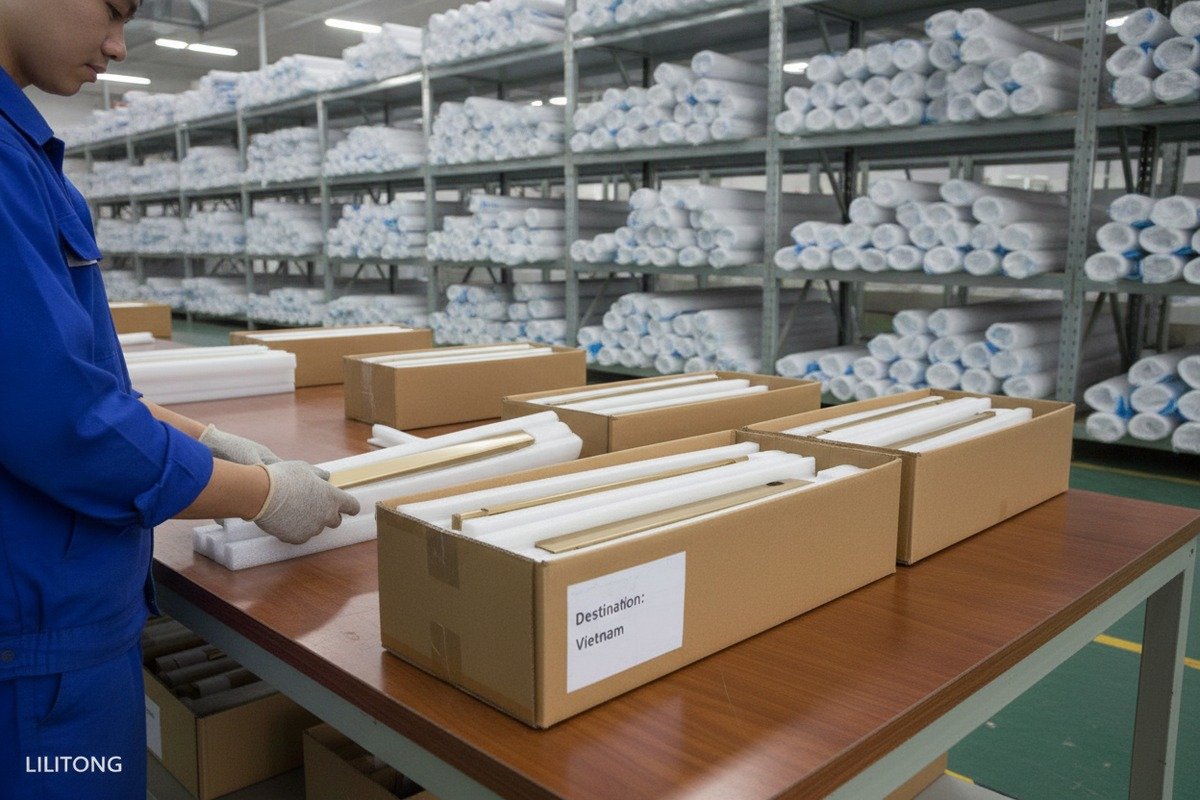
The customization question is actually a supply chain risk assessment disguised as a feature inquiry. What you're really asking: "What modifications can this factory execute within my timeline and budget constraints, and what hidden costs will appear after I commit?"
Customization Within Existing Tooling vs. New Tool Development
The "3-7 day custom delivery" we promise applies specifically to modifications within existing extrusion tooling—dimensional changes that don't require new die sets.
Here's what that includes:
Length adjustment across any existing profile shape. If we stock a 128mm handle in a specific cross-section design, cutting it to 96mm, 160mm, or 192mm is a material removal operation with no tooling cost