You've searched "aluminum handles from China manufacturers" because you need a reliable supplier—but now you're drowning in nearly identical websites, all claiming fast delivery, low MOQ, and full customization. The promises blur together, and you can't tell which supplier actually matches your order pattern. I've fielded hundreds of these inquiries over 18 years, and I can tell you: the confusion isn't your fault. Most manufacturers position themselves as if they solve every problem, when in reality, each supplier type excels at different things.
The answer isn't about finding the "best" manufacturer—it's about matching supplier structure to your order priority. If you need 200 pieces next week in standard finishes, you need a stock-focused supplier. If you're launching a custom furniture line with specific color matching, you need a customization-focused factory. If you try to force a stock supplier into deep customization or a custom factory into low-MOQ quick-turns, you'll waste weeks negotiating terms that don't align with how they actually operate.
Here's what most buyers miss: "customization" means different things across different supplier types, "fast delivery" requires infrastructure you can't see in product photos, and MOQ flexibility isn't negotiable goodwill—it's a mathematical outcome of how a supplier allocates capital. Let me walk you through how to decode what manufacturers actually offer versus what their marketing claims.
What Actually Determines If a Chinese Aluminum Handle Manufacturer Can Meet Your Needs?
When you contact five manufacturers with the same RFQ, you'll get five different responses—different MOQs, different lead times, different customization options. This isn't random. It reflects how each factory has structured their production model.
The core variable is inventory strategy: does the supplier pre-produce standard SKUs and hold stock, or do they manufacture-to-order for every inquiry? Stock-focused suppliers can ship 48 hours after payment because they've already invested capital into finished goods inventory. Custom-focused factories quote 25-45 day lead times because they start production only after your order confirms—they don't carry inventory risk.
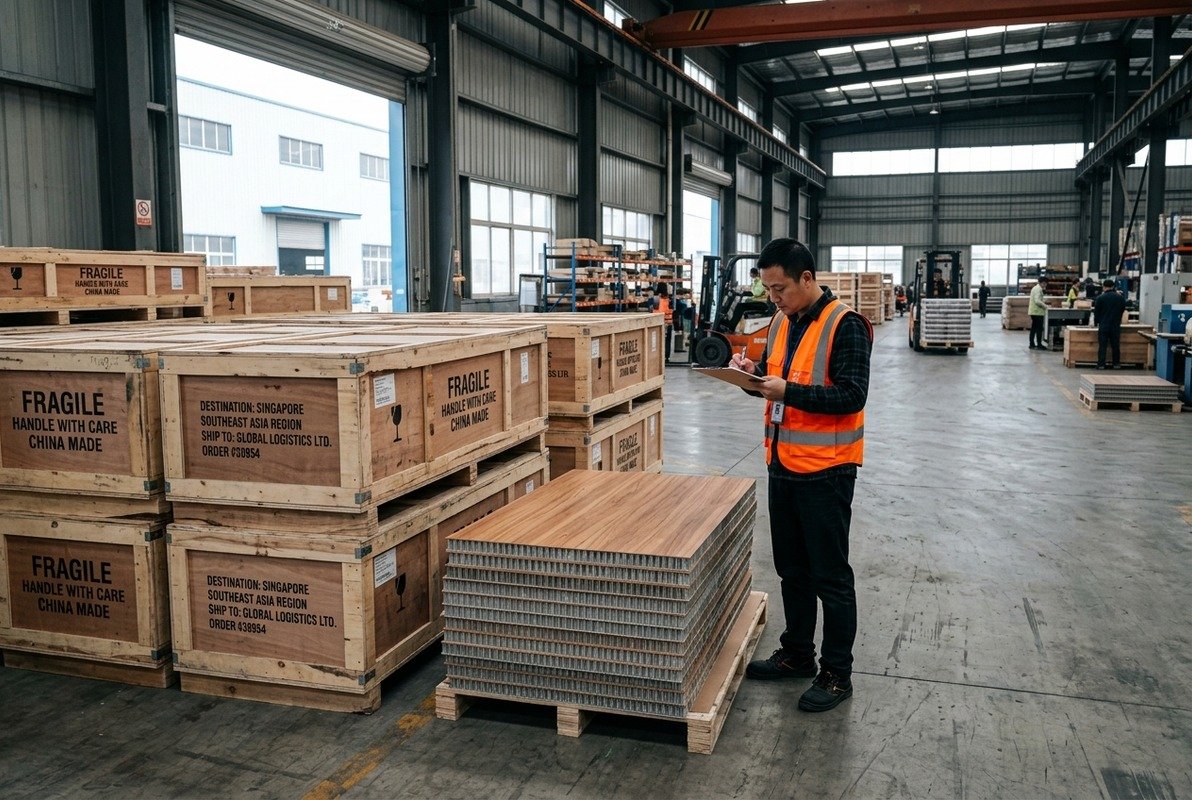
In client conversations, I see this confusion constantly: buyers assume low MOQ + full custom design + fast delivery should all come together. But these three variables trade off against each other. Let me break down what each supplier type actually optimizes for.
Stock-Ready Suppliers: High Inventory, Low MOQ, Limited Design Range
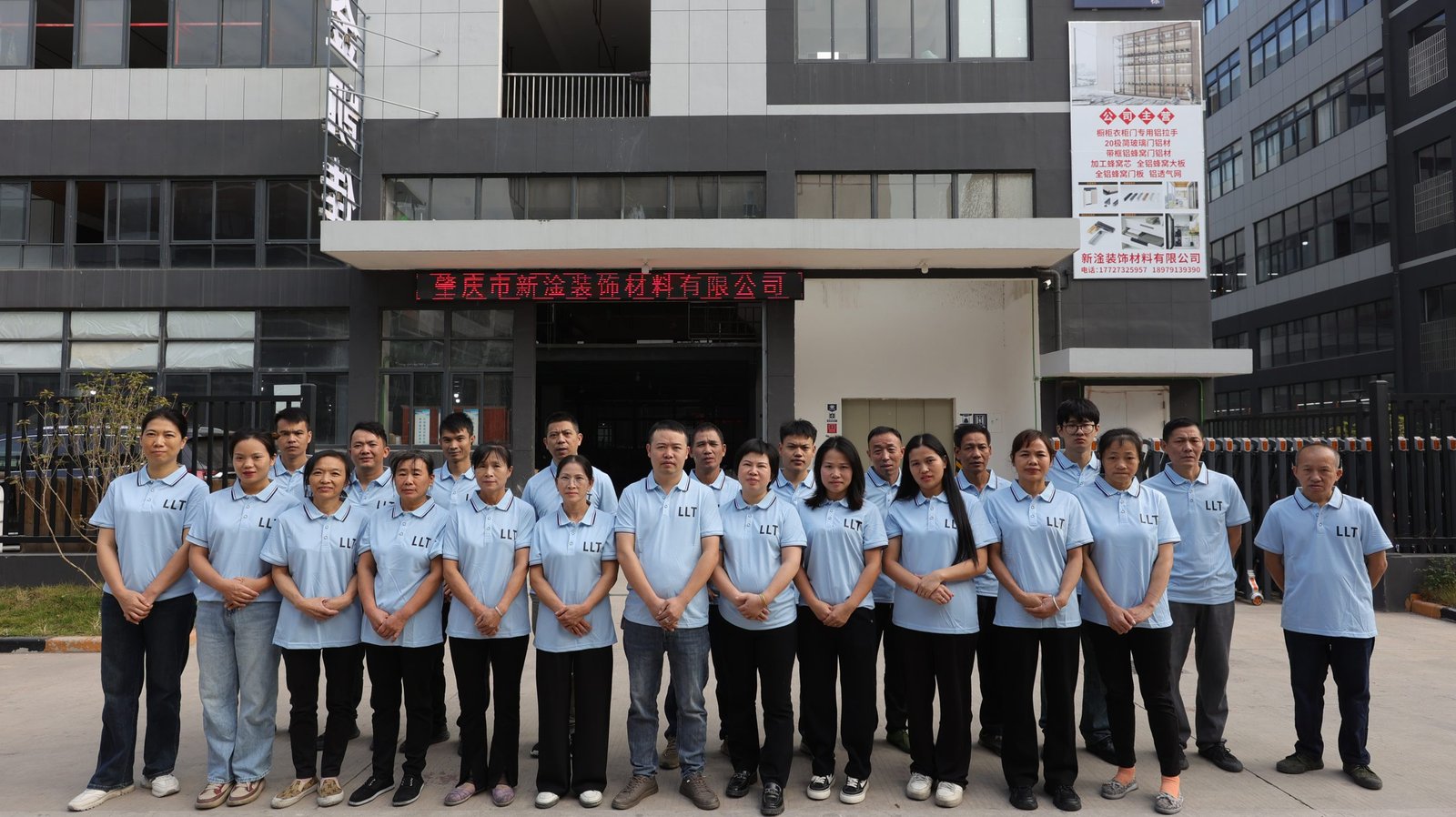
A stock-ready supplier (like us at LiliTONG, where we maintain 300 tons of ready inventory) pre-manufactures popular SKUs based on historical order patterns. We've already paid for raw materials, extrusion runs, surface finishing, and warehouse space before you contact us. This upfront capital commitment lets us offer:
- MOQs as low as 50-100 pieces per SKU (because we're not starting a new production run for your order—we're allocating from existing stock)
- Shipping within 48 hours (because the product is already finished and quality-checked)
- Immediate pricing without tooling quotes (because we're selling from inventory, not calculating custom production costs)
The trade-off: you're selecting from our existing style and finish library. If we stock 200 SKUs across various profiles (modern, classic, industrial) and finishes (brushed nickel, matte black, polished chrome), you can mix and match within that range—but we can't create a new profile design without moving you into the custom production workflow, which changes MOQ and lead time.
Who this works for:
- Furniture wholesalers who need to restock standard items frequently in smaller quantities
- Factory buyers testing new product lines without committing to bulk inventory
- Projects with tight timelines (hotel refurbishment, retail store buildouts) where 2-week lead times kill the deal
Who this doesn't work for:
- Brands launching signature handle designs that require new mold development
- Projects with highly specific color matching (e.g., matching a proprietary furniture finish that's not in our standard powder coating palette)
- Buyers who need just one unique profile at ultra-low MOQ (stock suppliers stock range, not endless one-offs)
Customization-Focused Factories: Unlimited Design, Higher MOQ, Longer Lead Times
A custom-focused manufacturer doesn't hold finished goods inventory. They operate on a make-to-order model: you provide specifications (profile drawing, finish sample, dimension requirements), they quote tooling costs (if new molds are needed), and they schedule your order into their production line.
This model unlocks true design flexibility:
- New profile development (they can extrude custom cross-sections, not just select from existing dies)
- Exact color matching (you send a physical sample or RAL/Pantone code, they formulate powder coating or anodizing to match)
- Specification adjustments (length, mounting hole position, internal reinforcement)
The constraints:
- MOQs typically start at 500-1,000 pieces per SKU (because they need to justify setup time for extrusion dies, surface finishing lines, and quality control batches)
- Lead times run 25-45 days (raw material procurement, production scheduling, batch processing, and QC cycles all happen after order confirmation)
- Pricing includes tooling amortization (if you need a new die, that cost gets spread across your order quantity—or charged upfront as a one-time fee)
Who this works for:
- Furniture brands with design teams creating signature hardware that differentiates their product line
- Large furniture factories consolidating handle procurement for annual production runs (where 10,000-piece orders make custom development economical)
- Projects where exact aesthetic matching is non-negotiable (luxury residential, high-end commercial interiors)
Who this doesn't work for:
- Wholesalers who need 200 pieces next month and another 150 pieces two months later (the MOQ math doesn't work)
- Buyers testing market response before committing to large inventory (custom MOQs force you to bet big upfront)
- Urgent restocking needs (you can't compress 30-day production cycles without paying rush fees that destroy your margin)
Hybrid Suppliers: The "Semi-Custom" Middle Ground
Some manufacturers (including us) operate a hybrid model: deep stock inventory for core SKUs, plus the ability to do surface finish variations and minor spec modifications without full custom tooling.
For example, at LiliTONG, if you like our Profile #A47 (a modern T-bar handle we stock in brushed nickel and matte black), but you need it in bronze or white powder coat, we can run a custom finish batch without creating new extrusion dies. This hits a middle ground:
- MOQ for custom finishes: 200-300 pieces (because we're only customizing the surface treatment, not re-engineering the base profile)
- Lead time: 7-10 days (we pull raw profile from stock, send it through custom powder coating, then package)
- No tooling fees (you're leveraging our existing profile inventory)
This works for buyers who need brand-specific color matching but don't need unique profile geometry. It's the most common actual customization need I see from Vietnam furniture wholesalers—they want their handles to match their proprietary furniture finishes, but they don't need a completely new handle design.
MOQ Logic: Why Stock Suppliers Can Go Lower
MOQ policies confuse buyers because they assume it's arbitrary negotiation. It's not. MOQ reflects the production efficiency threshold where a supplier's cost structure makes sense.
For stock-ready suppliers, the MOQ barrier is inventory allocation risk, not production setup cost. If I sell you 50 pieces from stock today, I need confidence that I can sell the remaining 950 pieces from that production batch to other clients. Our 300-ton inventory spreads this risk across hundreds of SKUs, which is why we can offer lower MOQs—we've already paid the production cost upfront, and we manage turnover across our entire client base.
For custom manufacturers, the MOQ barrier is setup cost amortization. Every time they switch dies on an extrusion line, adjust powder coating formulas, or recalibrate CNC machines for a new profile, they incur fixed costs (labor hours, material waste, QC time). If your order is 100 pieces, those fixed costs per unit are prohibitively high. At 1,000 pieces, the per-unit cost becomes reasonable.
For hybrid suppliers doing finish variations, the MOQ sits in between because we're only running one production step (surface treatment), not a full manufacturing cycle.
| Supplier Type | Typical MOQ Range | What Drives the MOQ | Your Flexibility |
|---|---|---|---|
| Stock-ready | 50-200 pieces per SKU | Inventory turnover confidence | Mix SKUs from existing catalog |
| Hybrid (finish variation) | 200-500 pieces per finish | Surface treatment batch setup | Choose profile from stock, customize color |
| Full custom | 500-1,500+ pieces | Extrusion tooling + full production setup | Complete design freedom |
This table isn't universal (some manufacturers claim lower MOQs by cross-subsidizing from other clients or accepting thinner margins), but it reflects the structural economics I see across our supplier network.
How Do Delivery Timelines Reflect Supplier Capability?
When a manufacturer claims "fast delivery," ask what that delivery speed actually requires from their operation. It's not a marketing slogan—it's a capacity commitment.
48-hour dispatch (stock suppliers):
This requires capital tied up in finished goods inventory, warehouse space, established QC protocols (we can't inspect on-the-fly; everything's pre-checked), and logistics partnerships with freight forwarders who collect daily. At LiliTONG, we maintain those 300 tons specifically so we can promise 48-hour dispatch—but that capital investment limits how much we can simultaneously invest in new profile development. It's a strategic choice.
![Logistics workflow diagram showing order processing to shipment for aluminum handles]https://lilitonghardware.com/wp-content/uploads/2026/06/微信图片_20250820165037_81_265-scaled.jpg( "Fast delivery system for furniture hardware")
7-10 day lead time (semi-custom finish variations):
This assumes the base profile exists in inventory, so the timeline covers: pulling inventory, batching orders for powder coating (we wait until we have enough pieces to justify a coating run), curing time (powder coating needs 24-48 hours depending on finish complexity), final QC, and packaging. The delay isn't inefficiency—it's batch economics. If we ran powder coating for every 50-piece order individually, the per-unit cost would triple.
25-45 day lead time (full custom production):
This is material procurement (3-7 days), production scheduling (factories batch similar orders to minimize die changeovers, so your order waits for a slot), extrusion run (1-3 days depending on order size), surface treatment (2-5 days depending on finish complexity), quality inspection (random sampling + stress testing), and packaging. You can't compress this without paying rush fees, which usually means jumping the queue in the production schedule—and that premium is significant (20-40% cost increase).
What buyers misunderstand:
Many assume delivery speed is negotiable if they push hard enough. It's not. If a stock supplier suddenly promises custom production in 10 days, they're either lying, rushing QC (which leads to defect claims later), or they're not actually doing what you think they're doing (e.g., they're giving you a close-enough stock item and hoping you don't notice the spec mismatch).
What Does "Customization" Actually Mean in Practical Terms?
This is where buyer expectations diverge most wildly from supplier reality. In our WhatsApp and Zalo conversations, I regularly see buyers ask: "Can you customize?" and expect a yes/no answer. But customization isn't binary—it's a spectrum, and each level has different cost and MOQ implications.
Level 1: SKU Selection from Stock Catalog
You browse our existing 200+ SKUs, pick Profile A in Finish 1 and Profile B in Finish 2, mix them into one order. This is technically "customizing your assortment," but it doesn't require any production changes. MOQ: 50-100 pieces per SKU. Lead time: 48 hours.
Level 2: Surface Finish Variations on Existing Profiles
You like our Profile #A47 but need it in a custom powder coat color we don't stock. We pull the raw profile from inventory and run a custom finish batch. This is semi-custom: the geometry is fixed, but the aesthetic is yours. MOQ: 200-300 pieces. Lead time: 7-10 days.
Level 3: Dimensional Modifications on Existing Profiles
You need our Profile #A47 but 20mm longer, or with mounting holes shifted 5mm. If the modification doesn't require new extrusion dies (e.g., we can cut to length, drill new holes in post-processing), this is still semi-custom with moderate setup costs. MOQ: 300-500 pieces. Lead time: 10-15 days.
Level 4: New Profile Development (New Extrusion Dies)
You provide a CAD drawing or physical sample of a handle design we don't have. We need to cut new extrusion dies, test the profile for structural integrity, validate surface finish adhesion on the new cross-section geometry. This is full custom. MOQ: 1,000-2,000 pieces (because die costs need amortization). Lead time: 30-45 days. Tooling fee: $800-$2,500 depending on profile complexity.
Why this matters for your inquiry:
When you ask "Can you do custom?", specify which level you need. If you say "custom" but you actually mean Level 2 (finish variation), and the supplier hears "custom" and quotes you Level 4 MOQs, you'll think they're inflexible—but the misunderstanding happened in the initial scope definition.
I've seen buyers waste two weeks going back and forth with suppliers because neither side clarified what "customization" meant in the first message. Save yourself the time: in your initial RFQ, specify:
- Are you selecting from existing profiles with potential finish changes? (Level 1-2)
- Do you need dimensional tweaks to an existing profile? (Level 3)
- Do you have a completely new design? (Level 4)
How Do You Evaluate Quality Without Visiting the Factory?
Furniture wholesalers in Vietnam often tell me: "I can't fly to Foshan to inspect the factory, so how do I know your handles won't fail after 6 months?" Fair concern. Here's what actually predicts quality in aluminum handles—and what's just theater.
Material Grade: 6063-T5 vs. 6061-T6
Aluminum extrusion handles typically use 6063-T5 alloy (standard for furniture hardware) or 6061-T6 alloy (higher strength, used in structural applications). For furniture handles, 6063-T5 is appropriate unless your design has extreme cantilever stress (very long pulls on heavy drawers). If a supplier claims "6061-T6 premium quality," ask if your application actually needs it—you might be paying for over-spec'd material.
What to verify: Ask for material certificates (EN AW-6063 standard). Don't accept vague claims like "high-grade aluminum"—that's meaningless.
Surface Finish Durability: Powder Coating vs. Anodizing
Powder coating:
- Pros: Unlimited color options, cost-effective, good corrosion resistance
- Cons: Scratches expose bare aluminum (looks damaged even if corrosion-resistant)
- Quality test: Ask about coating thickness (60-120 microns is standard; below 50 microns chips easily). Ask if they do salt spray testing (should pass 200+ hours per ASTM B117 for residential furniture use)
Anodizing:
- Pros: Surface is integral to aluminum (scratches don't expose different material), excellent wear resistance
- Cons: Limited color palette (natural silver, black, bronze), higher cost
- Quality test: Ask about anodizing layer thickness (10-25 microns for decorative anodizing). Class II anodizing is standard for furniture; Class I is too thin.
What to request in samples:
Don't just ask for "a sample." Request samples that you can physically test: scratch with a key (simulates daily wear), spray with diluted vinegar (simulates acidic cleaner contact), leave in sunlight for a week (checks color fastness). If a supplier refuses to send test samples, they're either hiding quality issues or they don't have confidence in their own product.
Internal Reinforcement for Long Handles
Handles over 300mm in length need internal reinforcement to prevent bending under stress (think of someone yanking open a stuck drawer). Quality manufacturers insert aluminum or steel reinforcement tubes inside hollow profiles. Budget manufacturers skip this—handles feel fine when you first install them, but they deform after 6 months of use.
What to verify: Ask suppliers directly: "For Profile XYZ at 400mm length, what internal reinforcement is used?" If they say "solid aluminum profile," check if that's economically plausible (solid profiles are expensive and heavy