I've coordinated hundreds of aluminium profile orders between buyers and Chinese factories. The pattern never changes: someone sends me an inquiry with a photo and asks for the "best price," then gets confused when three suppliers quote wildly different figures for what looks like the same product. The real problem isn't price negotiation — it's that most buyers don't realize their inquiry contains invisible assumptions that suppliers interpret completely differently.
If you're sourcing aluminium profiles from China, your main task isn't finding the cheapest quote. It's verifying which supplier can actually deliver your specific requirements without discovering capability gaps during production. The difference shows up in three questions: how they handle custom specifications without inflating MOQ, how they calculate lead times under production load, and which cost differences signal real capability gaps versus margin padding. Suppliers who can answer these questions with specific operational details — not marketing promises — are the ones who won't surprise you during order confirmation.
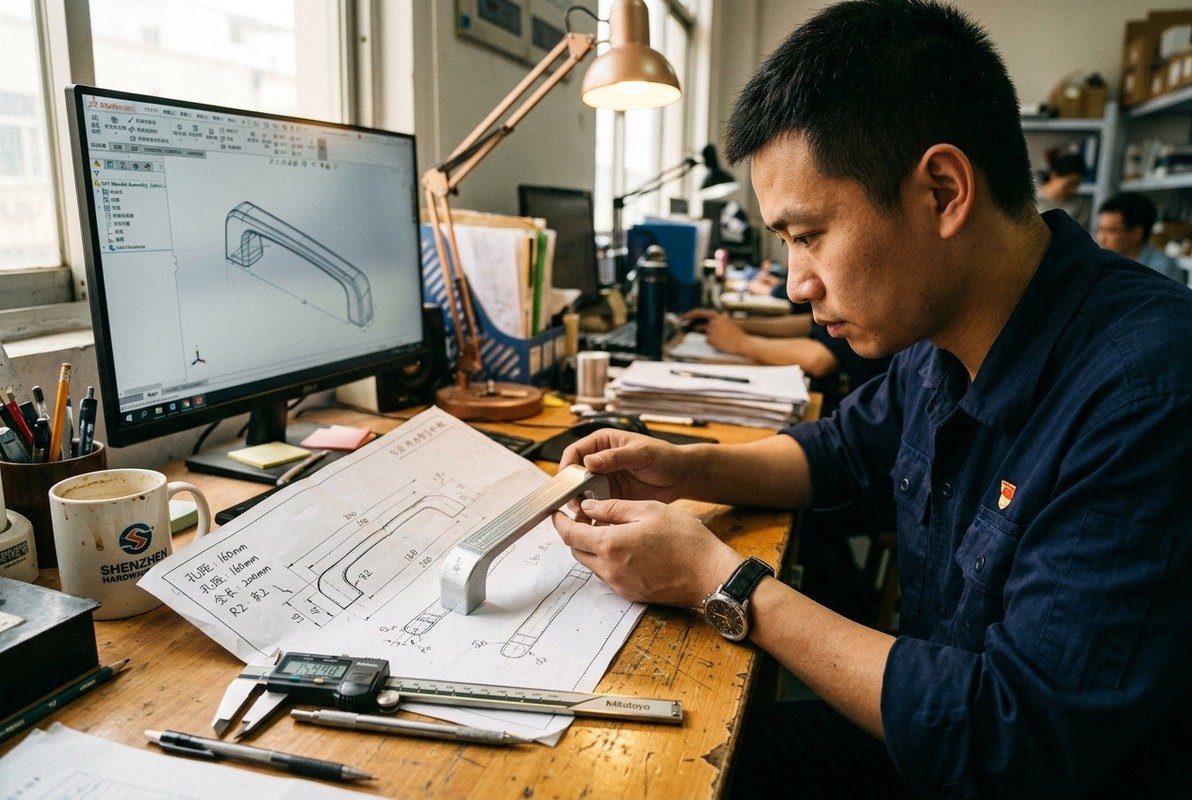
Here's what I've learned watching quotations fall apart: the buyers who avoid problems don't shop by lowest price. They ask verification questions that expose whether a factory's claims match their actual production setup. I'm going to walk you through the exact questions I use when coordinating orders, because these are the details that determine whether your shipment arrives on spec or becomes a six-week negotiation about acceptable tolerance levels.
What Does "Customization Capability" Actually Mean in Aluminium Profile Production?
When I receive an inquiry for custom profiles, the first thing I check is how the supplier responds to the technical drawings. This single interaction tells me more than any factory video tour.
Most buyers see "custom aluminium profiles" as a binary capability — either a factory can make custom shapes or they can't. That's not how extrusion works. The real question is: does the factory need to create new tooling for your profile, or do they have existing dies that match your requirements?
The operational reality I've seen across dozens of orders: factories with genuine custom capability always ask for detailed technical drawings before quoting. They need to check if your profile cross-section matches any existing dies in their inventory, because that's the difference between a 7-day turnaround and a 30-day lead time with tooling costs added. Suppliers who try to quote from photos alone are either guessing or planning to substitute the closest standard profile they have in stock.
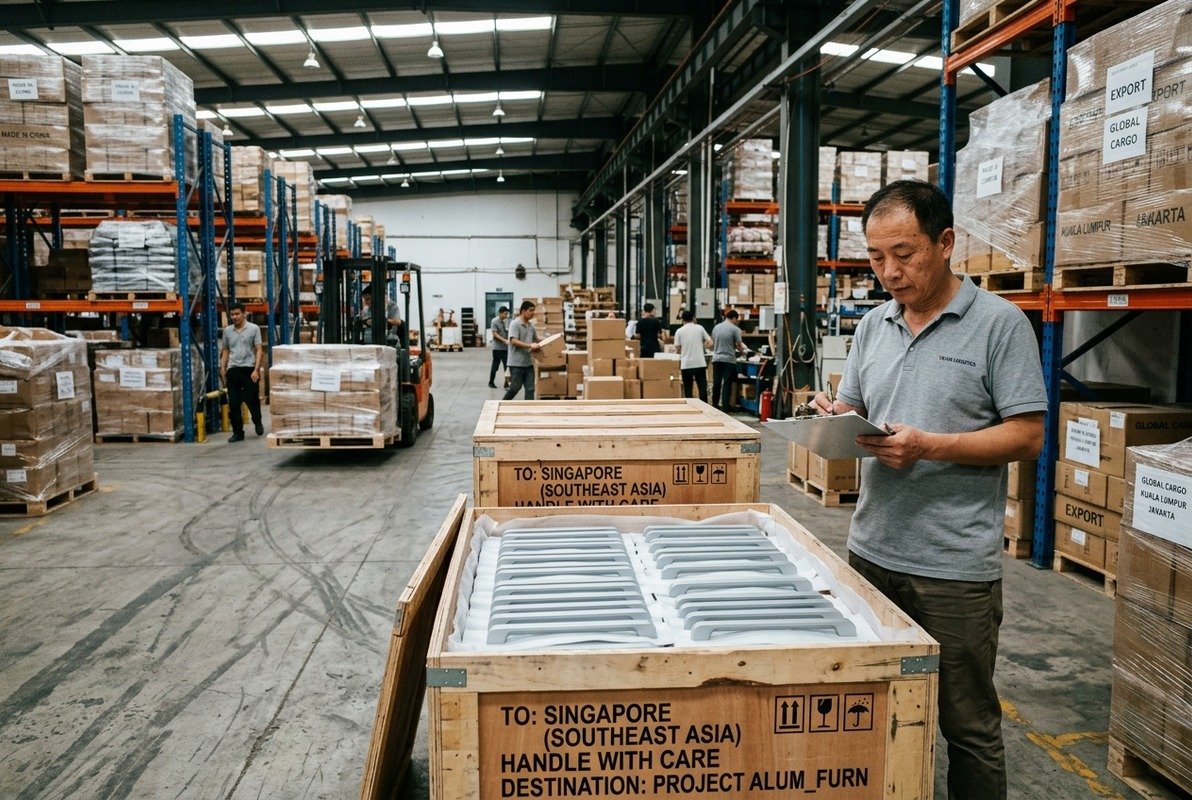
I've coordinated orders where buyers assumed "custom" meant the factory would replicate exactly what they showed in a photo. Then during production confirmation, they discovered the factory interpreted "similar profile" as acceptable variation. This happens because the inquiry never forced the supplier to commit to specific dimensions and tolerances upfront.
How Factory Die Inventory Controls What "Custom" Really Means
Every extrusion factory maintains a die inventory — the metal tools that shape molten aluminium into specific cross-sections. A factory claiming "full customization capability" should be able to answer this question immediately: how many dies do you keep in active inventory, and how do you categorize them?
Factories I've worked with that handle custom work efficiently typically maintain 200-500 dies across common profile categories. When you submit a technical drawing, they first search this inventory to see if an existing die matches your specifications within acceptable tolerances. If they find a match, your "custom" order becomes a standard production run with minimal lead time.
The issue comes when buyers compare quotes without understanding this system. One supplier quotes low because they're planning to use an existing die that's "close enough" to your specs. Another quotes higher because they're calculating actual custom die production. Both call it "custom work," but they're describing completely different production processes.
The Questions That Expose Real Custom Capability
When I'm vetting a supplier for custom profile work, I ask them to walk me through their die modification process. Specifically:
- When you receive a custom profile drawing, what's your first verification step? (Competent factories check existing die inventory first, not quote blindly)
- If you need to create a new die, what information do you need from the buyer? (They should ask about application requirements, not just dimensions)
- How do you handle tolerance specifications when the drawing doesn't include them? (This reveals whether they make assumptions or ask clarifying questions)
- What's your typical die creation timeline and cost structure? (Vague answers like "depends on complexity" mean they're reselling through another factory)
I've seen too many orders where the buyer selected a supplier based on enthusiastic claims about "any custom design possible," only to discover during production that "custom" meant "we'll modify a standard profile and hope it works for your application."
The factories that consistently deliver accurate custom profiles are the ones who push back on vague specifications. They ask uncomfortable questions during inquiry because they know unstated assumptions become quality disputes during delivery.
Why Does MOQ Vary So Dramatically Across Aluminium Profile Suppliers?
I get this question constantly: "Why does one factory quote 500kg minimum while another wants 5 tons for the same profile?" Buyers assume it's arbitrary pricing policy. The actual reason is that these suppliers are comparing incompatible production scenarios.
Minimum order quantities in aluminium extrusion depend on three operational factors that most inquiry forms don't address: whether you're ordering a standard profile with existing tooling, whether your surface finish requires dedicated production runs, and how the factory schedules their extrusion lines.
The MOQ confusion I see repeatedly: buyers compare quotes without specifying whether they need mill finish, anodized, powder coated, or other surface treatments. A factory quoting 500kg MOQ assumes you'll accept whatever finish comes off their current production run. The 5-ton quote assumes you need a dedicated batch with your specific surface treatment. Both are correct for different scenarios, but the buyer's inquiry didn't force suppliers to state their assumptions.
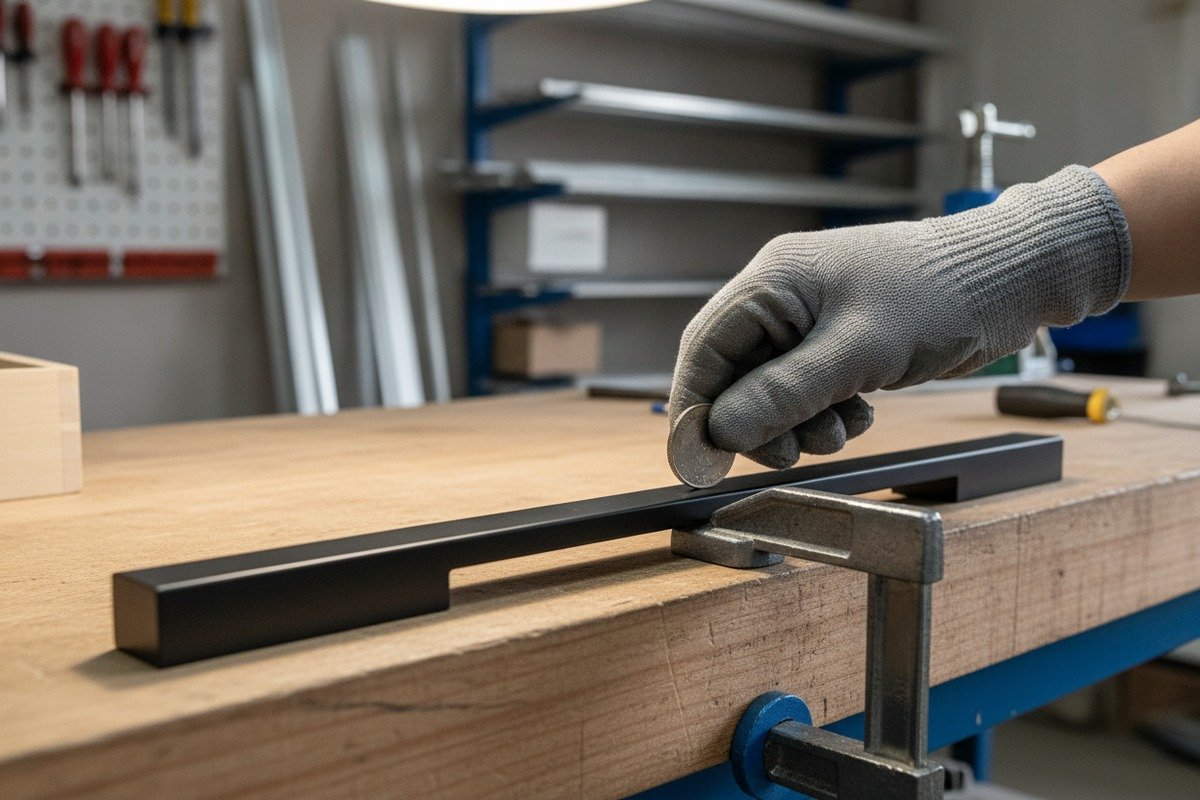
How Production Line Scheduling Creates the MOQ Gap
I coordinate with factories running two different production models: continuous lines and batch processing. This distinction controls MOQ more than any other factor.
Factories with continuous production lines extrude the same popular profiles day after day — handles, construction frames, LED housings. Their MOQ is low because your order slots into existing production runs. They're not stopping the line to set up custom tooling; they're adding your quantity to a profile they're making anyway.
Batch processing factories run job-shop scheduling. They set up tooling for custom orders, run the batch, then switch to the next order. Their MOQ reflects the economic minimum to justify setup costs and line changeover time. If they quote 3 tons minimum, they're calculating the point where your order covers the cost of stopping current production, installing your die, running extrusion, and switching back.
The problem happens when buyers send identical inquiries to both factory types without understanding this distinction. The continuous-line factory quotes low because they're assuming you want a profile they already make regularly. The batch factory quotes high because they're assuming you need custom tooling and dedicated production time.
Standard Profile vs. Custom Extrusion MOQ Reality
Here's the operational breakdown I explain to buyers who are confused about MOQ variation:
| Order Type | Typical MOQ Range | What Drives the Minimum |
|---|---|---|
| Standard profile, mill finish, from stock | 100-500kg | Cutting and packaging labor cost |
| Standard profile, custom surface finish | 1-2 tons | Surface treatment batch economics |
| Custom extrusion, existing die, mill finish | 500kg-1 ton | Line changeover time and die installation |
| Custom extrusion, new die required, any finish | 3-5 tons | Die production cost amortization plus setup |
| Complex multi-cavity profile or tight tolerances | 5+ tons | Quality control verification and scrap rate coverage |
I've coordinated orders where buyers insisted on comparing quotes across these categories without acknowledging the production differences. They'd forward me three quotes — one for a standard profile from a continuous-line factory, one for custom extrusion from a batch processor, and one from a trading company sourcing through a third factory — then ask why the MOQs didn't match.
The verification question I always ask: "Before comparing MOQs, did you specify whether you're ordering a standard catalogue profile or requesting custom extrusion? Did you clarify which surface finish you need?" Most buyers skip these details in initial inquiries, then wonder why supplier responses seem inconsistent.
The Surface Finish Variable Nobody Mentions
This is where MOQ confusion gets worse. Surface finishing for aluminium profiles usually happens in separate facilities or dedicated production lines. A factory might extrude your profile at 500kg minimum, but the anodizing facility requires 1-ton minimum batches to justify setup.
When I receive a quote inquiry asking for "aluminium profiles with color coating," I immediately clarify: are you asking about powder coating, anodizing, electrophoretic coating, or spray painting? Each process has different batch economics that affect MOQ.
Powder coating lines typically run in color batches. If you want a custom RAL color, the facility needs enough volume to justify cleaning the line and loading new powder. Standard colors have lower MOQ because they're in regular production rotation.
Anodizing creates even more complexity because the process chemistry varies by alloy and final color. Natural anodized finish has the lowest MOQ. Custom anodized colors require dedicated bath time, which increases minimum order requirements.
I've seen buyers compare quotes where one supplier included surface finishing in their base price and MOQ, while another quoted only extrusion and expected the buyer to arrange finishing separately. Without clarifying this distinction upfront, the quotes are meaningless to compare.
How Do I Calculate Realistic Lead Times for Aluminium Profiles from China?
Every week I receive inquiries asking about delivery timeframes. Buyers want a simple answer: "How long until my aluminium profiles arrive?" The factories I coordinate with can't answer that question without knowing your order's position in three operational queues: die availability, production scheduling, and surface treatment capacity.
Lead time calculation isn't a fixed number — it's the sum of multiple production stages that vary based on your specifications and the factory's current workload. Buyers who understand this can verify whether a supplier's timeline is realistic or based on optimistic assumptions.
The lead time reality I explain during every order coordination: "3-7 days for custom products" only works if you're ordering a profile the factory makes regularly, in mill finish, during a production window when that die is already scheduled. Add custom surface finishing and you're looking at 15-25 days minimum. Require new die production and the timeline extends to 35-45 days. Suppliers who quote fast delivery without asking these clarifying questions are either overpromising or planning to substitute a close-enough alternative.
The Three-Queue System That Controls Delivery
I walk buyers through this framework because it's the only way to verify whether a supplier's lead time is achievable or fictional:
Queue 1: Die Availability and Preparation
- Standard profile with existing die in inventory: 0-2 days
- Custom profile matching existing die specifications: 2-5 days for die retrieval and inspection
- Custom profile requiring die modification: 10-15 days for adjustment and testing
- New die production: 25-35 days from design approval to die verification
Queue 2: Extrusion Production Scheduling
- Continuous production line with your profile in rotation: 3-5 days
- Batch scheduling with available line capacity: 7-12 days
- High production load requiring wait for line availability: 15-20 days
- Complex profiles requiring multiple extrusion passes: Add 5-7 days
Queue 3: Surface Treatment Processing
- Mill finish (no treatment): 1-2 days for cooling and cutting
- Standard anodized or powder coat colors in current production: 5-7 days
- Custom colors requiring line changeover: 10-15 days
- Multiple finishing steps (anodizing + powder coat): 15-20 days
When I'm verifying a supplier's delivery promise, I ask them to break down their timeline across these three stages. Factories that can answer specifically — "Your profile uses an existing die so that's 2 days, we have line capacity next week for 5-day extrusion, and standard black anodizing adds 6 days" — are working from actual production schedules, not marketing estimates.
How Factory Production Model Affects Delivery Reliability
The most consistent delivery performance I've seen comes from factories that explicitly state their production model during inquiry. This isn't about factory size or equipment age — it's about how they schedule work.
Continuous production factories maintain delivery reliability for their standard profiles because those items are always in the production queue. Their lead time variation is minimal because they're not constantly switching dies and reconfiguring lines. The tradeoff is that custom profiles with unique specifications take longer because they must wait for scheduled custom production windows.
Job-shop factories deliver custom work faster when they have line capacity, but their timelines vary more based on current workload. I've coordinated orders where the same factory quoted 7 days for custom extrusion in January and 18 days for identical specifications in March because their production schedule was heavier.
The Questions That Reveal Real Lead Time Capability
When I'm evaluating whether a supplier can meet delivery requirements, I ask these specific questions that force them to reference their actual production situation:
- What's your current production queue for custom extrusions? (They should give a specific timeframe, not "we can start immediately" for all orders)
- How do you handle die preparation for profiles similar to existing inventory? (This reveals whether they've actually checked for die matches)
- Which surface finishing processes do you run in-house versus outsource? (Outsourced finishing adds coordination delays they might not mention)
- When you quote lead time, what's your definition of "production complete" — is that extrusion finished, surface treatment finished, or quality inspection passed? (Critical for calculating actual delivery date)
- How do you adjust lead times if I split my order into multiple delivery batches? (Tests whether they can handle partial shipments or need full batch completion)
I recently coordinated an order where the buyer needed 2 tons of custom anodized profiles. One supplier quoted 12-day delivery. When I asked about their finishing capacity, they admitted they outsource anodizing and the actual timeline would be "12 days plus finishing facility schedule, usually 7-10 additional days." The buyer had almost made a decision based on the misleading initial quote.
The factories that consistently meet delivery commitments are the ones who ask clarifying questions before quoting timelines. They want to know: Do you need all profiles delivered at once or can we ship in batches? Are you flexible on color matching if we can deliver faster with our standard finishes? Can your timeline accommodate potential die adjustment time if specifications need refinement?
What Do Price Differences Actually Signal in Aluminium Profile Quotes?
When buyers forward me three quotes for comparison, they usually focus on the bottom-line price per kilogram or per piece. I've learned that price analysis alone misses the information embedded in how suppliers structure their quotations. The differences aren't just margin variation — they're signals about capability assumptions and risk allocation.
A supplier quoting significantly lower than competitors is making different assumptions about specifications, or they're accepting risks that will surface during production. A higher quote might reflect included services that other suppliers expect you to arrange separately. Without dissecting these structural differences, price comparison becomes meaningless.
The pricing reality I explain to every buyer: when three suppliers quote $2.80, $3.20, and $4.10 per kilogram for "the same aluminium profile," they're not pricing the same product. The variation reflects different assumptions about tolerance levels, surface finish consistency, packaging requirements, and which party absorbs risk if specifications need adjustment during production. Competent buyers don't ask "why is this supplier cheaper?" — they ask "what capability differences or unstated assumptions explain this price range?"
The Hidden Specification Assumptions in Every Quote
I review quotations daily, and the pattern never changes: suppliers embed assumptions that buyers don't realize they're accepting. Here's what I look for when analyzing price differences:
Tolerance Specification Assumptions Standard industrial tolerances for aluminium extrusion allow roughly ±0.2mm on most dimensions. If your technical drawing doesn't specify tighter tolerances, some suppliers quote assuming standard allowances. Others build in tighter control because they've experienced too many disputes over "acceptable variance."
When I see a 15-20% price difference between otherwise similar quotes, I check whether one supplier asked about tolerance requirements while the other didn't mention it. The supplier who asks is usually quoting for tighter control, which requires slower extrusion speeds and more frequent measurement checks.
Surface Finish Quality Levels "Anodized black" sounds like a specific finish, but there's massive variation in color consistency, thickness uniformity, and surface preparation quality. Chinese national standards define multiple anodizing grades, but most inquiries don't reference which grade is required.
I've coordinated orders where buyers selected the lowest quote for "anodized profiles," then rejected the shipment because the color consistency didn't match their expectations. The issue wasn't that the supplier delivered substandard work — the buyer never specified which anodizing grade they needed, and the supplier quoted for the most economical standard.
Packaging and Protection Assumptions This seems minor until you're disputing damaged goods claims. Some suppliers include export-grade packaging with foam separation, plastic film wrap, and reinforced crates in their base price. Others quote for basic bund