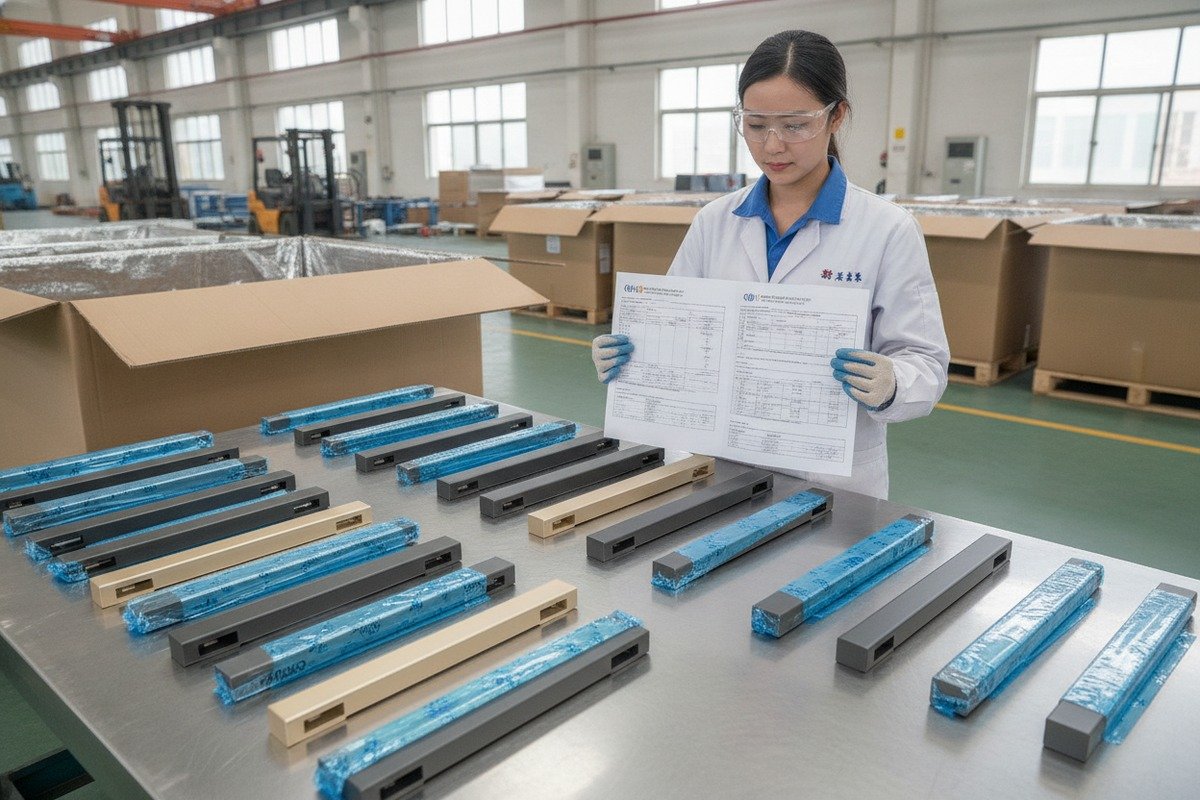
Every year, our production line ships over 300 tons of aluminum furniture handles to humid markets across Vietnam and the Middle East — and we have learned the hard way that a beautiful handle means nothing if it arrives with white oxidation spots 1 or rusty screws.
To request special moisture-proof and rust-proof packaging, send your supplier a written packaging specification that covers pre-pack drying, individual wrapping, VCI anti-corrosion materials, desiccant packs, sealed moisture-barrier bags, carton lining, pallet isolation, and pre-shipment photo verification. Treat packaging as a quality control step, not an afterthought.
Below, we break down exactly what materials to ask for, how to communicate your requirements clearly, what it costs, and how to verify everything before your container leaves the port. Let’s walk through each step so you can protect your inventory and your reputation.
What specific moisture-proof materials should I ask my aluminum handle supplier to use for long-distance shipping?
When we pack handles for a 30-day sea voyage 2 to the UAE, the inside of a steel container can swing from 25 °C to 55 °C in a single day — and that temperature swing creates condensation that soaks unprotected cartons.
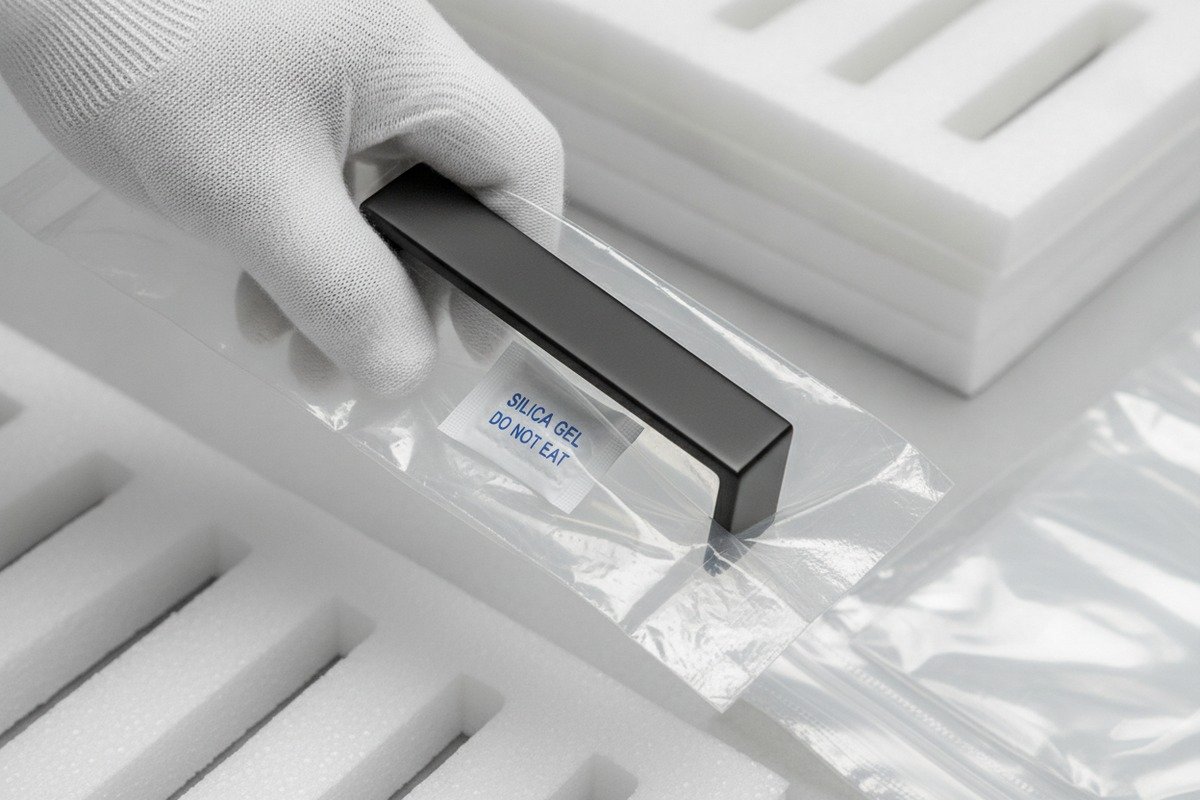
Ask your supplier to use a layered system: VCI (Volatile Corrosion Inhibitor) paper or film wrapped around each handle, silica gel desiccant packs inside every inner carton, sealed polyethylene moisture-barrier bags, and foam or paper dividers to prevent surface abrasion during transit.
Why Aluminum Handles Still Need Moisture Protection
Many buyers hear "aluminum doesn't rust" and assume packaging doesn't matter. That is only half true. Aluminum resists iron oxide rust, yes. But it is still vulnerable to surface oxidation, white corrosion (aluminum oxide), and pitting — especially when anodized or powder-coated finishes trap moisture underneath. More importantly, most aluminum furniture handles ship with steel screws, zinc-alloy inserts, or plated mounting brackets. Those components rust fast in humid air. A single rusty screw can stain an entire handle and make it unsellable.
The Layered Protection System
Think of moisture-proof packaging as a series of walls. Each wall stops a different threat. Here is how the layers work together:
| Layer | Material | What It Does |
|---|---|---|
| Layer 1 — Contact wrap | VCI paper or VCI poly film | Releases anti-corrosion vapor molecules that coat metal surfaces and block oxidation |
| Layer 2 — Moisture absorption | Silica gel desiccant packs | Absorbs moisture inside the sealed bag or carton, keeping relative humidity below 40% |
| Layer 3 — Moisture barrier | Sealed PE bag or aluminum-foil barrier bag | Prevents external humidity and container condensation from reaching the product |
| Layer 4 — Physical protection | Foam inserts, paper dividers, corrugated partitions | Prevents scratching, denting, and handle-to-handle contact |
| Layer 5 — Outer defense | Lined carton, pallet isolation film | Stops moisture wicking from wet wood pallets or damp warehouse floors |
VCI vs. Desiccants — They Are Not the Same
This is a point many buyers miss. VCI materials 3 and desiccants do two completely different jobs. VCI paper releases invisible corrosion-inhibiting molecules that form a thin protective layer on metal surfaces. Desiccants 4 absorb water vapor from the air inside the package. You need both. VCI alone cannot stop condensation if humidity is extreme. Desiccants alone cannot protect exposed metal surfaces from the moisture that does get through. When we prepare export-grade packing for coastal markets, we always combine VCI wrap on each handle with desiccant packs sized to the carton volume.
Specifying Film Thickness
For international transit, request polyethylene film 5 of at least 4 MIL thickness. Thinner films tear easily during loading and lose their seal integrity. If your handles have sharp edges — like our recessed architectural pulls with their clean geometric channels — a thicker film also prevents punctures. Heat-sealed bags outperform tape-sealed bags because they create a true airtight closure.
How do I clearly communicate my rust-proof packaging requirements to a Chinese manufacturer to avoid damage during sea freight?
Over the past 18 years, our team in Foshan has received hundreds of packaging requests — some crystal clear, some impossibly vague. The difference between "please pack well" and a proper packaging specification 6 is the difference between a clean delivery and a damage claim.
Write a formal packaging specification document that lists each required material by name, states desiccant quantity per carton, specifies sealing methods, requires pre-pack drying and inspection, demands pre-shipment packing photos, and includes sample wording your supplier can translate directly into warehouse instructions.

Why Vague Requests Fail
When you tell a supplier "please use good packaging," every person in that supply chain 7 interprets it differently. The sales manager thinks you mean double-wall cartons. The warehouse worker thinks you mean extra tape. Nobody adds VCI wrap or desiccants because nobody was told to. The result? Handles arrive with rusty screws or tarnished finishes, and both sides blame each other. A written spec removes all ambiguity.
What Your Packaging Spec Should Include
Here is a checklist you can send directly to your supplier. We recommend putting it in your purchase order or as an attachment to your contract.
| Requirement | Specific Detail to Include |
|---|---|
| Pre-pack condition | All handles must be clean, dry, free of oil, dust, and visible contamination before packing |
| Handling | Workers must use clean cotton gloves to avoid fingerprint marks on anodized or matte finishes |
| Individual wrapping | Each handle wrapped in VCI paper or VCI poly film |
| Inner bag | Sealed PE moisture-barrier bag (minimum 4 MIL), heat-sealed |
| Desiccant | Silica gel packs — minimum 10 g per inner bag, or sized to carton volume |
| Dividers | Foam or corrugated partition between each handle to prevent scratching |
| Carton lining | PE film lining inside each master carton |
| Pallet isolation | Cartons must not touch bare wood; use PE film or VCI paper between cartons and pallet |
| Sealing | Tamper-evident tape on all outer cartons |
| Labeling | "KEEP DRY" symbol, lot number, quantity, and product code on each carton |
| Evidence | Supplier must send packing photos showing each layer before dispatch |
Sample Email You Can Send to Your Supplier
Here is a template you can copy, paste, and customize:
Subject: Packaging Specification for PO #[XXX] — Aluminum Furniture Handles
Dear [Supplier Name],
For this order, please follow these packaging requirements:
- Ensure all handles are fully dry and free of dust or oil before packing.
- Wrap each handle individually in VCI paper or VCI poly film.
- Place wrapped handles into a sealed PE moisture-barrier bag (minimum 4 MIL, heat-sealed).
- Add silica gel desiccant packs inside each bag — minimum 10 g per bag.
- Use foam or corrugated dividers between handles to prevent surface contact.
- Line master cartons with PE film before placing bags inside.
- Do not place cartons directly on bare wood pallets. Use PE film or VCI paper as a barrier.
- Seal all cartons with tamper-evident tape and label with "KEEP DRY," lot number, and quantity.
- Send packing photos showing each layer (individual wrap, bag, desiccant, carton lining, pallet) before shipment.
Please confirm you can meet these requirements and note any cost adjustments.
Best regards,
[Your Name]
Handling Mixed-Metal Components
Our aluminum furniture handles — like our matte champagne gold recessed pulls — ship with zinc-alloy or steel screws and mounting hardware. These small parts are the most vulnerable to rust. In your specification, state clearly that anti-corrosion packaging applies to the entire handle assembly, including all fasteners and inserts. Do not assume the supplier will protect screws if you only mention handles. We recommend placing hardware kits in separate small VCI bags and including them inside the main sealed bag.
Will requesting specialized protective packaging for my furniture handles significantly increase my sourcing costs or lead times?
We get this question on almost every first call with a new wholesale partner. Buyers worry that asking for VCI wraps and desiccants will double their costs or push delivery back by weeks. The reality is much more manageable.
Specialized moisture-proof packaging typically adds only 2–5% to your per-unit cost and requires no additional lead time if the supplier stocks the materials. For our standard orders, we keep VCI paper, desiccants, and barrier bags in inventory, so export-grade packing adds zero extra days to our 48-hour stock shipment or 3–7 day custom production schedule.

Cost Breakdown by Packaging Level
Here is a realistic comparison based on what we see across our order volumes. Costs are approximate and per handle.
| Packaging Level | What Is Included | Estimated Added Cost Per Handle | Risk Level |
|---|---|---|---|
| Basic | Bulk-packed in single-wall carton, no inner protection | $0.00 | High — scratches, corrosion, rust on screws |
| Improved | Each handle in a PE bag, foam dividers, double-wall carton | $0.02–$0.05 | Moderate — reduces scratching but limited moisture defense |
| Export-grade | VCI wrap, sealed moisture-barrier bag, desiccant, lined carton, pallet isolation | $0.05–$0.12 | Low — protects against humidity, condensation, and mixed-metal rust |
For a typical order of 5,000 handles, export-grade packaging might add $250–$600 to your total. Compare that to the cost of a single damage claim — rejected goods, reshipping fees, customer refunds — and the math is clear.
Lead Time Impact
Most capable suppliers already have VCI paper, silica gel, PE bags, and foam dividers in their warehouse. These are standard industrial packaging materials, not specialty items. If your supplier does not stock them, sourcing these materials in Foshan or Guangzhou takes 1–3 days. That is why we maintain a ready supply of all packaging materials alongside our 300-ton handle inventory. For stock items, our 48-hour dispatch window includes full export-grade packing.
Where Costs Actually Go Up
The one scenario where costs jump is when buyers request custom-printed moisture-barrier bags, branded desiccant packs, or specific sustainability certifications such as post-consumer recycled (PCR) content. These are legitimate requests, but they do require additional sourcing time and minimum order quantities from packaging suppliers. If you need certified recyclable or biodegradable VCI materials, tell your handle supplier early — ideally before confirming the purchase order — so they can price it in and avoid delays.
The Hidden Cost of Not Specifying Packaging
Buyers who skip moisture-proof packaging to save a few cents per handle often pay far more later. We have seen cases where an entire pallet of matte black recessed handles arrived with white corrosion spots because cartons sat directly on wet wood during a rain delay at port. The buyer rejected the shipment, filed a claim, and lost three weeks of selling time. That single incident cost more than 50 orders' worth of desiccant packs.
How can I verify that the supplier's moisture-proof packaging is sufficient for the humid climate in my local market?
Our team regularly ships aluminum handles to Ho Chi Minh City and Jeddah — two markets where warehouse humidity can sit above 80% for months. We have learned that trusting a supplier's promise of "good packing" without verification is a gamble you do not need to take.
Verify your supplier's moisture-proof packaging by requesting pre-shipment packing photos showing every layer, asking for material data sheets for VCI and desiccant products, specifying humidity indicator cards inside sealed bags, and conducting an arrival inspection where you open sample cartons to check for condensation, corrosion, or desiccant saturation.

Pre-Shipment Photo Verification
The simplest and most effective check is to require your supplier to send timestamped photos before the shipment leaves. Ask for images showing:
- Each handle wrapped in VCI material
- The sealed moisture-barrier bag with desiccant visible inside
- The lined carton interior before closing
- Cartons placed on pallets with isolation layer visible
- The sealed and labeled outer carton
At our facility, we include this photo set as standard practice for all export orders. It takes our packing team about 10 minutes and gives the buyer complete peace of mind.
Humidity Indicator Cards
One smart, low-cost tool is the humidity indicator card 8 (HIC). These small cards change color when relative humidity inside a sealed package exceeds a set threshold — typically 30%, 40%, or 50%. Ask your supplier to place one HIC inside each sealed moisture-barrier bag. When you open the bag at your warehouse, check the card. If it shows humidity above 40%, your packaging was either improperly sealed or the desiccant was undersized.
Arrival Inspection Protocol
When your shipment arrives, do not just count cartons. Open at least 5–10% of the cartons and check for these signs:
- Is the outer carton dry or damp?
- Is the moisture-barrier bag still sealed?
- Is the desiccant pack still firm (not soft or swollen)?
- Does the humidity indicator card show safe levels?
- Are handles free of white spots, tarnish, or discoloration?
- Are screws and inserts free of rust or orange staining?
Document any issues with photos immediately. This creates a clear record for quality discussions with your supplier.
Environmental Simulation Testing
For high-value or large-volume orders, you can ask your supplier to perform a humidity cycling test 9 on sample packages before production begins. This means placing a fully packed sample in a controlled chamber that simulates temperature and humidity swings typical of a sea freight container — for example, cycling between 25 °C at 60% RH and 55 °C at 90% RH over 72 hours. After the test, open the package and inspect for any moisture ingress or corrosion. This step is not common for small orders, but for buyers committing to container-load quantities, it is a reasonable request that a professional supplier can accommodate.
Smart Monitoring Options
Some buyers are now placing small electronic humidity and temperature loggers 10 inside containers. These loggers record conditions throughout the voyage and can be downloaded upon arrival. If damage occurs, the data log shows exactly when and where conditions became problematic — which helps determine whether the issue was a packaging failure or an extreme transit event. This technology is affordable, with single-use loggers costing under $20 each.
Conclusion
Protecting aluminum furniture handles during transit is not about one material — it is about a complete packaging system. Write a clear specification, name every material, require photo evidence, and inspect on arrival. That is how you prevent damage claims and deliver flawless handles to your customers.
Footnotes
1. Explains what aluminum oxidation is and how it appears on surfaces. ↩︎
2. Details the significance of maritime transport for global trade and supply chains. ↩︎
3. Provides a comprehensive definition and mechanism of volatile corrosion inhibitors. ↩︎
4. Explains what desiccants are and how they control moisture in packaging. ↩︎
5. Describes the properties and common uses of polyethylene film in packaging. ↩︎
6. This article discusses the importance and definition of packaging specifications, fitting the original anchor text and context. ↩︎
7. Provides a comprehensive definition and key components of supply chain management. ↩︎
8. Explains how humidity indicator cards work and their use in monitoring moisture. ↩︎
9. Describes the purpose and methodology of humidity cycling tests for product reliability. ↩︎
10. Explains the function of data loggers for monitoring environmental conditions during shipping. ↩︎