
Every week, our sales team hears the same question from buyers overseas: “Do you have SGS?” The problem is, that question alone rarely gets you the proof you actually need ISO/IEC 17025 accreditation 1. Many suppliers will answer “yes” and then send a generic report that covers a different product, a different alloy, or a test done three years ago. You end up approving samples based on a document that proves nothing about the handles you are about to order.
Request the original PDF test report before sampling approval and before mass production. The report must match your exact handle model, alloy grade, surface finish, and the specific test standard your market requires. Verify the lab’s ISO/IEC 17025 accreditation and cross-check the sample description against your order specifications.
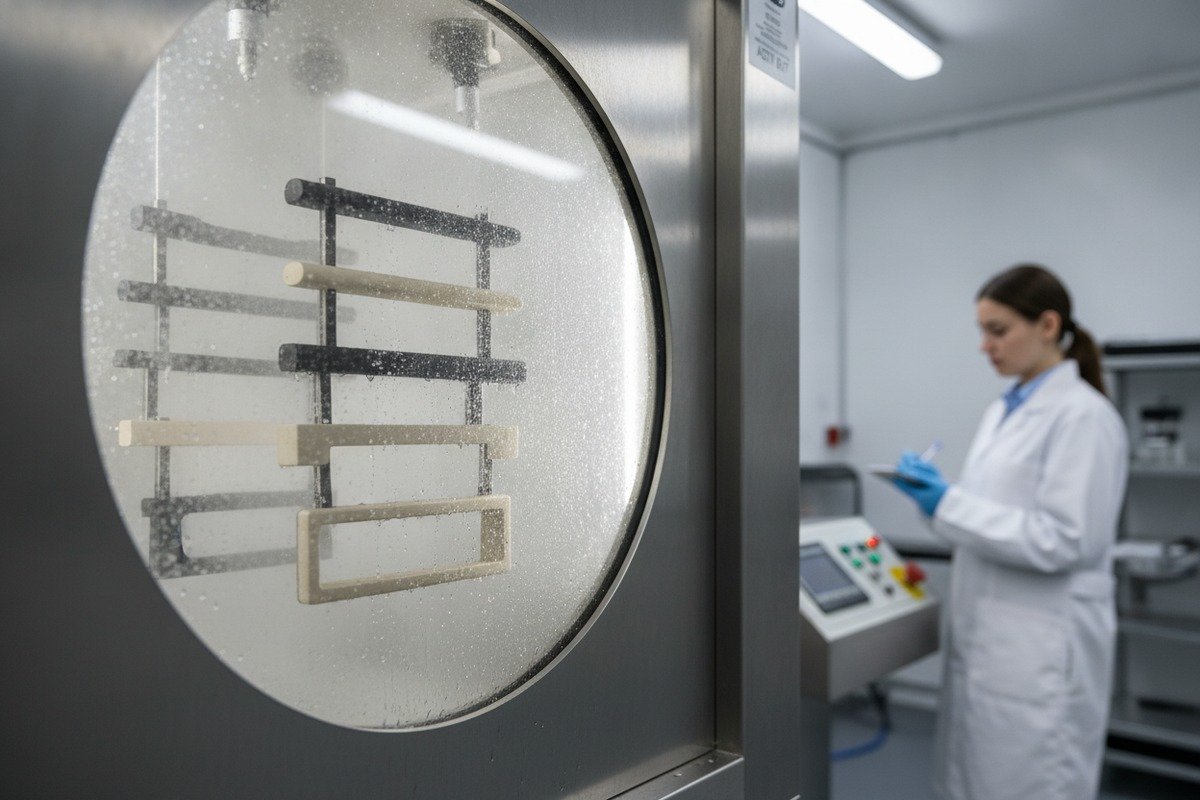
Below, we break down exactly which certifications to prioritize, how to spot fake reports, what extra costs to expect, and what to do when a supplier refuses ASTM B117 for salt spray testing 2. Each section includes practical checklists and email templates you can use right away.
Which specific quality certifications should I prioritize when importing aluminum handles from China?
Our production line runs through dozens of alloy grades and finish types every month, so we see firsthand how confusing the certification landscape can be for overseas buyers who just want reliable handles.
Prioritize certifications that verify alloy composition, surface finish durability, corrosion resistance, and mechanical strength. Look for reports based on recognized standards like ASTM B221 for aluminum extrusions, ASTM B117 for salt spray testing, and ISO 9001 for factory quality management systems.
Understand the Difference Between Product Testing and Factory Certification
Many buyers confuse two things: a test report on a specific product and a management system certificate for the factory. ISO 9001, for example, tells you the factory follows documented quality processes. It does not tell you whether the handle in your hand is made from 6063-T5 aluminum or a cheaper alloy. You need both types of evidence, but they answer different questions.
A product test report proves that a specific sample passed a specific test. A factory certificate proves that the company has systems in place to maintain consistency. Neither one alone is enough.
Key Test Standards for Aluminum Furniture Handles
Here is a table of the most relevant test standards you should ask about when sourcing aluminum handles:
| Test Category | Standard | What It Proves |
|---|---|---|
| Alloy composition | ASTM B221 / EN 755 | The aluminum grade matches your specification (e.g., 6063-T5) |
| Salt spray / corrosion | ASTM B117 / ISO 9227 | The finish resists corrosion for a defined number of hours |
| Anodizing thickness | ISO 7599 / MIL-A-8625 | The anodized layer meets minimum thickness and hardness |
| Coating adhesion | ASTM D3359 (cross-cut) | Paint or powder coating will not peel under stress |
| Mechanical pull strength | BIFMA X5.5 / EN 15338 | The handle withstands repeated pulling force without failure |
| Chemical safety (RoHS) | IEC 62321 | No restricted heavy metals exceed allowable limits |
Which Certifications Matter Most by Market?
If you are selling into the EU, EN standards and RoHS compliance 3 are non-negotiable. For the US market, ASTM standards and BIFMA furniture testing carry the most weight. Middle East markets often accept either framework, but some government tenders require specific ISO references.
Do not just ask "Do you have SGS?" Instead, ask: "Can you provide an SGS or equivalent report showing this exact handle model passed ASTM B117 salt spray testing at 200 hours?" That is a question that gets a useful answer.
Factory-Level Certifications Worth Requesting
Beyond product-level reports, these factory certifications add confidence:
- ISO 9001 — Quality management system
- ISO 14001 — Environmental management system
- BSCI or Sedex — Social compliance audits
At our facility in Foshan, we maintain ISO 9001 and keep updated test reports for each major product line. When a buyer asks for a specific test, we either share the existing report or arrange a new test on the exact SKU they are ordering. That is how it should work.
How can I verify that the SGS test report provided by my furniture handle supplier is actually authentic?
When we send
Footnotes
1. Explains the international standard for the competence of testing and calibration laboratories. ↩︎
2. HTTP 404 ↩︎
3. Defines the product-level compliance regulation restricting hazardous materials in electrical and electronic products. ↩︎