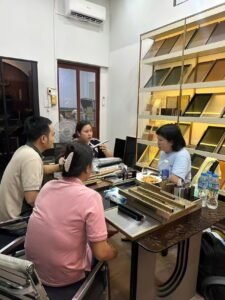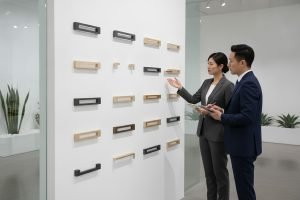
Every week, our sales team receives dozens of inquiries asking for “custom handles” — but many buyers struggle to communicate exactly what they need.
To request custom color and size services from Chinese aluminum handle suppliers, prepare detailed technical drawings with exact dimensions, specify color using RAL or Pantone codes, confirm whether new tooling is needed, request pre-production samples for approval, and clarify MOQ, lead time, mold fees, and packaging requirements in writing before placing any order.
This guide walks you through the entire process step by step RAL or Pantone codes 1. Whether you need a simple color change on an existing profile or a completely new extrusion design, the sections below cover what to prepare, what to expect, and how to avoid the most common sourcing mistakes. Let’s start with the foundation — getting your design information right.
How do I provide my design drawings and color samples to ensure accurate customization?
One thing we see repeatedly in our Foshan factory is buyers sending vague requests like "I want a gold handle, around 200mm." That single sentence creates more questions than answers detailed technical drawings 2.
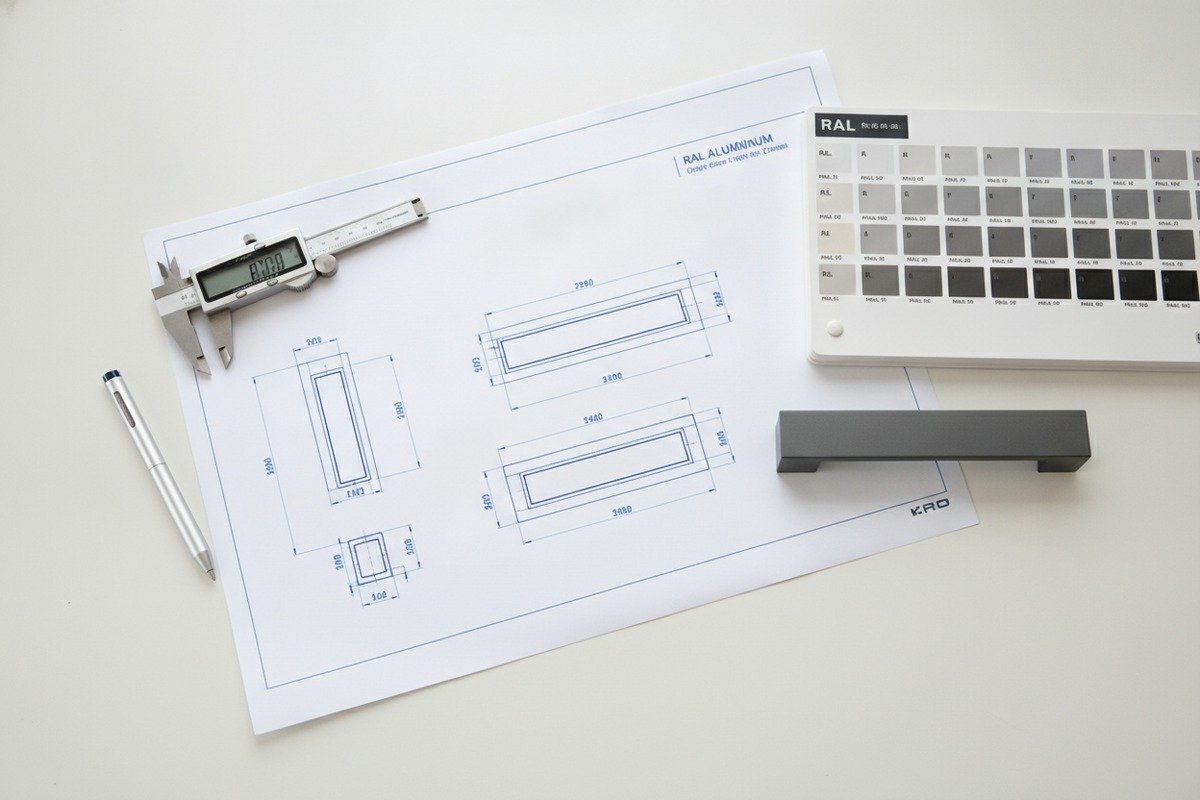
Provide a dimensioned technical drawing in PDF or DWG format showing length, width, projection, hole spacing, and tolerances. For color, send a physical RAL or Pantone chip, or at minimum a clear reference code. Include material preference, finish type, and application details so the supplier can quote accurately.
Why a Technical Drawing Matters More Than a Photo
A photo shows what a handle looks like. A drawing tells the factory how to make it. When our engineering team receives a proper drawing, we can confirm feasibility within 24 hours PDF or DWG format 3. Without one, the back-and-forth can stretch across weeks.
Your drawing should include these basic elements:
- Overall length (in millimeters)
- Center-to-center hole spacing
- Profile cross-section with width and height
- Projection depth (how far the handle sticks out from the surface)
- Mounting hole diameter and thread specification
- Tolerances for critical dimensions 4 (typically ±0.2mm for extruded aluminum handles)
If you don't have CAD software 5, even a clear hand sketch with precise measurements works. Many of our clients send annotated photos from their phone. As long as the numbers are there, we can draft a proper engineering drawing for confirmation.
How to Communicate Color Accurately
Color is where most misunderstandings happen. "Champagne gold" means different things to different people. In our experience exporting to the Middle East and Vietnam, we've seen buyers reject entire shipments simply because they assumed the factory understood their color intent from a verbal description.
Here is what works:
| Color Communication Method | Accuracy Level | Recommended? |
|---|---|---|
| Verbal description only ("matte black") | Low | No |
| Photo from a website or phone screen | Low to Medium | As reference only |
| RAL or Pantone code | High | Yes |
| Physical color chip mailed to the factory | Very High | Strongly recommended |
| Existing sample handle sent to factory | Highest | Best method |
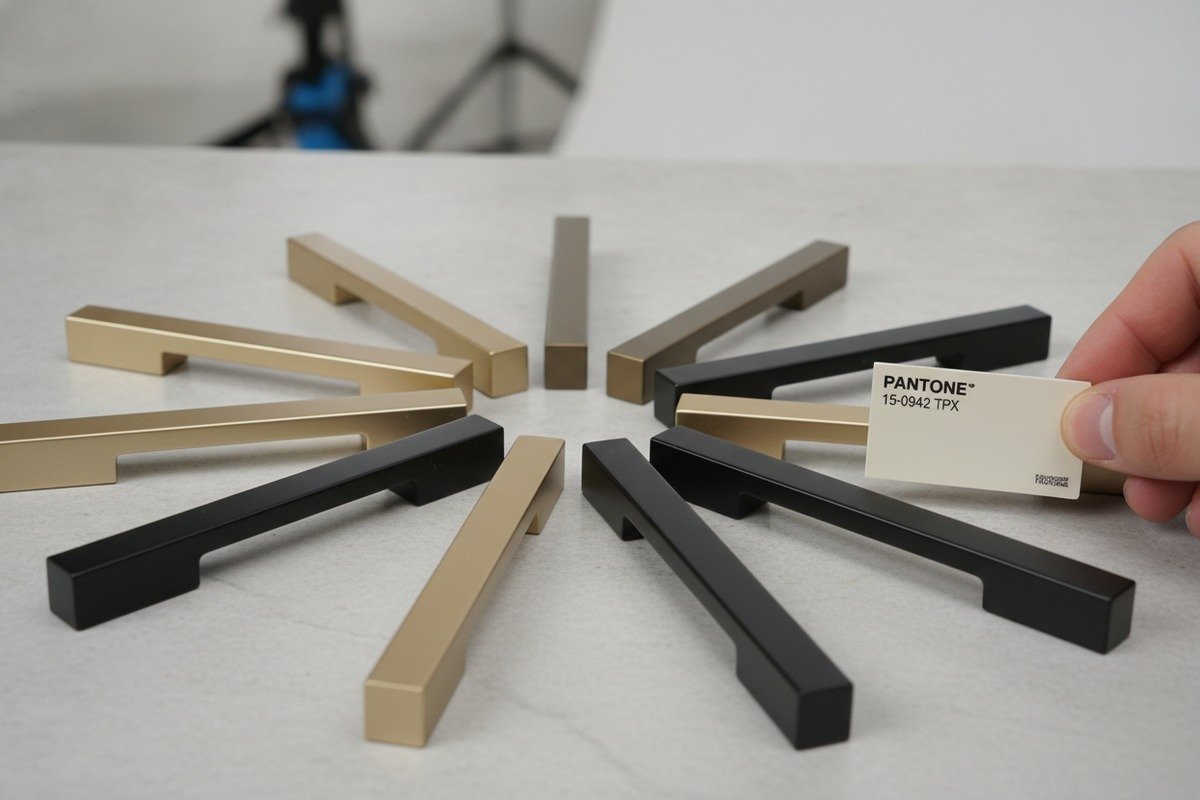
The best approach is to send a physical reference sample or color chip by courier. Screen colors vary wildly between devices. A handle that looks "warm bronze" on your laptop may look "dark gold" on our monitor. When exact matching matters — for example, matching handles across an entire kitchen cabinet line — a physical sample eliminates guesswork.
Specify the Finish Type, Not Just the Color
Color and finish are two separate decisions. A black handle can be anodized black, powder-coated black, painted black, or electrophoretically coated in black. Each finish looks and feels different. Anodizing 6 gives a thin, metallic look. Powder coating provides a thicker, more uniform matte or satin texture. Painting allows the widest color range but may chip more easily.
When you send your request, state the finish type explicitly. For example: "RAL 9005 jet black, powder coated, matte texture." This level of clarity saves everyone time.
Don't Forget Application Details
Tell the supplier where the handle will be used — kitchen cabinets, wardrobe doors, bathroom vanities, office furniture. This context helps the factory recommend the right alloy, finish durability, and mounting method. A handle for a humid bathroom environment needs a different surface treatment than one installed on a dry bedroom wardrobe.
What is the typical lead time I should expect for custom-sized aluminum handles compared to stock items?
Lead time is one of the biggest pain points our clients mention. When a furniture factory in Vietnam has a project deadline in six weeks, every day counts in the production schedule.
Stock aluminum handles typically ship within 48 hours to 3 days. Custom-sized handles using an existing extrusion profile take 7 to 15 days. Fully custom handles requiring new tooling or molds take 20 to 45 days, including mold fabrication, sample approval, and bulk production. Always add shipping transit time on top.
Breaking Down the Custom Handle Timeline
Not all customization takes the same amount of time. The lead time depends on what kind of customization you need.
| Customization Type | Typical Lead Time | Tooling Required? |
|---|---|---|
| Color change on existing profile | 7–15 days | No |
| Length/hole spacing adjustment on existing profile | 7–15 days | No |
| Minor profile modification | 15–25 days | Sometimes (retooling) |
| Completely new extrusion profile | 25–45 days | Yes (new mold) |
| Stock item, no changes | 1–3 days | No |
At our facility, we keep over 300 tons of ready-to-ship inventory in standard profiles. If you only need a different cut length or a different anodized color on a profile we already produce, we can often turn that around in 3 to 7 days. But if you need a brand-new cross-section shape that doesn't exist in our catalog, we have to create an extrusion die first, which alone takes 7 to 12 days.
What Adds Time to the Process
Several steps can extend the lead time beyond the production phase itself:
- Mold fabrication: A new extrusion die for a custom profile typically requires 7–12 days.
- Sample approval: After the first sample is produced, it ships to you for review. If you're overseas, this adds 5–7 days for express shipping alone, plus your review time.
- Revision rounds: If the sample doesn't pass, adjustments and a second sample add another 7–14 days.
- Surface finishing queue: Anodizing and powder coating 7 lines run in batches. Your order may need to wait for the right color batch.
- Holiday periods: Chinese New Year 8 (January/February) and National Day (October) can add 2–4 weeks of effective delay.
How to Shorten Your Lead Time
Plan ahead. The single best thing you can do is start the sampling process early, well before your production deadline. Approve drawings quickly. Respond to factory questions within 24 hours. And if your timeline is tight, ask the supplier upfront: "What profiles do you already have in stock that I can modify?"
Working from an existing extrusion profile and only changing the length, hole spacing, or color is the fastest path to customization. Creating a totally new profile is the slowest. Knowing the difference helps you set realistic deadlines for your furniture projects.
How can I verify that the final bulk production matches my custom color requirements exactly?
We've had clients approve a sample and then discover the bulk shipment looked slightly different under their showroom lights. Color consistency between samples and mass production is a real challenge — but a manageable one.
Verify bulk color accuracy by approving a golden sample as the binding reference, inspecting first-article production pieces before full runs, using a spectrophotometer or Delta E measurement for objective comparison, checking color under multiple lighting conditions, and requiring the factory to retain your approved sample for the entire production run.
Establish a Golden Sample
A "golden sample" is the approved reference piece that defines what the bulk production must look like. When we produce samples at our factory, we always ask the client to formally approve one and send written confirmation. We then keep a duplicate on our production floor. Every batch is compared against this sample before packing.
If you skip this step, there's no objective baseline. Arguments about color become subjective — and unresolvable.
Understand Why Color Can Vary
Aluminum handles go through multiple finishing steps: degreasing, etching, anodizing or coating, sealing, and sometimes secondary treatments. Slight variations in bath temperature, immersion time, chemical concentration, or raw material alloy composition can shift the final color.
| Finish Type | Common Color Variation Risk | Mitigation Strategy |
|---|---|---|
| Anodizing | Batch-to-batch shade differences | Control bath chemistry, use same alloy lot |
| Powder coating | Texture and gloss inconsistency | Specify gloss level (e.g., 30 GU matte), use same powder lot |
| Painting | Color drift between spray runs | Use RAL/Pantone code, measure Delta E |
| Brushed/polished | Grain direction and reflectivity | Standardize brushing direction and grit |
| Electrophoresis | Film thickness affects shade depth | Control voltage and immersion time |
Use Objective Measurement Tools
Your eyes are important, but they're not scientific instruments. Professional buyers use a spectrophotometer 9 to measure Delta E — the numeric difference between two colors. A Delta E below 1.0 is virtually invisible to the human eye. Delta E measurement 10 Between 1.0 and 2.0, trained observers can detect a difference. Above 3.0, most people will notice it.
Ask your supplier: "What Delta E tolerance do you maintain?" If they can't answer, it tells you something about their quality control maturity.
Check Color Under Real-World Lighting
This is a mistake we warn every new client about. A handle that looks perfect under the factory's fluorescent lights may look greenish under warm LED cabinet lighting. Always check your approved sample under the same lighting conditions where the handles will actually be installed.
If you can't visit the factory, request that samples be photographed under daylight (D65 standard) and ask the factory to note the light source used. Then evaluate the sample in your own showroom or installation environment before giving final approval.
In-Process Inspection Checkpoints
Don't wait until the full shipment arrives at your warehouse. Ask the factory to send photos or short videos at these stages:
- After extrusion: Confirm profile dimensions.
- After surface finishing: Confirm color and texture against the golden sample.
- After drilling and assembly: Confirm hole spacing and hardware fit.
- After packing: Confirm protective film, carton labeling, and pack quantity.
Many of our repeat clients use a third-party inspection agency for their first order, then rely on our in-house QC photos for ongoing orders once trust is established.
What are the minimum order quantities I need to meet when requesting bespoke sizes for my furniture projects?
MOQ is the question behind every custom request. Our clients — especially smaller distributors and project-based furniture factories — often worry that customization means ordering thousands of pieces they can't use.
MOQs for custom aluminum handles vary by customization type. Color changes on standard profiles typically require 200–500 pieces. Custom length or hole spacing adjustments may start at 100–300 pieces. Fully new extrusion profiles usually require 500–2,000 pieces or more to justify the mold investment. Always negotiate, as some factories offer lower MOQs at a slightly higher unit price.

Why MOQ Exists for Custom Orders
MOQ isn't an arbitrary number designed to frustrate buyers. It reflects real production economics. Anodizing lines and powder coating ovens run efficiently only with a certain volume. Extrusion presses need a minimum run length to stabilize the profile. Setting up a CNC machine for custom hole spacing takes time that must be amortized across enough pieces.
When our factory runs a custom anodizing color, the bath setup and cleaning alone take over an hour. Running that setup for 50 handles doesn't make economic sense. Running it for 500 does.
MOQ by Customization Level
| Customization Level | Typical MOQ Range | Mold/Tooling Fee? | Notes |
|---|---|---|---|
| Stock item, no changes | 1–50 pieces | No | Ships from inventory |
| Color change on existing profile | 200–500 pieces | No | Depends on finish type |
| Length or hole spacing change | 100–300 pieces | No | Cut and drill from standard profile |
| Minor profile modification | 300–1,000 pieces | Yes (partial retooling) | May use modified existing die |
| Completely new profile design | 500–2,000 pieces | Yes (new extrusion die) | Mold fee typically $300–$1,500 |
How to Reduce Your MOQ
There are several strategies we recommend to clients who need customization but can't commit to high volumes right away:
- Choose an existing profile and customize only the color or length. This is the fastest way to get a "custom" product with the lowest MOQ.
- Combine SKUs in one order. If you need three different lengths of the same profile in the same color, the total combined quantity often counts toward the MOQ.
- Accept a slightly higher unit price. Many factories, including ours, are willing to run smaller batches for a 10–20% premium. The math often works out for project-based buyers.
- Share tooling costs explicitly. If you pay the full mold fee upfront and accept ownership of the die, some factories will accept a lower first-order quantity.
- Build a relationship first. Start with stock items. Once the factory knows you're a serious, returning buyer, they're often more flexible on MOQ for your next custom project.
Mold Fees and Who Owns the Tooling
When a new extrusion die is created, someone has to pay for it. Mold fees for aluminum handle profiles typically range from $300 to $1,500, depending on complexity. Some factories absorb this cost if the total order value is high enough. Others charge it separately.
Always clarify in writing: Who owns the mold? Can you take it to another factory? Is it exclusive to your design? These are intellectual property questions that matter, especially if you're developing a proprietary handle design for your brand.
At our company, we typically retain the physical mold at our facility for production efficiency, but we clearly assign design ownership to the client in our contracts. If you later move production, we can ship the die to you.
A Practical MOQ Negotiation Example
Say you're a building material wholesaler in the UAE. You need 150 pieces of a 256mm center-to-center handle in champagne gold anodized finish. The supplier's listed MOQ is 500 pieces.
Here's how to negotiate:
- Ask if the 256mm length is available from an existing profile.
- Ask if champagne gold anodizing is a standard color they already run.
- If both answers are yes, explain your project volume and ask for a small-batch price.
- Offer to place a recurring order quarterly if the first batch meets expectations.
Most experienced Chinese suppliers will find a way to make this work. Rigidity on MOQ is more common with trading companies than actual factories.
Conclusion
Getting custom aluminum handles from China is straightforward when you communicate clearly, provide precise specs, and follow a structured approval process. Prepare your drawings, define your color with a physical reference, understand the lead time for your customization level, and confirm MOQ and costs in writing before production begins. Start with a sample, and you'll avoid the costly mistakes that come from assumptions.
Footnotes
1. Official website explaining the RAL color matching system used in various industries. ↩︎
2. Wikipedia provides a comprehensive overview of technical drawings and their importance in engineering communication. ↩︎
3. Replaced HTTP 403 with an authoritative guide on CAD file types, including PDF and DWG formats. ↩︎
4. NIST offers a primer on Geometric Dimensioning and Tolerancing (GD&T) for defining engineering tolerances. ↩︎
5. Replaced HTTP 403 with a Wikipedia page providing a general overview of CAD software. ↩︎
6. The Aluminum Anodizers Council provides information on the electrochemical process of anodizing. ↩︎
7. Replaced HTTP 403 with a Wikipedia page explaining powder coating. ↩︎
8. Replaced HTTP 404 with a Wikipedia page providing information on Chinese New Year. ↩︎
9. Replaced HTTP 404 with a Wikipedia page explaining what a spectrophotometer is. ↩︎
10. Replaced HTTP 404 with a Wikipedia page detailing color difference, including Delta E measurement. ↩︎