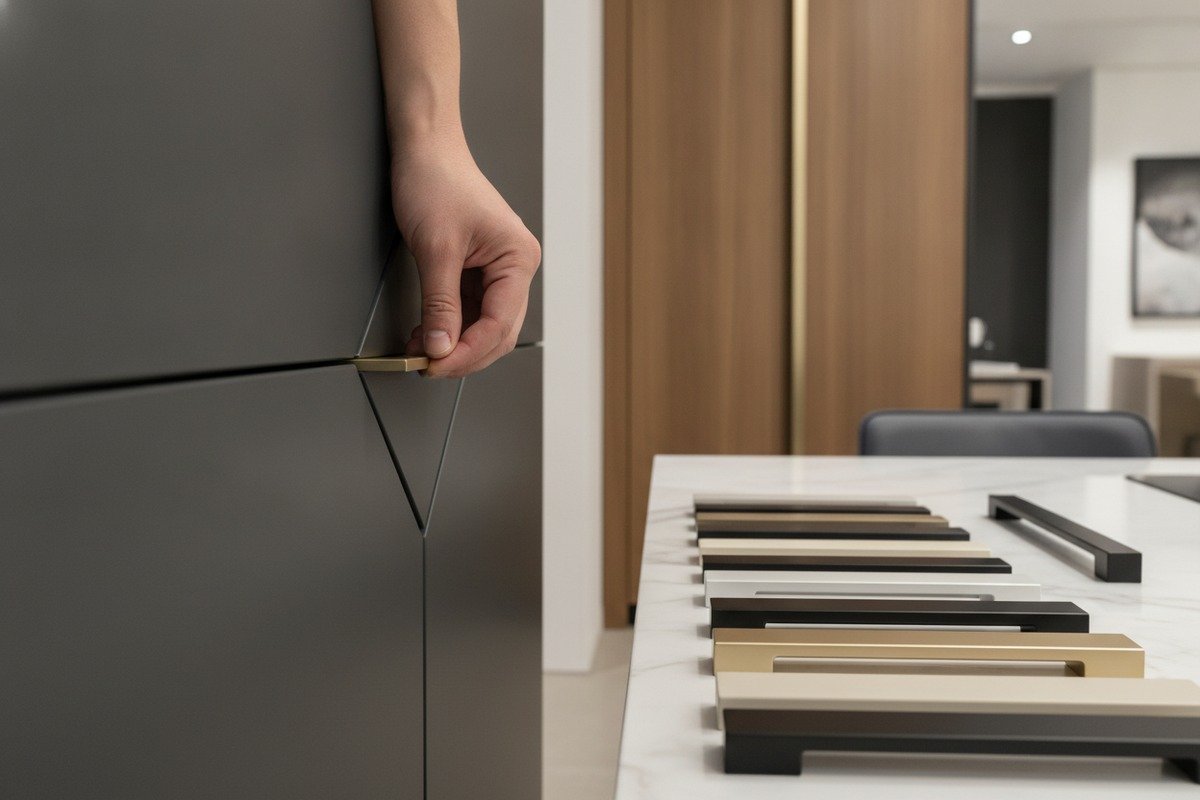
Over the past 18 years on our production floor in Foshan, one question keeps coming back from every new wholesale buyer and furniture factory owner we work with: “Which handle style goes where?” It sounds simple, but the wrong choice can make a premium wardrobe look cheap or a sleek kitchen cabinet feel clumsy drawer front thicknesses 1. The problem is real. A single aluminum handle that looks perfect on a showroom cabinet can feel completely wrong when mounted on a tall wardrobe door or a narrow drawer front. Most buyers learn this the hard way — after a full production run.
Choose aluminum furniture handles by matching visual proportion and function to each furniture type. Cabinets need balanced, medium-length pulls for daily use. Wardrobes suit longer, architectural styles that scale with large panels. Drawers look best with slim, compact pulls that preserve proportion.
This guide breaks down exactly how to pick the right aluminum handle style for cabinets, wardrobes, and drawers RAL code 2. We will cover lengths, surface treatments, profile shapes, and custom color sourcing. Each section gives you a clear decision framework so you can order with confidence.
How do I select the ideal aluminum handle lengths for my floor-to-ceiling wardrobe designs?
Floor-to-ceiling wardrobes 3 are some of the trickiest pieces to accessorize. When our engineering team develops handle profiles 4 for wardrobe projects, the most common feedback from furniture factories is that their previous handles looked "lost" on large door panels.
For floor-to-ceiling wardrobes, choose aluminum handles between 600 mm and 1200 mm long. Longer, vertical-oriented pulls create a clean architectural line that matches the scale of tall panels. Handles shorter than 400 mm tend to look disproportionate and feel awkward on full-height doors.
Why Proportion Drives the Decision
A floor-to-ceiling wardrobe door is typically 2200 mm to 2700 mm tall Pantone reference 5. A small 128 mm cabinet pull mounted on that surface looks like an afterthought. The eye needs a visual anchor. A longer handle — mounted vertically — gives the door a sense of intentional design. It also makes the door easier to open, because you can grip it at a comfortable height without bending or reaching.
Recommended Handle Lengths by Wardrobe Door Height
| Wardrobe Door Height | Recommended Handle Length | Mounting Orientation |
|---|---|---|
| 1800 mm – 2000 mm | 400 mm – 600 mm | Vertical or horizontal |
| 2000 mm – 2400 mm | 600 mm – 900 mm | Vertical preferred |
| 2400 mm – 2700 mm | 900 mm – 1200 mm | Vertical preferred |
| 2700 mm + | 1200 mm + or full-length profile | Vertical only |
Vertical vs. Horizontal Mounting
For wardrobes, vertical mounting almost always looks better. It echoes the tall proportion of the door. Horizontal mounting works on wider sliding doors, but for hinged floor-to-ceiling panels, vertical is the standard in modern design.
Style Families That Work Best
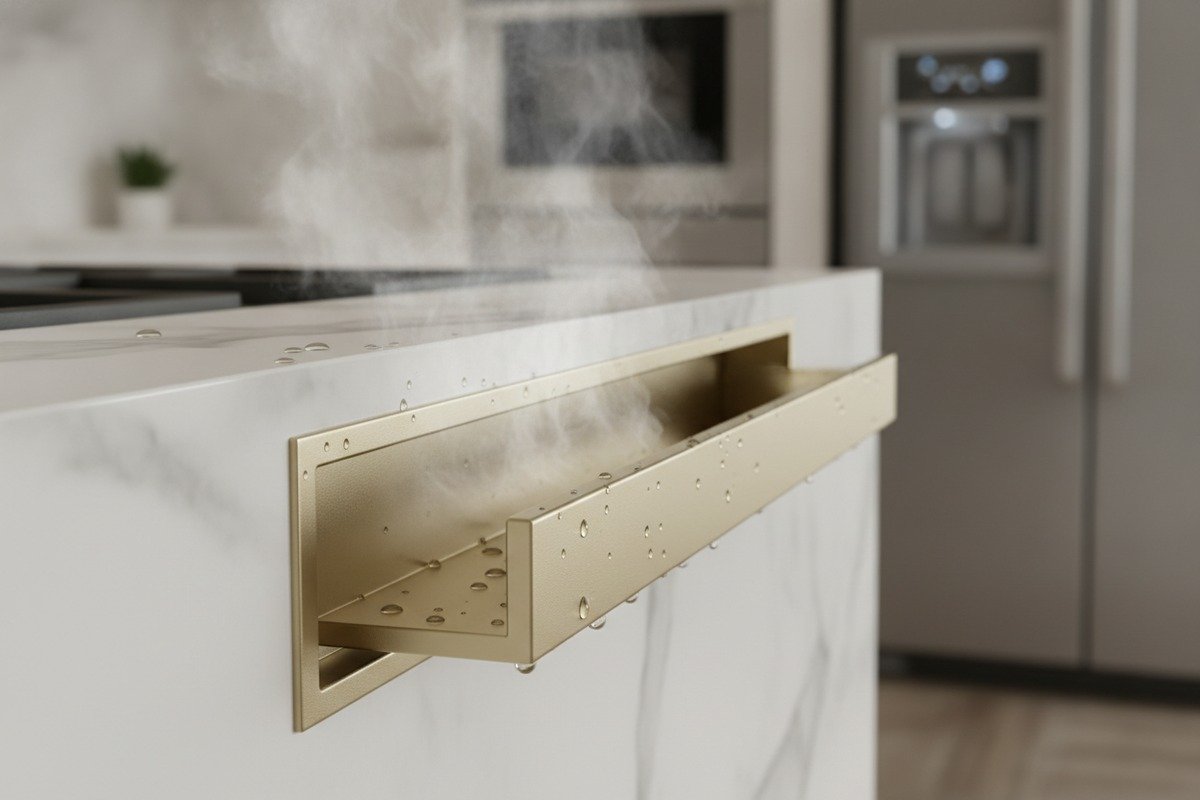
Slim rectangular bar pulls with a low-profile cross-section are the most popular choice. Recessed channel handles — like the extruded aluminum profiles 6 we produce with a deep geometric finger grip — sit flush with the door surface and give a truly minimalist look. These integrated profile handles eliminate protrusion entirely, which matters when wardrobe doors are in hallways or tight bedrooms.
From our export experience shipping to Vietnam and the Middle East, we find that champagne gold and matte black are the two dominant finishes for wardrobe handles. Both colors add warmth or contrast against common panel materials like melamine, PET film, and veneer.
Ergonomic Considerations
A longer handle distributes the pulling force. This matters on heavy wardrobe doors. A 900 mm vertical pull lets users grip at waist height, elbow height, or anywhere in between. This is far more comfortable than a short pull placed at a fixed point. For elderly users or children, a longer handle is simply more accessible.
One thing we always tell our B2B clients: test the grip depth. A handle with only 15 mm of finger clearance feels cramped. Aim for at least 20 mm to 25 mm of channel depth for comfortable daily use.
What are the best surface treatments for aluminum cabinet handles to prevent wear in humid environments?
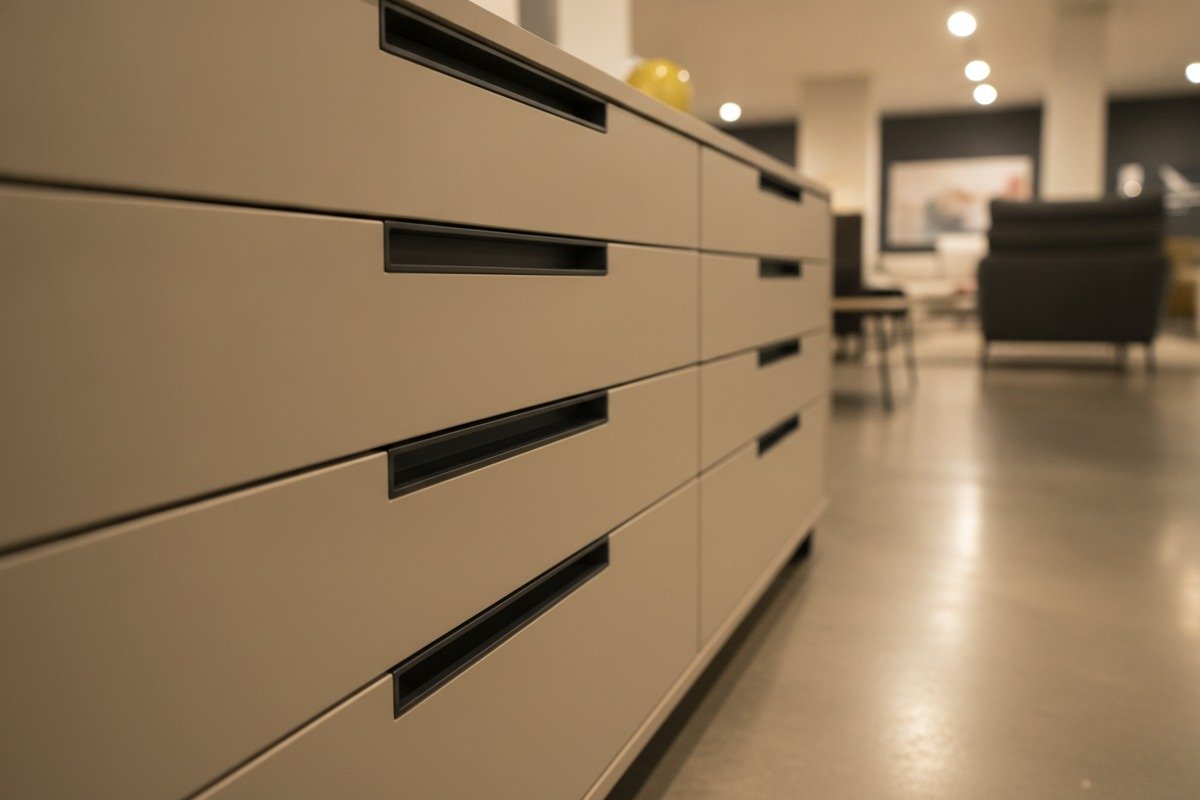
Kitchen and bathroom cabinets face constant moisture, steam, grease, and cleaning chemicals. When we run corrosion tests on our aluminum handle samples, the difference between a basic finish and a properly treated surface is dramatic — sometimes the gap is years of usable life.
The best surface treatments for aluminum cabinet handles in humid environments are anodizing and electrophoretic coating. Anodizing creates a hard oxide layer that resists corrosion, scratches, and fingerprints. Electrophoretic coating adds an extra barrier against moisture and chemical exposure, outperforming simple paint or powder coat in wet conditions.
Understanding the Main Surface Treatment Options
Not all finishes are equal. Here is a comparison of the most common treatments available for aluminum furniture handles.
| Surface Treatment | Corrosion Resistance | Scratch Resistance | Appearance Options | Best Use Case |
|---|---|---|---|---|
| Anodizing 7 | High | High | Matte, satin, metallic tones | Kitchens, bathrooms, coastal areas |
| Electrophoretic (E-coat) | Very high | High | Smooth, uniform colors | High-humidity or commercial use |
| Powder coating | Medium-high | Medium | Wide color range | Dry to moderate environments |
| Brushed (no seal) | Low | Low | Raw metallic look | Indoor, low-moisture only |
| Polished (no seal) | Low | Very low | Mirror finish | Display or decorative only |
Why Anodizing Leads the Pack
Anodizing is not a coating applied on top of the aluminum. It is an electrochemical process that converts the surface into aluminum oxide. This oxide layer is actually part of the metal. It does not peel, chip, or flake. It is harder than the base aluminum and resists most household chemicals.
For cabinet handles that get touched dozens of times a day — especially with wet or greasy hands — anodizing is the most reliable choice. It also accepts dye well, so you can get colors like champagne gold, bronze, matte black, and even custom tones.
Electrophoretic Coating for Extra Protection
Electrophoretic coating 8, also called E-coating, uses an electric field to deposit a thin, even layer of paint onto the aluminum surface. The result is a uniform, sealed finish that bonds tightly to the metal. It performs better than standard powder coat in high-humidity environments because it has fewer micro-pores.
We recommend E-coating for handles used in commercial kitchens, hotel bathrooms, or any project in tropical or coastal climates. The finish stays clean, resists salt air, and maintains its color for years.
Practical Tips for Buyers
First, always ask your supplier what pre-treatment they use before the final finish. Proper degreasing and chromate-free conversion coating improve adhesion and corrosion resistance significantly. Second, request salt spray test reports 9. A well-anodized aluminum handle should survive 500+ hours of salt spray without visible corrosion. Our standard handles pass 720 hours.
Third, consider the cleaning routine. Powder-coated handles can dull over time if cleaned with abrasive chemicals. Anodized handles tolerate most cleaners without losing their luster.
For cabinet applications specifically, brushed anodized finishes are the sweet spot. They hide fingerprints better than polished surfaces and feel premium to the touch. This is why our most popular cabinet handle finishes are brushed champagne gold and brushed matte black.
How can I find minimalist aluminum profile handles that fit various drawer thicknesses in my production line?
Running a furniture production line 10 means dealing with multiple drawer front thicknesses — 16 mm, 18 mm, 22 mm, sometimes even 25 mm panels. When our product development team works with factory buyers, the first question is always about compatibility. A beautiful profile handle is useless if it does not fit your panel.
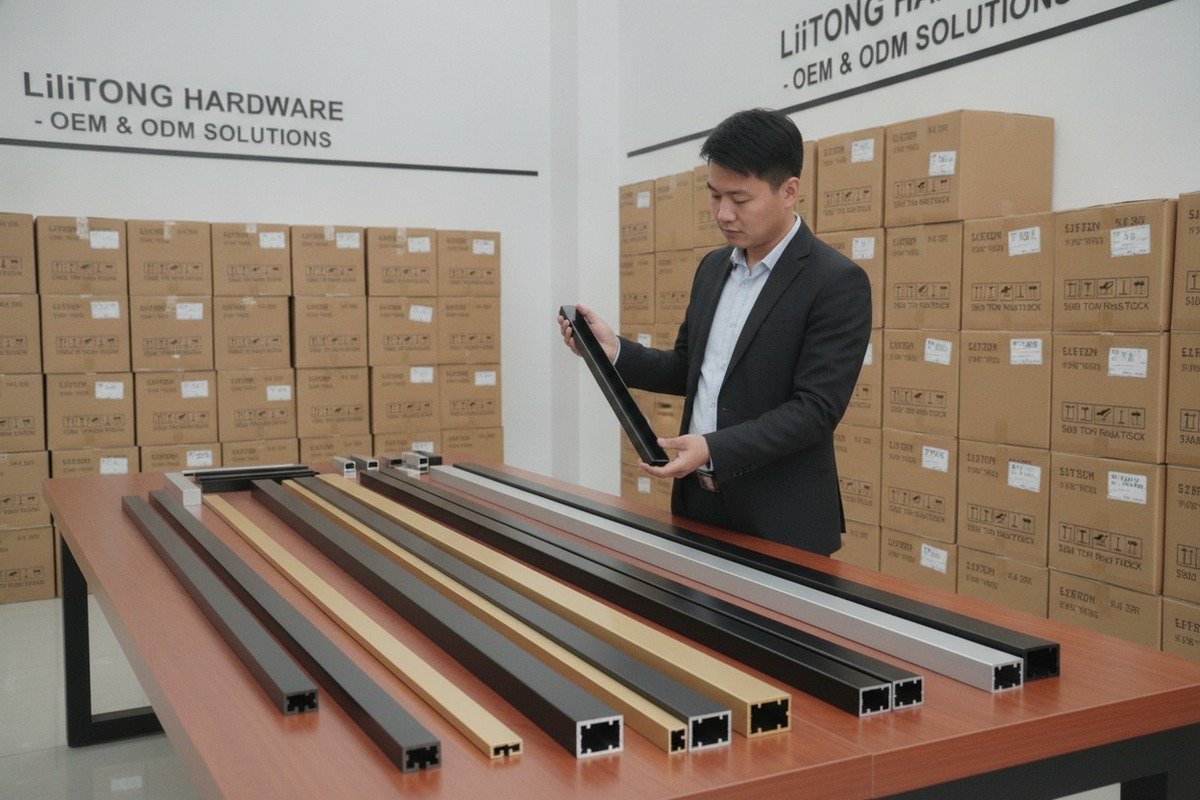
Look for extruded aluminum profile handles designed with adjustable or multi-thickness clip systems. The best minimalist profiles use a channel-mount design that accommodates panel thicknesses from 16 mm to 25 mm without modification. This lets one handle SKU serve multiple drawer configurations on the same production line.
What Makes a Profile Handle "Minimalist"
Minimalist profile handles sit flush or nearly flush with the drawer front. They do not protrude outward like traditional bar pulls. Instead, they create a slim, linear finger grip — often along the top edge or bottom edge of the drawer face. The visual effect is clean and uncluttered.
These handles are cut from extruded aluminum, which means the cross-section shape is consistent along the entire length. You can cut them to any width. This is a huge advantage for production lines that build drawers in multiple widths. You buy one profile in bulk, then cut to length as needed.
Key Specifications to Check
When sourcing these handles, ask about these three specs:
- Panel thickness range. The channel or clip opening must accept your drawer front panels. A good universal range is 16 mm to 22 mm.
- Profile depth. This is how far the handle extends behind the panel. Keep it under 30 mm for compact installations.
- Finger clearance. The gap between the handle lip and the panel surface. At least 18 mm to 20 mm is comfortable for adult fingers.
Matching Profile Handles to Drawer Proportions
Small drawers need short handles. Wide drawers can take full-width profiles. Here is a general guide:
| Drawer Width | Recommended Handle Length | Style Note |
|---|---|---|
| 300 mm – 450 mm | 200 mm – 300 mm centered pull | Compact, proportioned |
| 450 mm – 600 mm | 300 mm – 500 mm or full-width | Clean, balanced |
| 600 mm – 900 mm | Full-width profile recommended | Seamless, architectural |
| 900 mm + | Full-width profile | Continuous line effect |
For drawers under 300 mm wide — like small bathroom vanity drawers — a compact 96 mm or 128 mm slim bar pull may actually work better than a profile handle. Profile handles start to look their best at around 300 mm and above.
Sourcing Tips for Production Lines
If you run a factory, you want to minimize SKUs. Profile handles help with this. One extrusion profile, one anodized finish, and a chop saw on the factory floor. That is all you need to serve dozens of drawer widths.
We keep 300 tons of ready-to-ship inventory in Foshan, and our most popular profile handles are always in stock in standard finishes — matte black, champagne gold, silver anodized, and charcoal grey. For furniture factories that need quick turnaround, we ship stock items within 48 hours. Custom lengths and finishes take 3 to 7 days.
Another thing to consider: tolerances. Extruded aluminum profiles should have tight dimensional tolerances — typically ±0.1 mm on the channel opening. Loose tolerances mean the handle wobbles on the panel. Always request a sample and test-fit it on your actual drawer fronts before placing a bulk order.
The Integrated Look
The beauty of a minimalist profile handle is that it almost disappears. When mounted along the top edge of a drawer, the finger grip hides underneath. The drawer front looks like a solid, unbroken surface. This is the look that dominates modern kitchen, closet, and bathroom furniture design right now. It is clean. It is functional. And aluminum makes it lightweight enough that even long profiles do not add noticeable weight to the drawer.
Where can I source custom-colored aluminum handles that match my specific furniture brand's aesthetic?
Brand identity matters. When a furniture brand uses a specific palette — say, a warm rose gold or a custom grey-green — off-the-shelf handle colors rarely match exactly. Our color-matching lab handles this kind of request every week, and the process is more straightforward than most buyers expect.
Source custom-colored aluminum handles directly from manufacturers that offer in-house anodizing and powder coating lines. Provide your target color as a RAL code, Pantone reference, or physical sample. Factories with dedicated color-matching capabilities can produce handles in virtually any color with consistent batch-to-batch accuracy.

How the Custom Color Process Works
The process starts with a color reference. You can send a RAL number, a Pantone chip, or even a physical piece of material — a laminate sample, a painted panel, or a fabric swatch. The factory's color lab mixes and tests until the aluminum finish matches within an acceptable Delta E range (typically ΔE < 1.5 for a close visual match).
For anodized colors, the range is somewhat limited to metallic and translucent tones — silvers, golds, bronzes, blacks, and some blues or reds. If you need opaque, non-metallic colors (like pure white, mint green, or terracotta), powder coating or electrophoretic coating is the better route.
Comparing Custom Color Methods
| Method | Color Range | Durability | Minimum Order Typical | Lead Time |
|---|---|---|---|---|
| Custom anodizing | Metallic/translucent tones | Very high | 200 – 500 pcs | 5 – 10 days |
| Custom powder coating | Virtually unlimited | High | 300 – 500 pcs | 5 – 10 days |
| Custom electrophoretic | Good range, smooth finish | Very high | 500 – 1000 pcs | 7 – 14 days |
| PVD coating | Metallic, mirror-like | Excellent | 500+ pcs | 10 – 15 days |
What to Ask Your Supplier
Here are the key questions that save time and prevent costly mistakes:
- Do you have an in-house coating line or do you outsource? In-house means faster turnaround and better quality control. We run our own anodizing and powder coating lines, which is why we can offer 3 to 7 day turnaround on custom colors.
- What is the minimum order quantity for a custom color? Some factories require 5000 pieces minimum. Others, like ours, work with smaller batches — sometimes as low as 200 pieces for a first trial run.
- Can you provide a color sample before bulk production? Always request a pre-production sample on actual aluminum, not just a color card. Colors look different on metal than on paper.
- How do you ensure batch consistency? Ask about their quality control process. Spectrophotometer checks, standard sample retention, and controlled process parameters all matter.
Building a Cohesive Brand Look
Custom colors let you create a signature look across your entire furniture line. Imagine every handle — on cabinets, wardrobes, and drawers — in the same custom bronze tone that matches your brand's hardware palette. This is the kind of detail that elevates a furniture brand from generic to premium.
Some of our clients in the Middle East order handles in 4 or 5 custom colors to match their different furniture collections. They send us the laminate samples for each collection, and we match the handle color to each one. The result is a coordinated, professional look across every product they sell.
Combining Finishes and Colors
Do not overlook the possibility of combining surface textures with custom colors. A brushed texture in champagne gold feels very different from a smooth, glossy champagne gold — even though the color is identical. The brushed version hides fingerprints and gives a warmer, more tactile quality. The glossy version is more dramatic and eye-catching.
Think about where the handle will live. Kitchen cabinets benefit from brushed finishes because they get touched constantly. Display wardrobes in a showroom might look better with a polished or smooth finish. Drawers in a bedroom vanity can go either way.
The key takeaway is this: custom color sourcing is not as complicated or expensive as it sounds, especially when you work directly with a manufacturer that controls the entire process from extrusion to finishing. It is one of the most effective ways to differentiate your product in a crowded market.
Conclusion
Choosing the right aluminum handle comes down to three things: furniture type, proportion, and finish. Match long handles to wardrobes, balanced pulls to cabinets, and compact styles to drawers. Get the scale right, and everything else falls into place.
Footnotes
1. Explains a critical dimension in furniture manufacturing. ↩︎
2. Identifies an international standard for color matching. ↩︎
3. Provides context on the specific furniture type discussed. ↩︎
4. Explains the design and manufacturing of handle shapes. ↩︎
5. Identifies another international standard for color matching. ↩︎
6. Details the manufacturing process for aluminum profiles. ↩︎
7. Wikipedia provides a comprehensive and authoritative explanation of anodizing. ↩︎
8. Wikipedia offers a detailed and authoritative overview of electrophoretic deposition, also known as electrophoretic coating. ↩︎
9. Details a standard test for corrosion resistance. ↩︎
10. Provides context on the industrial manufacturing process. ↩︎