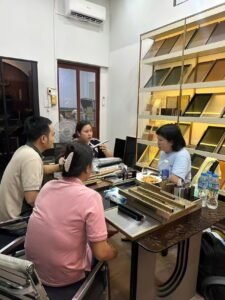
Every week, our sales team fields dozens of inquiries from buyers who’ve been burned by suppliers promising “full customization” but delivering inconsistent handles, missed deadlines, and zero engineering support tooling and mold development 1. The gap between brochure-level claims and real factory capability is where most sourcing projects fail.
To evaluate a supplier’s OEM and ODM custom production capabilities for aluminum furniture handles, assess their engineering feasibility review process, tooling and mold development expertise, finish consistency across batches, sample turnaround discipline, MOQ flexibility, monthly production capacity, and quality-control protocols before committing to any custom run.
This guide walks you through the exact due-diligence framework we recommend to every wholesaler and furniture factory buyer who contacts us OEM Versus ODM 2. Whether you are a first-time importer or a seasoned procurement director, the criteria below will help you separate real manufacturing partners from middlemen with glossy catalogs.
How can I verify if a supplier can really deliver my custom aluminum handle orders within 7 days?
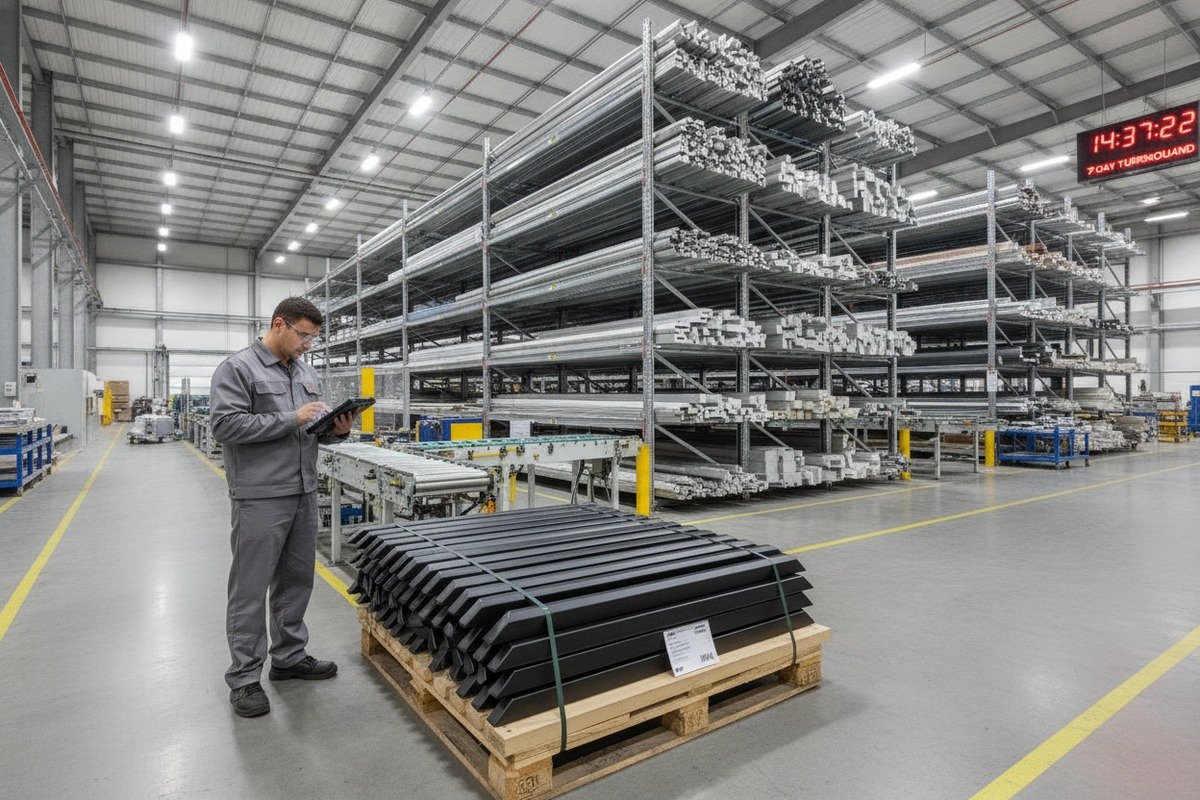
Promises of fast turnaround are everywhere in the aluminum hardware space. Our production scheduler tracks every custom order from drawing approval to dispatch, and the reality is that a 7-day delivery window is achievable — but only under specific conditions that most buyers never think to verify upfront.
To verify a 7-day custom delivery claim, ask the supplier for their standard production workflow timeline, confirm they hold raw aluminum stock, check if tooling already exists for your profile, and request references from past orders with documented ship dates and order complexity.
Why 7-Day Claims Need Context
A 7-day turnaround does not mean 7 days from your first email. It means 7 days from the moment design approval, material allocation, and tooling setup are all confirmed. When we quote a 3-to-7-day custom turnaround at our Foshan facility, that clock starts after the buyer signs off on the technical drawing and finish selection. If the profile requires a brand-new extrusion die 3, add another 5 to 10 days for die fabrication alone.
The Production Timeline Breakdown
Here is what a realistic custom order timeline looks like for extruded aluminum handles:
| Stage | Typical Duration | What Can Delay It |
|---|---|---|
| Drawing review and approval | 1–2 days | Incomplete dimensions, unclear finish specs |
| Die/tooling check or fabrication | 0 days (existing die) / 5–10 days (new die) | Complex cross-section, tight tolerances |
| Aluminum extrusion | 1–2 days | Material shortage, machine queue |
| Surface treatment (anodizing, powder coat) | 1–2 days | Color matching revisions, batch size |
| Cutting, drilling, packaging | 1 day | Custom packaging requirements |
| Quality inspection and dispatch | 0.5–1 day | Failed inspection, rework needed |
Questions You Should Ask Before Believing the Timeline
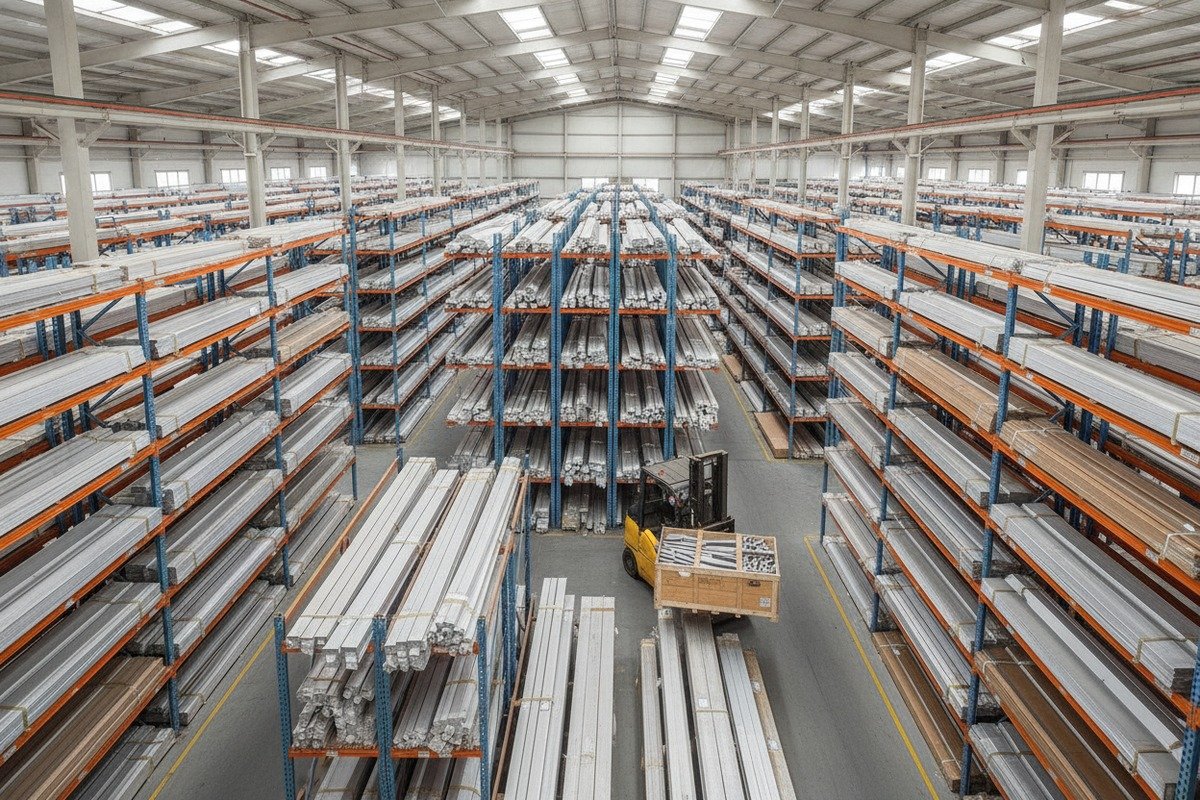
First, ask whether the supplier keeps raw aluminum billet or ingot in stock. A factory holding 300 tons of ready inventory, as we do, can start extrusion almost immediately. A supplier who must order material from a smelter adds 7 to 14 days before production even begins.
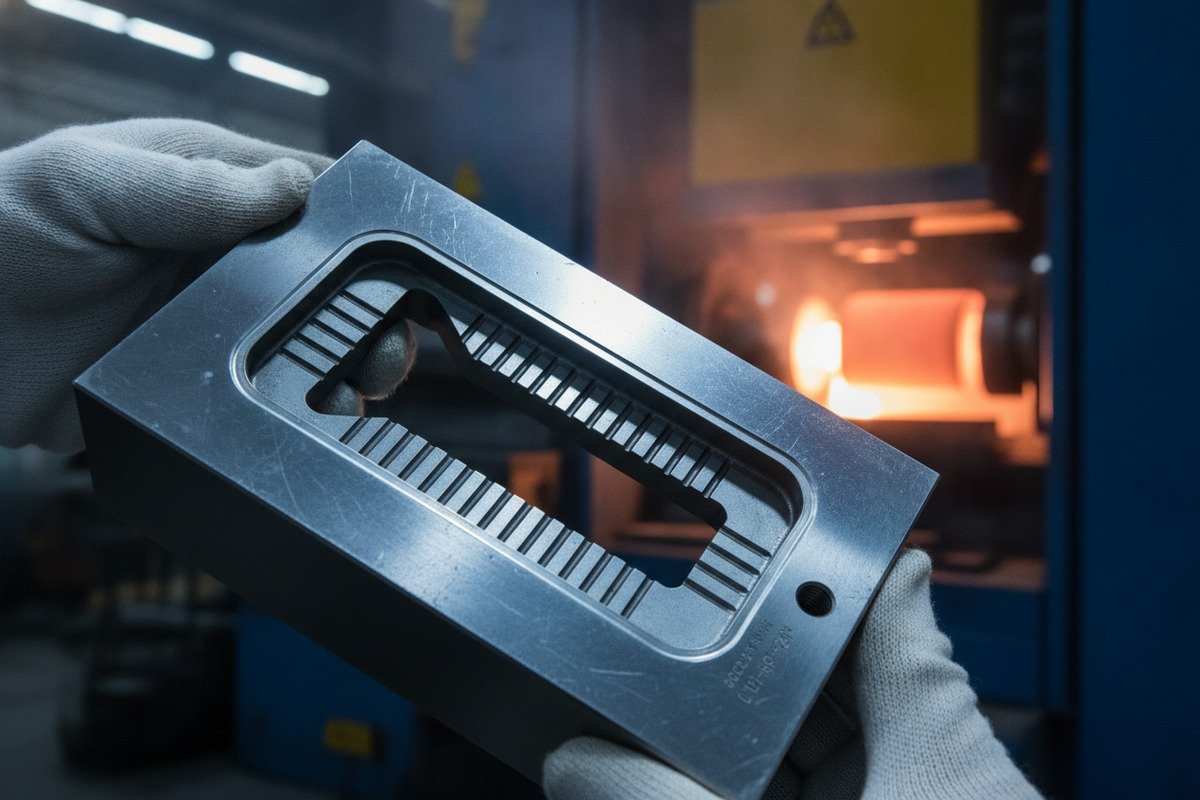
Second, ask if the extrusion die 4 for your handle profile already exists. For popular minimalist recessed pulls — the kind with a long slim rectangular form and a deep geometric finger-grip channel — many experienced factories already own the tooling. That eliminates the longest variable in the timeline.
Third, request a Gantt chart 5 or simple stage-by-stage schedule for a recent custom order. Any factory that tracks production digitally can export this in minutes. If they cannot provide it, their "7-day" promise is a guess, not a commitment.
Stock Items Versus Custom Items
There is a critical difference between shipping a stock handle in a standard finish and producing a custom handle with a unique length, hole spacing, or champagne-gold anodized color. Stock items can ship within 48 hours from a ready warehouse. Custom items enter the production queue. A trustworthy supplier will clearly separate these two categories in their quotation and never blur the line to win your order.
What steps should I take to ensure the final bulk production matches the quality of my initial custom samples?
One of the most frustrating experiences our clients describe is receiving a perfect sample — and then getting bulk handles that look or feel completely different. Over 18 years of running our production lines, we have learned that the sample-to-bulk gap is almost always a process discipline problem, not a materials problem.
To ensure bulk production matches your approved sample, require a signed golden sample agreement, define measurable tolerances for dimensions and finish, mandate in-process inspections at key stages, and arrange a pre-shipment audit on a random pull from the finished batch.
The Golden Sample Protocol
A golden sample is a physical reference piece that both buyer and supplier agree represents the acceptable standard. It covers dimensions, surface finish, color, weight, and feel. Both parties should keep one. Every production batch is then compared against this reference. Without a golden sample, "quality" becomes subjective, and disputes are almost impossible to resolve fairly.
Where Quality Drift Happens
Quality drift in aluminum handle production usually occurs at three points:
| Drift Point | What Goes Wrong | How to Prevent It |
|---|---|---|
| Extrusion | Die wear causes slight dimensional changes over long runs | Require die inspection reports every 5,000 meters of extrusion |
| Anodizing / powder coating | Color shifts between tanks or batches | Demand Delta-E color measurement below 1.5 on every batch |
| Cutting and drilling | Hole spacing or handle length varies | Specify tolerances (e.g., ±0.2 mm) and require first-article inspection |
Measurable Specifications Beat Verbal Agreements
When we onboard a new OEM client, we create a product specification sheet that lists every measurable parameter: overall length, depth of the recessed channel, wall thickness, hole center distance, surface roughness (Ra value), anodizing layer thickness in microns, and Pantone or RAL color code 6. This document becomes the legal quality standard. If the factory cannot produce or discuss such a document, they lack the process controls needed for repeatable quality.
In-Process Inspection Checkpoints
Do not wait until the entire batch is packed to check quality. Ask the supplier to send photos and measurement data at three stages: after extrusion (raw profile check), after surface treatment (color and coating check), and after final machining and packing (dimensional and cosmetic check). Factories with real quality systems already do this internally. Asking them to share it with you costs nothing and reveals everything about their discipline.
Third-Party Inspection as Insurance
For high-value or first-time orders, hire a third-party inspection agency like SGS or TÜV to conduct an on-site pre-shipment inspection 7. They will pull random samples from the finished batch, measure them against your spec sheet, and issue a pass/fail report. This is standard practice in B2B hardware sourcing and any credible supplier will welcome it rather than resist it.
How do I assess if a manufacturer has the technical expertise to handle my specific ODM design requirements for furniture handles?
When clients come to us with just a sketch on a napkin or a Pinterest mood board, they need more than a factory — they need an engineering partner. Our R&D team regularly converts rough concepts into production-ready extruded aluminum profiles, and the difference between a capable ODM factory and a simple job shop becomes obvious the moment you discuss cross-section geometry and alloy selection.
Assess ODM technical expertise by requesting the supplier's past ODM project portfolio, asking them to review your concept and provide a feasibility report with material recommendations, verifying they have in-house CAD/CAM capability, and confirming they can develop custom extrusion dies and prototypes before committing to mass production.
OEM Versus ODM: Why the Distinction Matters for Aluminum Handles
OEM means you provide the complete design — CAD files, dimensions, tolerances, finish specs — and the factory simply manufactures to your blueprint. ODM means the factory contributes to the design process itself, turning your concept, reference images, or functional requirements into a manufacturable product. For aluminum furniture handles, ODM capability is especially valuable because extrusion profile design requires knowledge of wall thickness limits, alloy flow behavior, and die engineering that most buyers do not possess.
| Capability | OEM-Only Supplier | Full ODM Supplier |
|---|---|---|
| Accepts finished CAD drawings | Yes | Yes |
| Develops design from concept/sketch | No | Yes |
| Advises on alloy and finish tradeoffs | Rarely | Yes |
| Creates custom extrusion dies in-house | Sometimes (outsourced) | Yes (in-house or closely managed) |
| Offers 3D rendering and revision cycles | No | Yes |
| Provides feasibility report before quoting | No | Yes |
How to Test a Supplier's Engineering Depth
Send the supplier a photo or rough sketch of the handle you want — for example, a sleek recessed pull with a deep geometric channel and an L-shaped cross-section in champagne gold anodized finish. Then ask three questions:
- What aluminum alloy do you recommend for this profile, and why?
- What is the minimum wall thickness you can extrude for this cross-section?
- How many die revisions do you typically need before the profile is production-ready?
A capable ODM factory will answer with specifics. They might say 6063-T5 alloy 8 is ideal for furniture handles because it extrudes cleanly and anodizes evenly, that the minimum wall for this profile is 1.0 mm but they recommend 1.2 mm for rigidity, and that most dies need one to two trial extrusions before sign-off. A trading company or lightweight assembler will give vague or delayed answers because they are forwarding your question to someone else.
Design Ownership and IP Protection
When a factory helps develop your design through ODM, clarify who owns the intellectual property 9. A professional supplier will sign a design ownership agreement stating that the final product design belongs to the buyer. They will also commit not to sell the same design to other clients. Ask for this in writing before sharing any proprietary concepts. Factories that hesitate or refuse to discuss IP ownership are a risk, especially in a market where handle designs can be easily replicated.
Prototyping Before Mass Production
A real ODM partner will always offer a prototype phase. This might be a CNC-machined sample from a solid aluminum block (faster but more expensive) or a trial extrusion from a preliminary die (slower but closer to the final production method). Either way, you should hold, measure, and finish-test the prototype before approving mass production. Skipping this step is the single biggest source of ODM project failures.
Evaluating Past ODM Projects
Ask for a portfolio of past ODM projects, including photos, drawings, and — if possible — client references. A factory with genuine ODM experience will have a library of custom profiles they have developed. Look for variety in cross-sections, finishes, and applications. If every handle in their portfolio looks identical with minor variations, their design capability may be limited to catalog modifications rather than true ground-up development.
Can I find a partner that offers low MOQs while still providing full OEM customization for my unique brand needs?
This question comes up in almost every first conversation we have with new distributors, especially those entering a new market or testing a niche product line. The short answer is yes — but the economics of low-MOQ customization only work when the supplier has the right infrastructure and is transparent about the tradeoffs involved.
Yes, low-MOQ OEM customization is possible when the supplier maintains existing extrusion dies, holds standard aluminum stock, and offers modular customization such as custom lengths, finishes, or laser-engraved branding on established handle profiles, rather than requiring entirely new tooling for every order.
Why MOQ and Customization Are Connected
Minimum order quantities exist because of fixed costs. Every custom aluminum handle order involves die setup, machine calibration 10, anodizing bath preparation, and packaging configuration. These costs are the same whether you order 50 handles or 5,000. A higher MOQ spreads those fixed costs across more units, lowering the per-piece price. A lower MOQ concentrates them, raising it.
The Modular Customization Approach
The most practical way to get low MOQs with real OEM customization is modular customization. This means selecting from an existing library of handle profiles and then customizing specific elements:
| Customization Element | Requires New Tooling? | Typical MOQ Impact |
|---|---|---|
| Handle length (cut to order) | No | Minimal — can be as low as 50–100 pcs |
| Surface finish (anodizing color, powder coat) | No (if color is standard) | Low — 100–300 pcs per color |
| Custom RAL/Pantone color match | No new die, but color setup cost | Moderate — 200–500 pcs per color |
| Laser-engraved logo or brand name | No | Minimal — 50–100 pcs |
| Entirely new cross-section profile | Yes (new extrusion die) | High — 500–2,000 pcs to justify die cost |
| Custom packaging with brand printing | No new handle tooling | Moderate — 300–500 pcs |
How Our Facility Handles Low-MOQ Custom Orders
At our Foshan factory, we maintain over 200 existing extrusion dies for furniture handle profiles. When a buyer selects one of these profiles, we can customize length, finish, and branding with MOQs as low as 50 to 100 pieces for standard finishes. This works because the die already exists and our 300-ton aluminum inventory means we do not need to source material for small runs. The buyer gets a product that looks and feels fully custom — unique color, branded packaging, specific length — without paying for new tooling.
However, if the buyer needs a completely new cross-section shape, the MOQ increases because we must fabricate a new extrusion die. Die costs typically range from a few hundred to over a thousand dollars depending on complexity. Some factories amortize this cost into the per-piece price over a larger order, while others charge it as a one-time tooling fee. Either way, transparency here is critical. If a supplier quotes you 50-piece MOQ for a fully custom profile with new tooling and no tooling fee, something does not add up.
Red Flags in Low-MOQ Claims
Be cautious of suppliers who promise unlimited customization at very low MOQs without explaining how they manage the economics. Common red flags include: no mention of tooling fees, no distinction between existing and new profiles, no explanation of finish setup costs, and delivery promises that seem too fast for the claimed level of customization. A trustworthy partner will explain the tradeoffs clearly rather than hiding them to close the deal.
What to Request Before Placing a Low-MOQ Custom Order
Ask for the supplier's existing die catalog or profile library. Request a written breakdown of tooling fees versus per-piece costs. Confirm which finishes are available at low volume and which require a minimum batch for color consistency. And always request a sample — even for a small order, a pre-production sample protects both sides from misunderstandings.
Conclusion
Evaluating a supplier's OEM and ODM capabilities comes down to verifiable actions, not marketing language. Check their engineering depth, tooling assets, quality protocols, and MOQ transparency — then trust the evidence, not the promises.
Footnotes
1. Provides context on the process of developing tools and dies for aluminum extrusion. ↩︎
2. Clarifies the fundamental differences between OEM and ODM manufacturing models and responsibilities. ↩︎
3. Explains the industrial extrusion process and die tooling. ↩︎
4. Explains the role and types of extrusion dies in aluminum profile manufacturing. ↩︎
5. Provides context on project management scheduling tools. ↩︎
6. Details the RAL color matching system used in manufacturing. ↩︎
7. WTO outlines official guidelines and agreements on pre-shipment inspections. ↩︎
8. Details the material properties of the 6063 aluminum alloy. ↩︎
9. WIPO is the global authority on intellectual property rights and protection. ↩︎
10. NIST provides standards for industrial machine calibration and measurement. ↩︎