
Every week, our production team receives packaging requests from overseas buyers—some crystal clear, others frustratingly vague barcode formats 1. The difference between the two often decides whether a shipment arrives in perfect condition or leads to costly disputes and damaged product.
To get a Chinese supplier to follow your specific packaging instructions for aluminum furniture handles, you must provide a written, measurable packaging specification—covering inner protection, outer carton details, labeling, and palletization—and tie it formally to your purchase order or sales contract before production begins.
This guide walks you through every step, from writing your first packaging spec to verifying the final packed carton. Let’s break it down so nothing gets lost in translation—or in transit.
How can I clearly communicate my custom branding and labeling requirements to my aluminum handle manufacturer?
In our experience shipping aluminum furniture handles 2 to the Middle East and Southeast Asia, the number one cause of packaging errors is not bad intentions—it is unclear instructions. Buyers often assume the factory "knows what they mean," and that assumption creates problems.
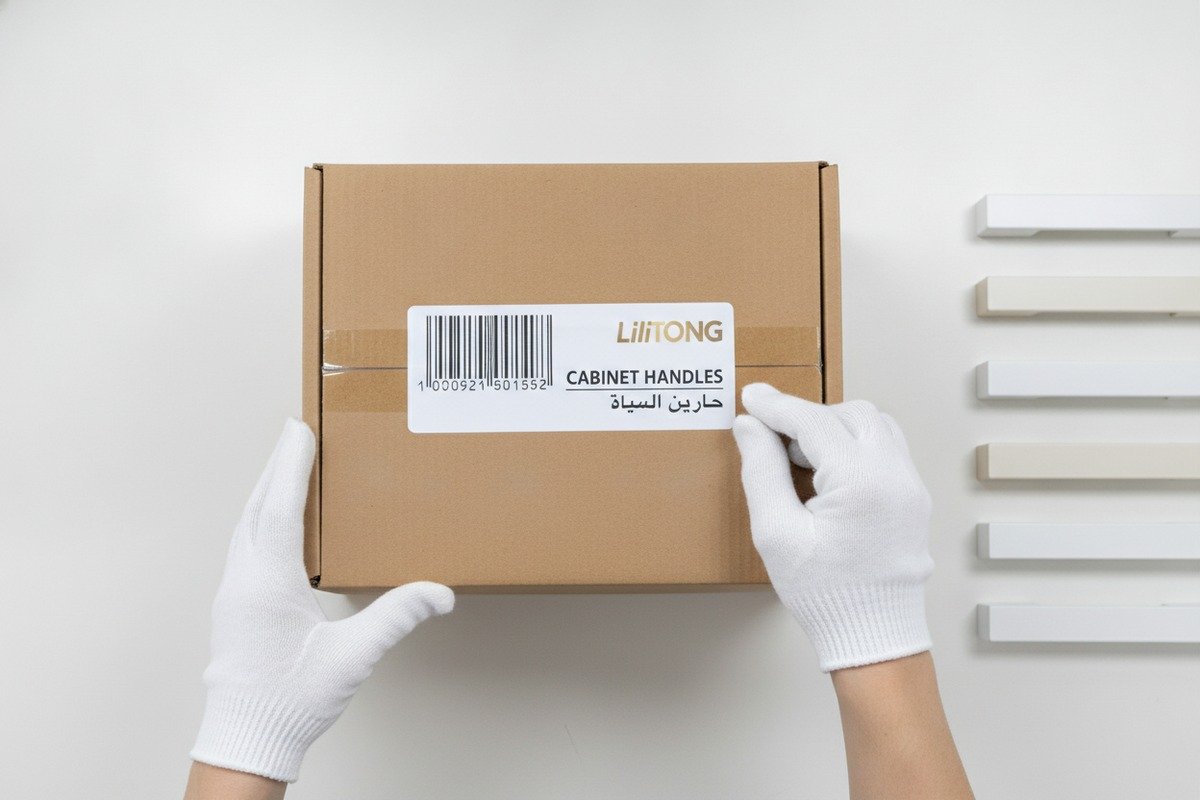
To clearly communicate branding and labeling requirements, send your supplier a detailed written specification with exact label dimensions, placement positions, content fields, barcode formats, and print color codes—then request they repeat the instructions back in writing and provide a physical sample for your approval.
Why Vague Requests Fail
Saying "please put my logo on the box" tells the factory almost nothing. Which box—the inner box or the master carton? What size should the logo be? What color? Where exactly should it go? Our production staff have seen buyers send a single logo file with no other instruction, then reject the carton because the logo was printed on the wrong side. This kind of rework costs time and money for both parties.
The fix is simple: treat labeling as a technical specification, not a casual request.
What Your Labeling Spec Should Include
Here is a breakdown of the information you should provide:
| Label Element | What to Specify | Example |
|---|---|---|
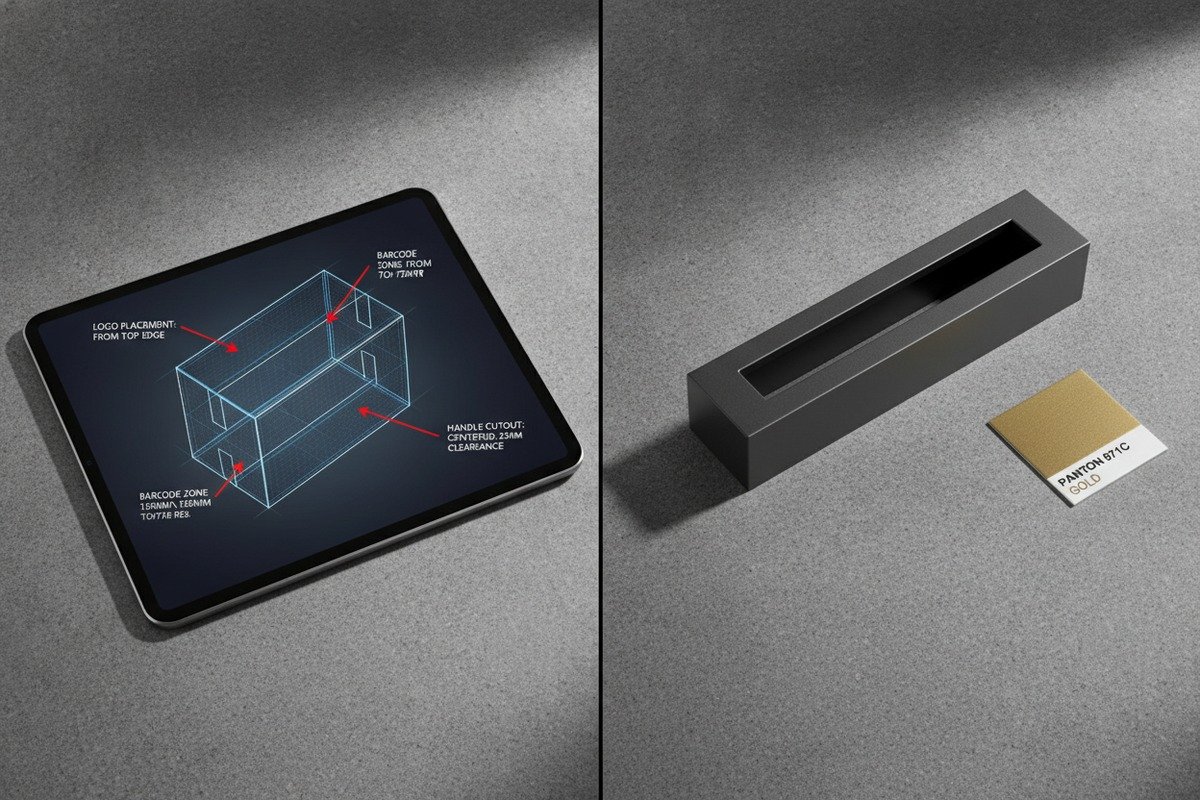
| Logo | File format, color code (Pantone/CMYK), size in mm | Logo.ai, Pantone 871C, 80mm × 30mm |
| Barcode | Format (UPC-A, EAN-13, Code 128), content, size | EAN-13, product SKU, 40mm × 25mm |
| Placement | Which surface, distance from edges | Front panel of master carton, 50mm from top edge |
| Text fields | Product name, model number, quantity, country of origin | "Aluminum Handle AH-2048, 50 pcs, Made in China" |
| Language | Required languages for text | English and Arabic |
| Shipping marks | Handling symbols, carton number, destination port | "Fragile," "Carton 1 of 20," "Jebel Ali" |
Use Visual Aids, Not Just Words
We always recommend buyers send an annotated photo or diagram. Draw arrows pointing to exactly where the label goes. Circle the barcode position. Mark the logo placement on a simple sketch of the carton's six faces. Visual instructions cut through language barriers far more effectively than paragraphs of text.
If your handles need individual retail-ready packaging—such as a hang tag, a branded insert card, or an instruction leaflet inside the polybag—provide a separate spec for each element with dimensions, material, and content.
The "Repeat Back" Rule
After sending your spec, ask the supplier to repeat the instructions back to you in their own words. This is not about trust. It is about catching misunderstandings before they become 5,000 misprinted cartons. At our facility, we make it standard practice to send a written packaging confirmation document before production starts. If your supplier does not do this, ask them to.
Get a Physical Sample Approved
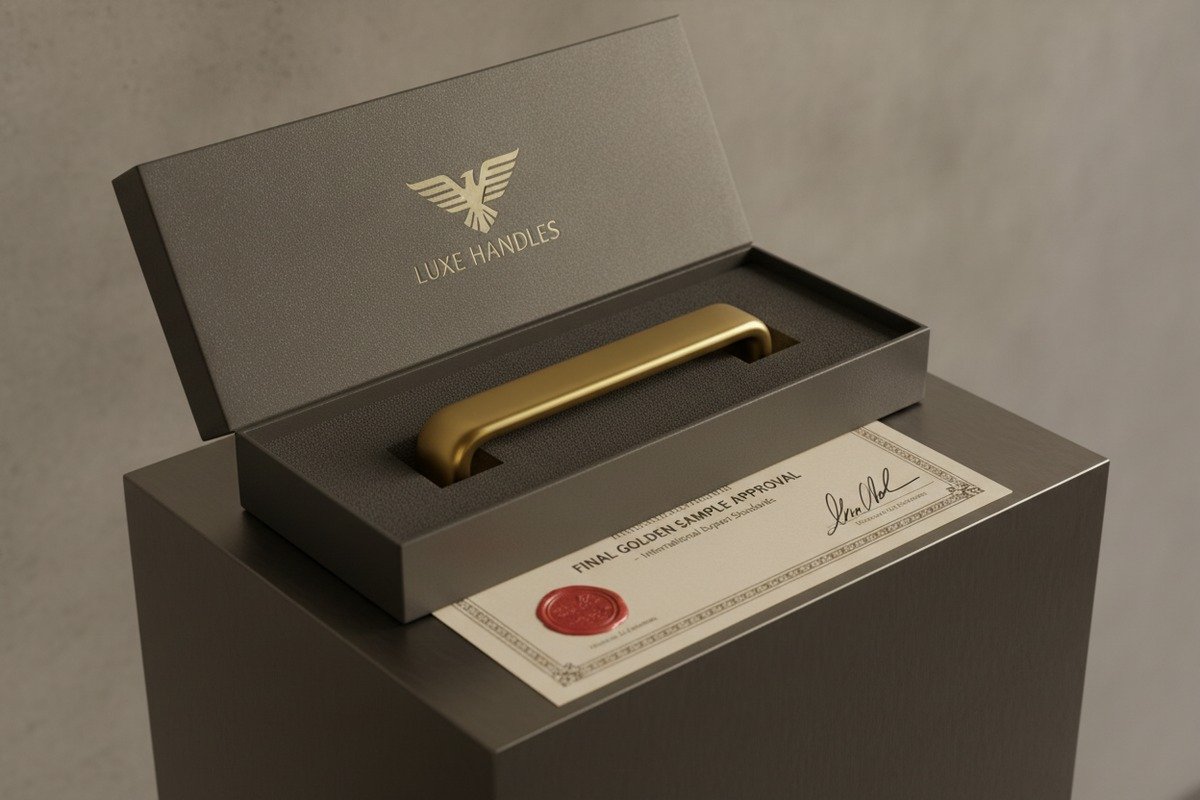
Never skip this step. A digital mock-up can look perfect on screen and still look wrong in real life. Request a physical packed sample—sometimes called a "golden sample"—with the actual label, actual carton print, and actual inner packaging. Approve it in writing. This sample becomes the benchmark for mass production.
What steps should I take to verify that my packaging instructions are being followed before the shipment leaves the factory?
When our team finishes a production run of recessed aluminum cabinet handles, the packing stage is where small oversights can undo weeks of careful manufacturing. We have seen buyers who invest heavily in product quality but treat packaging verification as an afterthought—and then wonder why goods arrive damaged or mislabeled.
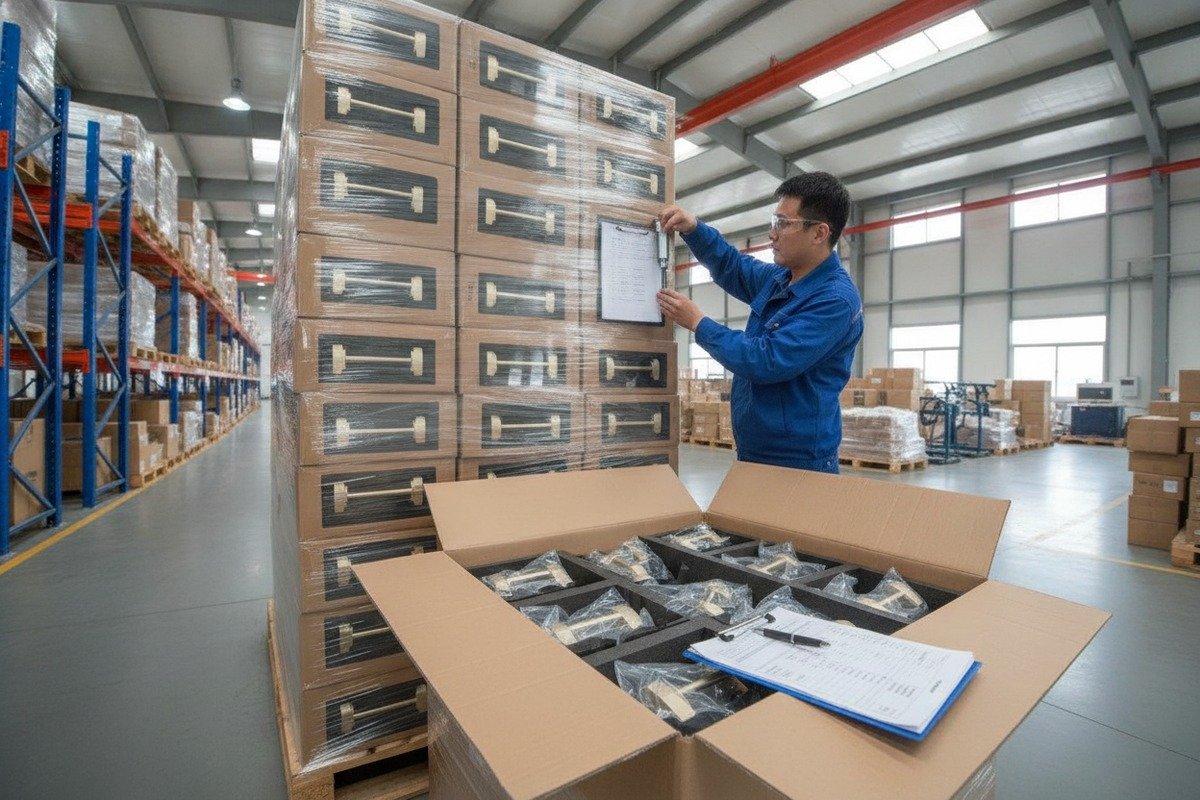
Before shipment, you should verify packaging compliance through a three-step process: approve a pre-production packing sample, require in-line packing photos or video during production, and conduct a final pre-shipment inspection—either in person or through a third-party quality control agency.
Step 1: Pre-Production Packing Sample
Before mass packing begins, ask your supplier to pack a small batch—typically 5 to 10 pieces—exactly as specified. This is your chance to check every detail: the polybag thickness, foam sleeve fit, carton print quality, label accuracy, and carton strength. Compare it directly against the golden sample you approved earlier.
If anything is wrong, now is the time to correct it. Fixing a packing error before mass production costs almost nothing. Fixing it after 10,000 handles are already boxed is expensive.
Step 2: In-Line Packing Photos and Video
During production, request that the factory send you photos or a short video of the packing process. This is standard practice for many export-oriented suppliers in Foshan. You want to see:
- The inner protection being applied (polybag, foam, separator)
- Handles being placed into inner boxes
- Inner boxes being arranged in the master carton
- Labels and shipping marks visible on the sealed carton
- Palletization method if applicable
Video is especially useful for verifying complex packing sequences. A 60-second clip shows you far more than a static photo.
Step 3: Pre-Shipment Inspection (PSI)
This is your last line of defense. A pre-shipment inspection 3 can be done by your own staff, by a buying agent, or by a third-party QC firm such as SGS, Bureau Veritas, or a local China-based inspection company quality control agency 4. The inspector should check:
| Inspection Point | What to Verify |
|---|---|
| Inner packaging | Correct material, correct wrapping method, no exposed metal surfaces |
| Quantity per carton | Matches the PO spec exactly |
| Carton quality | Double-wall if specified, no crushed corners, tape sealed properly |
| Label accuracy | SKU, barcode, quantity, origin—all correct and legible |
| Pallet condition | Stretch wrap applied, corner boards in place, height within limit |
| Moisture protection | Desiccant packets 5 present if required, sealed inner bags |
| Random open-box check | Open 5–10% of cartons to verify contents match labels |
Document Everything in the PO
Your purchase order should include a packaging clause that references your packaging specification 6 document by name and revision number. For example: "Packing per Buyer's Packaging Spec v2.1, dated March 15, 2025." This makes the spec legally part of the order. If the supplier deviates, you have a clear written basis for a claim.
What If You Cannot Visit the Factory?
Many of our buyers in Vietnam and the UAE cannot visit our Foshan facility for every order. In that case, we provide packing photos and a packing list before shipment. You can also hire a local third-party inspector for as little as $200–$350 per visit. This small investment can save you thousands in damaged goods or re-sorting costs at your warehouse.
Will requesting specialized protective packaging for my furniture handles significantly increase my unit cost or MOQ?
One concern we hear from distributors almost every week is this: "If I ask for custom packaging, will you double my price?" The fear is understandable—but usually overblown. At our facility, standard protective packaging is already built into the unit price. The cost only shifts meaningfully when buyers request premium retail packaging or unusual materials.
Requesting specialized protective packaging for aluminum furniture handles typically adds between 2% and 8% to your unit cost, depending on the materials and complexity involved. It rarely changes your MOQ unless the packaging itself—such as a custom-printed branded box—requires its own minimum production run.
Standard vs. Custom Packaging Cost
Here is a practical comparison to help you estimate the impact:
| Packaging Type | Typical Cost Impact | MOQ 7 Impact | Common Use Case |
|---|---|---|---|
| Standard polybag + kraft paper + plain carton | Included in unit price | None | Bulk wholesale, B2B distribution |
| Individual PE bag + foam sleeve + plain carton | +2–3% per unit | None | Scratch-sensitive finishes (anodized, brushed) |
| Branded inner box + barcode label + printed carton | +5–8% per unit | May require 1,000+ pcs for printed boxes | Retail-ready packaging, private label |
| Wooden crate + moisture barrier + pallet | +3–5% per shipment | None, but adds freight weight | Heavy or fragile items, sea freight 8 |
| Custom insert tray (EVA foam or molded pulp) | +$0.05–$0.20 per piece | Mold cost: $200–$800 one-time | High-value handles, showroom presentation |
Why the Cost Is Usually Modest
Aluminum furniture handles are small, lightweight items. The packaging material for each piece—a polybag, a strip of foam, a paper separator—costs only a few cents. Even upgrading from single-wall to double-wall cartons typically adds less than $0.50 per carton. The real cost driver is labor: how long does each piece take to wrap, place, and label? If your packaging design is efficient, the labor impact is minimal.
When Custom Packaging Does Raise the MOQ
The one scenario where MOQ becomes an issue is custom-printed packaging. A branded retail box with your logo, color scheme, and barcode usually requires a print run of 1,000 to 3,000 units minimum from the box supplier. If your handle order is only 500 pieces, you may need to buy extra boxes or accept plain boxes for the first order.
Our recommendation: for first orders, use plain packaging with a printed adhesive label. This gives you branding without the box MOQ. Switch to fully printed boxes once your order volume justifies it.
How to Negotiate Packaging Costs
Ask your supplier to quote the product and packaging separately. This lets you see exactly what the packaging adds. Then ask for alternatives: "Can we use bubble wrap instead of foam sleeves to reduce cost?" or "What if we use 40 pcs per carton instead of 25 to reduce carton usage?" A good supplier will work with you to find the most cost-effective solution that still protects the product.
How do I ensure my supplier uses sea-freight-ready packaging to prevent scratches on my aluminum profiles during transit?
Our champagne gold anodized handles and matte charcoal recessed pulls look flawless leaving our Foshan warehouse. But sea freight is brutal. Containers shift, vibrate, and sweat with moisture. A 30-day ocean journey from China to the Middle East puts enormous stress on packaging that was never designed for it. If your handles arrive with scratches, scuffs, or white oxidation spots, the root cause is almost always inadequate export packaging.
To ensure sea-freight-ready packaging, specify multi-layer protection—individual PE bags, foam or paper separators between pieces, double-wall master cartons, moisture-barrier materials such as desiccant and sealed inner bags—and require palletization with stretch wrap, corner boards, and a maximum stacking height.
Understanding Why Aluminum Handles Get Damaged at Sea
Aluminum surfaces are softer than steel. Anodized, brushed, and powder-coated finishes are especially vulnerable to surface contact damage. During ocean transit, three forces attack your product:
- Vibration and shifting. Containers are loaded onto ships, transferred by crane, and trucked to your warehouse. At every stage, contents shift and rub against each other.
- Compression. Cartons stacked high inside a container put weight on the bottom layers. Weak cartons collapse. Handles inside get crushed or pressed together.
- Moisture. Temperature changes during transit cause condensation inside the container, known as "container rain." This moisture can cause white oxidation spots on unprotected aluminum.
Your Sea-Freight Packaging Checklist
Here is a practical checklist you can send directly to your supplier:
- Individual protection: Each handle wrapped in a PE bag or protective film. For polished or anodized finishes, add a foam sleeve or tissue paper layer.
- Separation: Use cardboard dividers, foam sheets, or corrugated inserts between handles inside each inner box. No metal-to-metal contact.
- Inner box: A sturdy inner carton or tray holding a fixed quantity (e.g., 25 or 50 pcs). The handles should fit snugly—no rattling.
- Master carton: Double-wall corrugated board rated for export. Minimum edge crush test (ECT) of 32 lb/ft or burst strength of 200 psi. Sealed with packing tape on all seams.
- Moisture control: Include 1–2 desiccant packets per master carton. Seal the inner bag with a moisture barrier film if shipping to humid destinations.
- Palletization: Stack cartons on a fumigated wooden pallet or a plastic pallet. Apply stretch wrap in at least 3 full rotations. Add corner boards on all four vertical edges. Maximum pallet height: 1.2 meters (unless the container allows more).
- No staples against product surfaces: Use tape or adhesive to close inner packaging. Staples can scratch finished aluminum.
The Difference Between "Export Standard" and Actually Safe Packaging
Many buyers write "export standard packing" in their PO and assume the supplier will handle the rest. This is one of the most common mistakes. "Export standard" has no universal definition. For one factory, it means a plain carton with no inner wrap. For another, it means a wooden crate. The term is meaningless without specifics.
Instead, replace "export standard packing" with your actual requirements. A sample message to your supplier might look like this:
"Please pack each aluminum furniture handle (Model AH-2048, champagne gold anodized finish) in an individual PE bag with a foam sleeve. Pack 50 pcs per inner carton with cardboard dividers. Place 4 inner cartons per double-wall master carton. Include 2 desiccant packets per master carton. Seal inner bags for moisture protection. Palletize with stretch wrap and corner boards. Max pallet height 1.1m. Print carton marks on two sides. Send packing photos for approval before shipment."
This message is specific, measurable, and leaves no room for guesswork. It takes five minutes to write and can prevent thousands of dollars in damage claims.
Post-Shipment Feedback Loop
After you receive the first shipment, inspect the packaging condition carefully. Note any crushed cartons, moisture damage, shifted pallets, or scratched handles. Share this data with your supplier. A reliable factory will adjust the packaging for the next order—adding thicker foam, stronger cartons, or better pallet wrapping. This continuous improvement cycle is what separates a transactional supplier from a true long-term partner.
Conclusion
Getting your Chinese supplier to follow packaging instructions is not about luck—it is about clarity. Write specific, measurable specs, confirm them in writing, approve a physical sample 10, and inspect before shipment. Your aluminum furniture handles deserve packaging that protects the quality you paid for.
Footnotes
1. Details various barcode types, their uses, and where they appear on packaging and labels. ↩︎
2. Provides information on the technical specifications and applications of aluminum handle profiles. ↩︎
3. Defines pre-shipment inspection and its importance in verifying product quality before goods leave the factory. ↩︎
4. Describes the services offered by third-party quality control agencies in China for product inspections. ↩︎
5. Explains what desiccants are, how they work, and their use for moisture control in shipping containers. ↩︎
6. Explains what a packaging specification is and its importance for consistent product packaging. ↩︎
7. Explains what Minimum Order Quantity (MOQ) means and why suppliers implement it. ↩︎
8. Describes ocean freight logistics, its process, and its role in the global supply chain. ↩︎
9. Provides a clear definition of unit cost and its significance in business and logistics. ↩︎
10. Explains the concept of a ‘golden sample’ and its critical role in manufacturing quality control. ↩︎