
Every year, our production lines at LiliTONG ship hundreds of tons of aluminum handles to wholesalers who later discover that not all warranty promises carry equal weight RMA process 1. The problem is real: a buyer signs a contract with a “5-year warranty,” only to find out that finish peeling at month 14 is excluded, replacement shipping falls on them, and spare parts take 60 days. The cost of a weak warranty is not just a defective handle — it is lost customers, stalled projects, and margin erosion that hits your bottom line hard.
When purchasing aluminum furniture handles, negotiate the warranty as a complete service package — not just a time period. Push for separate coverage on the frame, finish, and hardware components, and require written terms for claim response times, replacement logistics, spare parts availability, and labor or freight reimbursement to protect your wholesale business long term.
Below, I will walk you through the specific benchmarks, contract clauses, and negotiation tactics that matter most. Each section builds on real scenarios we see in our Foshan factory every week.
What is the standard warranty period I should expect for high-quality aluminum furniture handles?
Most buyers assume a single number answers this question. In our experience exporting to Vietnam and the Middle East, the reality is far more layered — and that gap between assumption and reality is where costly mistakes happen.
For high-quality aluminum furniture handles, expect a structural warranty of 2 to 5 years and a separate finish warranty of 1 to 3 years. Premium suppliers may offer up to 15 years on structural frames, but component parts like handles, hinges, and glides typically carry only 1 to 2 years of coverage.
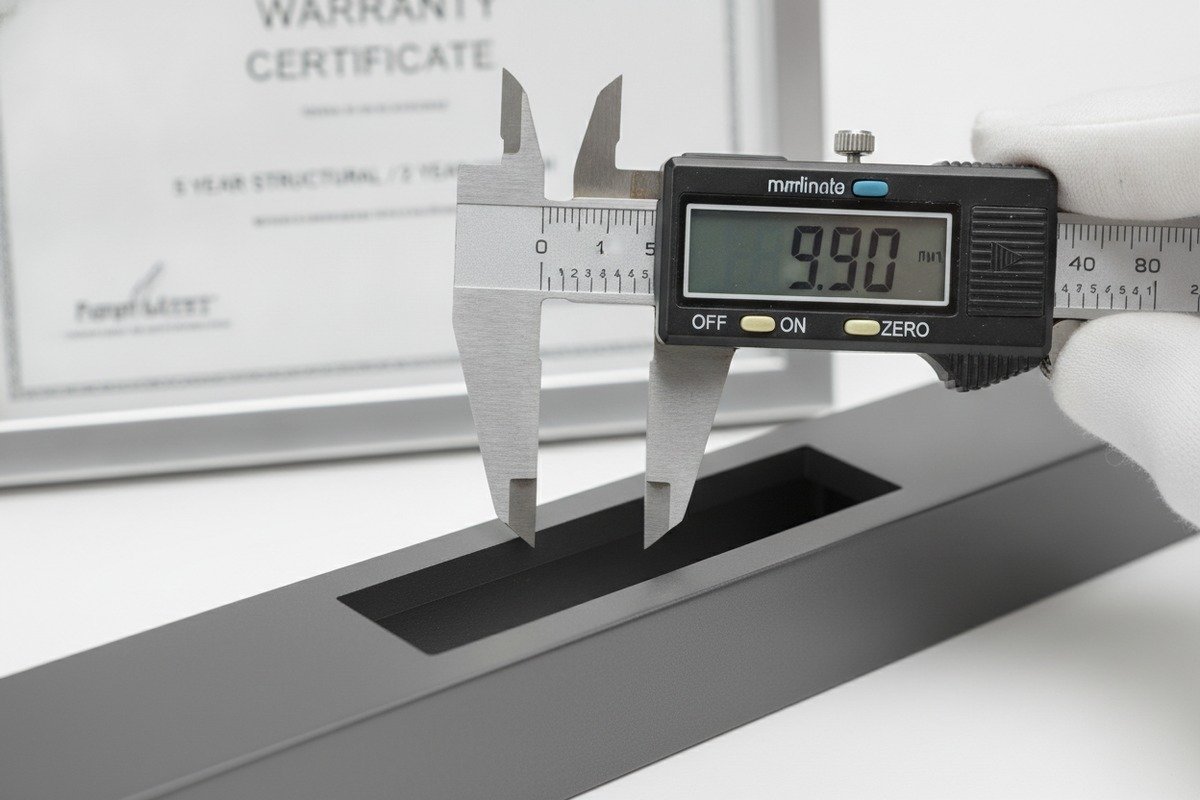
Why Warranties Are Split by Part Type
A single aluminum furniture handle is not one homogeneous piece. It has a base aluminum body (the structural element), a surface finish (anodized, powder-coated, or electrophoretic), and sometimes moving or mechanical parts. Each layer ages differently. The aluminum extrusion 2 itself resists corrosion well. The finish, however, faces UV exposure, abrasion from daily use, and chemical contact from cleaning agents. That is why reputable suppliers split the warranty.
When our engineers test a champagne gold anodized handle profile, the aluminum substrate may last decades. But the anodized layer can show visible wear in 2 to 4 years depending on use environment. A single blanket warranty hides this distinction and leaves buyers unprotected where failure is most likely — on the surface.
Benchmark Table: Warranty Periods Across Product Categories
| Product Category | Structural Warranty 3 | Finish Warranty | Component Parts Warranty |
|---|---|---|---|
| Premium residential aluminum furniture | 10–15 years | 3–5 years | 2 years |
| Mid-range residential aluminum handles | 5–7 years | 2–3 years | 1–2 years |
| Commercial-grade aluminum handles | 3–5 years | 1–3 years | 1 year |
| Budget/economy aluminum furniture hardware | 1–2 years | 1 year or none | 6 months–1 year |
| Marine-grade stainless-steel hardware | Lifetime (some brands) | 3–5 years | 3–5 years |
Residential vs. Commercial: A Critical Distinction
Some suppliers offer 15-year structural coverage for residential use but only 3 years for commercial applications. If your customers use these handles in hotel furniture, office cabinets, or retail displays, the commercial classification kicks in. Always ask which category applies. A wholesaler in Dubai once told me he assumed his 10-year warranty covered his hospitality clients. It did not. The supplier classified hotels as commercial, cutting coverage to 3 years.
The Headline Number Is Not the Real Number
A 15-year warranty sounds powerful on a quotation sheet. But if finish coverage lasts only 3 years, component parts only 2 years, and labor is excluded, the practical protection is far smaller. Think of it as a stack, not a single layer. The structural warranty is the base. The finish warranty sits on top. The component warranty is the thinnest layer. Your negotiation should strengthen every layer, not just the base.
How can I negotiate a better after-sales policy for my custom OEM handle orders?
When we run OEM projects for furniture factories, one thing becomes clear fast: the after-sales policy is where most negotiations fall short. Buyers spend 90% of their time on unit price and 10% on terms that determine the total cost of ownership.
To negotiate a better after-sales policy for custom OEM handle orders, request written terms covering claim response windows, replacement shipping responsibility, spare parts availability for at least 3 to 5 years, finish-specific coverage, and a clear RMA process with defined timelines — then tie these terms to order volume commitments.
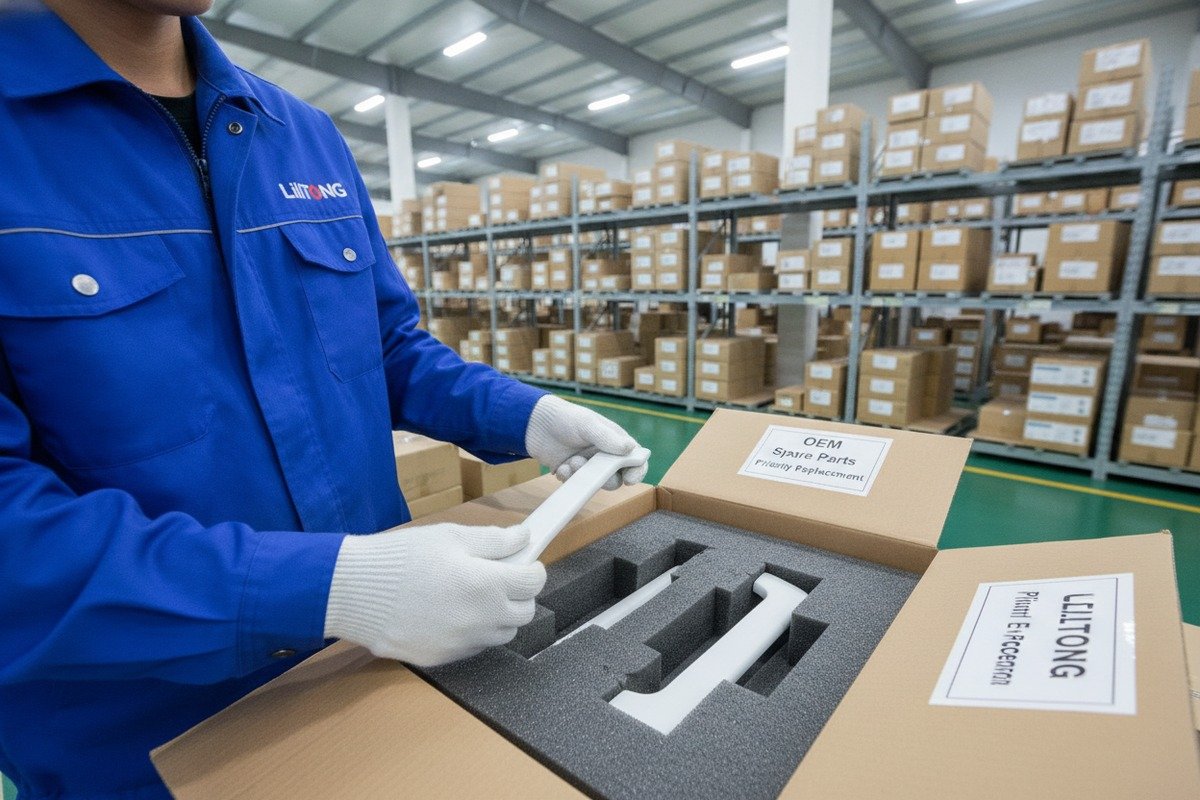
Frame the Warranty as a Service Package
Stop thinking of the warranty as a line item. Think of it as a service package with five
Footnotes
1. Defines the Return Material Authorization (RMA) process and its significance for manufacturers. ↩︎
2. Original authoritative source (Aluminum Extruders Council) with a working URL for aluminum extrusion process basics. ↩︎
3. Explains what a structural warranty is and its importance in construction and property development. ↩︎