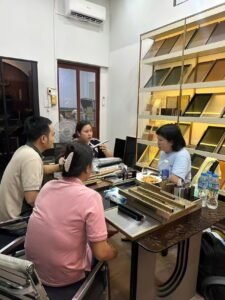
Every week, our shipping team in Foshan handles orders heading to Vietnam, and one question keeps coming up from buyers there: can we hold stock closer to their factories?
To negotiate a Vietnam transit warehouse with your Chinese aluminum handle supplier, frame it as a joint logistics solution. Propose volume commitments, agree on cost-sharing for storage and handling, define ownership transfer points, and set clear quality protocols. This approach reduces lead times and benefits both parties commercially.
This article walks you through each stage of that negotiation quality assurance protocols 1. We will cover how to prove the business case, what volumes to commit, how to share costs fairly, and what quality controls to put in place. Whether you are a furniture factory owner or a building material wholesaler, you will find a practical roadmap below.
How can I demonstrate to my supplier that a Vietnam transit warehouse will reduce my lead times and increase order frequency?
When we ship aluminum handles from our Foshan warehouse to Vietnamese buyers, the standard ocean freight cycle 2 takes 5 to 10 days, plus customs clearance time. Many buyers tell us the real pain is not the shipping itself but the unpredictability.
Show your supplier concrete data: compare current lead times with projected warehouse-enabled delivery times, estimate how much faster order fulfillment becomes, and forecast how increased speed will drive higher annual order volumes. Numbers persuade better than promises.

Why Lead Time Reduction Matters for Furniture Handle Buyers
Most furniture factories in Vietnam run on tight production schedules. A single delayed shipment of cabinet handles can hold up an entire kitchen line. When your handles sit in a Vietnam transit warehouse, you cut the replenishment window from weeks to days. Lead Time Reduction 3 That speed means you order more often, in smaller batches, and with less risk of overstock.
From our experience exporting to Vietnam, buyers who receive goods within 2 to 3 days from a local stock point tend to place orders 30 to 50 percent more frequently than those waiting for full international shipments. That frequency is the strongest argument you can present to your supplier.
Build a Simple Comparison Table
Prepare a side-by-side comparison. Suppliers respond to facts, not feelings. Here is a template you can adapt:
| Metric | Current (Direct from China) | With Vietnam Transit Warehouse |
|---|---|---|
| Average lead time | 10–18 days | 2–4 days |
| Minimum order quantity per shipment | 500 kg+ | 50–100 kg |
| Order frequency per year | 6–8 times | 12–20 times |
| Annual volume potential | 3,000 kg | 4,500–6,000 kg |
| Risk of production line stoppage | Medium–High | Low |
| Packaging customization flexibility | Limited (bulk only) | Per-project labeling possible |
When a supplier sees that your annual volume can grow by 50 percent or more, the warehouse conversation shifts from "extra work" to "extra revenue."
How to Frame the Conversation
Do not walk into the negotiation asking your supplier to build a warehouse. That sounds expensive and complicated. Instead, say something like this:
- "We want to increase our annual purchases, but our factory needs faster delivery. Can you support shipments into a Vietnam 3PL or consolidation point?"
- "If we set up a local stock buffer, we could order every two weeks instead of every two months. Would you be open to shipping smaller, more frequent batches?"
- "We are exploring a bonded warehouse 4 or 3PL partner in Ho Chi Minh City. Do you already work with any logistics providers in Vietnam?"
This positions the warehouse as a commercial opportunity, not a burden.
Understand the Two Main Warehouse Types
Before you negotiate, know what you are asking for. Vietnam offers two primary options:
- Bonded warehouse: Goods are stored under customs control. Duties and VAT are deferred until goods leave the facility for domestic delivery. This is regulated and requires customs approval, site inspections, and surveillance systems. Minimum facility sizes apply—often 5,000 square meters total with at least 1,000 square meters for storage.
- Regular 3PL warehouse: A simpler setup. A third-party logistics company receives, stores, and dispatches your goods. No customs deferral, but far less red tape. This is the better starting point for small to mid-volume buyers.
For most aluminum handle buyers moving 3 to 6 tons per year, a regular 3PL warehouse 5 is practical and affordable. Reserve bonded warehousing for when your volumes justify the compliance overhead.
What volume commitments should I propose to make a local stock arrangement profitable for both my business and the manufacturer?
Our production line runs most efficiently when we can plan around predictable, recurring orders. When a buyer in Vietnam says "I want a local warehouse," the first thing we think about is whether the volume supports the extra handling and logistics cost.
Propose a minimum annual volume commitment—typically 3 to 6 tons for aluminum handles—paired with a regular replenishment schedule such as monthly or biweekly shipments. Tie your commitment to agreed pricing tiers so both sides benefit as volumes grow over time.
Start With Your Real Demand Numbers
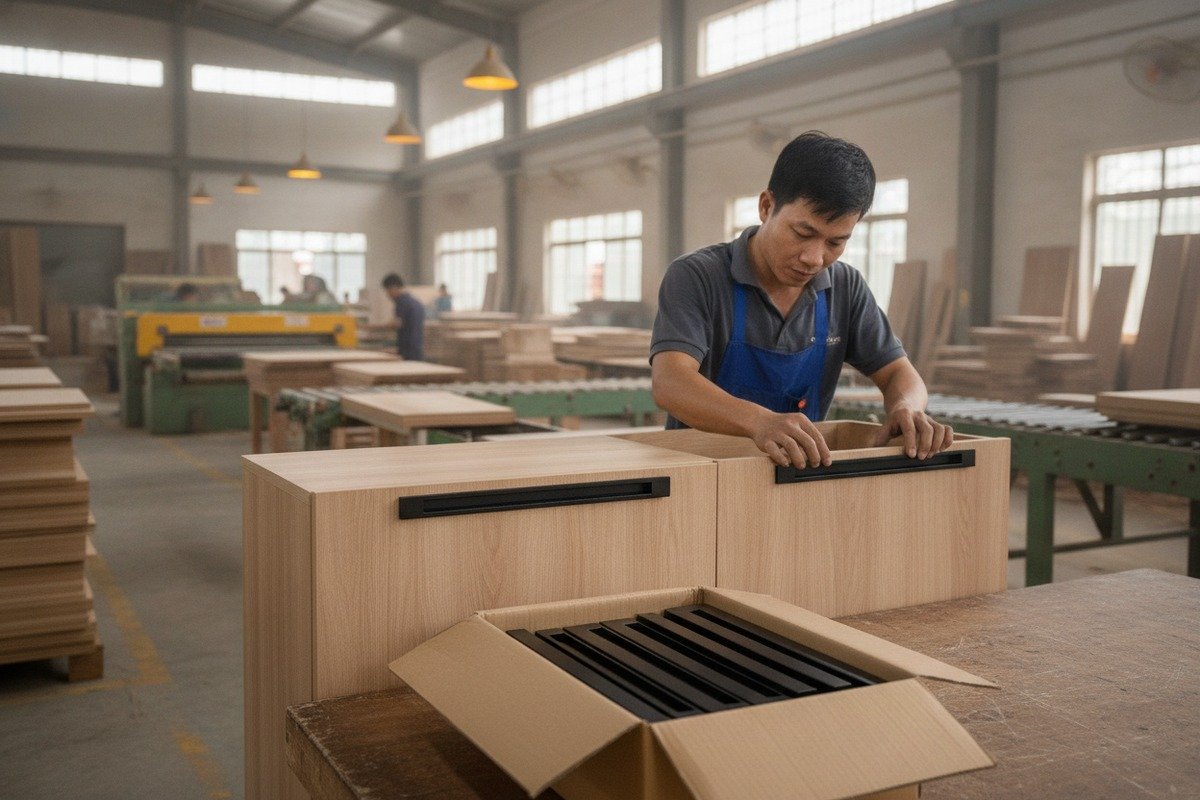
Before you propose anything, map your actual consumption. How many handles does your factory or your customers use per month? Break it down by finish, size, and SKU. For example, if you sell five finishes of a recessed aluminum pull—matte white, charcoal grey, black, champagne gold, and light beige—and each finish moves roughly 50 kg per month, your baseline is 250 kg monthly or 3 tons annually.
That baseline becomes your negotiation anchor. Here is a framework:
| Commitment Level | Monthly Volume | Annual Volume | Likely Supplier Response |
|---|---|---|---|
| Pilot / Starter | 200–300 kg | 2.5–3.5 tons | Cautious support; may require buyer to cover most warehouse costs |
| Standard | 400–600 kg | 5–7 tons | Willing to share logistics setup; may offer small price discount |
| Growth Partner | 700–1,000 kg+ | 8–12 tons | Eager cooperation; dedicated SKU stocking; better payment terms |
Why Volume Commitments Must Be Mutual
A one-sided commitment does not work. If you promise 500 kg per month but the supplier ships inconsistently or sends the wrong finishes, the warehouse fills with dead stock. Negotiate a mutual commitment:
- Your side: Guaranteed minimum monthly or quarterly purchase volume. A rolling forecast shared 30 to 60 days in advance.
- Supplier side: Guaranteed production slot. Priority allocation during peak season. Consistent quality and packaging to warehouse specifications.
This mutual structure is what turns a transactional relationship into a partnership.
Tie Volume to Pricing Tiers
The strongest negotiation move is to link your warehouse volume to a tiered pricing structure. The more you commit, the better your unit cost. Ask your supplier to quote like this:
- Tier 1: 200–400 kg/month → Base price
- Tier 2: 400–700 kg/month → 3–5% discount
- Tier 3: 700 kg+/month → 5–8% discount plus priority production
This gives both sides a financial incentive to grow the arrangement. At our facility, we routinely offer tiered pricing for Vietnamese buyers who commit to predictable volumes because it allows us to batch-produce their orders alongside regular stock runs, which lowers our cost too.
Plan for Seasonal Fluctuations
Furniture handle demand is not flat. Project-based buyers may need 800 kg one month and 150 kg the next. Build flexibility into your commitment:
- Set a quarterly minimum instead of a rigid monthly number.
- Allow a buffer of plus or minus 20 percent on any single month.
- Agree on a review cycle—every 6 months—to adjust volumes based on actual performance.
This prevents either side from being trapped by unrealistic projections.
How can I negotiate a cost-sharing model for a Vietnam warehouse to lower my upfront inventory investment?
When we discuss warehouse arrangements with our Vietnamese buyers, the cost question always comes first. Nobody wants to pay twice—once for the goods and again for storing them in a country where they have not even been sold yet.
Negotiate a cost-sharing model by splitting expenses into categories: the supplier covers export-ready packaging and documentation, the buyer pays 3PL storage and handling fees, and both parties share the cost of initial inventory stocking through extended payment terms or consignment-style arrangements for the first shipments.
Break Costs Into Clear Categories
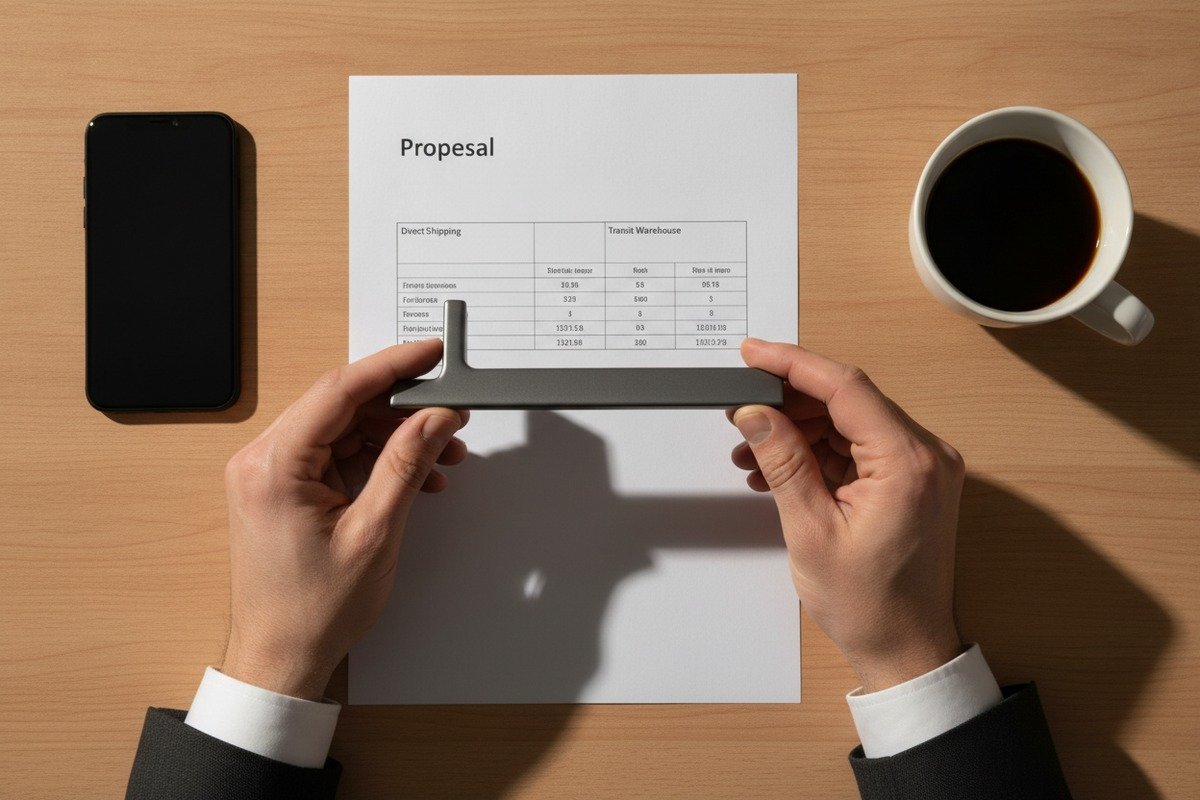
The warehouse introduces several new cost layers. List them all, then decide who pays what. Here is a practical breakdown:
| Cost Category | Who Typically Pays | Negotiation Opportunity |
|---|---|---|
| Export packaging and SKU labeling | Supplier | Ask supplier to absorb if volumes meet threshold |
| Ocean freight to Vietnam | Buyer | Supplier may subsidize for large commitments |
| Customs clearance and import duties | Buyer | Bonded warehouse can defer duties |
| Monthly warehouse rental | Buyer | 3PL may offer pay-per-pallet pricing |
| Inbound receiving and inspection | Shared | Negotiate a flat per-shipment fee |
| Outbound picking and dispatch | Buyer | Build into per-unit landed cost |
| Insurance on stored goods | Buyer | Supplier may cover during transit |
| Damaged or expired stock write-off | Shared | Agree on split, e.g., 50/50 or by cause |
Use Payment Terms as a Cost-Sharing Tool
One of the most effective ways to lower your upfront investment is to negotiate extended payment terms 7 for warehouse-bound inventory. Instead of paying 100 percent before shipment, propose:
- 30 percent deposit at order confirmation, 70 percent upon withdrawal from the Vietnam warehouse. This means you only pay the balance when goods leave the warehouse for your factory or your customer.
- Net-60 or net-90 terms on warehouse inventory, secured by your volume commitment and purchase history.
From our side, we are more open to these terms when the buyer has a track record of consistent orders and clear communication. A new buyer would need to build trust first—perhaps with 2 to 3 standard orders before transitioning to warehouse-supported payment structures.
Consider a Pilot Period
Do not commit to a 12-month warehouse contract on day one. Propose a 3-month pilot:
- Ship 2 to 3 container loads of your most popular SKUs—for aluminum handles, that might be champagne gold and matte black recessed pulls in the most common lengths.
- Track withdrawal speed, handling costs, and actual savings on lead time.
- Review after 90 days. If the numbers work, scale up. If not, exit cleanly.
A pilot lowers risk for both sides. It also gives your supplier confidence that you are serious without asking them to gamble on an unproven arrangement.
Ownership and Title Transfer
This is where many negotiations fail. Be explicit about when ownership of the goods transfers:
- EXW or FOB terms: You own the goods once they leave the supplier's factory or port. EXW or FOB terms 8 All warehouse risk is yours.
- DDP or DAP terms: The supplier retains some responsibility until goods arrive at the warehouse or your door.
- Consignment: The supplier owns the goods until you withdraw them. This is rare but powerful if you can negotiate it.
Clarify this early. It affects insurance, liability, accounting, and tax treatment in Vietnam. If you use a bonded warehouse, ownership and customs declarations are especially important—goods in a bonded facility are not yet "imported" in the legal sense, so duties are deferred until release.
Leverage the China-Plus-One Trend
Vietnam's role as a regional logistics hub is growing fast. China-Plus-One Trend 9 Many 3PL providers now offer plug-and-play warehouse services designed for exactly this kind of arrangement—small importers holding Chinese-sourced inventory for faster regional distribution. Mention this trend to your supplier. It signals that you are following market best practices, not inventing something unusual.
What quality assurance protocols should I demand when my aluminum handles are stored in a transit facility before reaching my factory?
Our quality control process does not end when the container leaves Foshan. In fact, one of the biggest concerns we hear from Vietnamese buyers is what happens to their aluminum handles between the time they leave China and the time they reach the production floor. A transit warehouse adds a new link in the chain, and that link needs its own quality rules.
Demand pre-shipment inspection reports, sealed moisture-proof packaging, inbound receiving checks at the warehouse, climate-controlled or covered dry storage, FIFO inventory rotation, and periodic spot inspections. Every protocol should be documented in a warehouse service agreement with clear accountability for damage or non-conformance.
Why Aluminum Handles Need Specific Storage Care
Aluminum furniture handles—especially those with anodized or matte finishes like champagne gold, charcoal grey, or matte white—are sensitive to certain storage conditions. Southern Vietnam is hot and humid. Poor storage can cause:
- Surface oxidation or staining on anodized finishes if exposed to moisture.
- Scratch damage if handles shift inside poorly packed cartons.
- Label degradation if adhesive labels are exposed to heat.
- Packaging deformation if heavy items are stacked on top.
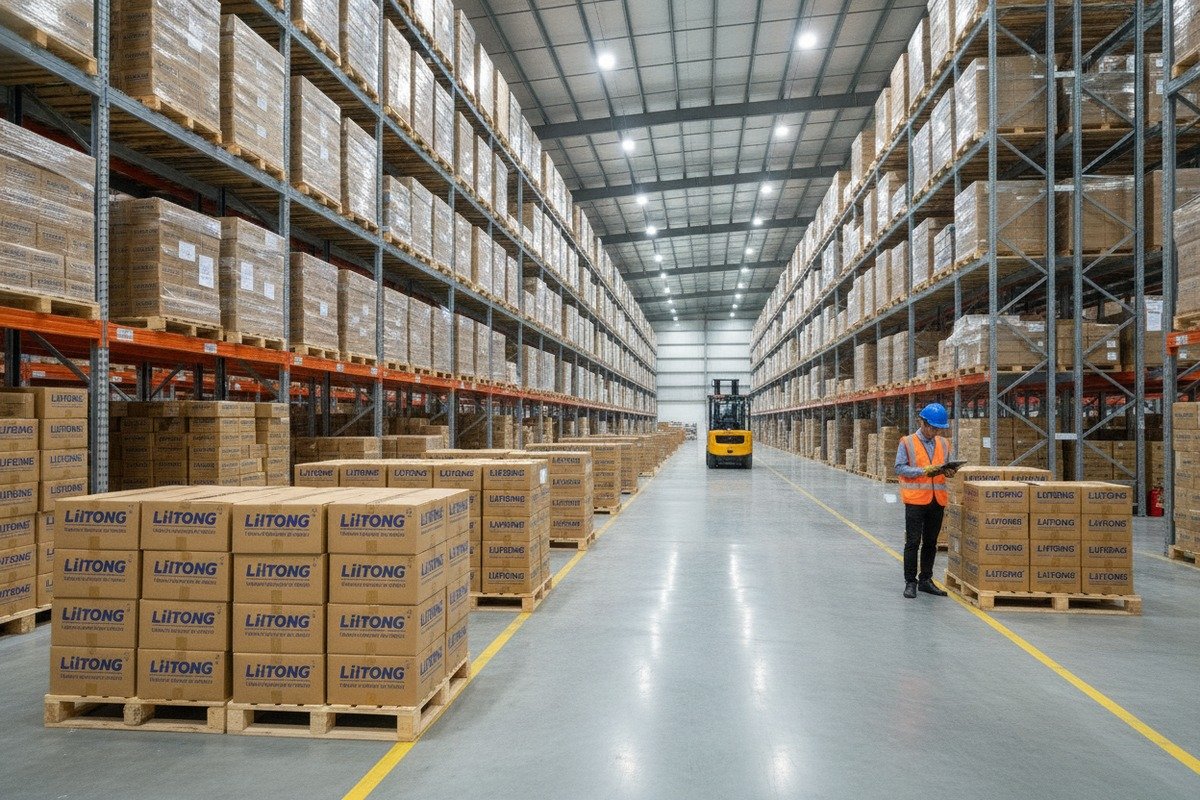
These are not theoretical risks. We have seen buyers reject entire pallets because cartons were stored outdoors under tarps during a rainy week. The warehouse must have covered, dry, well-ventilated space at minimum.
Define Your QA Protocol in Writing
Do not rely on verbal agreements. Build a warehouse quality protocol into your 3PL contract and reference it in your supplier agreement. Here is what to include:
Inbound inspection: When goods arrive at the warehouse from China, the 3PL should verify carton count, check for external damage, and confirm SKU labels match the packing list. A photo record of each inbound shipment is standard practice.
Storage conditions: Specify indoor storage, off the ground on pallets, with a maximum stacking height. For aluminum handles, avoid direct sunlight and maintain relative humidity below 70 percent if possible.
FIFO rotation: First In, First Out. Older stock ships before newer stock. This prevents handles from sitting in storage for months, which increases the risk of finish degradation.
Outbound inspection: Before dispatch, the 3PL picks the order, verifies quantities and SKUs, and checks a random sample for surface quality. Any damaged units are flagged and photographed before replacement or claim.
Periodic spot checks: If you or your representative visits the warehouse, you should be allowed unannounced access to inspect your inventory.
Assign Responsibility for Damage
This is where disputes happen. Who pays when 50 handles arrive at your factory with scratches? The answer depends on where the damage occurred:
- Damage in transit from China to warehouse: Supplier or freight insurer responsibility.
- Damage during warehouse handling: 3PL responsibility.
- Damage from poor packaging that fails during storage: Supplier responsibility if packaging did not meet agreed specifications.
Write this into your agreements. Use a simple liability matrix and review it with both the supplier and the 3PL before the first shipment.
Integrate Digital Visibility
Modern 3PL providers in Vietnam offer real-time inventory dashboards. Ask for:
- Stock level by SKU, updated daily or in real time.
- Inbound and outbound transaction logs.
- Photo documentation of receiving and dispatch.
- Alerts when stock falls below a reorder threshold.
This visibility lets you and your supplier coordinate replenishment without guessing. It also creates an audit trail if quality issues arise later. At our end, we can tag each carton with a batch code and production date, making it easy to trace any quality problem back to a specific production run.
Anti-Circumvention Awareness
One final point that many buyers overlook: if you store Chinese-origin aluminum products in Vietnam and then re-export them, you may face anti-circumvention scrutiny. Some countries impose tariffs on Chinese aluminum that transits through a third country without substantial transformation. Make sure your transit warehouse arrangement is genuinely for domestic distribution or regional efficiency, not for relabeling goods to avoid tariffs. Consult a trade compliance advisor if you plan any re-export activity.
Conclusion
Setting up a Vietnam transit warehouse for your aluminum furniture handles is not a demand you make—it is a solution you build together with your supplier. Start small, share costs fairly, commit to real volumes, and protect quality at every step. That is how both sides win.
Footnotes
1. Found a relevant article defining and explaining quality assurance in logistics and warehousing. ↩︎
2. Details the steps and considerations in the ocean freight shipping process. ↩︎
3. Found a highly relevant article from Kaizen Institute, the same domain as the original failed link, discussing lead time definition and reduction strategies. ↩︎
4. Found an authoritative .gov link from help.CBP.gov providing a clear definition of a Customs bonded warehouse. ↩︎
5. Found a working and relevant article from Extensiv, the same domain as the original failed link, explaining 3PL warehousing. ↩︎
6. Explains the properties and manufacturing of aluminum handles. ↩︎
7. Defines and explains the strategic use of extended payment terms in business. ↩︎
8. Clarifies responsibilities and ownership transfer under EXW and FOB Incoterms. ↩︎
9. Explains the strategic rationale and implications of the China Plus One supply chain strategy. ↩︎
10. Provides a detailed explanation of the anodizing process for aluminum. ↩︎