
Every week, our warehouse in Foshan dispatches pallets of aluminum furniture handles 1 to wholesalers across Vietnam, the UAE, and Saudi Arabia. Yet one recurring headache never goes away: a buyer opens a carton only to find scratched, dented, or missing handles bill of lading 2. The order was perfect when it left our production line. Transit did the damage. And without the right shipping insurance 3, the financial loss lands squarely on the buyer.
To choose the right shipping insurance for aluminum furniture handles, compare carrier liability limits with third-party all-risk cargo insurance, declare the full replacement value, confirm coverage for cosmetic damage like scratches and dents, and verify packaging requirements and claim deadlines before the shipment leaves the warehouse.
This guide walks you through every decision point—from coverage types and value calculations to claims filing and whether your Chinese supplier should handle the insurance or you should arrange it yourself. Let’s break it down step by step.
What Specific Types of Shipping Insurance Coverage Should I Prioritize for My Bulk Aluminum Handle Order?
When we pack a 300-kilogram bulk order of recessed aluminum pulls, the cartons look sturdy and the handles feel solid. But aluminum is softer than steel. One rough transfer between containers can leave dozens of pieces with surface scratches that make them unsellable. That gap between "looks safe" and "actually protected" is exactly where the wrong insurance choice costs you money.
For bulk aluminum handle orders, prioritize all-risk cargo insurance that explicitly covers loss, theft, total damage, and cosmetic damage such as scratches, dents, and bending—not just carrier-default liability, which often caps reimbursement at $100 per package and excludes surface-level defects.

Understanding the Three Main Coverage Layers
Most buyers encounter three layers of protection when shipping aluminum furniture handles internationally. Each layer has a different scope, cost, and claims experience.
| Coverage Layer | What It Covers | Typical Limit | Best For |
|---|---|---|---|
| Carrier Default Liability | Proven carrier fault only | $100 per parcel (FedEx/UPS default) | Very low-value, non-fragile parcels |
| Carrier Declared Value | Loss or damage up to declared amount | Varies; must be purchased at checkout | Mid-value domestic shipments |
| Third-Party All-Risk Cargo Insurance 4 | Loss, theft, damage, and often cosmetic harm | Up to full declared value | High-value, international, or surface-sensitive goods |
Carrier default liability is what you get for free. It is almost never enough for a bulk order of aluminum handles. If your shipment is worth $5,000 and the carrier only covers $100 per package, you are exposed to a $4,900 loss with no recourse.
Why Cosmetic Damage Coverage Matters for Aluminum
Aluminum furniture handles—especially those with anodized champagne gold or matte black finishes—are visible components. A scratch on a recessed pull is not just structural. It is a cosmetic defect that makes the handle unusable for a custom kitchen or wardrobe project. Many standard carrier policies only reimburse for "total loss" or "structural damage." They will deny a claim for a box of handles that arrived intact but scratched.
In our experience shipping to the Middle East, where buyers demand flawless finishes on every piece, we always recommend confirming that the policy language includes words like "marring," "scratching," "denting," or "surface damage." If those words are missing, the policy probably will not pay for the kind of damage aluminum handles actually suffer in transit.
All-Risk vs. Named-Peril Policies
All-risk policies cover everything unless specifically excluded. Named-peril policies only cover the risks listed in the contract. For aluminum handles, all-risk is almost always the better choice because transit damage comes in many forms—vibration, compression, humidity, rough handling—and named-peril policies may not list all of them.
One more thing to check: does the policy cover "institute cargo clauses A"? This is the broadest standard coverage in international shipping. It covers all risks of loss or damage except specific exclusions like war, strikes, or inherent vice of the goods. For most aluminum handle shipments, Clause A gives you the widest safety net.
How Do I Accurately Calculate the Insured Value of My Furniture Hardware to Avoid Financial Loss?
One mistake we see buyers make repeatedly is insuring their order for the invoice price alone. They forget about freight costs, customs duties, and the hidden cost of reordering—especially when the handles are custom-finished and have a 7-day production turnaround. Underinsurance is one of the most common and most expensive errors in hardware shipping.
To accurately calculate insured value, add the product cost (CIF or FOB price), international freight charges, customs duties, and at least 10% for incidental expenses like reordering, production delays, and lost sales—then declare this total as the insured amount on your policy.

The CIF+10 Formula
The most widely accepted method in international cargo insurance is known as CIF+10. It works like this:
| Component | Example Amount | Notes |
|---|---|---|
| Product cost (FOB) | $4,000 | Invoice value of aluminum handles |
| International freight | $600 | Ocean or air freight charges |
| Insurance premium | $50 | Cost of the insurance itself |
| Subtotal (CIF) | $4,650 | Cost, Insurance, Freight |
| +10% incidental margin | $465 | Covers reordering, delays, lost profit |
| Total Insured Value | $5,115 | Declare this amount on the policy |
This formula exists because when a shipment is lost or destroyed, the buyer does not just lose the product. They lose the freight they already paid, the insurance premium, and they face additional costs to source replacement handles—possibly at a higher price or with a longer lead time.
Why Matching Sets Change the Math
Aluminum furniture handles are often ordered in matched sets. A kitchen renovation might need 40 identical champagne gold recessed pulls. If 5 arrive damaged and those exact handles are out of stock or discontinued, the buyer may need to reorder all 40 to maintain a consistent finish. The insured value should reflect this risk.
When we advise our wholesale clients, we suggest they ask themselves: "If 10% of this order arrives damaged, what is my real cost?" If the answer involves reordering the entire batch, the insured value should be closer to the full batch replacement cost, not just the value of the individual damaged pieces.
Avoiding the Underinsurance Trap
Some buyers deliberately undervalue their shipment to save on premiums. This is risky. Most insurance policies include a proportional indemnity clause 6. If you insure a $5,000 shipment for $2,500, the insurer may only pay 50% of any approved claim—even if the damage is fully covered. You save a few dollars on the premium but lose thousands on the payout.
The premium for cargo insurance typically runs between 1% and 3% of the declared value. On a $5,000 shipment, that is $50 to $150. Compared to the potential loss, the cost of adequate insurance is almost always worth it.
What Is the Process for Filing a Claim if My Aluminum Profiles Arrive Damaged or Scratched?
Our team has helped dozens of buyers navigate the claims process after handles arrived with transit damage. The single biggest lesson we have learned is this: speed and documentation win claims. Delays and missing photos lose them. Even a legitimate claim can be denied if the buyer waits too long or throws away the packaging.
If your aluminum handles arrive damaged, immediately photograph the damage and packaging, notify the carrier and insurer within 24–48 hours, retain all original packing materials for inspection, then file a formal claim with invoices, photos, tracking records, and proof of declared value before the policy deadline—typically within 30 days.
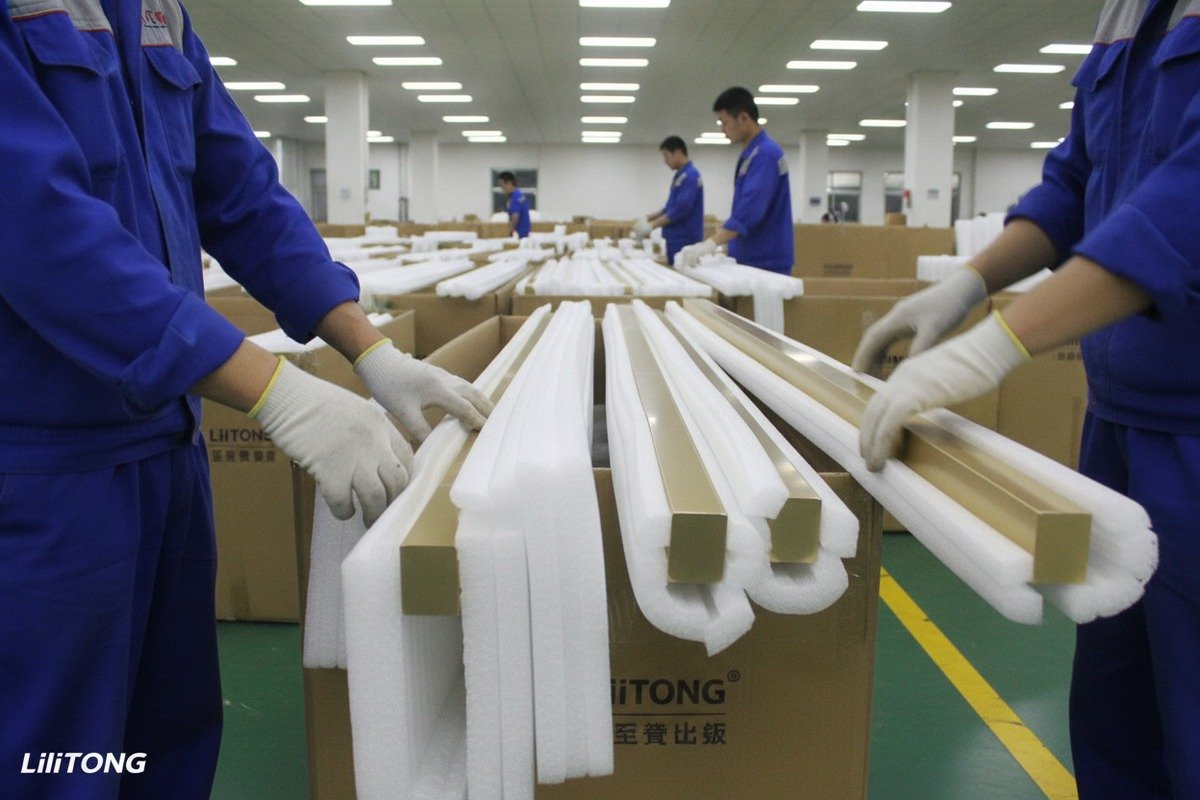
Step-by-Step Claims Process
Here is the general process that applies to most carrier and third-party insurance claims:
Step 1: Inspect on delivery. Open the cartons while the delivery driver is still present, if possible. Note any visible damage on the delivery receipt. If you sign without noting damage, it becomes harder to prove the harm occurred during transit.
Step 2: Document everything. Take clear photos and video of the outer carton, inner packaging, and damaged handles. Capture close-ups of scratches, dents, bent edges, or missing pieces. Include a ruler or coin for scale.
Step 3: Notify the carrier and insurer. Contact both parties within 24 to 48 hours. Most carriers have online claim portals. Third-party insurers usually have email or phone notification processes. The sooner you report, the stronger your case.
Step 4: Preserve all materials. Do not discard the packaging, void fill, or damaged handles. Insurers may send an inspector or ask for additional photos. If you throw away the evidence, the claim may be denied.
Step 5: Gather your documents. You will need the commercial invoice 8, packing list, bill of lading or airway bill, proof of insurance, photos of damage, and tracking records. For aluminum handles, include any quality inspection reports or pre-shipment photos showing the handles were in perfect condition when they left the factory.
Step 6: File the formal claim. Submit all documents through the insurer's or carrier's portal. Most policies require claims to be filed within 30 days of delivery, though some carriers have shorter windows.
Common Claim Killers
| Mistake | Why It Kills the Claim | How to Avoid It |
|---|---|---|
| Signing delivery receipt without noting damage | Implies goods arrived in good condition | Always inspect before signing or note "subject to inspection" |
| Discarding packaging before inspection | Removes evidence of inadequate protection or transit damage | Keep all materials until claim is resolved |
| Late notification | Exceeds carrier or insurer deadline | Report within 24–48 hours |
| Insufficient photos | Insurer cannot verify extent of damage | Take 20+ photos from multiple angles |
| Missing invoice or proof of value | Insurer cannot calculate payout | Keep digital copies of all trade documents |
| Repairing or refinishing handles before inspection | Eliminates evidence of original damage | Wait for insurer approval before any repair |
Pre-Shipment Documentation Is Your Best Friend
At our facility, we photograph every batch of aluminum handles before packing. We include shots of the anodized finish under good lighting, the packaging materials used, and the sealed cartons with shipping labels visible. We share these photos with the buyer. This pre-shipment documentation creates a clear "before" record that makes the "after" damage undeniable to any insurer.
If your supplier does not offer pre-shipment photos, request them. It takes five minutes and can save thousands of dollars in disputed claims.
Should I Ask My Chinese Supplier to Include Shipping Insurance in the Quote or Arrange It Independently?
This is a question we get asked almost every week. A furniture factory in Vietnam or a building material wholesaler in Saudi Arabia wants to know: "Mia, can you just add insurance to the invoice?" The answer is yes, we can. But whether that is the best choice for you depends on your order size, shipping route, and how much control you want over the claims process.
For most bulk buyers, asking your Chinese supplier to include CIF insurance in the quote is convenient but may offer limited coverage; arranging your own third-party cargo insurance independently gives you control over coverage scope, declared value, claims filing, and insurer selection—which is especially important for high-value or custom orders.

Supplier-Arranged vs. Buyer-Arranged Insurance
When a supplier includes insurance in a CIF quote, they typically purchase the minimum coverage required by the trade term—usually Institute Cargo Clause C 9, which covers only major perils like fire, sinking, or collision. It does not cover scratching, denting, theft, or rough handling. That is a problem for aluminum furniture handles where surface condition is everything.
When you arrange insurance independently, you can choose an all-risk policy (Clause A), set a higher declared value, select an insurer with a good claims reputation, and file claims directly without going through the supplier as a middleman.
Comparing the Two Approaches
| Factor | Supplier-Arranged (CIF) | Buyer-Arranged (Independent) |
|---|---|---|
| Convenience | High—included in one invoice | Lower—requires separate purchase |
| Coverage scope | Often minimum (Clause C) | Customizable (Clause A all-risk) |
| Declared value control | Supplier sets it | Buyer sets it based on real replacement cost |
| Claims filing | Must go through supplier | Direct relationship with insurer |
| Cost transparency | Embedded in CIF price | Visible and comparable |
| Best for | Low-value, standard orders | High-value, custom, or surface-sensitive orders |
When Supplier Insurance Makes Sense
If you are ordering standard stock aluminum handles with a total value under $2,000 and shipping via a well-established route, supplier-arranged insurance can be perfectly adequate. The risk is lower, the replacement cost is manageable, and the convenience factor matters.
When Independent Insurance Is Worth the Effort
For orders above $5,000, custom-finished handles (like our champagne gold anodized recessed pulls), or shipments to regions with complex logistics chains, independent insurance is almost always the smarter choice. You get broader coverage, higher limits, and a direct line to the insurer when something goes wrong.
In our experience, buyers who arrange their own insurance also tend to be more careful about packaging requirements and documentation—because they understand that their claim depends on it. That awareness alone reduces damage rates.
A Practical Hybrid Approach
Some of our long-term wholesale partners use a hybrid method. They ask us to ship FOB (free on board) and then purchase their own all-risk cargo insurance through a broker in their home country. This gives them full control over the insurance while still relying on our expertise for packaging and factory-side quality control. We provide pre-shipment inspection photos, detailed packing lists, and packaging specifications that their insurer can reference if a claim ever arises.
This hybrid approach works especially well for repeat buyers who ship monthly containers. They build a relationship with their insurer, establish a track record of well-documented shipments, and often negotiate lower premiums over time.
Checking Insurer Credibility
Whether you or your supplier arranges the insurance, always verify the insurer's financial strength. Look for an A.M. Best rating 10 of A or higher. A low-rated insurer may offer cheaper premiums but could delay or deny claims when it matters most. Ask for a copy of the policy certificate before the shipment sails. Read the exclusions. Confirm the claims process and timeline. A 30-day claims processing window is a reasonable benchmark.
Conclusion
Choosing the right shipping insurance for aluminum furniture handles comes down to understanding your real risk, declaring the full replacement value, and confirming that your policy covers the cosmetic damage these handles actually face in transit. Whether you let your supplier handle coverage or arrange it independently, the key is to never assume default carrier liability is enough. Document everything, file fast, and keep every scrap of packaging until the claim is resolved. If you need help with pre-shipment documentation or packaging guidance for your next order, reach out to us at Al**************@********************************************te.com—we are happy to help.
Footnotes
1. Explains the manufacturing process and properties of aluminum handles. ↩︎
2. Wikipedia offers a comprehensive and authoritative definition and explanation of a bill of lading. ↩︎
3. Wikipedia provides a comprehensive and authoritative overview of shipping insurance. ↩︎
4. Ascent Global Logistics offers a clear explanation of all-risk cargo coverage. ↩︎
5. Explains how standard carrier liability often does not cover the full commercial value, implying cosmetic damage might be excluded. ↩︎
6. Defines a proportional indemnity clause and its implications in insurance. ↩︎
7. Intoglo explains the ‘110% rule’ for marine cargo insurance, which is the CIF+10 formula. ↩︎
8. The International Trade Administration (.gov) provides an authoritative resource on commercial invoices. ↩︎
9. Details the limited coverage provided by Institute Cargo Clause C. ↩︎
10. Explains what an A.M. Best rating signifies for an insurer’s financial strength. ↩︎