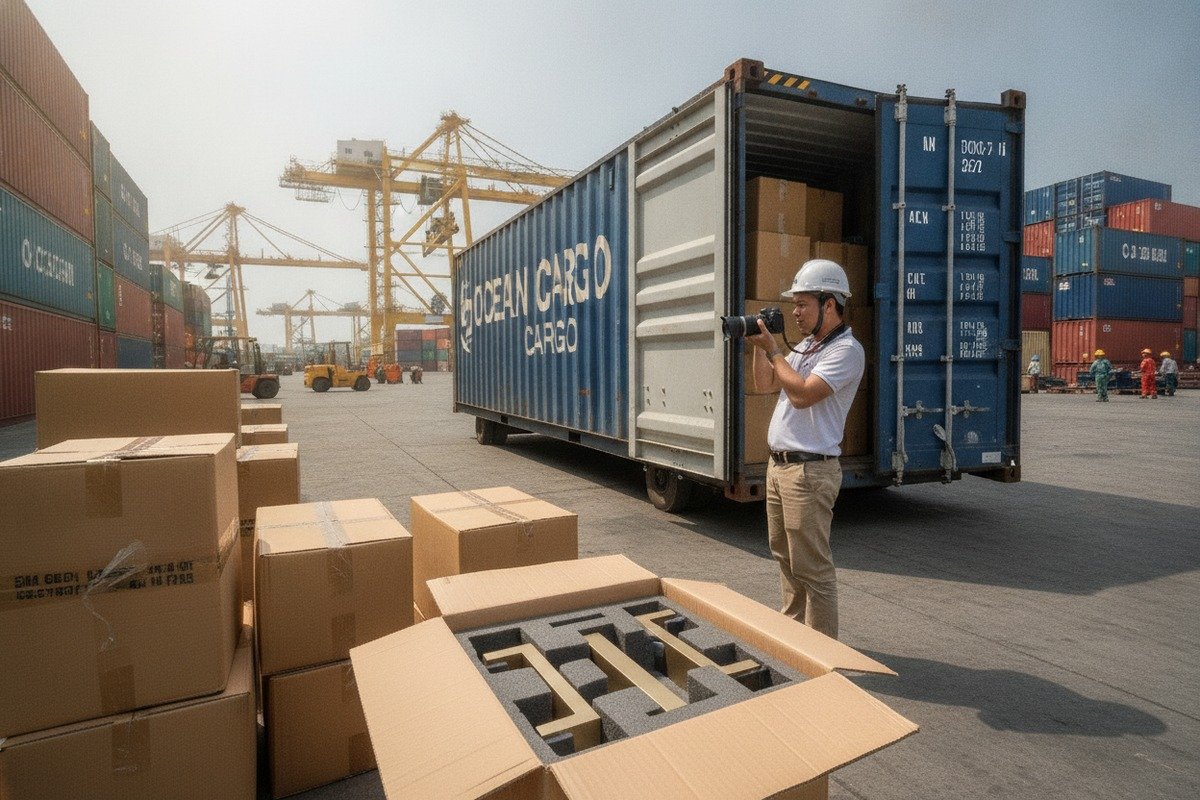
Every year, our Foshan warehouse ships hundreds of tons of aluminum handles to Vietnam pre-shipment inspection 1. Yet even with careful packing, we still get calls from buyers who open a container and find crushed boxes, scratched profiles, or missing cartons.
When you discover damage or shortages in your aluminum handle shipment at a Vietnamese port, you must immediately stop unloading, photograph all evidence, request a joint inspection report, notify the carrier and supplier in writing within 24 hours, and cross-reference the physical count against your Bill of Lading and packing list before filing formal claims.
This guide walks you through the exact steps — from the moment you crack open that container seal to final compensation Hague-Visby Rules 2. Let’s start with the most urgent phase: evidence collection.
What evidence must I document immediately to prove damage or shortages in my aluminum handle shipment?
Over the years, our team has helped dozens of Vietnamese distributors navigate damage claims. The single biggest mistake we see is moving cargo before recording proof. Once you shift those pallets, your leverage disappears.
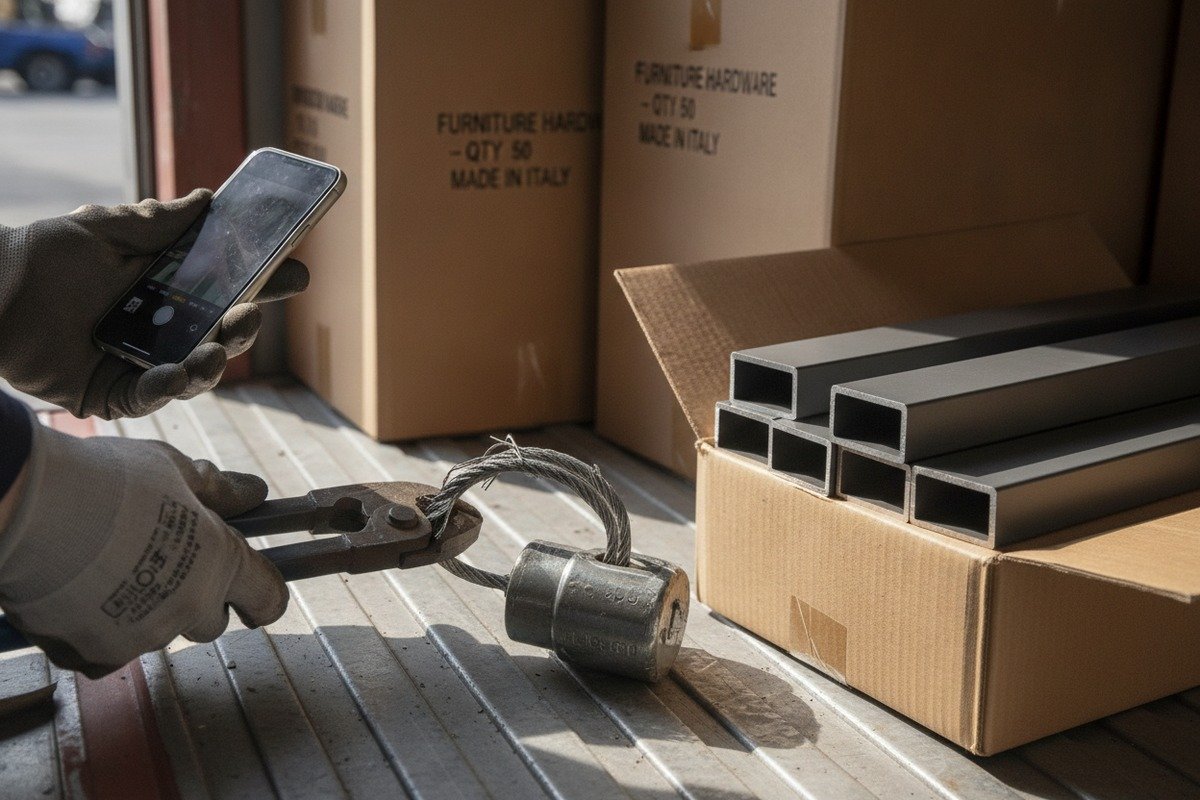
You must document high-resolution photos of packaging, product damage, container seals, and quantity discrepancies immediately upon opening the container. Also secure a third-party survey report and cross-check the physical count against the packing list, commercial invoice, and Bill of Lading within the first 24 hours.
The "Stop and Inspect" Rule
Do not move the cargo out of the container yard. Call your freight forwarder first. Tell them you are opening the container and suspect damage. This creates a time-stamped communication trail.
Next, break the container seal in front of a witness. Ideally, a port official or your logistics partner should be present. Record the seal number before you cut it. If the seal number does not match the Bill of Lading 3, that alone is powerful evidence of tampering.
What to Photograph
Aluminum handles are small but dense. They scratch easily. They oxidize when exposed to moisture. Your photos need to capture specific details.
| Evidence Type | What to Capture | Why It Matters |
|---|---|---|
| Container exterior | Seal number, dents, rust, water stains | Proves if the container was compromised during transit |
| Outer cartons | Crushed corners, wet spots, torn labels | Shows whether damage is from stacking or moisture |
| Internal packaging | Foam inserts, bubble wrap, silica gel packets | Determines if supplier used adequate protection |
| Product close-ups | Bent edges, scratches, white rust (oxidation) | Distinguishes manufacturing defects from transit damage |
| Quantity layout | Open boxes with visible count, empty spaces | Proves shortages against packing list 4 numbers |
Take video as well. Walk around the container slowly. Narrate what you see. Include the date and time in the footage if possible.
Request a Joint Inspection Report
In Vietnam, a Joint Inspection Report 5 (JIR) or a formal Survey Report from a third-party agency like SGS, Intertek, or Bureau Veritas is often required by customs. This report states the nature and extent of the damage and estimates the loss.
Without this report, Vietnamese Customs may treat your goods as "received in full and in good condition." That means full duties on the entire invoice quantity — even if half the handles are bent.
Cross-Reference Your Documents
Pull out three key documents:
- Packing List: Compare item counts per carton against what you physically see.
- Commercial Invoice: Check unit quantities and values.
- Bill of Lading (B/L): Look for the phrase "Clean on Board 6." If the B/L is clean, the shipping line claims the goods were fine when loaded. This shifts the focus to whether damage happened at sea or was hidden inside sealed boxes.
For aluminum handles packed in bulk cartons, shortages often happen when boxes are under-filled at origin. We always recommend our buyers request per-carton weight labels so you can spot discrepancies without opening every box.
Time Is Critical
Vietnamese customs practice typically gives you a 7-to-14-day window after container opening to report discrepancies. Missing this deadline makes claims significantly harder. File your initial report within 24 hours.
How can I negotiate a fair compensation or replacement with my Chinese supplier for missing hardware?
When our clients contact us about shortages, the first thing we do is ask for photos and the survey report. A supplier who takes claims seriously will respond the same way. But not every supplier does, so you need a strategy.
To negotiate fair compensation, send a formal Notice of Claim with photographic evidence, the survey report, and a clear reference to your contract terms and Incoterms. Request replacement shipment, credit note, or refund within a defined deadline, and escalate to arbitration only if negotiation fails.

Step 1: Send a Formal Notice of Claim
Email your supplier within 24 hours. Use the subject line "Formal Notice of Claim — Order [Number]." Attach all photos, the survey report, and a side-by-side comparison of the packing list versus actual count. Be specific. State exactly how many handles are damaged, how many are missing, and the dollar value of the loss.
Step 2: Reference the Contract
Your sales contract and Incoterms 8 dictate who owes what. Here is how liability typically works:
| Incoterm | Risk Transfer Point | Who Handles the Claim |
|---|---|---|
| FOB (Free on Board) 9 | When goods cross the ship's rail at Foshan port | Buyer claims against carrier for transit damage; supplier liable only for pre-loading defects |
| CIF (Cost, Insurance, Freight) | When goods cross the ship's rail at Foshan port | Buyer claims against insurer; seller arranged insurance but risk already transferred |
| DDP (Delivered Duty Paid) | When goods arrive at buyer's premises in Vietnam | Supplier is responsible for everything until delivery — strongest position for the buyer |
If your contract says FOB Foshan, and the damage clearly happened at sea, your claim goes to the carrier, not the supplier. But if the damage is from poor internal packaging — no foam dividers, no silica gel — that is the supplier's fault regardless of Incoterms.
Step 3: Propose a Clear Resolution
Do not leave the resolution open-ended. State what you want:
- Replacement shipment for damaged or missing handles (practical for large orders).
- Credit note applied to your next order (common for ongoing relationships).
- Partial refund via wire transfer (best for one-time orders or small losses).
For aluminum handles, which are often low-to-mid cost per unit, reshipping a small quantity from China may cost more in freight than the product itself. In our experience, a credit note on the next order is the most practical solution for both sides.
Step 4: Set a Deadline
Give the supplier 7 business days to respond with a proposed resolution. If they do not respond, escalate. Send a second notice referencing the arbitration clause in your contract. Most contracts for China-Vietnam trade specify either CIETAC (China International Economic and Trade Arbitration Commission) or VIAC (Vietnam International Arbitration Centre).
When Negotiation Fails
For high-value claims, formal arbitration is effective. For smaller claims — say, under $2,000 — the cost of arbitration often exceeds the loss. In that case, consider adjusting future orders or switching suppliers. At our company, we prefer to resolve claims within days because we value long-term partnerships over short-term savings.
A local repair facility in Vietnam can also salvage minor damage. Lightly scratched aluminum handles can be re-polished or re-anodized locally at a fraction of the replacement cost.
What steps can I take during the ordering process to minimize the risk of shipping damage to my furniture profiles?
Having packed and shipped aluminum profiles for 18 years, our production team knows exactly where things go wrong. Most transit damage is preventable. It starts long before the container leaves Foshan.
To minimize shipping damage, specify detailed packaging standards in your purchase contract, require pre-shipment inspection by a third party, use FCL shipping when possible, include moisture barriers like silica gel, and ensure each handle is individually wrapped with foam or bubble wrap before boxing.

Packaging Standards for Aluminum Handles
Aluminum is a soft metal. It scratches when handles rub against each other. It dents when heavy cartons are stacked on top. It develops white rust when trapped moisture reacts with the surface. Every one of these issues is preventable with the right packaging.
| Packaging Element | Purpose | Recommended Standard |
|---|---|---|
| Individual wrapping | Prevents scratching between handles | PE foam bag or bubble wrap per piece |
| Internal dividers | Stops movement inside the carton | Corrugated cardboard grid or foam tray |
| Silica gel packets | Absorbs moisture to prevent oxidation | 2–3 packets per carton (5g each minimum) |
| Corner protectors | Guards carton edges from stacking damage | Cardboard or plastic L-shaped protectors |
| Outer carton | Holds everything together | Minimum 5-ply corrugated, weight-rated for content |
| Pallet wrapping | Secures cartons during container movement | Stretch film, minimum 3 layers |
At our factory, we include all of these as standard. But not every supplier does. Write these requirements into your purchase contract. Use the phrase "Acceptance Criteria" and be specific: "Each handle must be individually wrapped in PE foam. Each carton must contain 2 silica gel packets minimum."
Pre-Shipment Inspection
Hire a third-party inspection agency — SGS, Intertek, or a local Foshan-based inspector — to visit the factory before the goods ship. They will check:
- Product quality (dimensions, finish, color match to sample).
- Quantity (random carton counts).
- Packaging compliance (your specified standards).
This costs $200–$400 per inspection but can save you thousands in damage claims. We welcome inspections at our facility because they build trust and catch problems early.
Shipping Method Matters
If your order fills a container, always use FCL (Full Container Load). Your goods travel alone, with no other cargo to cause damage.
If your order is smaller, you will use LCL (Less than Container Load). Here, your cartons share space with other shippers' cargo. The risk of crushing, shifting, and contamination is much higher. If you must use LCL, insist on sturdy palletizing and stretch wrapping.
Container Condition
Before loading, inspect the container itself. Look for:
- Holes or rust in walls and ceiling (water leak risk).
- Wet floors or residual odors (moisture and contamination risk).
- Functioning door seals (security and weather protection).
Ask your supplier or freight forwarder for photos of the empty container before loading. This is a simple step that prevents a major category of damage — water intrusion that causes white rust on your anodized aluminum handles.
Digital Monitoring Tools
Modern supply chains offer shock sensors and GPS trackers that attach to your cargo. These small devices record impacts, temperature, and humidity throughout the journey. If a sensor shows a major impact event mid-voyage, you have irrefutable evidence for a carrier claim. The cost is minimal — often under $50 per shipment — and the data is invaluable.
Who is legally responsible for the loss if my aluminum handles are damaged during the transit from Foshan to Vietnam?
This is the question our Vietnamese buyers ask most often after a bad delivery. The answer depends on three things: the Incoterms in your contract, the condition of the Bill of Lading, and the actual cause of the damage.
Legal responsibility depends on your agreed Incoterms, the carrier's obligations under the Hague-Visby Rules, and whether the damage resulted from poor packaging (supplier fault), rough handling at sea (carrier fault), or an uninsured event. Your Bill of Lading, survey report, and contract terms together determine liability.

Scenario A: The Carrier Is Responsible
The shipping line is liable when damage results from events under their control. Common causes include:
- Rough seas or improper container stacking.
- Water intrusion through a damaged container.
- Mishandling during loading or unloading.
- Theft or pilferage at port.
Under the Hague-Visby Rules, which govern most international sea freight, the carrier must exercise "due diligence" to make the ship seaworthy and to properly handle cargo. If they fail, they pay.
To file a claim against the carrier, you need:
- The original Bill of Lading.
- The Survey Report showing transit-consistent damage (water stains, crush patterns).
- The Commercial Invoice 10 and Packing List for value calculation.
Time limits are strict. You generally must notify the carrier within 3 days of delivery for visible damage and within 7 days for shortages. If you miss these deadlines, the carrier's liability is presumed to end.
Scenario B: The Supplier Is Responsible
The supplier is liable when the problem existed before the goods boarded the ship. This includes:
- Under-counting items (shortage at origin).
- Poor packaging that fails to protect during normal transit.
- Manufacturing defects like pre-bent handles or incorrect finishes.
The key evidence here is the packaging. If your survey report shows that handles were scratched because there were no foam dividers inside the box, that is a packaging failure — supplier's fault — even if the Incoterm is FOB.
Scenario C: The Insurer Covers the Loss
If your shipment is covered by cargo insurance (common under CIF terms or a separate policy), the insurer is your fastest path to compensation. Insurers typically settle claims within 30–60 days. After paying you, they pursue the responsible party (carrier or supplier) through subrogation.
The "Clean on Board" Challenge
A "Clean on Board" Bill of Lading means the carrier says the goods looked fine when loaded. If you later find damage, the carrier will argue the goods were already defective inside the sealed cartons. You counter this with:
- Internal packaging photos proving the damage pattern matches transit impact, not pre-existing defects.
- Container condition reports showing water intrusion or structural failure.
- Shock sensor data showing a major impact event during the voyage.
HS Code and Customs Implications
Aluminum furniture handles typically fall under HS Code 8302.41 (mountings, fittings for furniture) or 8302.42 (other base metal mountings). Correct classification matters. If your HS code is wrong, customs may delay processing your damage declaration, which can push you past the reporting deadline.
When you report damaged or missing goods, Vietnamese Customs will assess duties on the actual quantity received, not the invoiced quantity. But you must submit the Survey Report and a Letter of Explanation from the supplier to support this adjustment.
A Practical Decision Framework
Here is how to decide where to direct your claim:
- Damage pattern looks like crushing, water, or impact → Claim against carrier.
- Damage pattern looks like poor packaging or missing items → Claim against supplier.
- You have cargo insurance → File with insurer first; let them chase the responsible party.
- Small claim, under $2,000 → Negotiate a credit note with the supplier; avoid formal legal processes.
For disputes that cannot be resolved through negotiation, the contract should specify an arbitration body. CIETAC handles most China-side arbitrations. VIAC handles Vietnam-side cases. Litigation in either country's courts is expensive and slow — generally not worthwhile for aluminum hardware disputes unless the value is very high.
Conclusion
Handling damage or shortages at a Vietnamese port comes down to speed, evidence, and knowing who to claim against. Document everything in the first 24 hours, file with the right party based on your Incoterms, and invest in prevention for future orders.
Footnotes
1. Highlights pre-shipment inspection as a crucial quality control measure to prevent defects before shipping. ↩︎
2. Explains the Hague-Visby Rules as international legal rules defining carrier and shipper responsibilities in sea carriage. ↩︎
3. Replaced with an authoritative legal definition from Cornell Law School’s Legal Information Institute. ↩︎
4. Details the packing list’s role in international logistics, customs, and freight handling. ↩︎
5. Found a working, relevant page from a marine services company describing a joint survey. ↩︎
6. Explains “Clean on Board” signifies goods were loaded without visible damage, crucial for payment and assurance. ↩︎
7. Explains how claim inspections and survey reports identify damage, determine liability, and support claims. ↩︎
8. Replaced with the official source for Incoterms from the International Chamber of Commerce (ICC). ↩︎
9. Explains FOB Incoterms, defining seller’s delivery obligations and risk transfer point. ↩︎
10. Defines the commercial invoice as a customs declaration for international shipments, detailing goods and value. ↩︎