
Every year, we see first-time buyers on our production floor who ordered the wrong finish, miscounted hole spacing, or missed a shipping window by weeks custom OEM orders 1. These mistakes are avoidable — but only if the procurement plan 2 is built before the purchase order is signed.
To develop a reasonable procurement plan for aluminum furniture handles, start by locking down exact specifications, then qualify suppliers, request samples, set approval milestones, and build a 20–30% time buffer into every phase. Standard stock orders typically take 4–10 weeks, while custom OEM orders need 8–12 weeks or more.
This guide walks you through each phase of the process lower MOQs 3. Whether you are a wholesaler placing your first container order or a furniture factory sourcing a new handle line, the steps below will help you buy the right handle, in the right quantity, at the right time.
How can I accurately estimate the lead time for my first bulk order of aluminum furniture handles?
When we quote lead time 4s from our Foshan facility, the number we give is only one piece of the puzzle. Most first-time buyers underestimate how much time disappears between "I want to order" and "the goods arrive at my warehouse."
For standard stocked aluminum handles, expect a total lead time of 4–8 weeks from first inquiry to delivery. For custom or OEM handles with special finishes or dimensions, plan for 8–12 weeks minimum. Always add a 20–30% buffer to the supplier's quoted production time to account for approvals, holidays, and freight variables.
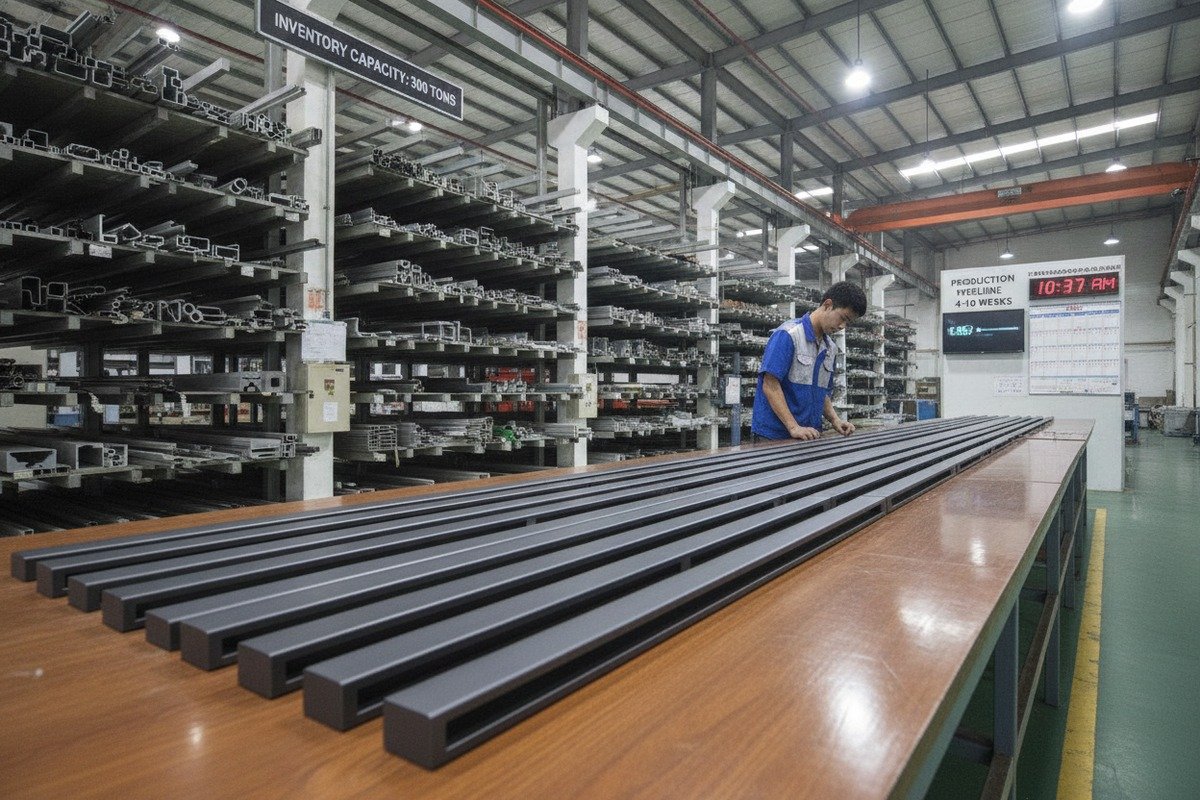
Break the Timeline into Phases
A lead time is not just "factory time." It is made up of several distinct phases, and each one can expand if you are not prepared quality inspections 5. Here is how a typical first-order timeline breaks down:
| Phase | Activity | Typical Duration |
|---|---|---|
| Phase 1 | Requirements gathering, measurements, finish selection | 3–5 days |
| Phase 2 | Supplier shortlisting, quote requests | 5–7 days |
| Phase 3 | Sample ordering, review, and approval | 7–14 days |
| Phase 4 | Purchase order placement and production | 10–25 days (stock) / 20–40 days (custom) |
| Phase 5 | Freight, customs clearance, and delivery | 10–30 days depending on destination |
Why First Orders Always Take Longer
There is a simple reason first orders stretch beyond expectations. You and the supplier are learning each other. You do not yet know their sample turnaround speed. They do not yet know your approval process. Every back-and-forth email adds a day or two.
From our experience shipping to Vietnam and the Middle East, the single biggest delay on first orders is not production — it is the approval loop. A buyer requests a sample, receives it in 5 days, then takes 10 days to circulate it internally before confirming. That silent gap doubles the pre-production timeline.
How to Compress Your Lead Time
Here are practical steps that work:
- Send complete specifications with your first inquiry. Include handle length, center-to-center hole spacing, projection from the cabinet surface, finish code, and quantity.
- Ask the supplier upfront whether the item is in stock or needs production. Our facility keeps over 300 tons of ready-to-ship inventory, so many standard profiles ship within 48 hours. But a custom anodized finish 6 might need 5–7 working days.
- Set an internal deadline for sample approval. Tell your team the sample must be accepted or rejected within 3 business days of arrival.
- Confirm the shipping method at the time of order, not after production finishes. Ocean freight to the Middle East can take 20+ days. If you wait until the goods are packed to book a vessel, you may lose another week.
Account for Calendar Gaps
Chinese factories observe several holidays that can affect your timeline. Chinese New Year 7 alone shuts down most production for 2–3 weeks. Mid-Autumn Festival, National Day in early October, and other public holidays add smaller gaps. If your order lands near these windows, add extra buffer time.
What factors should I consider when choosing between ready-to-ship stock and custom OEM aluminum handles?
We produce both stock catalog handles and fully custom OEM profiles on the same production lines, so we see the trade-offs clearly every day. The right choice depends on your project, your timeline, and how much design control you need.
Choose ready-to-ship stock handles when you need fast delivery, lower MOQs, and proven quality. Choose custom OEM handles when your furniture line requires a unique profile, proprietary finish, or specific branding. Stock items ship in days; custom items require 3–7 days for production plus additional time for sampling and tooling if a new mold is involved.

Side-by-Side Comparison
This table summarizes the key differences:
| Factor | Ready-to-Ship Stock | Custom OEM |
|---|---|---|
| Lead time | 1–3 days (from inventory) | 7–40 days depending on complexity |
| Minimum order quantity | Often lower (50–200 pcs) | Higher (500+ pcs typical) |
| Finish options | Limited to existing catalog | Fully customizable anodizing, powder coat, or PVD |
| Tooling cost | None | May require mold fee for new profiles |
| Design exclusivity | None — anyone can buy the same handle | Full exclusivity if you own the mold |
| Risk level | Low — proven design, tested finish | Moderate — new design needs validation |
| Replacement ease | Simple reorder | Requires production run |
When Stock Makes Sense
Stock handles are the safest bet for your first order if you are testing a new market or adding a basic product line. You can see and touch the exact product before committing. There is no mold risk, no color-matching uncertainty, and no waiting for a production slot.
For wholesalers in Vietnam or the UAE who need to fill shelves quickly, our catalog of recessed aluminum pulls in matte white, charcoal grey, black, champagne gold, and light beige covers the most popular styles. These are sitting in our warehouse right now. You order on Monday, they ship on Wednesday.
When Custom OEM Is Worth the Wait
Custom handles make sense when your furniture factory needs a handle that matches a specific design language. Maybe your cabinet line uses a unique champagne gold tone that does not match any standard anodized finish. Or perhaps you need a handle length of 450 mm that is not in any catalog.
Custom also makes sense for branding. If you are a distributor building a private-label hardware line, an OEM handle with your logo laser-engraved on the back gives you a product nobody else can source.
The Hybrid Approach
Many of our long-term clients start with stock handles for their first order. They test the market, learn what sells, and then come back for a custom version of their best seller with a proprietary finish or modified dimensions. This is a low-risk path that protects your cash flow while still building toward a differentiated product line.
Watch Out for Spec Ambiguity
The biggest trap in choosing between stock and custom is vague specifications. If you tell a supplier "I want a handle like this photo" without providing exact dimensions, finish codes, and mounting details, you will get a quote for a stock item that may not match and a custom quote that is overbuilt. Define the spec first. Then the stock-vs-custom decision becomes obvious.
How do I ensure my procurement plan accounts for quality inspections and sample testing before mass production?
On our production floor, we have a saying: fix the problem on the sample, not on the container. The cost of catching a defect at the sample stage is almost zero. The cost of catching it after 5,000 handles are packed and shipped is enormous.
Build quality gates into your procurement plan at three points: pre-production sample approval, in-process inspection during mass production, and final outgoing quality check before shipment. Never approve mass production until you have physically tested a sample for finish consistency, mounting fit, edge sharpness, and dimensional accuracy.
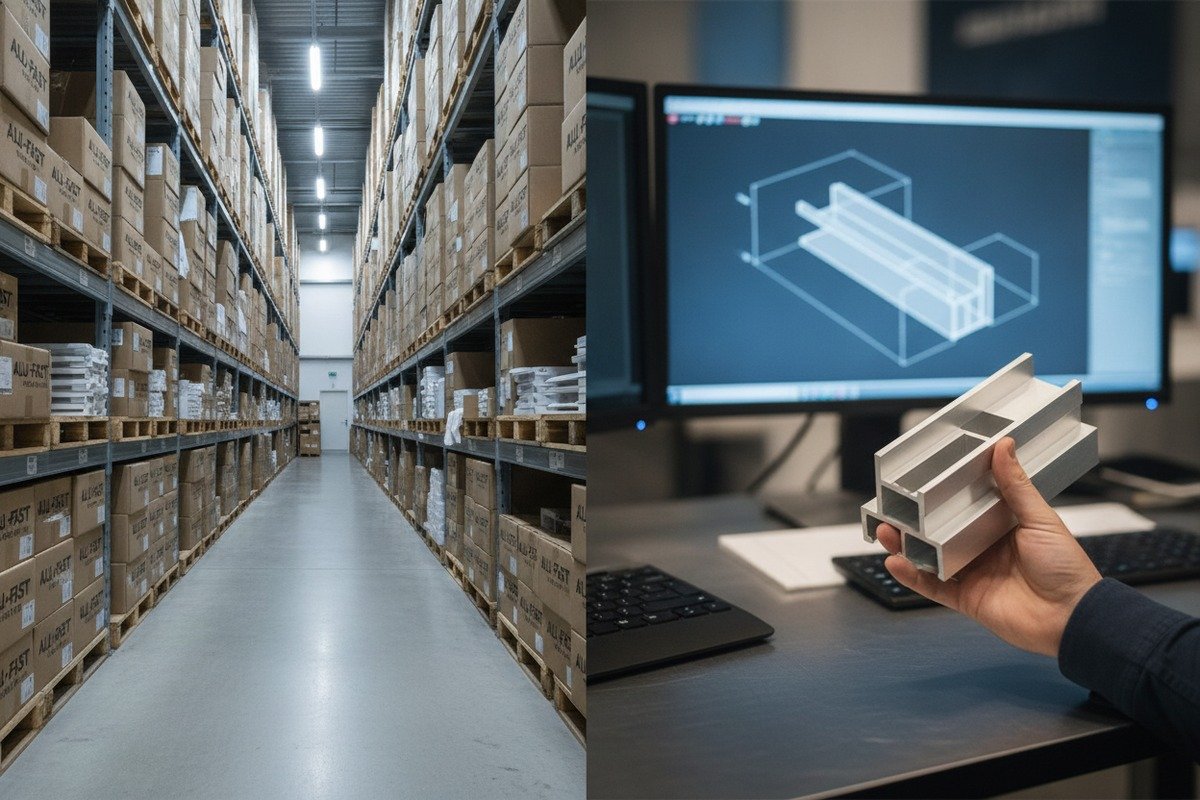
The Three Quality Gates
Think of your procurement plan as having three checkpoints where production must pause until you give a green light.
Gate 1: Sample Approval
This is the most important step. Request 2–3 sample pieces before any bulk order. When the samples arrive, check:
- Visual finish — Is the anodizing or powder coat even? Any scratches, pits, or color variation?
- Dimensions — Measure the overall length, hole spacing (center-to-center), projection, and width against your specification. Even a 1 mm deviation can cause mounting issues.
- Edge quality — Run your finger along every edge. Aluminum extrusions can have sharp burrs if not properly deburred. A sharp edge is a rejection.
- Mounting fit — Attach the sample to an actual cabinet door or drawer front. Does it sit flush? Do the screws align?
- Tactile feel — Pull the handle repeatedly. Does it feel solid? Is there any rattle or flex?
Gate 2: In-Process Check
For orders above 1,000 pieces, ask the supplier whether you can receive photos or a brief inspection report during production. This is especially important for custom finishes. A mid-run color drift on an anodizing line is easier to correct at piece 500 than at piece 4,500.
Gate 3: Final Outgoing Inspection
Before shipment, confirm the final quantity, packaging condition, and a random spot check of handles from different production batches. A simple checklist works:
| Checkpoint | What to Verify | Pass Criteria |
|---|---|---|
| Quantity count | Total pieces vs. PO | Must match exactly |
| Finish consistency | Compare random pieces to approved sample | No visible color difference |
| Dimensional accuracy | Measure 5% of pieces | Within ±0.5 mm of spec |
| Edge quality | Feel edges on random pieces | No sharp burrs |
| Packaging integrity | Boxes, dividers, labeling | No damage, correct labels |
| Mounting hardware | Screws included if specified | Correct size and quantity |
What Happens When a Sample Fails?
If the sample does not meet your standard, reject it clearly. Send photos of the specific issue. Mark the exact location of the defect. Give the supplier a written list of corrections needed. Then wait for a revised sample before proceeding.
This sounds slow, but it saves weeks. We have seen buyers approve a "close enough" sample, only to reject the entire shipment later because the color was half a shade off from their cabinet panels. That rejection cost them 6 weeks and a second production run.
Coordinate With Your Furniture Line
If the handles are part of a coordinated furniture system — for example, a kitchen cabinet line with matching pulls across different drawer sizes — test all handle sizes together, not individually. A 128 mm pull and a 256 mm pull from the same order should have identical finish tones. Compare them side by side under the same lighting.
Document Everything
Keep a simple file for each order: the original specification, the approved sample photos, the inspection checklist, and the final shipping photos. This becomes your quality baseline for repeat orders. If finish consistency drifts on order number three, you can point back to the original approved standard.
What are the best strategies for me to manage shipping schedules and logistics costs for my aluminum profile imports?
We ship containers from Foshan to ports across Southeast Asia and the Middle East every week. The patterns are consistent: buyers who plan shipping alongside production save money and avoid idle inventory. Buyers who figure out shipping after the goods are ready often pay rush fees or sit waiting for vessel space.
The best strategies are to confirm your shipping method and Incoterm at the time of order placement, consolidate shipments to reduce per-unit freight costs, choose the right port and customs broker in advance, and align your delivery date with your actual installation or distribution schedule rather than ordering "as soon as possible."

Choose Your Shipping Method Early
There are three common methods for aluminum handle imports. Each has a different cost and speed profile.
| Shipping Method | Typical Transit Time | Best For | Cost Level |
|---|---|---|---|
| Ocean freight (FCL) | 15–30 days | Large orders (full container) | Lowest per unit |
| Ocean freight (LCL) | 20–35 days | Medium orders (partial container) | Moderate per unit |
| Air freight | 3–7 days | Urgent or small sample orders | Highest per unit |
For most first-time wholesale buyers, LCL ocean freight is the sweet spot. You do not fill an entire container, but the cost per kilogram is far lower than air. If your order is large enough to fill a 20-foot container 8 — which is common for mixed hardware orders — FCL gives you the best rate and the most control over handling.
Understand the Incoterms
The Incoterm 9 you agree to defines who pays for what. For aluminum handle imports, the most common terms are:
- FOB (Free on Board): The supplier delivers the goods to the port in China. You handle ocean freight, insurance, and destination customs. This gives you control over the carrier.
- CIF (Cost, Insurance, Freight): The supplier arranges freight and insurance to your destination port. You handle customs clearance on arrival. This is simpler but gives the supplier control over the carrier choice.
- DDP (Delivered Duty Paid): The supplier handles everything to your door, including duties. This is the simplest for the buyer but usually the most expensive.
For first-time buyers, CIF is often the easiest starting point because the supplier handles the complex China-side logistics. As your volume grows, switching to FOB gives you more negotiating power with freight forwarders.
Consolidate to Cut Costs
If you are buying aluminum handles along with other hardware — hinges, shelf supports, glass door profiles — consolidate them into a single shipment. Shipping five small cartons separately on five different LCL bookings costs far more than one combined pallet. Ask your supplier if they can palletize mixed products together.
At our facility, many clients order handles and aluminum glass door profiles in the same shipment. We pack them on shared pallets with clear labeling. This saves the buyer hundreds of dollars in freight per shipment.
Align Delivery With Your Real Need Date
A common first-buyer mistake is requesting the fastest possible delivery without thinking about when the handles are actually needed. If your cabinet production starts in 6 weeks, there is no benefit to receiving handles in 3 weeks. You just pay for warehousing and risk damage from extra handling.
Work backward from your installation or distribution date. Subtract freight time, customs clearance time, and a 5-day buffer. That gives you the target ship date from the factory. Share that date with your supplier at the time of order placement so production scheduling aligns.
Plan for Customs and Receiving
Before the shipment arrives, make sure you have:
- A licensed customs broker 10 at your destination port (or your supplier's DDP service if applicable).
- A receiving location
Footnotes
1. Defines custom OEM orders in manufacturing and their implications. ↩︎
2. Explains the importance and steps for creating a purchasing strategy. ↩︎
3. Explains the concept of minimum order quantities in manufacturing. ↩︎
4. Clarifies the definition and components of manufacturing lead time. ↩︎
5. Details the importance and methods of quality control in manufacturing. ↩︎
6. Describes the process and characteristics of anodizing for aluminum. ↩︎
7. Provides context on the impact of this major holiday on production schedules. ↩︎
8. Describes full container load shipping for large international orders. ↩︎
9. Explains international commercial terms used in global trade. ↩︎
10. Defines the role of a customs broker in international shipping. ↩︎