
Every week, our sales team receives inquiries from furniture factories and distributors that say little more than “I need aluminum handles.” No alloy grade. No finish details. No tolerances. The result is predictable: mismatched samples, wasted time, and frustration on both sides aluminum alloy grade 1. After 18 years of producing aluminum furniture handles in Foshan, we have learned that the single biggest factor separating smooth orders from painful ones is the quality of the buyer’s procurement specification 2. aluminum production 3
To create a detailed procurement specification for aluminum furniture handles, you should document the exact alloy grade, dimensional tolerances, surface finish requirements, quality control standards, packaging instructions, and lead time expectations in a single supplier-ready document that eliminates ambiguity and ensures repeatable manufacturing quality.
This guide walks you through every section of a professional handle specification, from material grades to packaging details RAL or Pantone code 4. Whether you run a furniture factory in Vietnam or distribute building materials in the Middle East, the steps below will help you communicate clearly with any Chinese supplier and get exactly the product you need.
What Technical Dimensions and Material Grades Should I Include in My Aluminum Handle Specification?
Vague material requests are the number one reason sample rounds fail. Our engineering team has seen buyers lose weeks because their spec simply said "aluminum" with no alloy, no temper, and no dimensional drawing attached.
Your specification should include the exact aluminum alloy grade and temper (such as 6063-T5 or 6061-T6), the manufacturing process (extrusion, die-cast, or machined), all critical dimensions with tolerances, mounting hole spacing, and the intended furniture application to ensure the supplier quotes and manufactures the correct product.
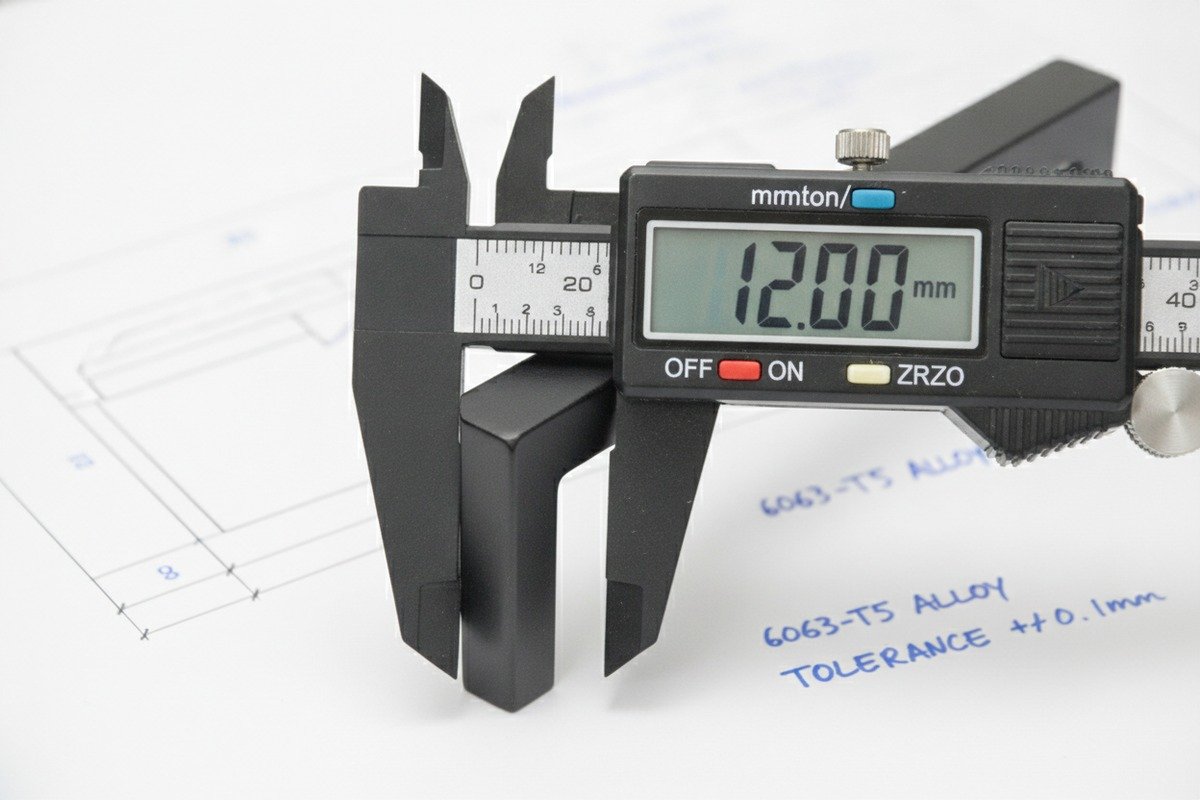
Choosing the Right Alloy Grade
Not all aluminum is the same. The alloy you choose affects strength, surface finish quality, extrudability, and cost. For furniture handles, three grades dominate the market.
| Alloy Grade | Temper | Key Properties | Best For |
|---|---|---|---|
| 6063 | T5 / T6 | Excellent extrudability, smooth surface, good anodizing response | Most furniture handles, decorative pulls, profile handles |
| 6061 | T6 | Higher strength, good machinability | Heavy-duty handles, commercial furniture, architectural grips |
| 6060 | T5 / T6 | Similar to 6063, common in European markets | Slim profile handles, minimal load applications |
When you write your spec, state the alloy and temper clearly. For example: "Material: Aluminum 6063-T5 5 per EN 755-2." Do not write just "aluminum alloy" and hope the supplier picks the right one. They may default to whatever is cheapest or most available.
Defining the Manufacturing Process
Your spec should state whether the handle is to be produced by extrusion, die-casting, CNC machining, or a combination. manufacturing process 6 This matters because each process has different capabilities. Extrusion is ideal for long, consistent profile handles. Die-casting works better for complex three-dimensional shapes. CNC machining suits low-volume custom designs but raises unit cost.
On our production lines, most minimalist recessed cabinet handles — the kind with a long, slim rectangular form and a deep geometric channel for a finger grip — are precision-extruded and then cut, drilled, and finished. If you need that type of handle, specify "extruded aluminum profile, cut to length, with CNC-drilled mounting holes."
Critical Dimensions to Document
Every handle spec needs a dimensioned drawing. At minimum, include these measurements:
- Overall length
- Cross-section width and height
- Projection from cabinet surface
- Grip channel depth and width
- Mounting hole center-to-center distance
- Mounting hole diameter
- Edge radii and chamfer dimensions
- Compatible cabinet panel thickness
Separate your dimensions into two categories: critical and reference. Critical dimensions are non-negotiable and must fall within tight tolerances. dimensional tolerances 7 Reference dimensions are informational and allow more flexibility. This saves you money because tighter tolerances cost more to hold. A practical starting point for furniture handles is ±0.1 mm on mounting hole centers and ±0.3 mm on overall length. If you need tighter control, say so explicitly and expect the unit price to reflect the added precision.
Stating the Application
Tell your supplier where the handle will be used. A kitchen cabinet handle in a commercial restaurant faces very different demands than a bedroom wardrobe pull. High-traffic environments may need reinforced extrusion walls and harder temper. Low-traffic residential use may allow thinner walls and softer alloys. This context helps the supplier recommend the right solution and avoid over- or under-engineering the product.
How Do I Accurately Describe the Surface Finish and Color Requirements for My Custom Handles?
Finish mismatches are the most common complaint we hear from new buyers. The handle looks perfect in the supplier's photo, but when the shipment arrives, the color is slightly off or the texture feels different from the sample.
To accurately describe surface finish requirements, specify the finish type (anodized, powder-coated, or electrophoretic), the exact color code or RAL number, gloss level, texture description, coating thickness, and require a sealed golden sample for visual approval before mass production begins.

Finish Types Compared
The two most common finishes for aluminum furniture handles are anodizing and powder coating 8. Each has trade-offs.
| Feature | Anodizing | Powder Coating |
|---|---|---|
| Color range | Limited (natural, champagne, bronze, black) | Very wide (any RAL color, custom matches) |
| Texture | Smooth, metallic feel | Can be smooth, textured, or matte |
| Durability | Excellent scratch and corrosion resistance | Good impact and chip resistance |
| Coating thickness | 10–25 µm typical | 60–120 µm typical |
| Appearance | Metallic, semi-transparent | Opaque, uniform |
| Cost | Moderate | Moderate to low |
| Best for | Premium minimalist handles, architectural looks | Colorful designs, matching specific furniture palettes |
When we produce our champagne gold and light bronze handles, we use anodizing because it preserves the metallic grain of the aluminum and gives a sophisticated, non-reflective surface. For white, charcoal grey, or custom colors, powder coating is usually the better choice.
How to Lock in Color and Gloss
Never describe color with words alone. "Champagne gold" means different things to different people. Instead, use one or more of these methods:
- RAL or Pantone code: Provide a specific reference number.
- Golden sample: Request the supplier to produce a physical finish sample. Approve it in writing. Keep one at your office and one at the factory.
- Gloss level: Specify in gloss units (GU). Matte finishes are typically below 30 GU. Semi-gloss falls between 30 and 70 GU. High gloss is above 70 GU.
- Acceptable variation: State the allowable Delta E (color difference) between batches. A Delta E of 1.0 or less is tight. A Delta E of 2.0 is more forgiving and common for furniture hardware.
Coating Performance Requirements
Your spec should also include performance expectations for the finish. Ask suppliers to provide coating adhesion test results (cross-hatch test per ASTM D3359 or ISO 2409), salt spray resistance hours if corrosion is a concern, and UV stability data if the handles will be exposed to sunlight. For anodized finishes, specify a minimum oxide layer thickness — 15 µm is a good baseline for furniture handles that will see daily use.
Dealing with Batch-to-Batch Variation
Even with a golden sample, slight variation between production batches is normal. The key is to define what is acceptable up front. State in your spec: "Finish color must match the approved golden sample within Delta E ≤ 1.5 under D65 illuminant." This gives both you and the supplier a measurable standard to resolve any disputes quickly.
On our production floor, we check finish consistency at the start of every anodizing batch and retain color coupons for traceability. If your supplier does not do this, it is worth asking why.
What Quality Control Standards and Tolerance Limits Should I Set for My Procurement Order?
We have seen orders rejected at the port because the buyer never defined what "acceptable" meant. No tolerance sheet. No inspection criteria. No AQL level. The supplier shipped what they thought was fine, and the buyer disagreed. Both sides lost money.
Set quality control standards by defining dimensional tolerances for every critical feature, specifying AQL levels for visual and functional defects, requiring material certificates and coating test reports, and establishing a pre-production sample approval step that must be signed off before mass production starts.

Setting Practical Tolerances
Tolerances are the allowed variation from your target dimension. Too loose, and the handles may not fit your cabinets. Too tight, and you pay a premium for precision you may not need. Here is a practical guide for furniture handle tolerances:
| Feature | Recommended Tolerance | Notes |
|---|---|---|
| Overall length | ±0.3 mm | Standard for extruded and cut profiles |
| Mounting hole center-to-center | ±0.1 mm | Critical for cabinet alignment |
| Mounting hole diameter | ±0.05 mm | Must match fastener spec |
| Cross-section dimensions | ±0.15 mm | Controlled by extrusion die |
| Surface flatness | ≤0.2 mm over 300 mm | Prevents visible bowing |
| Edge radius | ±0.1 mm | Affects feel and appearance |
Mark each tolerance as critical or standard in your drawing. This tells the supplier where to focus inspection effort and where to invest in tooling precision.
Defining Inspection and Acceptance Criteria
Your specification should explain how you will check incoming goods. Common inspection points include:
- Dimensional check: Measure a sample of handles against the drawing using calipers and gauges.
- Finish check: Compare against the golden sample under standardized lighting.
- Functional check: Test handle mounting on a sample cabinet panel.
- Packaging check: Verify protective wrapping and carton condition.
For batch acceptance, use AQL (Acceptable Quality Level) sampling. AQL sampling 9 A common standard for furniture hardware is AQL 1.0 for critical defects (structural cracks, wrong alloy), AQL 2.5 for major defects (finish flaws visible at arm's length, dimensional out-of-spec), and AQL 4.0 for minor defects (light scratches hidden after installation). State these levels in your spec so the supplier knows the inspection rules before they start production.
Requiring Documentation
A professional procurement spec lists the documents you expect with every shipment. These typically include:
- Material test certificate 10 showing alloy composition and mechanical properties
- Coating thickness and adhesion test report
- Dimensional inspection report for the production batch
- Photos of finished goods before packing
When we ship to our distributors in the Middle East, we include all four documents as standard. If your current supplier does not provide them, adding this requirement to your spec will immediately raise the quality of your incoming goods.
Pre-Production Sample Approval
Never skip the sample approval step. Your spec should require the supplier to produce a small batch of samples — typically 5 to 10 pieces — using the actual production tooling and finish process. You inspect and approve these samples in writing before the factory starts mass production. This catches problems early and gives you legal standing if the bulk order does not match.
We typically turn around production samples in 3 to 7 days for custom handle orders. If a supplier cannot commit to a sample timeline, that is a red flag worth noting.
How Can I Communicate My Custom Packaging and Lead Time Expectations to My Chinese Supplier?
Packaging and lead times are the sections most buyers leave until the last minute — and then regret. Our warehouse team has seen beautiful handles arrive at the customer's door with scratched finishes because the packaging spec was an afterthought.
Communicate packaging and lead time expectations by specifying individual handle wrapping material, carton dimensions, maximum carton weight, palletization method, and labeling requirements, along with written commitments for sample lead time, production lead time, and shipping method, all documented in the purchase order before production begins.
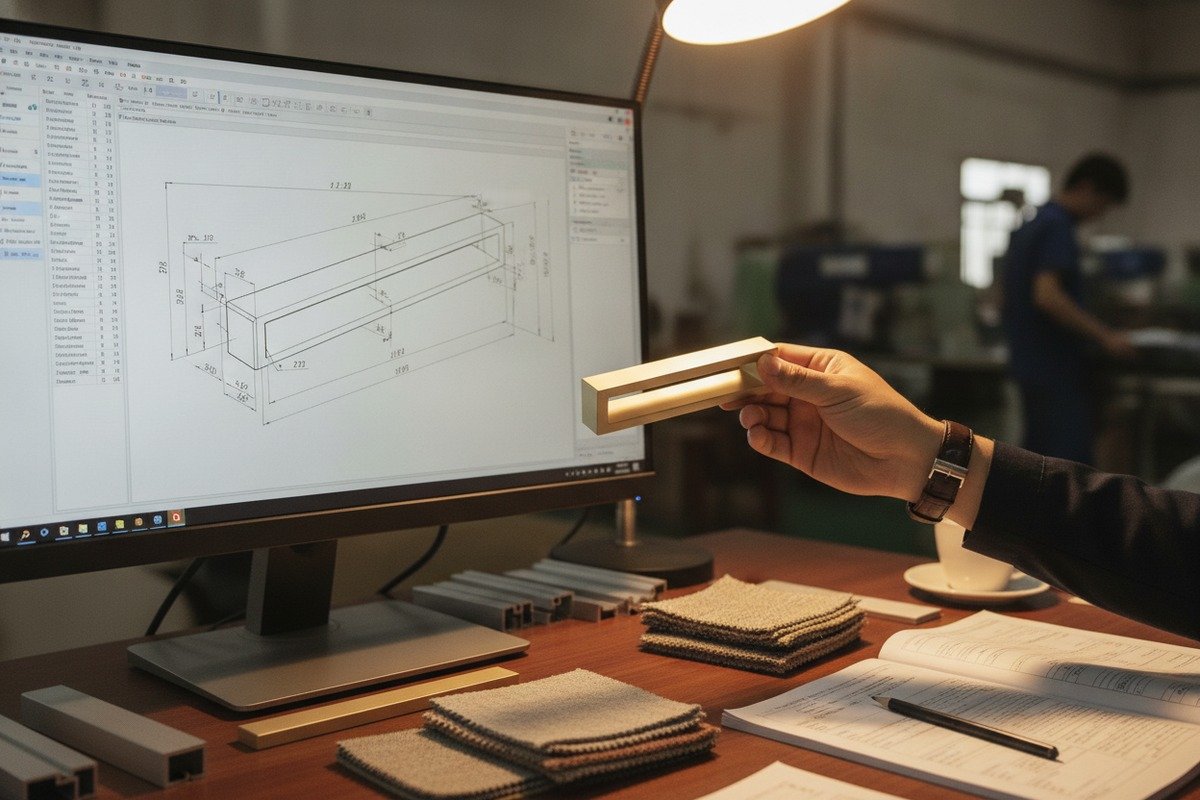
Why Packaging Deserves Its Own Section
Aluminum handles, especially anodized ones, scratch easily when they rub against each other during transit. A champagne gold anodized handle with a visible scratch across its face is unsellable. Your spec should define:
- Individual wrapping: PE foam sleeve, bubble wrap, or plastic film per handle.
- Separation: Dividers or foam inserts inside cartons to prevent contact.
- Carton specs: Inner and outer carton dimensions, material grade (e.g., 5-layer corrugated), and maximum weight per carton (usually 15–20 kg for easy handling).
- Labeling: Product code, quantity, color, batch number, and barcode if needed.
- Palletization: Pallet size, stacking pattern, stretch wrap, and corner protectors.
Request a packaging sample before the first bulk order. Open it, shake it, drop it from table height. If the handles inside survive without marks, the packaging is adequate.
Lead Time Expectations
Lead time is one of the biggest pain points for furniture factories and distributors. Late handles mean late furniture, missed deadlines, and unhappy end customers. Your spec should include clear timelines for each stage:
- Sample production: Typically 3–7 days for custom handles.
- Sample shipping: Depends on your location and courier choice.
- Sample approval: Set a deadline for yourself to review and respond.
- Mass production: Usually 15–25 days for custom orders, depending on quantity and finish complexity.
- Stock items: Can ship within 48 hours if the supplier maintains ready inventory.
We keep over 300 tons of popular handle profiles in stock specifically to eliminate long waits for our repeat customers. If your handle design is based on a standard profile, ask the supplier whether they stock it. Standard sizes can cut lead times by roughly 20 percent compared to fully custom orders.
Writing Lead Time into the Purchase Order
Do not rely on verbal promises. Write the agreed lead time into the purchase order or supply agreement. Include a clause that defines what happens if the supplier misses the deadline — a discount, expedited shipping at the supplier's cost, or order cancellation rights. This protects you and motivates the supplier to plan capacity properly.
Tooling Ownership and Reorder Logistics
If your custom handle requires a new extrusion die or CNC fixture, clarify who owns the tooling. State this in the spec: "All custom tooling paid for by the buyer remains the buyer's property and must be stored, maintained, and returned upon request." This protects you if you ever need to switch suppliers. Also define the reorder process — minimum order quantities, reorder lead times, and whether the supplier will hold safety stock for you.
Quoting Structure
Ask your supplier to break down the quote into line items: unit price, tooling cost, sample cost, packaging cost, shipping estimate, and any inspection or certification fees. This transparency lets you compare suppliers fairly and identify hidden costs before you commit. A supplier who refuses to itemize their quote may be bundling margins into unclear categories.
Conclusion
A well-written procurement specification is not just paperwork — it is the foundation of every successful aluminum handle order. Define your alloy, dimensions, finish, quality standards, packaging, and lead times in one clear document, and you will save time, reduce defects, and build stronger supplier relationships from the very first order.
Footnotes
1. Provides an overview of different aluminum alloy grades. ↩︎
2. Defines procurement specification and its importance. ↩︎
3. Replaced HTTP 403 link with authoritative source on aluminum production process. ↩︎
4. Explains the RAL color matching system for industrial colors. ↩︎
5. Details the properties and uses of the 6063-T5 aluminum alloy. ↩︎
6. Explains various aluminum manufacturing processes. ↩︎
7. Defines engineering and dimensional tolerances in manufacturing. ↩︎
8. Compares the properties and applications of anodizing and powder coating. ↩︎
9. Explains the Acceptable Quality Level (AQL) sampling method for inspections. ↩︎
10. Defines what a material test certificate is and its purpose. ↩︎