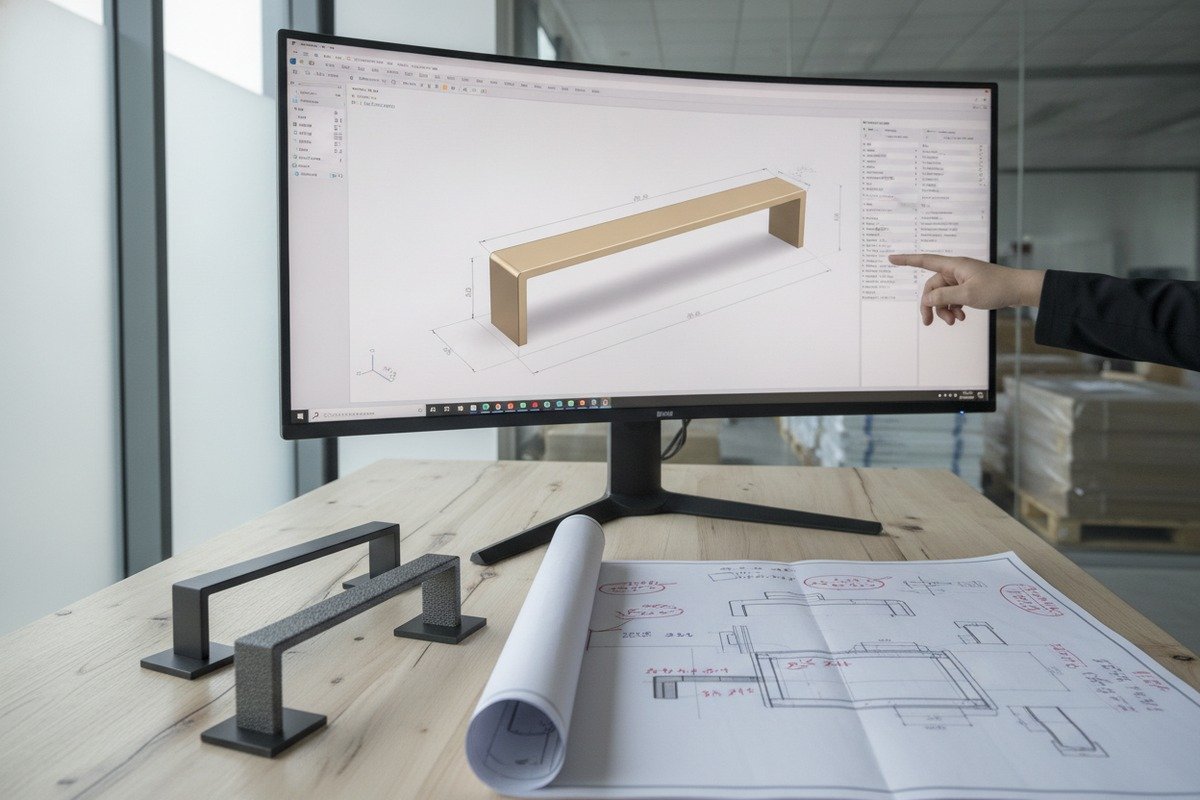
Over 18 years on our production lines in Foshan, we have seen one issue cause more disputes than almost anything else: the final handle looks different from what the buyer expected.
Yes, you should check whether your Chinese supplier can provide 3D renderings before production. Renderings let you confirm design intent, proportions, and surface details early. But they are not enough on their own—you also need technical drawings, finish samples, and an approved physical prototype to fully secure the appearance.
This article breaks down exactly how 3D renderings 1 fit into a smart approval chain, what they can and cannot guarantee, and how to use them alongside other checkpoints so you never face a costly surprise when your aluminum handles arrive.
How Can 3D Renderings Help Me Reduce the Risk of Design Errors When Sourcing Custom Aluminum Handles?
Every year, our engineering team processes hundreds of custom handle requests design errors 2. The single biggest source of rework is not a machining error—it is a misunderstanding about the design that could have been caught weeks earlier.
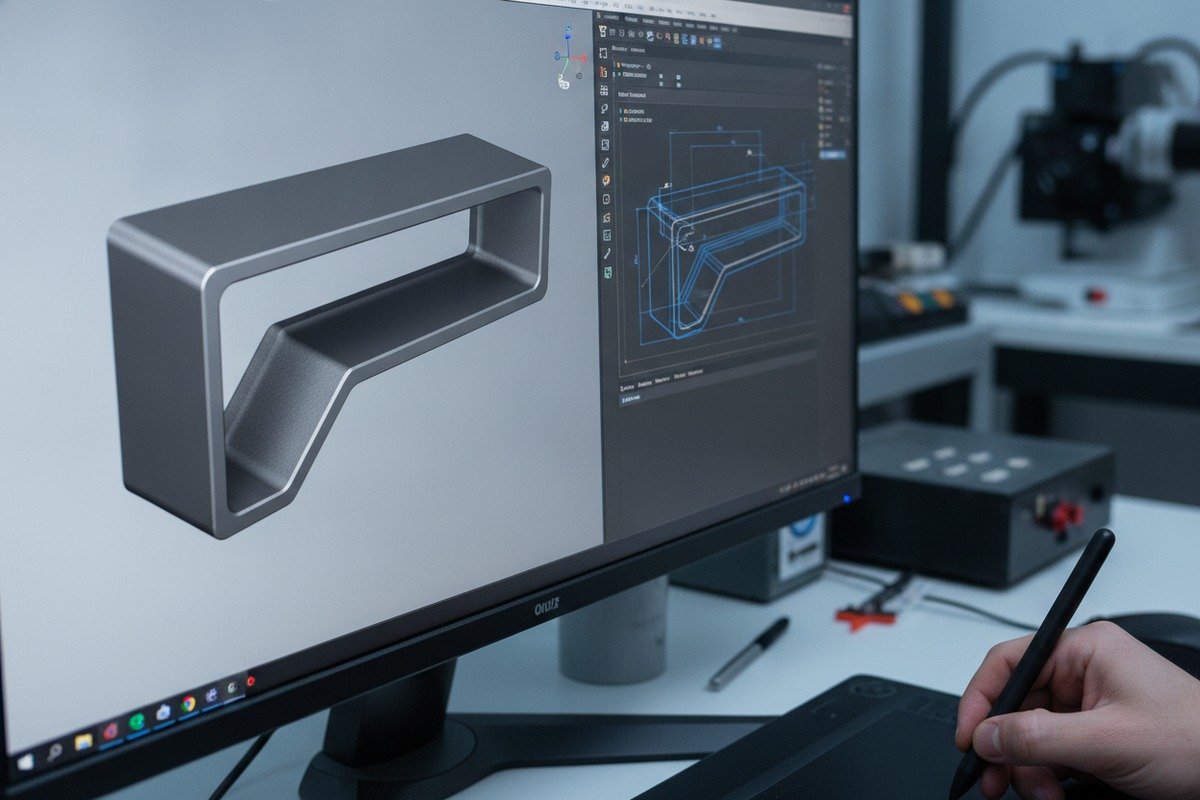
3D renderings reduce design-error risk by giving you a realistic visual reference to approve before any tooling or extrusion begins. They reveal proportion issues, curve mismatches, and channel-depth problems that flat 2D drawings often hide, saving you time, money, and frustration during the custom sourcing process.
Why 2D Drawings Alone Fall Short
A standard 2D technical drawing is essential. It locks in dimensions, tolerances, and material call-outs. But it cannot show you how a recessed finger-grip channel will look under showroom lighting, or whether the champagne-gold anodized finish 3 will clash with a matte-white cabinet panel. When our R&D department first switched to providing 3D renders alongside flat drawings, the rate of first-sample rejections dropped noticeably.
What Exactly Can a 3D Rendering Confirm?
Think of a 3D rendering as a digital dress rehearsal. It confirms the intended appearance—not the guaranteed final appearance. Here is a quick breakdown:
| What 3D Renderings CAN Confirm | What 3D Renderings CANNOT Confirm |
|---|---|
| Overall shape and proportions | Exact tactile feel of the surface |
| Relative size against a cabinet mock-up | True color accuracy under all lighting |
| Finger-grip depth and ergonomic profile | Real-world reflection and gloss variation |
| Edge sharpness and corner radii intent | Micro-texture from brushing or sandblasting |
| General finish tone (matte, satin, gloss) | Coating thickness and adhesion quality |
How to Use Renderings as an Error-Catching Step
The best practice is to treat the rendering as a gate. No rendering approval, no tooling. Here is a simple workflow we recommend to our wholesale partners:
- Send your concept sketch or reference photo to the supplier.
- Receive a 3D rendering with key dimensions annotated.
- Review proportions, curvature, and overall styling.
- Request revisions if needed. Define a maximum number of revision rounds upfront—usually two or three—to keep the timeline on track.
- Once the rendering is approved, move to a detailed shop drawing for final dimensional sign-off.
- Then request a physical sample before mass production.
This layered approach catches errors at the cheapest possible stage. Changing a 3D file costs almost nothing. Changing a steel extrusion 4 die costs a lot.
A Common Mistake Buyers Make
Some buyers skip the rendering step entirely and jump straight to a sample order. That works for simple, standard pulls. But for a custom minimalist recessed handle—like the slim rectangular designs with deep geometric channels and L-shaped cross-sections that are popular right now—going straight to a sample without visual alignment is risky. You may burn through two or three sample rounds before the shape feels right. Each round costs time and shipping fees.
On the other hand, some buyers treat the approved rendering as the final quality guarantee. That is equally dangerous. Aluminum can be shaped and finished in many ways. A small difference in anodizing bath chemistry can shift the champagne-gold tone warmer or cooler. A rendering cannot capture that. You still need a physical sample to confirm the real-world finish.
Should I Expect My Chinese Supplier to Provide 3D Models to Help Me Visualize the Final Product on My Furniture?
When we ship handles to furniture factories in Vietnam and the Middle East, a frequent request is: "Can you show me how this handle will look on my cabinet door?" That is a fair ask, and any serious supplier should be able to help.
You should expect a capable Chinese supplier to provide 3D models or at least high-quality rendered images that show the handle in context. This helps you visualize scale, finish contrast, and mounting style on your specific furniture, making your internal approval faster and more confident.
Not All Suppliers Have the Same Capability
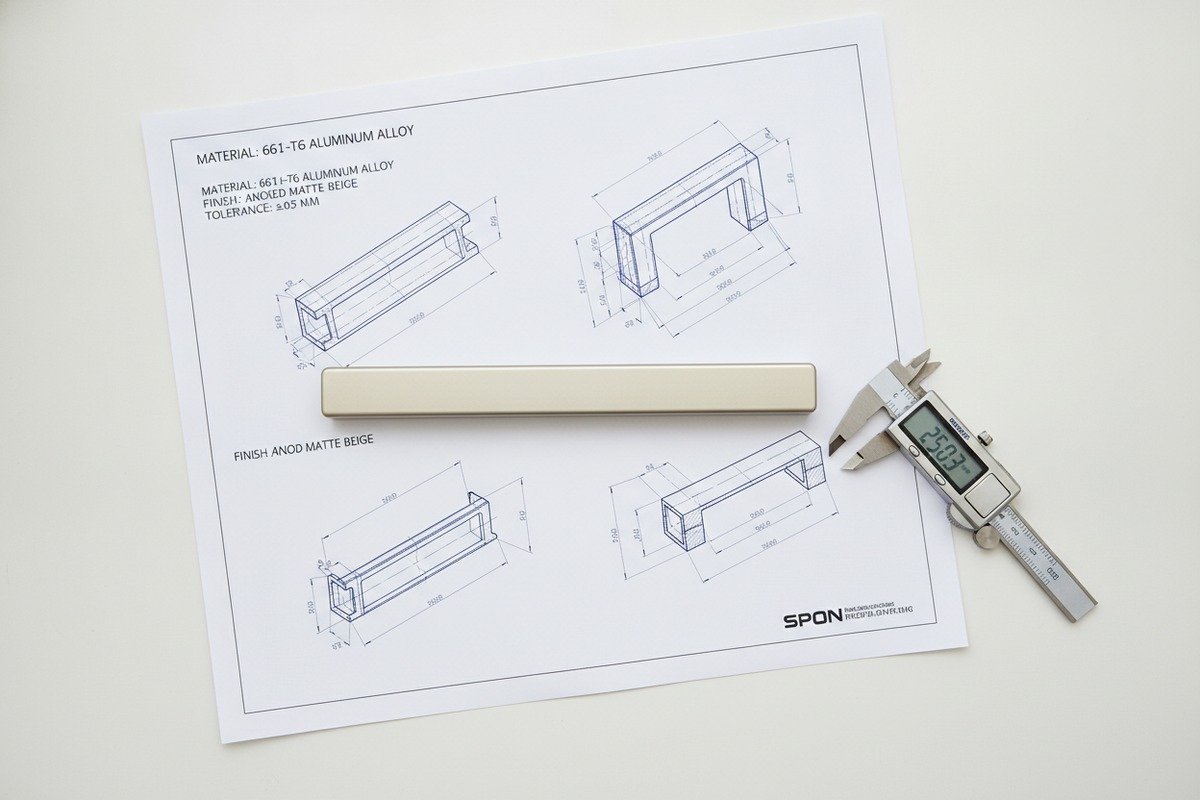
The aluminum handle industry in China ranges from small workshops to fully integrated factories. A supplier's ability to deliver 3D renderings says something about their technical depth. Here is a rough guide:
| Supplier Type | Typical 3D Capability | What to Expect |
|---|---|---|
| Small workshop (5–10 workers) | Limited or none | May rely on hand sketches or reference photos only |
| Mid-size factory (20–50 workers) | Basic 3D modeling | Can produce simple rendered views, usually in SolidWorks or similar |
| Integrated OEM/ODM factory (30+ with design team) | Full 3D rendering and scene placement | Can show the handle on a virtual cabinet, offer multiple angle views, and iterate quickly |
At our facility, we maintain a dedicated design team that works in CAD and rendering software 5 daily. This is not universal, so it is worth asking early in your supplier evaluation.
How to Evaluate a Supplier's Rendering Quality
Ask for examples. Request two or three past renderings they have done for other clients. Look for:
- Clean geometry with no obvious mesh errors.
- Realistic material appearance—metal should look like metal, not plastic.
- Correct shadow and reflection behavior.
- Dimensional annotations or at least a scale reference.
If the supplier cannot show you previous work, consider sending them a simple test: provide a basic sketch of a handle and ask them to return a 3D rendering within a few days. Their response time and output quality will tell you a lot about their process maturity.
Context Renderings Save Internal Decision Time
If you are a distributor presenting new handle options to your furniture-factory clients, a context rendering—showing the handle mounted on a virtual cabinet—is far more persuasive than a standalone product shot. It helps your own customers say yes faster, which shortens your sales cycle. We have seen wholesale partners close orders weeks earlier simply because they had a context image to share on WhatsApp instead of trying to describe the handle over text.
What If Your Supplier Cannot Provide 3D Models?
It is not necessarily a deal-breaker if the factory lacks in-house rendering. Some excellent manufacturers focus on production, not design. In that case, you can provide your own 3D files or hire a freelance industrial designer to create the rendering based on the supplier's technical drawings 6. The important thing is that both sides agree on a visual reference before moving forward. Never allow production to start without an approved visual and dimensional document.
Will Requesting 3D Renderings from the Factory Speed Up My Approval Process for New Handle Designs?
In our experience exporting custom aluminum profiles and handles, the approval stage is where most project timelines either stay on track or fall apart. Delays rarely come from production—they come from unclear expectations during design review.
Yes, requesting 3D renderings typically speeds up approval because all stakeholders can review a realistic visual instead of interpreting flat drawings. This reduces back-and-forth emails, eliminates guesswork, and allows faster sign-off—especially when multiple decision-makers are involved in your organization.
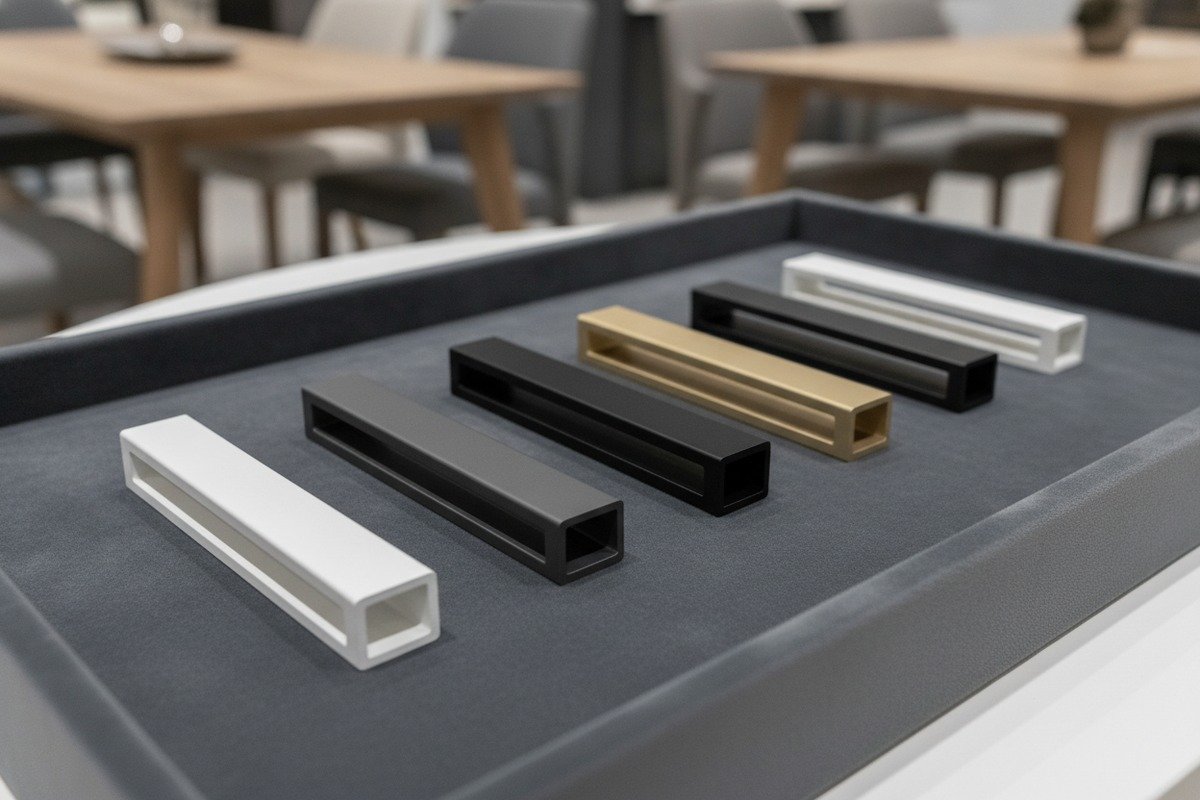
The Traditional Approval Path vs. the Rendering-Assisted Path
Let me lay out two common scenarios so you can see the time difference clearly.
| Step | Without 3D Rendering | With 3D Rendering |
|---|---|---|
| Initial concept discussion | 2–3 days | 2–3 days |
| First visual review | Buyer tries to interpret 2D drawing (often unclear) | Buyer reviews realistic 3D image (clear and fast) |
| Revision rounds | 2–4 rounds due to misunderstandings | 1–2 rounds with precise visual feedback |
| Internal stakeholder alignment | Slow—each person interprets the drawing differently | Fast—everyone sees the same image |
| Move to sample stage | 10–15 days from concept | 5–8 days from concept |
| Sample approval | May need 2 samples if design was misunderstood | Usually 1 sample is enough |
The difference is dramatic when you add up the calendar days. A project that might take five weeks from concept to approved sample can often be compressed to three weeks or less when renderings are used effectively.
Why Multiple Decision-Makers Slow Things Down
In many furniture companies and distribution businesses, the person sourcing the handle is not the only one who approves it. A product manager, a showroom designer, or even an end client may need to weigh in. When you circulate a 2D drawing, each reviewer forms a different mental image of the final product. That leads to conflicting feedback and extra revision cycles.
A 3D rendering solves this by anchoring everyone to the same visual. When we send a rendering to a buyer in Dubai, for example, that buyer can forward the same image to their retail partner, and both parties are looking at the same handle from the same angle. Alignment happens in one round instead of three.
Virtual Prototyping Saves Physical Sample Costs
Each physical sample of a custom aluminum handle involves material, machining or extrusion time, surface treatment, and international shipping. Depending on complexity, a single sample round can cost between $50 and $200 and take one to two weeks for delivery. If you can eliminate even one unnecessary sample round through better upfront rendering, you save both money and time. For buyers placing orders across multiple handle SKUs, those savings multiply quickly.
Set Clear Rules for Rendering Revisions
One risk of offering renderings is scope creep. A buyer keeps requesting small tweaks—move this edge 0.5 mm, try a darker shade, rotate the angle—and the rendering phase itself becomes a bottleneck. To prevent this, agree upfront on the number of revision rounds included. Two or three rounds is standard. After that, additional revisions should trigger a small design fee or a clear timeline extension. This keeps both sides accountable and the project moving forward.
Why Is It Important for My Supplier to Offer 3D Design Services to Ensure the Handles Meet My Technical Requirements?
When we calibrate our extrusion dies for a new aluminum handle profile, the tolerances involved are measured in fractions of a millimeter. A supplier that offers 3D design services is not just being helpful with visuals—they are showing you they can think in three dimensions about your technical requirements.
A supplier offering 3D design services can cross-check your handle's geometry, wall thickness, mounting clearance, and structural integrity before cutting any metal. This technical validation step ensures the handle meets both aesthetic and functional requirements, preventing failures that only show up during assembly or use.
Beyond Looks: The Technical Side of 3D Models
Most buyers think of 3D renderings as a visual tool. But a properly built 3D CAD model is also a technical document. It contains:
- Exact wall thicknesses for each section of the profile.
- Internal radii that affect extrusion feasibility.
- Mounting hole positions and screw-channel dimensions.
- Cross-sectional geometry that determines structural strength.
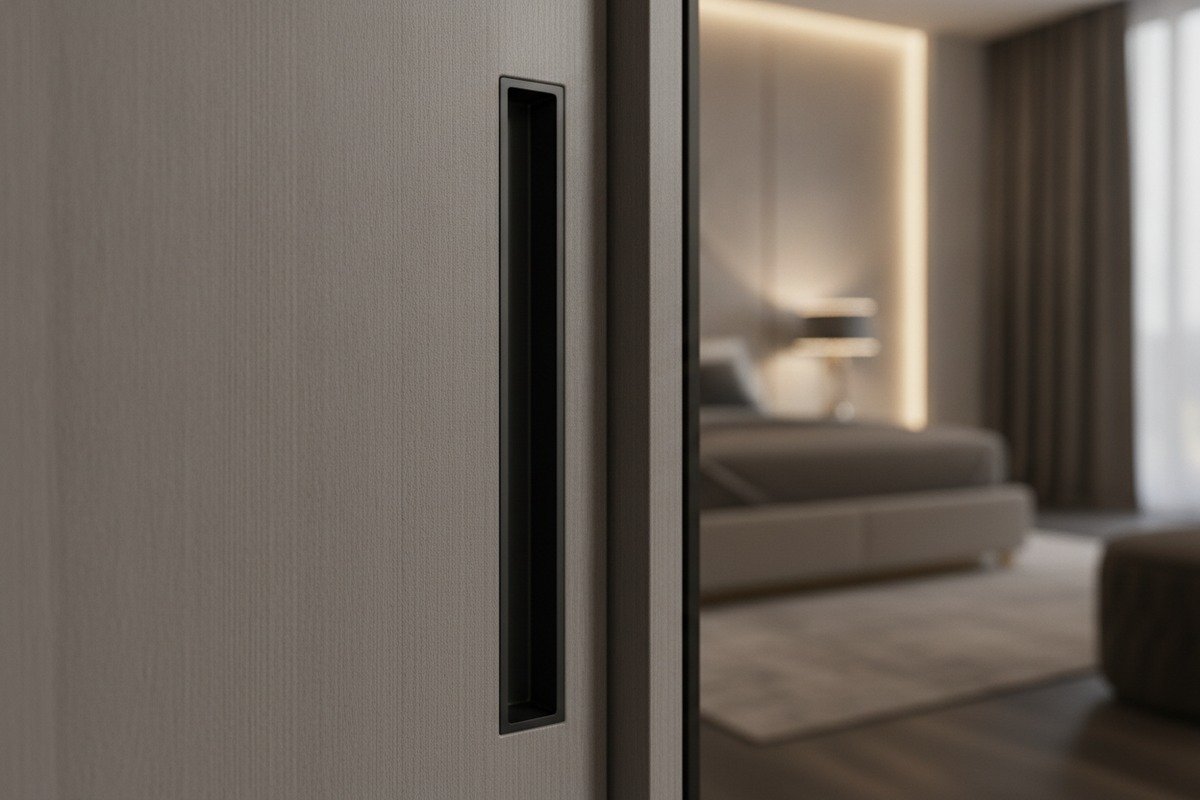
For instance, the modern recessed handles with an L-shaped cross-section and deep finger-grip channels require precise wall thickness to maintain rigidity while keeping the profile slim. If the wall is too thin, the handle flexes during use. If it is too thick, the extrusion die becomes more expensive and the handle feels bulky. A 3D model lets both the buyer and the factory test these trade-offs digitally before committing to tooling.
How 3D Files Support Tolerance and Finish Specifications
A good 3D model pairs naturally with a written specification sheet. Together, they form a complete technical package. Here is what each component covers:
| Technical Requirement | Covered by 3D Model? | Covered by Spec Sheet? | Best Practice |
|---|---|---|---|
| Overall dimensions | Yes | Yes | Cross-reference both |
| Surface finish type (anodized, powder-coated) | Partially (visual only) | Yes (detailed spec) | Use spec sheet as the binding document |
| Tolerance range (e.g., ±0.1 mm) | Not directly | Yes | Annotate tolerances on the 2D drawing derived from the 3D model |
| Mounting method and screw size | Yes (shown in model) | Yes | Verify both match your cabinet hardware |
| Color and sheen level | Approximated in rendering | Yes (RAL code, gloss units) | Always confirm with a physical finish sample |
| Weight per unit | Can be calculated from model | Yes | Useful for shipping cost estimates |
The Connection Between Design Services and Quality Control
When a supplier builds your handle in 3D software, they are essentially doing a pre-production simulation. They can spot problems like insufficient draft angles for extrusion, undercuts that complicate die design, or mounting points that interfere with internal channels. Catching these issues before production means fewer defective parts and less waste.
At our factory, the 3D model also becomes the reference file for quality inspection. Quality Control 8 Our QC team compares finished handles against the approved model dimensions. If the model was never built or was built inaccurately, inspection becomes subjective. A precise 3D file gives everyone—buyer, engineer, and inspector—a single source of truth.
Future-Proofing Your Handle Design
Once a 3D model exists, reordering or modifying the design later becomes straightforward. Need the same handle in a different length? The designer adjusts one parameter. Want to test a new finish? The rendering is updated in minutes. Want to share the design with a different factory for a quote comparison? You send the same file. This digital blueprint saves significant effort over the life of a product line, especially for distributors who manage dozens of SKUs across multiple furniture clients.
Bringing More Complete Design Input to the Table
The sourcing landscape is shifting. Chinese factories increasingly expect buyers to bring detailed design input—CAD files, 3D renderings, finish references, and exact standards—rather than relying on the factory to interpret a rough sketch. Buyers who arrive prepared with this level of detail get faster quotes, fewer misunderstandings, and better pricing because the factory spends less time on guesswork. If your supplier also offers 3D design services, even better—they can refine your input into a production-ready file, bridging any gaps in your original concept.
Conclusion
3D renderings are a valuable checkpoint when sourcing custom aluminum furniture handles from China—but they work best alongside shop drawings, finish samples, and approved physical prototype 10s to fully secure your design.
Footnotes
1. Explains the fundamental concept and process of 3D rendering. ↩︎
2. Discusses strategies and principles for reducing design errors in manufacturing processes. ↩︎
3. Explains what anodized aluminum is and the process of creating this finish. ↩︎
4. Reference 5. ↩︎
5. Provides an overview of CAD software and its capabilities in design. ↩︎
6. Reference 2. ↩︎
7. Reference 7. ↩︎
8. Explains the fundamental principles and importance of quality control in manufacturing. ↩︎
9. Defines structural integrity and its importance in engineering and product design. ↩︎
10. Explains the definition and purpose of physical prototypes in product development. ↩︎