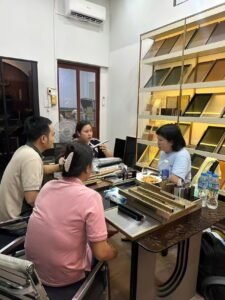
Every week, our team in Foshan ships aluminum furniture handles 1 to distributors across Vietnam, and one question keeps coming back: “Can you change the packaging?” It usually comes too late — after production, after the finish is locked in, sometimes after the first batch has already landed in Ho Chi Minh City muted, modern color palettes 2. The packaging looks fine by factory standards, but it does not match what Vietnamese consumers 3 expect to see on a showroom shelf or in an unboxing video.
To align packaging with Vietnamese consumer tastes, communicate specific visual directions, target customer profiles, channel requirements, and branding details to your supplier before production begins. Provide mood boards, color references, material samples, and mockup approvals so the final packaging reflects the clean, modern, and premium aesthetic that Vietnamese furniture buyers increasingly demand.
This article walks you through the exact steps — from choosing color schemes and visual styles, to briefing custom branding, to defining technical specs, and finally to negotiating customization within your budget. Let’s get into it.
What Specific Color Schemes and Visual Styles Should I Request from My Supplier to Appeal to the Vietnamese Furniture Market?
When we prepare handle samples for Vietnamese distributors, the first feedback is almost always about how the product looks on the shelf — not just the handle itself, but the full package. Color and style choices that work in the Middle East often fall flat in Vietnam.
Request muted, modern color palettes — soft greys, whites, blacks, champagne golds, and earthy tones — paired with clean, minimalist graphic layouts. Vietnamese furniture consumers increasingly favor understated elegance over ornate or flashy designs, especially in urban markets driven by younger, style-conscious buyers.
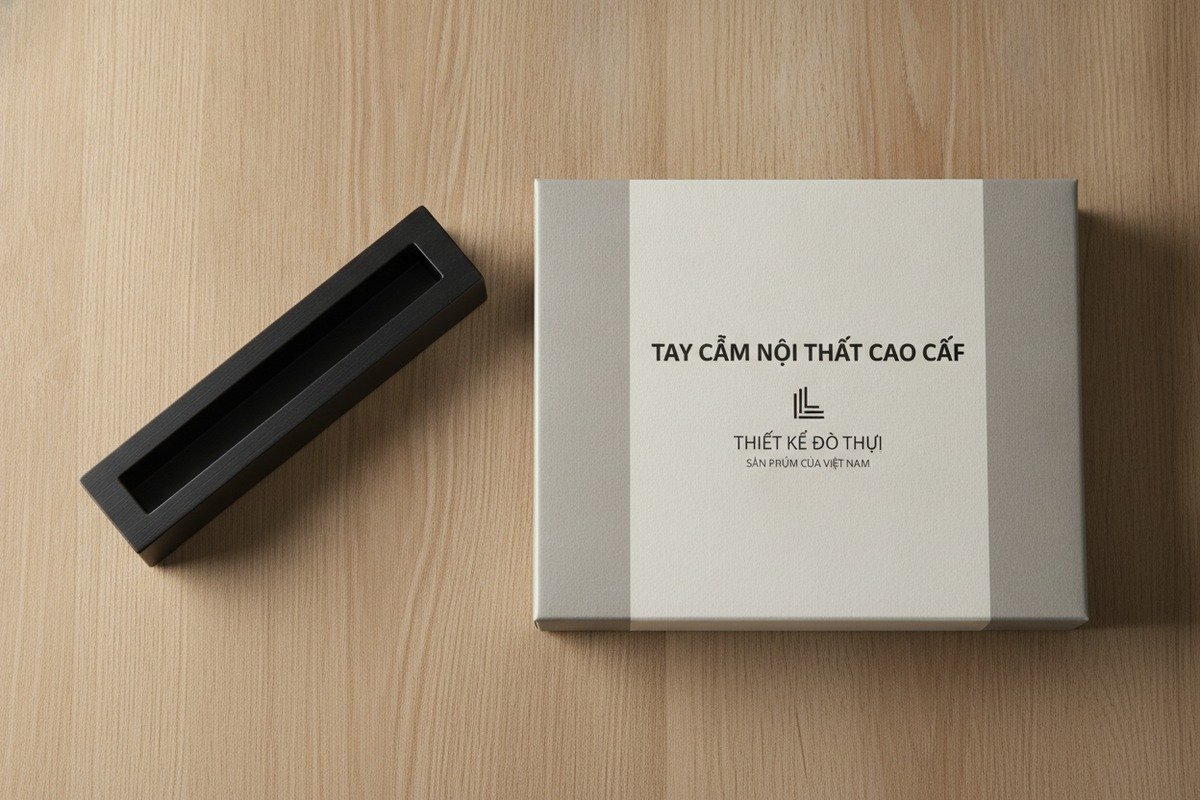
Understanding What Vietnamese Consumers Actually Want
Vietnam's furniture market is estimated at around USD 1.5 billion in 2025 and projected to reach USD 2.4 billion by 2034. Vietnamese furniture market 4 Urbanization and a growing middle class are the main engines. The home furniture segment alone is forecast to hit USD 515.37 million by 2026, growing at an 8.66% CAGR through 2031. These are not just numbers — they represent a consumer base that is becoming more selective, more exposed to global design trends, and more willing to pay for quality.
Research on Vietnamese furniture consumption shows that low price, high quality, multifunctionality, and safety are the key purchase drivers. But "low price" does not mean "cheap-looking." Vietnamese buyers want value — they want to feel that what they are paying for is well-made and well-presented. Packaging that looks generic or cluttered sends the wrong signal.
Color Schemes That Resonate
Based on our experience shipping to the Vietnamese market and feedback from our distribution partners in Hanoi and Ho Chi Minh City, here is a breakdown of color directions that work:
| Color Direction | Packaging Application | Market Fit |
|---|---|---|
| Matte white + soft grey | Premium handle lines, modern kitchens | Urban middle-class, new apartments |
| Black + champagne gold accents | High-end handle collections | Luxury furniture factories, showrooms |
| Kraft brown + minimal black text | Eco-conscious or value-focused lines | Younger consumers, e-commerce channels |
| Light beige + warm metallic | Transitional and contemporary styles | Broad market appeal across segments |
| Deep charcoal + matte finish | Architectural and minimalist handles | Designer and custom kitchen segment |
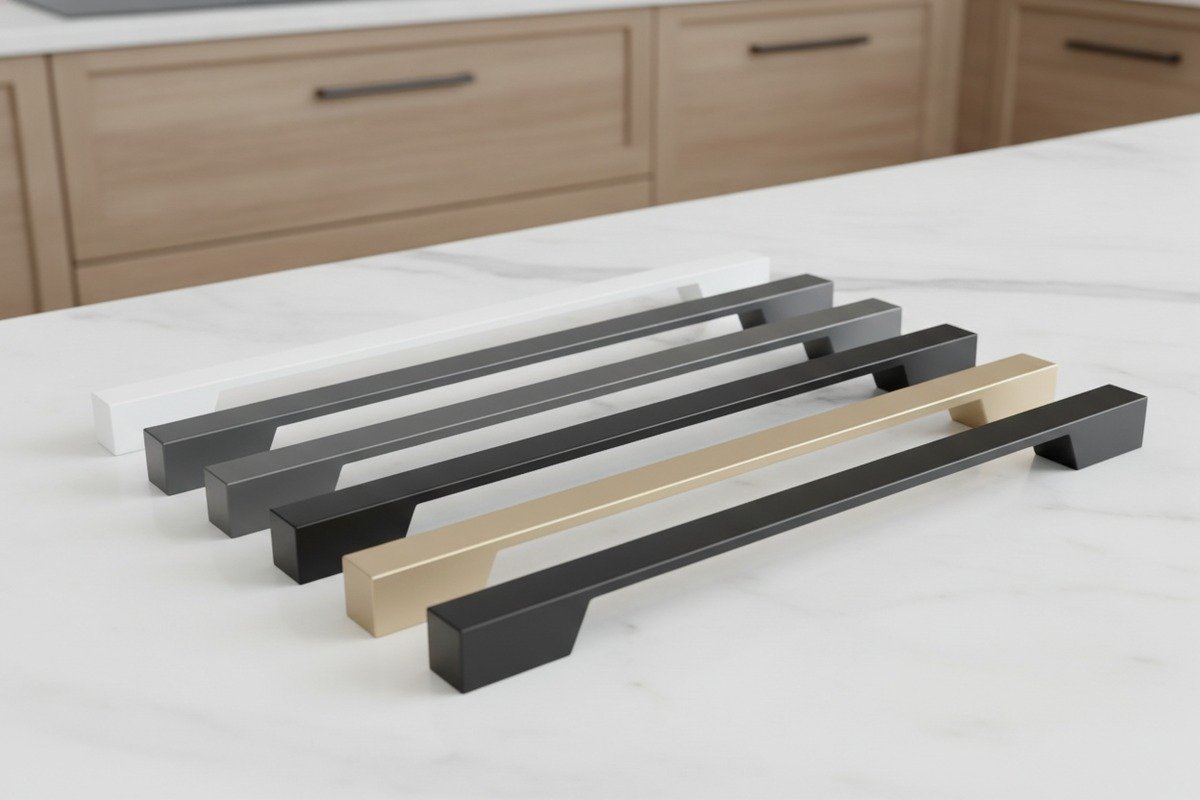
These are not arbitrary. They mirror the finishes we produce on our aluminum handles — matte white, charcoal grey, black, champagne gold, and light beige. When the packaging color echoes the product finish, the entire presentation feels intentional and cohesive.
Visual Style: Less Is More
Vietnamese consumers, particularly in the 25–45 age range, are heavily influenced by social media and e-commerce platforms. They scroll fast. They judge quickly. Your packaging needs to communicate quality in a thumbnail. That means:
- Clean typography 5 with clear hierarchy
- Plenty of white space
- One or two accent colors, not five
- Product imagery or a transparent window that shows the handle itself
- Vietnamese-language labeling that is grammatically correct and well-typeset
Avoid ornate borders, excessive gradients, or overly decorative layouts. These styles can feel dated in the Vietnamese market, where contemporary interior design — Scandinavian-inspired, Japanese-minimal, and modern industrial — dominates consumer taste.
What to Tell Your Supplier
Do not simply say "make it look nice." Instead, send your supplier a one-page mood board 6 with three to five reference images of packaging you admire. Include a note that says: "Our Vietnamese customers prefer modern, restrained designs. Please avoid busy layouts and bright primary colors." That kind of direction saves revision rounds and prevents misunderstandings.
How Can I Effectively Communicate My Custom Branding Requirements to Ensure the Packaging Reflects a Premium Feel for My Local Customers?
Our production team handles OEM and ODM orders daily, and the biggest gap we see is between what buyers imagine their branded packaging will look like and what they actually communicate to us. Vague requests produce vague results.
Send your supplier a structured branding brief that includes your logo files in vector format, exact Pantone color codes, preferred typography, product positioning statement, and at least two reference examples of packaging you consider premium. This eliminates guesswork and ensures the factory produces packaging that matches your brand vision from the first sample.
Why a Branding Brief Matters More Than You Think
Packaging is not decoration. It is a trust signal. In Vietnam's furniture market, where consumers are increasingly shopping online and comparing options side by side, packaging communicates whether your product is worth the price. A distributor in Da Nang told us last year that his retail customers consistently chose the competitor's handles — not because of quality, but because the packaging "looked more professional." That single comment cost our client orders for three months until we redesigned the box together.
What Your Branding Brief Should Include
Here is a practical checklist we recommend to every buyer who wants custom packaging:
| Brief Element | What to Provide | Why It Matters |
|---|---|---|
| Logo files | AI, EPS, or high-res PNG with transparent background | Low-res logos print blurry; wrong formats delay production |
| Pantone colors | Specific Pantone codes for brand colors | Screen colors differ from print; Pantone ensures consistency |
| Typography | Font names or font files | Prevents the factory from substituting generic alternatives |
| Product positioning | One sentence describing your brand level | Helps the design team calibrate the packaging tone |
| Reference examples | Two to three images of packaging you admire | Visual references reduce miscommunication dramatically |
| Language requirements | Vietnamese text, English text, or bilingual | Ensures space is allocated correctly on the layout |
| Regulatory labels | Any required safety, material, or recycling marks | Avoids costly reprints due to missing compliance info |
Speaking the Same Visual Language
When you send reference images, be specific about what you like. Say, "I like the matte texture on this box," or "I want the same layout structure but with our color scheme." Do not just send a photo and say "like this." Suppliers interpret ambiguity differently, and that leads to samples that miss the mark.
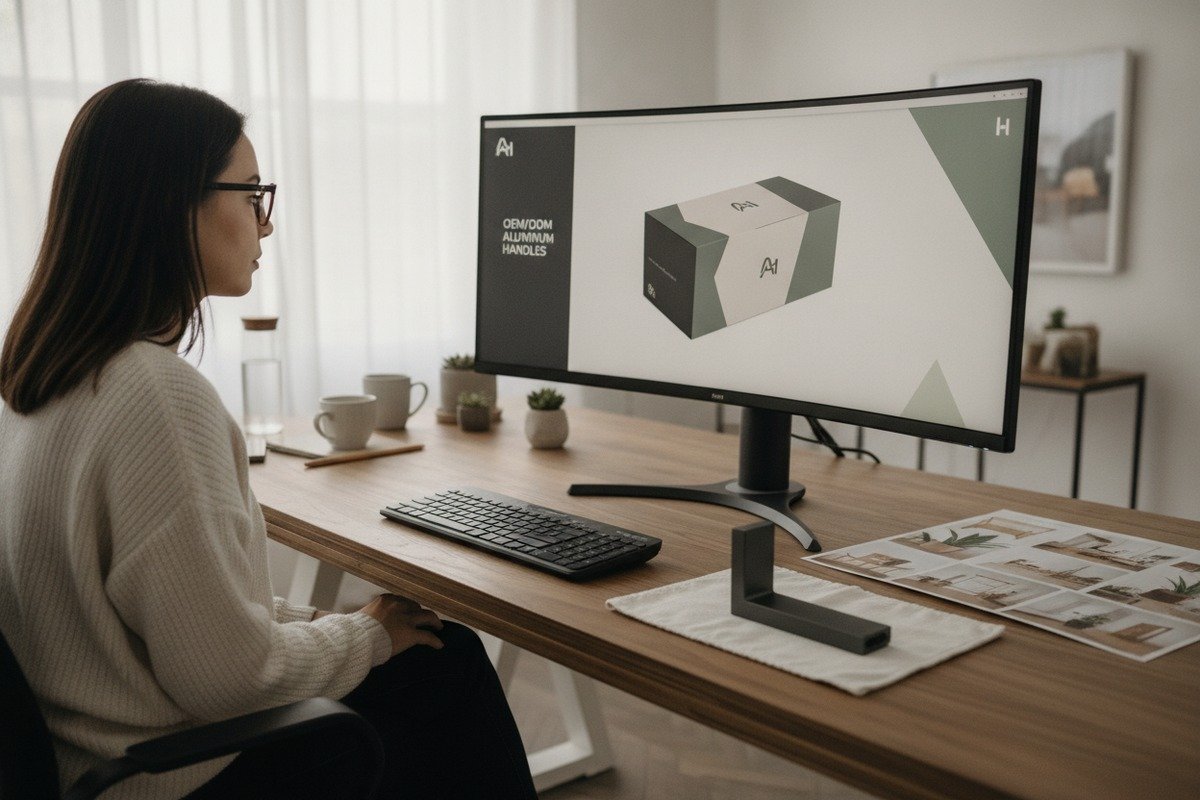
If possible, use digital prototyping tools. Some suppliers — ourselves included — can produce 3D renderings of your packaging before cutting a single die. This lets you see the box from every angle, check how your logo sits, and approve the layout before committing to a print run. It saves time and money.
The Premium Feel Without the Premium Price
A premium feel does not require expensive materials. It requires intentional design. A well-structured kraft box with clean foil-stamped text can feel more premium than a full-color glossy box with cluttered graphics. Soft-touch lamination 7 on a simple white box gives a tactile quality that consumers notice. Embossed logos add depth without raising cost significantly.
For our aluminum handles — especially the champagne gold and matte black finishes — we often recommend a simple white or dark grey box with a single foil accent. It matches the handle's own sophistication. The unboxing experience feels deliberate, not accidental.
Consider the E-Commerce Angle
More than half of Vietnam's population is under 35, and e-commerce adoption is accelerating. If your handles are sold through online platforms like Shopee, Lazada, or your own website, the packaging must photograph well. That means:
- High-contrast designs that read clearly in small thumbnails
- A consistent look across your entire product range
- A clean front face that can serve as the main product image
- Interior packaging that creates a positive unboxing experience
Ask your supplier if they can design the outer box to double as a display-ready unit. This is increasingly common in the hardware industry and reduces the need for additional retail packaging.
What Technical Specifications Should I Provide to My Manufacturer to Ensure the Handle Packaging Is Both Durable and Aesthetically Pleasing?
On our production floor, we see the full life cycle of a handle — from raw aluminum extrusion to anodized finish 9 to packaging to shipping. The most common damage happens not during manufacturing, but during transit, when packaging fails to protect the surface finish.
Provide your manufacturer with exact handle dimensions, weight per unit, surface finish type, packing quantity per box, stacking requirements, shipping method, and desired packaging materials. Include inner protective specifications such as foam inserts or PE film wrapping to prevent scratches on anodized or matte aluminum surfaces during transport.
Why Technical Specs Are Non-Negotiable
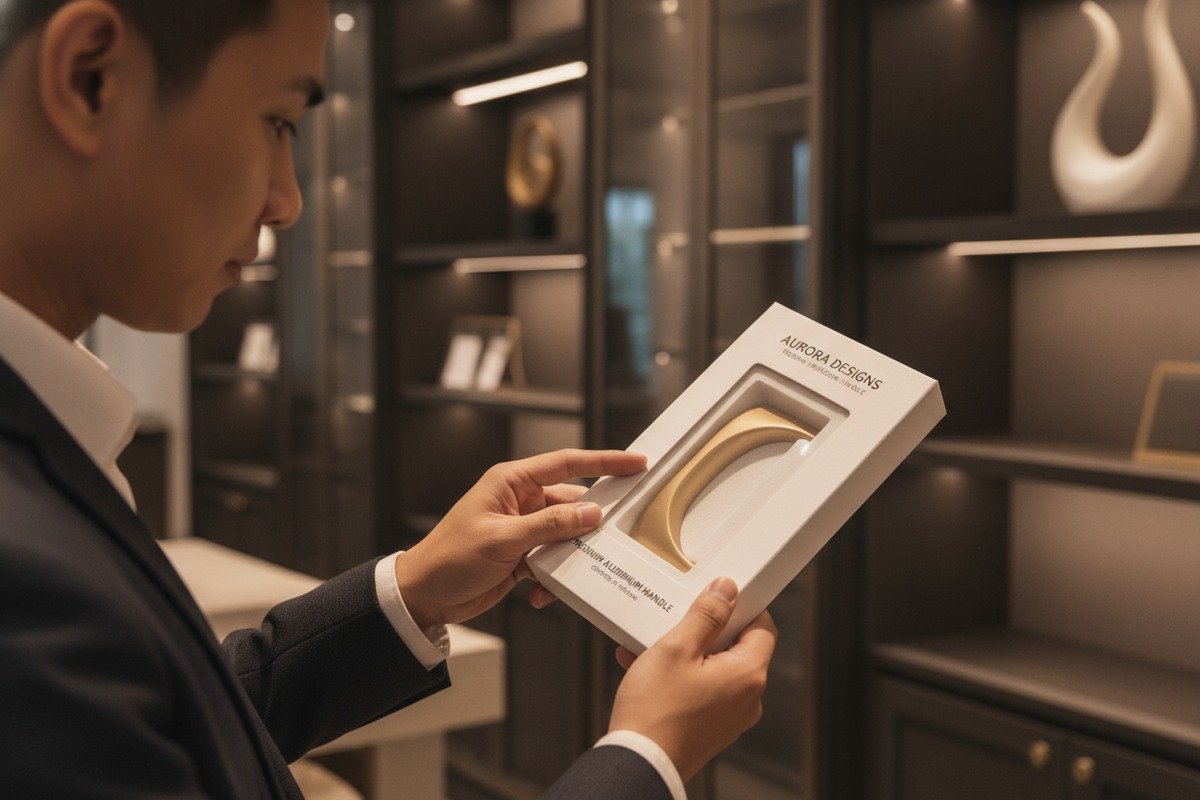
Aluminum furniture handles — especially those with anodized finishes in champagne gold or matte black — are sensitive to surface contact. A single scratch during shipping can downgrade the product from premium to defective. Our recessed cabinet handles feature a long, slim rectangular form with sharp, clean edges and a low-profile L-shaped cross-section. These precision details demand packaging that holds each piece firmly in place.
Without clear technical specifications, your manufacturer will default to standard packaging. Standard packaging is designed for cost efficiency, not for protecting a premium finish or impressing a consumer.
Key Technical Specifications to Share
Here is the minimum set of specifications you should provide:
| Specification | Details to Include | Impact on Packaging Design |
|---|---|---|
| Handle dimensions | Length, width, depth in mm | Determines box inner dimensions and insert sizing |
| Weight per unit | Grams per handle | Affects box material weight rating and stacking limits |
| Surface finish | Anodized, powder-coated, brushed, matte | Dictates protective layer needs (PE film, foam, dividers) |
| Packing quantity | Units per inner box, inner boxes per carton | Shapes the entire packaging structure and cost |
| Stacking limit | Maximum carton stacking height | Determines cardboard grade and corrugation type |
| Shipping method | Sea freight, air freight, or land transport | Sea freight needs moisture-resistant materials |
| Storage conditions | Warehouse humidity and temperature range | May require silica gel packs or sealed poly bags |
Inner Protection Details
For our aluminum handles with matte, non-reflective finishes and deep geometric channels, we use a combination of:
- Individual PE film wrapping to prevent surface-to-surface contact
- Custom foam or EPE inserts that cradle the handle's L-shaped profile
- Cardboard dividers between layers inside the inner box
- A sealed poly bag around the inner box for moisture protection during sea freight
These measures add minimal cost — typically less than USD 0.03 per unit — but they prevent the kind of damage that leads to returns, complaints, and lost repeat orders.
Outer Packaging Strength
The outer carton needs to match the shipping conditions. For Vietnam-bound sea freight from Foshan, we recommend:
- Five-ply corrugated carton 10 (BC flute) for standard shipments
- Edge protectors on carton corners for palletized loads
- Moisture-resistant tape sealing
- Clear handling marks ("This Side Up," "Fragile") in both English and Vietnamese
If your handles are going to a distributor who breaks down cartons and repackages for retail, the inner box becomes the consumer-facing package. That inner box needs to be both protective and attractive. It should open cleanly, present the handle neatly, and include a product information card in Vietnamese.
Balancing Durability with Aesthetics
The best packaging does both jobs at once. A well-structured inner box with a magnetic closure, for example, protects the handle during transit and delivers a premium unboxing experience. A foam insert that follows the handle's exact contour prevents movement damage and also looks sophisticated when the box is opened.
Tell your supplier you want packaging samples that are drop-tested and visually approved. Request both a structural sample (plain cardboard, no print) and a finished sample (fully printed, with inserts) before signing off on mass production. This two-step approval process catches both structural and aesthetic issues early.
How Do I Negotiate Packaging Customization with a Chinese Supplier to Balance Local Design Trends with My Budget and MOQ?
In our 18 years of exporting aluminum hardware, we have learned that packaging negotiations fail when buyers treat them as a separate conversation from the product order. The most successful buyers integrate packaging into the initial sourcing discussion.
Negotiate packaging customization by bundling it with your product order, requesting tiered MOQ options for different packaging levels, asking for stock packaging with custom sticker overlays as a low-cost entry point, and phasing premium packaging upgrades into future orders as your volume grows.
The Real Cost of Custom Packaging
Custom packaging has two main costs: tooling (die-cutting molds, printing plates) and per-unit production. Tooling is a one-time expense that ranges from USD 100 to USD 500 depending on complexity. Per-unit costs depend on material, print method, and quantity. Here is a rough guide based on what we typically quote:
| Packaging Level | Description | Estimated Cost Per Unit | Typical MOQ |
|---|---|---|---|
| Stock white box | Plain white carton with product label | USD 0.05–0.10 | No minimum |
| Stock box + custom sticker | Standard box with branded adhesive label | USD 0.08–0.15 | 500 units |
| Semi-custom printed box | One- or two-color print on standard carton | USD 0.15–0.30 | 1,000 units |
| Fully custom box | Full-color print, custom die-cut, inserts | USD 0.30–0.80 | 2,000–3,000 units |
| Premium presentation box | Rigid or magnetic closure, foil stamping | USD 1.00–3.00 | 1,000–2,000 units |
These numbers shift based on order volume. A buyer ordering 10,000 handles will get a much better per-unit packaging rate than someone ordering 1,000.
Strategies for Budget-Conscious Customization
Not every order needs full custom packaging from day one. Here are practical strategies that our Vietnamese buyers use:
Start with stock packaging plus a branded sticker. This is the lowest-risk option. You use our standard white or kraft inner box and apply your own branded sticker with your logo, product code, and Vietnamese text. Total added cost is minimal, and there is no tooling investment.
Graduate to semi-custom printing. Once your order volumes reach 1,000 to 2,000 units per SKU, it becomes cost-effective to print your branding directly on the box. One- or two-color printing keeps costs low while giving a much more polished look than a sticker.
Reserve premium packaging for your hero products. If you sell 15 handle SKUs but only three are your bestsellers, invest in fully custom premium packaging for those three. The rest can use semi-custom or stock options. This focuses your packaging budget where it has the most market impact.
How to Frame the Conversation with Your Supplier
Here are specific questions to ask during negotiation:
- What is the MOQ for custom printed inner boxes?
- Can we share tooling costs across multiple SKUs that use the same box size?
- Do you offer packaging design services, or should we supply print-ready files?
- Can we approve a digital mockup before you produce a physical sample?
- What is the lead time difference between stock packaging and custom packaging?
- If we start with stock boxes now, can we switch to custom boxes on the next order without re-quoting the handles?
These questions signal to the supplier that you are serious about packaging but also cost-aware. A good supplier — and we include ourselves in this — will work with you to find the right balance rather than pushing the most expensive option.
Phased Customization: A Smart Market Entry Approach
For buyers entering the Vietnamese market, a phased approach makes the most sense. Start with a smaller order using branded stickers to test market response. Collect feedback from your retailers and end consumers. Then invest in fully custom packaging for your second or third order based on real-world data, not assumptions.
This is not just about saving money. It is about making packaging decisions based on evidence. A consumer test in Ho Chi Minh City might reveal that your target buyers care more about the inner foam insert (because it signals product protection) than the outer box print quality. That insight changes your packaging budget allocation entirely.
Sustainability as a Negotiation Point
Vietnamese consumers are increasingly aware of sustainability. If your supplier can offer recyclable carton materials, soy-based inks, or reduced plastic in the packaging, mention this as a requirement. It does not always cost more — and it can become a selling point on your product listings and showroom displays. Ask your supplier: "Can we use FSC-certified cardboard? Can we eliminate the plastic window and use a printed illustration instead?" These small changes can differentiate your product in a competitive market without adding significant cost.
Conclusion
Packaging is not a finishing step — it is part of your product's market fit. Communicate specific visual, branding, and technical requirements to your supplier early, and your aluminum handles will stand out in Vietnam's growing furniture market.
Footnotes
1. Provides information on the design, durability, and applications of aluminum furniture handles. ↩︎
2. Explains muted colors, their use in modern design, and how they create a sophisticated, balanced aesthetic. ↩︎
3. Discusses preferences, behaviors, and trends among Vietnamese consumers regarding product choices. ↩︎
4. Provides market size, growth forecasts, and key trends in the Vietnamese furniture market. ↩︎
5. Explains the principles of clean typography, including consistency, alignment, and hierarchy, for effective visual communication. ↩︎
6. Explains what a mood board is and provides steps for creating one for design projects. ↩︎
7. Describes soft-touch lamination, its benefits, and applications in premium packaging for enhanced tactile and visual appeal. ↩︎
8. Found a direct explanation of the Pantone numbering system on the official Pantone website. ↩︎
9. Explains the electrochemical process of anodizing aluminum to create a durable, protective, and aesthetically pleasing surface finish. ↩︎
10. Details the construction, strength, and applications of five-ply corrugated cartons for heavy-duty packaging. ↩︎