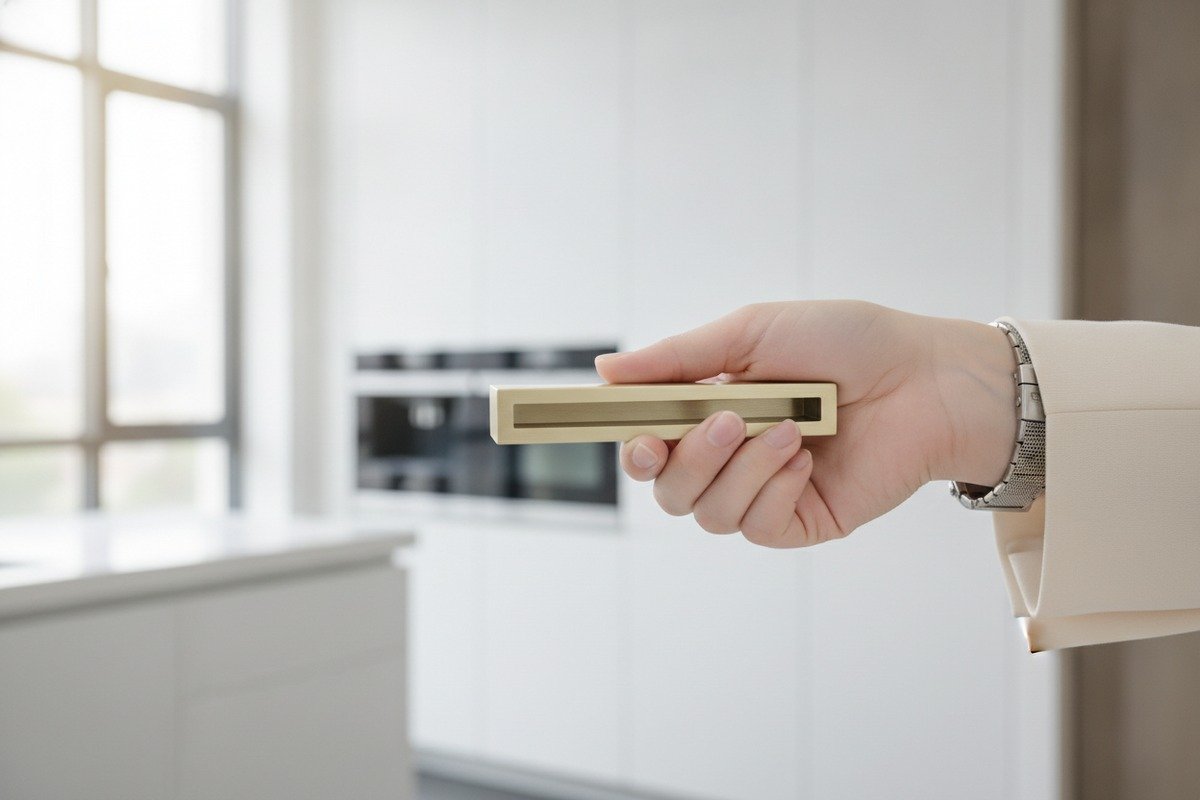
Greasy fingerprints, cooking oil splatters, and humid air can ruin a kitchen cabinet handle in months Pantone code 1. Over 18 years on our production lines in Foshan, we have seen countless buyers struggle with handles that look great in the showroom but turn sticky, dull, or corroded once installed in a real cooking environment.
To choose oil-resistant aluminum handles for kitchen cabinets, focus on three things: a smooth, easy-to-wipe surface finish like anodizing or powder coating; a simple handle profile such as a bar pull or recessed design that prevents grease buildup; and an ergonomic grip that stays comfortable even with wet or oily hands.
Below, we break down finish types, handle styles, sourcing tips, and custom finish options so you can make the right decision for your wholesale business or furniture factory. Let us walk through each factor step by step.
Which aluminum handle surface treatments offer the best oil resistance for my kitchen cabinet wholesale business?
When our R&D team tests new handle finishes, we always simulate kitchen conditions first — oil mist, steam, acidic food splatters, and repeated wiping. Not every surface treatment holds up equally, and the wrong choice can lead to returns and unhappy clients.
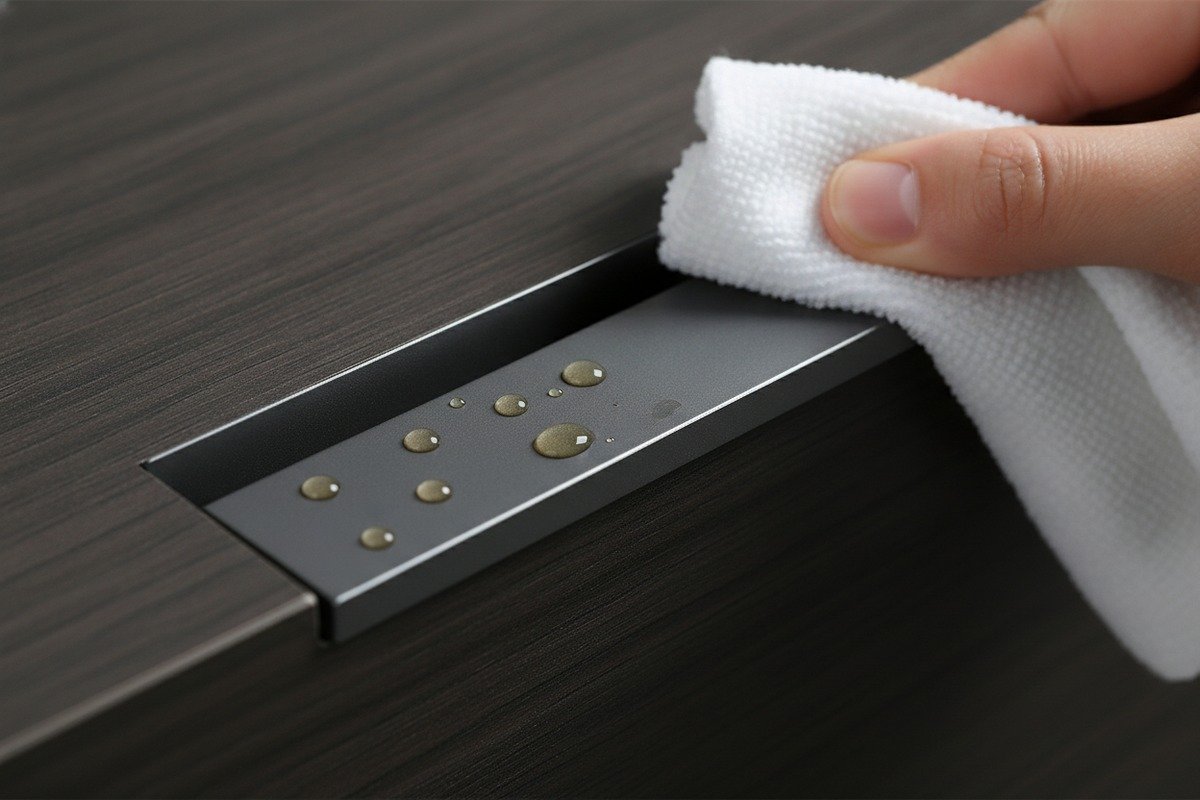
Anodized and powder-coated finishes offer the best oil resistance for kitchen aluminum handles because they create a hard, sealed surface layer that repels grease, resists scratches, and wipes clean with a damp cloth — far outperforming raw or simply polished aluminum in durability and low maintenance.
Why Surface Treatment Matters More Than Raw Material
Many buyers assume that aluminum is inherently oil-resistant. Aluminum alloy 2 is naturally corrosion-resistant and lightweight. But "oil-resistant" in a kitchen context is not about the raw metal. It is about the finish on top of the metal. A raw aluminum handle will show fingerprints within hours and may develop a dull patina over time. The finish is what determines how visibly cooking residue, fingerprints, and grease show up — and how easily they wipe off.
Comparing Common Surface Treatments
Here is a practical comparison of the most common surface treatments we produce for kitchen cabinet handles:
| Surface Treatment | Oil Resistance | Scratch Resistance | Fingerprint Visibility | Best For |
|---|---|---|---|---|
| Anodized (matte) | Excellent | High | Low | Heavy-cooking kitchens, wholesale buyers wanting durability |
| Anodized (champagne gold / light bronze) | Excellent | High | Low to medium | Modern kitchens, mid-to-high-end projects |
| Powder-coated (matte) | Excellent | Very high | Low | High-traffic commercial kitchens, custom color matching |
| Brushed aluminum | Good | Medium | Medium | Minimalist residential kitchens |
| Polished / mirror finish | Fair | Low | Very high | Display or light-use cabinets only |
Anodized Finishes: The Kitchen Workhorse
Anodizing 3 creates a dense oxide layer on the aluminum surface. This layer is extremely hard — harder than the aluminum itself. Oil and grease sit on top of this layer rather than absorbing into the metal. A quick wipe with a damp cloth or mild kitchen cleaner removes residue easily. In our factory, we offer anodized finishes in matte silver, champagne gold, and light bronze. The matte versions hide fingerprints far better than polished options, which is a major advantage in kitchens where hands are frequently oily or wet.
Powder Coating: Maximum Protection and Color Freedom
Powder coating 4 adds an even thicker protective barrier. It bonds electrostatically and is then cured with heat, creating a finish that resists chipping, fading, and chemical exposure. For wholesalers who need custom colors — matte white, charcoal grey, or black to match specific cabinet lines — powder coating is the go-to treatment. It also performs well against acidic food splatters and common kitchen cleaners.
What About Antimicrobial Coatings?
Some manufacturers now offer antimicrobial coatings 5 as an added layer. These inhibit bacterial growth on frequently touched surfaces. While this does not directly improve oil resistance, it adds a hygiene benefit that furniture factories selling into health-conscious markets may find valuable.
Quick Rule for Buyers
If your clients cook heavily and touch cabinet handles multiple times a day, recommend anodized matte or powder-coated matte finishes. Save polished finishes for low-use display cabinets or decorative furniture. This single decision will reduce cleaning complaints and warranty issues significantly.
How can I identify furniture handle styles that minimize grease buildup for my kitchen manufacturing clients?
Our production team often gets the same question from furniture factory owners: "Which handle shape gives us the fewest cleaning complaints?" The answer comes down to how many crevices a handle has and how easy it is to reach every surface with a cloth.
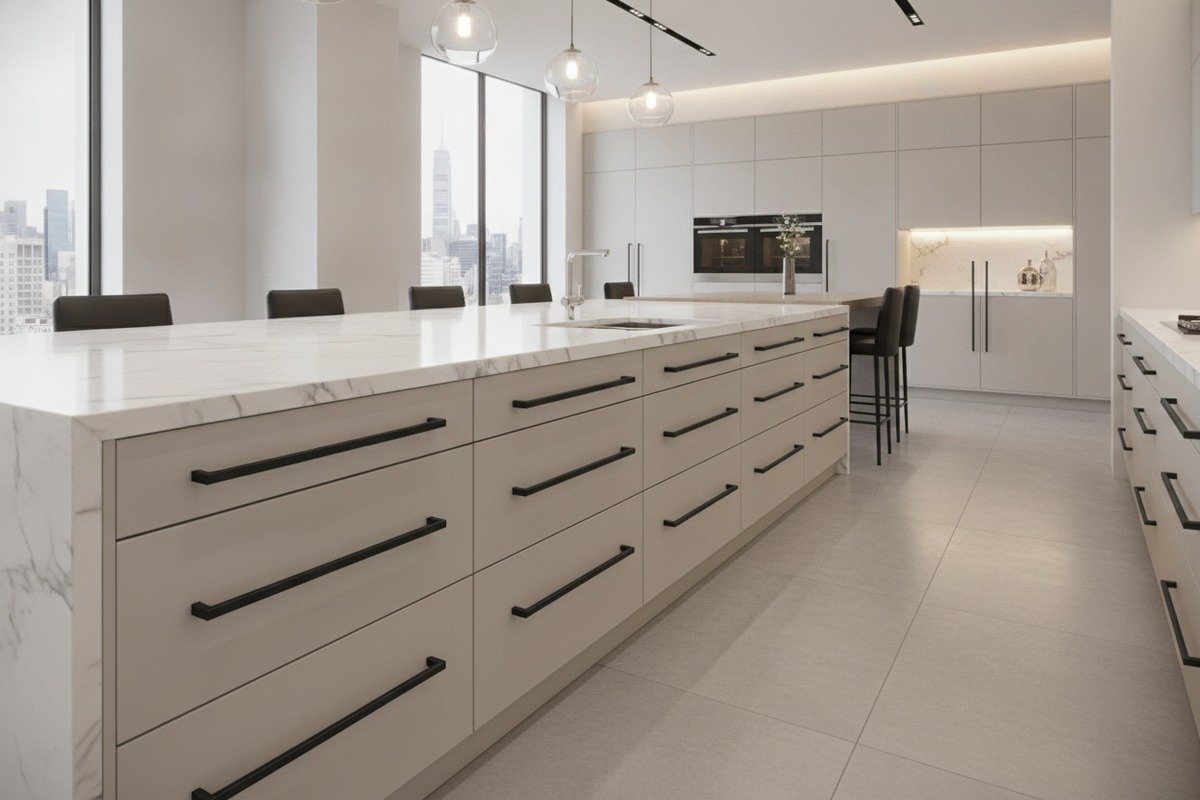
To minimize grease buildup, choose handle styles with smooth, simple profiles — bar pulls, slim recessed pulls, or integrated channel handles. Avoid ornate designs with deep grooves or decorative detailing, as these trap oil and dust in hard-to-reach spots that require extra scrubbing to clean.
Handle Shape Directly Affects Cleaning Effort
Think about a kitchen handle the same way you think about a cooking utensil. A flat spatula is easy to clean. A slotted spoon with decorative edges collects food residue. The same logic applies to handles. The fewer crevices, seams, and sharp interior angles a handle has, the less grease it traps. For kitchen cabinet applications, simplicity is not just an aesthetic choice — it is a practical one.
Best Handle Styles for Greasy Kitchens
Here is a breakdown of the most common aluminum handle styles and how they perform in oil-heavy kitchen environments:
| Handle Style | Grease Trap Risk | Cleaning Ease | Ergonomic Grip | Best Application |
|---|---|---|---|---|
| Simple bar pull | Low | Very easy — one wipe | Comfortable, especially at 128mm+ length | Drawers, base cabinets |
| Recessed / integrated channel | Very low | Easy — flat surface | Requires finger-tip grip | Upper cabinets, minimalist designs |
| Oblique / angled profile | Low | Easy — smooth angles | Good, natural hand position | Modern flat-panel doors |
| T-bar pull | Low to medium | Easy | Comfortable, round grip | Drawers, pantry doors |
| Ornate / decorative pull | High | Difficult — crevices trap grease | Varies | Not recommended for heavy-cooking kitchens |
Simple Bar Pulls: The All-Rounder
Bar pulls 6 are the most popular choice we ship to kitchen cabinet manufacturers. They are straight, cylindrical or rectangular in cross-section, and have no hidden corners. A single pass with a damp cloth cleans them completely. For comfortable use with oily or wet hands, we recommend a pull length of at least 96mm center-to-center, though 128mm or 160mm lengths provide a better grip. A common sizing guideline is that pull length should be roughly one-third of the drawer width for balanced proportions.
Recessed and Integrated Channel Handles
These handles sit flush with the cabinet surface or are built into the door edge. Recessed and Integrated Channel Handles 7 Because they have no protruding parts, there is almost nowhere for grease and dust to accumulate. The products we produce in this category feature a deep geometric channel for a finger grip, with sharp clean edges and a low-profile L-shaped cross-section. They come in matte finishes like white, charcoal grey, black, champagne gold, and light beige. This style supports a streamlined, handleless look while still giving users a comfortable grip point.
Oblique and Angled Profile Handles
Oblique handles have a subtle angled face that provides a natural grip position. They are sleek, minimalist, and reduce external edges where grime collects. These work especially well on flat-panel or slab-style cabinet doors common in modern kitchen designs.
Comfort with Oily Hands
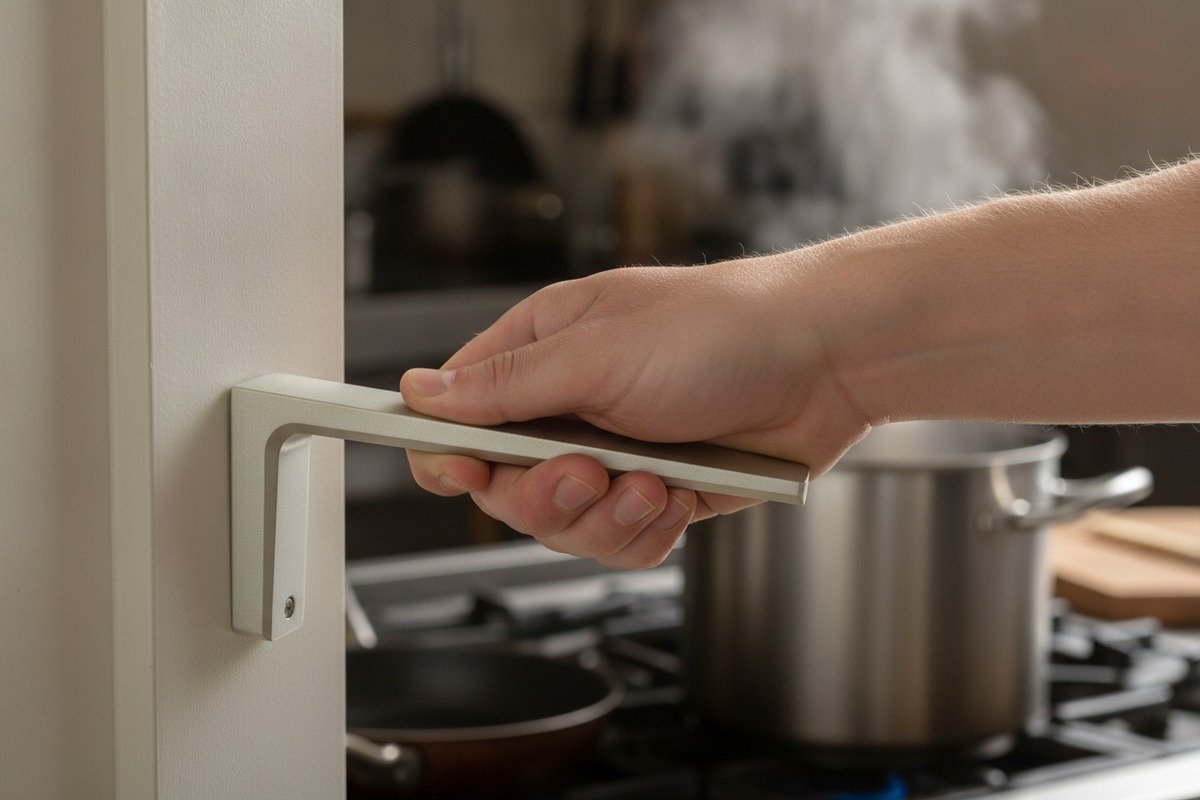
Grip comfort becomes more important — not less — when hands are greasy. Pulls are generally easier to hold than knobs because you can wrap your fingers around them rather than pinching. For heavy-use kitchens, we always recommend pulls over knobs. A pull that is at least 90mm long gives enough surface area for a secure grip even with wet hands.
Minimalism vs. Usability
Integrated and concealed handles look beautiful and reduce visual clutter. But they require a finger-tip grip rather than a full-hand grasp. For older users or in kitchens where hands are frequently oily, a visible bar pull may be more practical. The best approach for wholesalers is to stock both options and let the end-use case guide the recommendation.
Where can I source high-quality oil-resistant aluminum handles with fast shipping for my furniture factory?
We hear this from new buyers almost every week: "I found a good handle design online, but the supplier quoted me a 30-day lead time and I need stock in 10 days." Long lead times are one of the biggest pain points in the cabinet hardware supply chain, especially for furniture factories running tight production schedules.
Source oil-resistant aluminum handles from established manufacturers with ready-to-ship inventory, verified production capacity, and fast turnaround — look for suppliers offering 48-hour shipping on stock items and 3-to-7-day production for custom orders, backed by real factory photos, finish samples, and clear MOQ terms.
What to Look for in a Supplier
Finding the right supplier is more than comparing prices on a quote sheet. Here are the key factors our buyers tell us they evaluate:
Ready Stock vs. Made-to-Order
Stock availability is the single biggest time-saver. A supplier with 300 tons of ready-to-ship aluminum handle inventory can dispatch your order within 48 hours for standard items. Made-to-order handles — especially custom finishes or non-standard lengths — typically take 3 to 7 days at a well-organized factory, or 15 to 30 days at a slower one. Ask your supplier directly: "How many SKUs do you hold in stock, and what is your dispatch time for stock items?"
Quality Consistency Between Samples and Bulk Orders
A common frustration for furniture factory owners is receiving bulk shipments that do not match the approved sample. This happens when the supplier outsources production or lacks in-house quality control. To avoid this, request production-line photos, ask about in-house anodizing or powder-coating capability, and order a small trial batch before committing to a large order.
Supplier Evaluation Checklist
| Evaluation Criteria | What to Ask / Verify | Red Flag |
|---|---|---|
| Production capacity | Monthly output in tons or pieces | Vague answers, no factory photos |
| Stock availability | Number of SKUs in stock, dispatch time | "Everything is made to order" with no stock |
| Surface treatment | In-house anodizing / powder coating? | Outsourced finishing with no QC oversight |
| Lead time | Stock items: 24–48 hrs; Custom: 3–7 days | Lead times over 15 days for simple orders |
| MOQ | Minimum order per SKU | Very high MOQs for standard items |
| Customization | OEM/ODM capability, color matching | No willingness to adjust dimensions or finishes |
| Sample policy | Free or paid samples, lead time | No samples available |
| Communication | WhatsApp, email responsiveness | Slow replies, language barriers |
Why Foshan Is a Key Sourcing Hub
Foshan, China 8, is one of the world's largest aluminum product manufacturing clusters. The concentration of raw material suppliers, extrusion plants, anodizing facilities, and hardware factories in this region creates a short internal supply chain. That means faster turnaround, lower logistics costs, and more competitive pricing. Our team of 30 operates from this hub, which allows us to keep 300 tons of inventory on hand and turn around custom orders in 3 to 7 days.
Shipping and Logistics Considerations
For buyers in Vietnam, the Middle East, and Southeast Asia, sea freight from Foshan typically takes 5 to 15 days depending on destination. Combining fast production turnaround with efficient shipping routes can cut total lead time to under three weeks — even for custom orders. Ask your supplier about their preferred freight forwarders and whether they can consolidate shipments to reduce per-unit shipping costs.
Start with a Trial Order
If you are evaluating a new supplier, place a small trial order first. Test the finish quality, packaging, labeling accuracy, and actual delivery time against what was promised. This one step eliminates most sourcing risks before you commit to a large purchase.
What should I look for when requesting custom oil-resistant finishes for my large-scale kitchen cabinet orders?
When we sit down with a furniture factory owner to discuss a custom finish for a 10,000-piece order, the conversation always starts the same way: "Can you match this exact color and make it last in a kitchen?" The answer is usually yes — but only if the specifications are clear from the start.
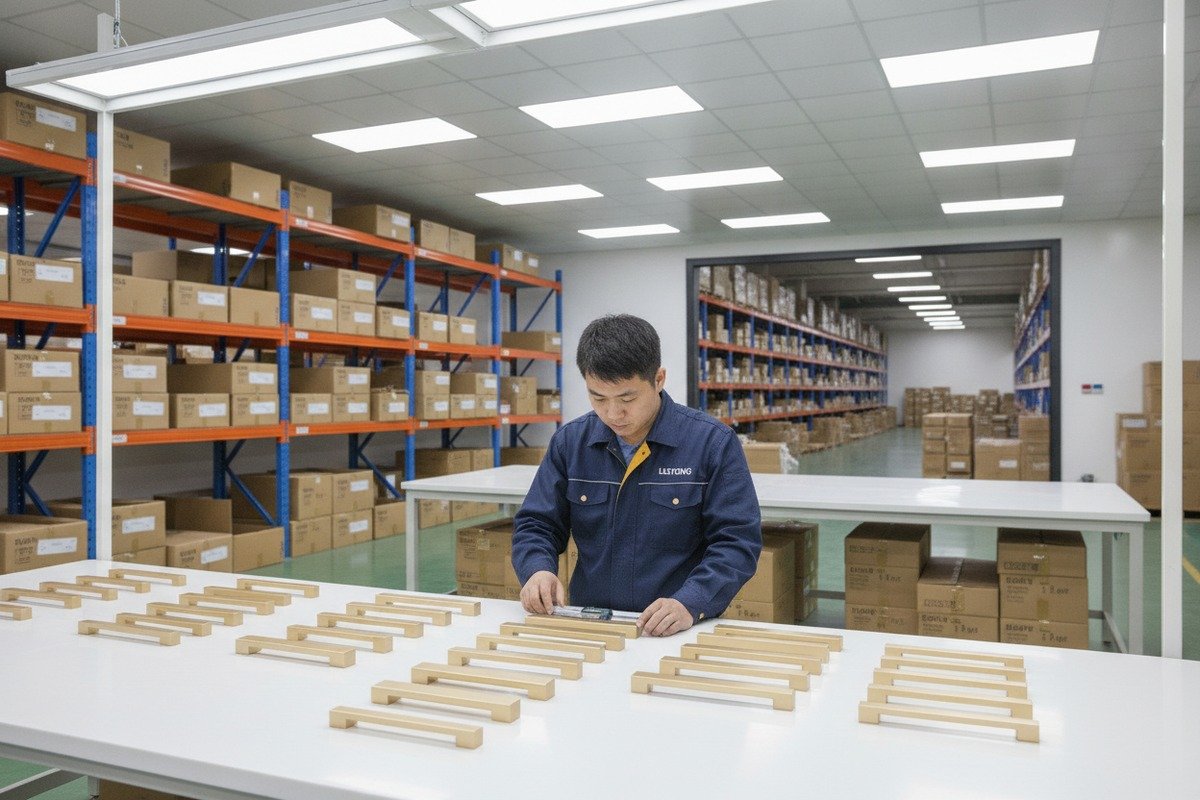
When requesting custom oil-resistant finishes, specify the exact color code (RAL or Pantone), finish texture (matte, brushed, or satin), coating thickness, and performance requirements (oil resistance, salt spray hours, scratch hardness). Also request a pre-production sample for approval and confirm the supplier's in-house coating capability before placing a bulk order.
Define Your Finish Specifications Clearly
Vague requests like "make it gold" or "something oil-resistant" lead to mismatched expectations. Instead, provide your supplier with precise specifications. Here is what to include in every custom finish request:
Key Specifications for Custom Oil-Resistant Finishes
- Color reference: RAL number 9, Pantone code, or a physical sample.
- Finish texture: Matte, satin, brushed, or polished.
- Coating type: Anodizing, powder coating, or electrophoresis.
- Coating thickness: Measured in microns. Thicker coatings generally offer better durability.
- Performance tests: Salt spray resistance 10 (hours), pencil hardness rating, oil/grease wipe test.
- Quantity and timeline: Total pieces, delivery schedule, and packaging requirements.
Anodizing vs. Powder Coating for Custom Colors
Both anodizing and powder coating can achieve oil-resistant, kitchen-grade finishes. But they differ in color range and process:
| Factor | Anodizing | Powder Coating |
|---|---|---|
| Color range | Limited (metallic tones: silver, gold, bronze, black) | Virtually unlimited (any RAL or custom color) |
| Finish texture | Matte, satin, or bright | Matte, satin, textured, or glossy |
| Oil resistance | Excellent | Excellent |
| Coating thickness | 10–25 microns typical | 60–120 microns typical |
| Scratch resistance | Very high (hard oxide layer) | High (flexible polymer layer) |
| Best for | Metallic finishes, champagne gold, light bronze | White, black, charcoal, or any specific brand color |
| Repairability | Difficult to touch up | Can be stripped and recoated |
The Importance of Pre-Production Samples
Never approve a bulk run without a physical sample. Digital color swatches on a screen look different from the actual anodized or powder-coated surface. We always produce 2 to 5 sample pieces in the requested finish and ship them for approval before starting full production. This step adds 3 to 5 days to the timeline, but it prevents costly mismatches on a 10,000-piece order.
Recycled Aluminum and Sustainability
Many buyers now ask about recycled aluminum. The good news is that aluminum can be recycled without losing its structural or surface qualities. Handles made from recycled aluminum accept anodizing and powder coating just as well as virgin material. If your end clients value sustainability, this is a strong selling point that does not compromise oil resistance or durability.
Modular and Customizable Length Systems
For large-scale cabinet projects, consider modular handle systems. These are extruded aluminum profiles that can be cut to any length — from short 96mm pulls to extra-long 600mm or even 1200mm pulls for pantry doors and wide drawers. We produce precision-engineered extruded aluminum profiles with a sophisticated champagne gold or light bronze anodized finish that can be cut and drilled to exact specifications. This modular approach reduces SKU complexity and ensures a cohesive appearance across an entire kitchen line.
Final Tip for Large Orders
Build a written specification sheet for every custom finish order. Include the color code, texture, coating type, thickness, test requirements, sample approval process, and delivery timeline. Share this document with your supplier before production begins. This eliminates ambiguity and protects both sides if a dispute arises later.
Conclusion
Choosing oil-resistant aluminum handles for kitchen cabinets comes down to finish quality, handle shape, grip comfort, and a reliable supplier. Get these four factors right, and your kitchen hardware will stay clean, comfortable, and attractive for years.
Footnotes
1. Official source for the Pantone color system, a global standard for color communication. ↩︎
2. Provides information on the composition and characteristics of aluminum alloys. ↩︎
3. Explains the electrochemical process that enhances aluminum’s surface. ↩︎
4. Describes the application of a protective, decorative finish to metal. ↩︎
5. Discusses the development and testing of surfaces designed to inhibit microbial growth. ↩︎
6. Replaced with a relevant commercial site offering a good overview of cabinet hardware, including bar pulls, suitable for the article’s context. ↩︎
7. Showcases product examples and details of recessed and integrated handle designs. ↩︎
8. Replaced with the Wikipedia page for Foshan, China, as it is a highly authoritative and general source for geographical information. ↩︎
9. Official source for the RAL color matching system, widely used in industrial coatings. ↩︎
10. Replaced with the Wikipedia page for ‘Salt spray test’, which provides an authoritative and general overview of the test, including its relation to ASTM B117. ↩︎