
Over 18 years of producing aluminum handles in Foshan, our team has seen first-time buyers repeat the same costly mistakes again and again.
To build a reliable first-time procurement checklist for aluminum furniture handles from China, cover nine stages in order: product specification, supplier vetting, RFQ control, sample approval, quality standards, packaging confirmation, contract and payment terms, production inspection, and shipment release. Skipping any stage increases risk.
Aluminum handles look simple. A bar, a finish, two screws. But the sourcing process behind them is not simple at all product specification 1. Finish inconsistency, wrong hole spacing, weak packaging, and unclear payment terms can turn a small handle order into a big headache. This guide walks you through every critical step so your first order goes smoothly supplier vetting 2. Let’s break it down stage by stage.
How do I verify if a Chinese aluminum handle factory is a legitimate manufacturer or just a middleman?
When our sales team fields inquiries from new buyers, we notice many have already been burned by trading companies posing as factories Incoterms 3.
To verify a Chinese aluminum handle supplier is a real manufacturer, request recent factory photos with timestamps, ask for product-specific production videos, confirm business license scope, check equipment lists, and test their technical depth during conversations. Middlemen usually fail at least two of these checks.

Why This Matters More Than You Think
A middleman adds cost, slows communication, and reduces your control over quality. They cannot adjust production parameters when you need a finish change or a tolerance tweak. They relay messages. That delay often causes errors. In our experience exporting to Vietnam and the Middle East, buyers who verified factory legitimacy upfront had far fewer disputes later.
Five Checks to Separate Factories from Traders
Here is a practical framework you can use right away.
| Check | What to Ask | Red Flag if… |
|---|---|---|
| Business license | Request a copy and verify the registered scope includes "manufacturing" or "production" | Scope only says "trading" or "import/export" |
| Factory photos/video | Ask for a live video call or timestamped photos of the production floor | They only send catalog images or showroom photos |
| Equipment details | Ask what extrusion presses, CNC machines, or anodizing lines they operate | They cannot name specific machines or capacities |
| Technical depth | Ask about alloy grades, anodizing thickness, or powder coating curing temperature | Answers are vague or they say "we will check with the factory" |
| Recent same-category work | Request photos of recent aluminum handle orders, including packaging | They only show a broad catalog with no project-specific evidence |
Ask the Right Technical Questions
A real aluminum handle manufacturer can tell you the alloy grade they use, such as 6063-T5 4, without hesitation. They can explain the difference between anodizing and electrophoresis 5 on aluminum surfaces. They know typical tolerance ranges for extruded profiles. When we discuss projects with buyers, our engineers often jump in to clarify surface treatment options, because that knowledge lives on the production floor, not in a trading office.
Check Communication Discipline
Speed matters, but consistency matters more. A legitimate factory with export experience will respond with structured answers. They will attach specification sheets, not just price lists. They will ask clarifying questions about your application, hole center distance 6, furniture thickness, and screw type. If a supplier only talks about price and never asks about your product requirements, that is a warning sign.
Also verify whether they can provide documentation such as inspection records, material certificates, or testing reports. A factory with real QC processes has these on hand. A middleman typically does not.
What technical specifications should I include in my request to ensure my custom handle designs are produced accurately?
On our production line, the most common cause of order disputes is not bad workmanship. It is incomplete specifications from the buyer side.
Your specification request should include handle type, aluminum alloy grade, exact dimensions with tolerances, hole center distance, surface finish type and color, coating thickness, screw size, mounting method, furniture thickness compatibility, and appearance acceptance criteria. Missing any one of these creates room for error.

The Specification Sheet Is Your Contract Foundation
Think of specifications as the language between you and the factory. If you say "brushed silver handle, 128mm," that leaves too much open. Brushed can mean different grit levels. Silver can mean natural anodized, chrome plated, or powder coated metallic silver. 128mm could refer to overall length or hole center distance. Each ambiguity becomes a potential defect in mass production.
What Every RFQ Should Include
Here is a complete specification checklist for aluminum furniture handles. Use it as a template.
| Specification Item | Details to Provide | Why It Matters |
|---|---|---|
| Handle type | Pull handle, edge pull, recessed handle, bar handle, T-bar, etc. | Defines the profile and tooling requirements |
| Material | Aluminum alloy grade (e.g., 6063-T5) | Affects strength, machinability, and finish quality |
| Dimensions | Overall length, width, height, projection from surface | Ensures fit with furniture design |
| Hole center distance | Exact center-to-center measurement (e.g., 128mm, 160mm, 256mm) | Must match pre-drilled holes in cabinets or drawers |
| Tolerances | Acceptable range for each dimension (e.g., ±0.3mm) | Prevents rejection of acceptable parts |
| Surface finish | Anodized, powder coated, electrophoresis, brushed, polished, matte, etc. | Defines appearance and durability |
| Color | RAL number 7, Pantone code, or approved color sample | Eliminates subjective color disputes |
| Coating thickness | Microns (e.g., anodizing 10–15μm, powder coating 60–80μm) | Affects corrosion resistance 8 and appearance durability |
| Screw type and size | M4×25mm, included or not, material of screw | Ensures mounting compatibility |
| Furniture thickness | Thickness of door, drawer front, or panel the handle mounts to | Determines screw length and projection |
| Packaging | Individual poly bag, foam wrap, branded box, bulk carton, etc. | Prevents damage and supports your brand presentation |
| Appearance limits | Acceptable scratch length, surface mark tolerance, color variation range | Sets the quality acceptance standard clearly |
Recessed Handles Need Extra Detail
For recessed cabinet handles, like the modern minimalist designs with deep geometric channels for finger grip, you need to specify the channel depth, the lip width, and the overall cross-section profile. These handles often feature an L-shaped cross-section. If you do not specify the internal radius of the channel or the edge finishing requirement, you may receive handles with sharp edges that feel uncomfortable during daily use. When we develop these profiles, our engineering team always confirms edge radius, surface texture inside the channel, and whether the back surface needs finishing or remains raw.
Finish Consistency Across Colors
If you plan to order multiple finishes, such as matte white, charcoal grey, black, champagne gold, and light beige, specify each color with a reference code. Champagne gold anodized aluminum, for example, can look very different under warm versus cool lighting. Request that the factory provides a color swatch panel with all finishes side by side. This becomes your visual reference standard and reduces disputes during inspection.
How can I evaluate sample quality and finish consistency before committing to a large wholesale order?
We ship hundreds of sample sets each year, and the buyers who evaluate them most carefully are always the ones with the smoothest bulk orders later.
Evaluate samples by checking dimensional accuracy against your specification sheet, testing surface finish under different lighting, inspecting edge quality by hand, comparing color consistency across multiple pieces, verifying screw fit and mounting compatibility, and documenting everything with photos and a signed approval record.

Samples Are Not Souvenirs — They Are Quality Contracts
A sample is the physical agreement between you and the factory. Once you approve it, it becomes the production reference standard. If you approve a sample casually, you lose your leverage to reject defective goods later. Treat sample evaluation like a formal inspection.
Step-by-Step Sample Evaluation Process
Start with a visual check under natural daylight. Then move to artificial light. Anodized aluminum changes tone under different lighting conditions. Champagne gold can look bronze under warm light and almost silver under cool fluorescent light. This matters because your end customers will see the handles in showrooms, kitchens, and bedrooms with different light sources.
Next, feel the handle. Run your fingers along every edge. Recessed handles with deep channels should have smooth, rounded internal edges. No burrs. No sharp points. The matte surface should feel uniform, not patchy.
Then measure. Use calipers 9 to check overall length, hole center distance, projection, and channel depth. Compare each measurement to your specification sheet. Record any deviation.
What to Document When You Approve
| Document Item | Details | Purpose |
|---|---|---|
| Sample version number | e.g., V1, V2, V3 | Tracks revisions and prevents confusion |
| Approval date | Date you sign off on the sample | Establishes the timeline |
| Photos | Front, back, side, edge close-up, mounted view | Visual reference for production QC |
| Dimensional record | Measured vs. specified values for all key dimensions | Numeric reference for inspection |
| Finish description | Color code, sheen level, texture notes | Prevents finish drift in production |
| Supplier sign-off | Factory representative confirms this sample is the production standard | Creates mutual accountability |
Batch Consistency Testing
If possible, ask for three to five samples, not just one. A single sample can look perfect. But if you compare five pieces side by side, you may spot color variation, slight dimensional differences, or inconsistent edge finishing. These small differences reveal how stable the factory's process is. If five samples look identical, production consistency is likely strong. If they vary noticeably, ask the factory to explain and correct before you approve.
When to Request a Second Sample
If the first sample fails on finish quality, dimensional accuracy, or edge treatment, do not approve it with verbal corrections. Ask for a revised sample. Document what was wrong and what needs to change. This costs a few extra days but prevents an entire bulk order from being wrong. In our workflow, we always encourage buyers to reject a first sample cleanly rather than approve it conditionally, because conditional approvals create confusion on the production floor.
What logistics and lead time factors should I include in my checklist to avoid stockouts in my local market?
Buyers we work with in Vietnam and the Middle East often underestimate transit time and port clearance delays, leading to empty shelves at the worst possible moment.
Your logistics checklist should include production lead time, pre-shipment inspection window, inland transport to port, ocean freight transit time, customs clearance duration, local delivery time, and a safety buffer of at least one to two weeks. Map each stage with realistic timeframes and track milestones against your restocking calendar.
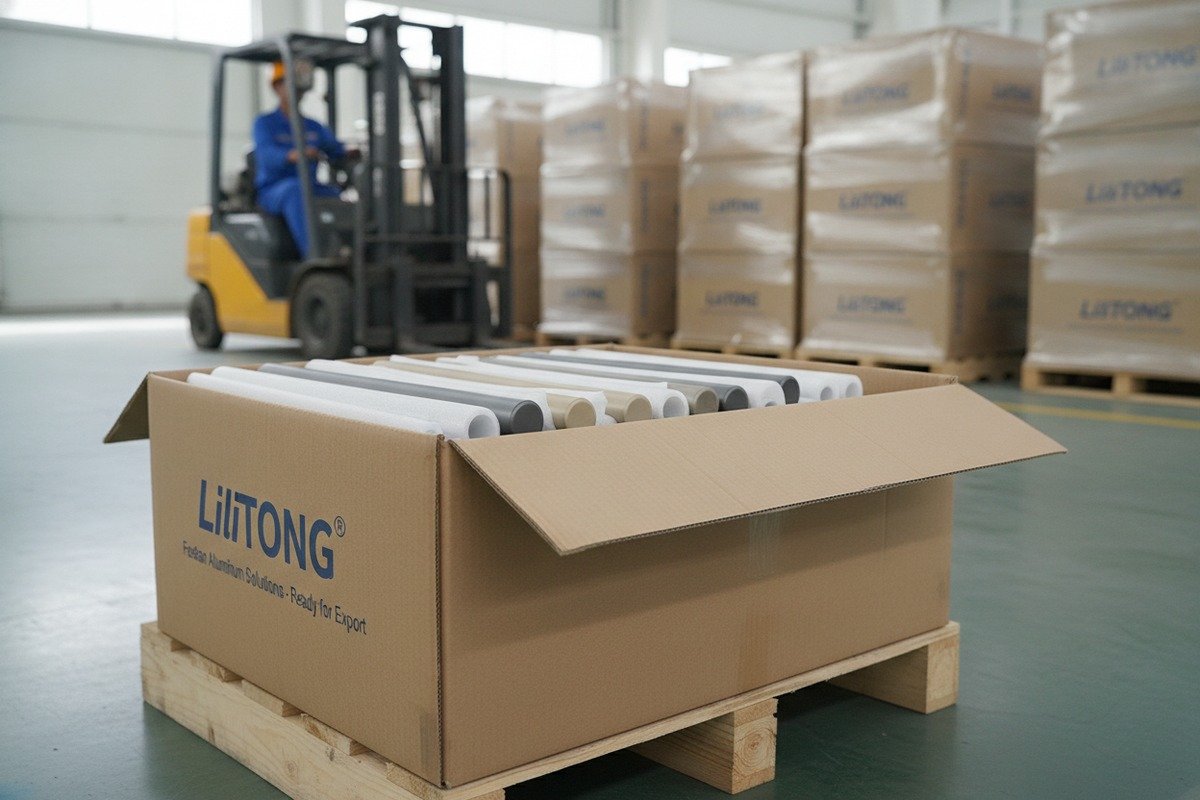
Map the Full Timeline, Not Just Production
Most beginners ask one question: "How long to produce?" But production time is only one piece. A complete lead time map looks like this:
- Sample approval to production start: 1–3 days after deposit received
- Production: 3–7 days for stock profiles, 10–20 days for custom orders
- Pre-shipment inspection: 1–2 days
- Inland transport to Foshan/Shenzhen/Guangzhou port: 1–2 days
- Port handling and customs export: 2–5 days
- Ocean freight: varies by destination (Southeast Asia 7–12 days, Middle East 15–25 days)
- Destination customs clearance: 3–10 days depending on country
- Local delivery to your warehouse: 1–3 days
Total realistic timeline from deposit to your warehouse: 4 to 8 weeks for most orders.
Build a Safety Buffer
Delays happen. Vessels skip ports. Customs holds shipments for document review. Production runs into a finish consistency issue that needs rework. If you calculate your reorder point based on the best-case timeline, you will face stockouts. Add a buffer of one to two weeks to your planning. For seasonal peaks, add more.
Payment Milestones and Shipment Control
Tie your payment stages to measurable events. Here is a practical framework:
| Payment Stage | Trigger Event | Typical Percentage |
|---|---|---|
| Deposit | After sample approval and contract signing | 30% |
| Balance before shipment | After pre-shipment inspection passed and photos/report shared | 70% |
| Alternative: Balance against B/L | After Bill of Lading 10 copy is provided | 70% |
Never pay 100% upfront on a first order. Use payment milestones to keep both sides accountable. If a factory resists any form of staged payment, consider that a red flag.
Incoterms for Beginners
If you are new to importing, start with FOB (Free on Board). This means the factory delivers goods to the port and handles export customs. You arrange ocean freight and import customs. FOB gives you control over shipping costs and carrier selection. As you gain experience, you can explore CIF or DDP terms if your supplier offers them competitively.
Prepare Your Import Documents Early
Work with a freight forwarder in your country before the goods ship. You will need a commercial invoice, packing list, Bill of Lading, and possibly a certificate of origin. Some markets require additional documentation for aluminum products. Ask your forwarder what your country requires and share those requirements with your Chinese supplier so they can prepare the documents correctly.
First-Order Red-Flag Checklist
Before you release any payment, run through these final checks:
- Is the approved sample documented with version number and sign-off?
- Does the contract state MOQ, unit price, total amount, lead time, and Incoterm?
- Are inspection criteria and defect acceptance limits written down?
- Is the packaging specification confirmed, including protective film, inner bags, and carton marks?
- Is there a clear rule for rework, replacement, or refund if quality fails inspection?
- Has the factory confirmed the production schedule with milestone dates?
If any answer is "no," stop and resolve it before proceeding. Every unresolved detail becomes a potential dispute during or after production.
Conclusion
A good first-order checklist turns sourcing from guesswork into a controlled, repeatable process. Specify clearly, verify thoroughly, inspect honestly, and document everything. That is how beginners become confident repeat buyers. Contact our team at Al**************@********************************************te.com if you need guidance on your first aluminum handle order.
Footnotes
1. Explains the importance and key components of a comprehensive product specification. ↩︎
2. Defines the process of evaluating suppliers to ensure quality, reliability, and compliance. ↩︎
3. Explains international commercial terms that define responsibilities in global trade transactions. ↩︎
4. Provides detailed material properties and composition for the specific aluminum alloy 6063-T5. ↩︎
5. Compares and contrasts anodizing and electrophoresis as surface treatment methods for aluminum. ↩︎
6. Defines this crucial measurement for cabinet hardware to ensure proper fit and alignment. ↩︎
7. Explains the international standard for color matching used in various industries. ↩︎
8. Replaced with an authoritative Wikipedia article defining corrosion and resistance. ↩︎
9. Replaced with an authoritative Wikipedia article on calipers. ↩︎
10. Replaced with an authoritative Wikipedia article defining a Bill of Lading. ↩︎