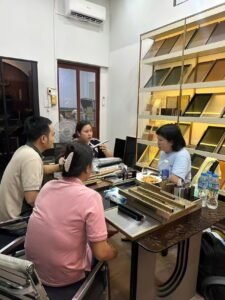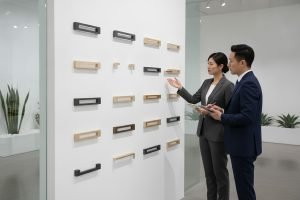
Every week, our sales team hears the same story from new buyers who tried another supplier first and lost money because goods never arrived National Enterprise Credit Information System (GSXT) 1. It is a real problem, and it happens more often than most people admit. The fear of paying and receiving nothing keeps many first-time importers awake at night Quality management system 2. You are not alone in feeling this way, and the good news is that this risk is almost entirely preventable.
To avoid paying in full and never receiving your aluminum furniture handles, you should verify the supplier’s business license and factory background, negotiate staged payment terms tied to production milestones and third-party inspection, use escrow services when available, and never release the final balance until shipment is confirmed with traceable logistics documents.
The key mindset shift is simple. Stop relying on trust. Start relying on controls. Below, we walk through every step a beginner needs to follow, from verifying the supplier to confirming the cargo is on the water. Each section gives you practical tools you can use today.
How can I verify the business license and factory background of a Chinese aluminum handle supplier to ensure they are legitimate?
Over the past 18 years running our production lines in Foshan, we have seen trading companies pretend to be factories and tiny workshops claim enormous capacity. Verification is your first defense, and skipping it is the single biggest mistake beginners make.
Before placing any order, request the supplier's Chinese business license number, cross-check it on the National Enterprise Credit Information System (GSXT), confirm their registered business scope includes aluminum hardware manufacturing, and ask for dated factory photos or a live video tour showing actual handle production equipment.

Why Verification Matters More Than You Think
A business license alone does not prove a supplier is trustworthy. But the absence of one is a guaranteed red flag. When you verify, you are checking three things at once: legal identity, production capability, and product-category experience. A supplier who truly manufactures aluminum furniture handles will have extrusion machines, anodizing lines, CNC cutting equipment, and packaging stations. A trading company will not.
What Documents to Request
Ask for the following before any money changes hands:
| Document | What It Proves | How to Verify |
|---|---|---|
| Business license (营业执照) | Legal registration, business scope | Check on GSXT (gsxt.gov.cn) |
| Factory photos with timestamps | Physical existence of production facility | Request a live video call walkthrough |
| ISO 9001 certificate 3 | Quality management system in place | Verify certificate number with issuing body |
| Export license 4 or customs registration | Legal authority to export goods | Ask for customs registration number |
| Previous shipment records or B/L copies | Track record of actual exports | Request redacted copies for reference |
Go Beyond the Documents
Documents can be faked. That is why you should also take these steps. First, search the supplier's company name on Google and on Chinese platforms like 1688.com or Made-in-China. Look for consistent information. Second, ask for two or three references from buyers in your region. A legitimate factory will gladly connect you. Third, request a sample of the exact aluminum handle style you want. When we ship samples from our Foshan warehouse, we include a business card, product spec sheet, and a photo of the sample being packed. A serious supplier invests in this process.
Matching Capability to Your Product
Not every aluminum factory makes furniture handles. Some make window profiles. Some make industrial parts. You need a supplier whose daily production involves the exact category you are buying. Ask to see their product catalog. Ask what percentage of their output is furniture hardware. If they cannot answer clearly, move on. Our production line, for example, runs dedicated extrusion dies for recessed cabinet pulls with specific anodized finishes like champagne gold and matte black. That level of specialization matters.
What payment terms or escrow services should I request to protect my money until my furniture handles are actually shipped?
From our experience exporting aluminum handles to Vietnam and the Middle East, we know that payment structure is the single most powerful tool a buyer has. Once you pay 100% upfront, your leverage drops to nearly zero. The supplier has your money and no contractual reason to rush.
Request a 30% deposit with the balance of 70% payable only after a pre-shipment inspection confirms the goods match your order, or use an escrow service like Alibaba Trade Assurance that holds funds until you confirm receipt. Never pay the full amount before production is verified and shipment is booked.
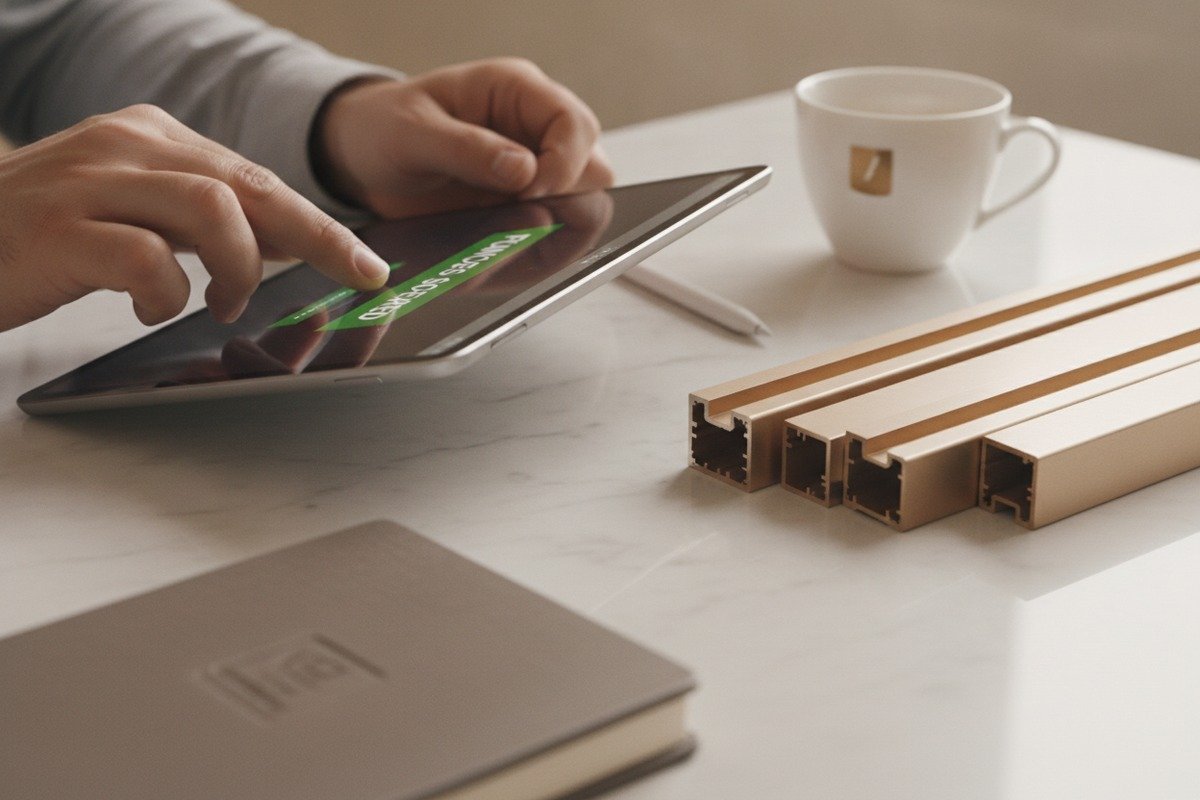
The Problem with 100% Upfront Payment
When a beginner pays everything before production starts, several bad outcomes become possible. The supplier may prioritize other orders. They may face cash-flow problems and use your money for someone else's production. In the worst case, they disappear. Even honest suppliers lose urgency when the money is already in their account.
Recommended Payment Structures
Here is a comparison of common payment terms and their risk levels:
| Payment Structure | Buyer Risk Level | When to Use |
|---|---|---|
| 100% upfront (T/T in advance) | Very High | Almost never recommended for new suppliers |
| 30% deposit + 70% before shipment | High | Only with verified, trusted suppliers |
| 30% deposit + 70% after pre-shipment inspection 6 | Medium | Best for most first-time orders |
| 30% deposit + 70% against copy of Bill of Lading 7 | Low-Medium | Good for repeat orders with known suppliers |
| Letter of Credit (L/C) 8 | Low | Best for orders above $20,000 USD |
| Escrow / Trade Assurance | Low | Good for Alibaba-based transactions |
How Escrow and Trade Assurance Work
An escrow service 9 holds your payment in a third-party account. The supplier does not receive the funds until you confirm the goods arrived or met agreed conditions. Alibaba Trade Assurance works similarly. You pay into the platform, and funds are released after confirmed delivery. This is not perfect. Disputes can be slow. But it is far safer than a direct bank transfer to a supplier you have never met.
Tie Payment to Milestones
The strongest approach is milestone-based payment. You pay a deposit to start production. You pay the balance only after an independent inspector confirms the goods are finished, packed, and ready to ship. This way, the supplier must produce and pass inspection before they get the rest of your money. It aligns their incentive with your goal: getting the handles on the water.
Always Pay to a Business Account
One non-negotiable rule: send money only to a bank account that matches the supplier's registered company name. If someone asks you to wire funds to a personal account or a different company name, stop the transaction immediately. This is one of the clearest signs of fraud.
How can I use third-party inspections or video audits to confirm my order is being produced before I make the final payment?
When we finish a batch of recessed aluminum pulls on our production line, we photograph every stage — extrusion, anodizing, CNC cutting, and packing. We do this because experienced buyers expect visual proof. But beginners often skip this step entirely, and that is when problems happen.
Hire an independent third-party inspection company to visit the factory when production reaches 80-100% completion. The inspector checks quantity, dimensions, finish quality, packaging, and labeling against your purchase order. Only release the final payment after receiving a satisfactory inspection report.
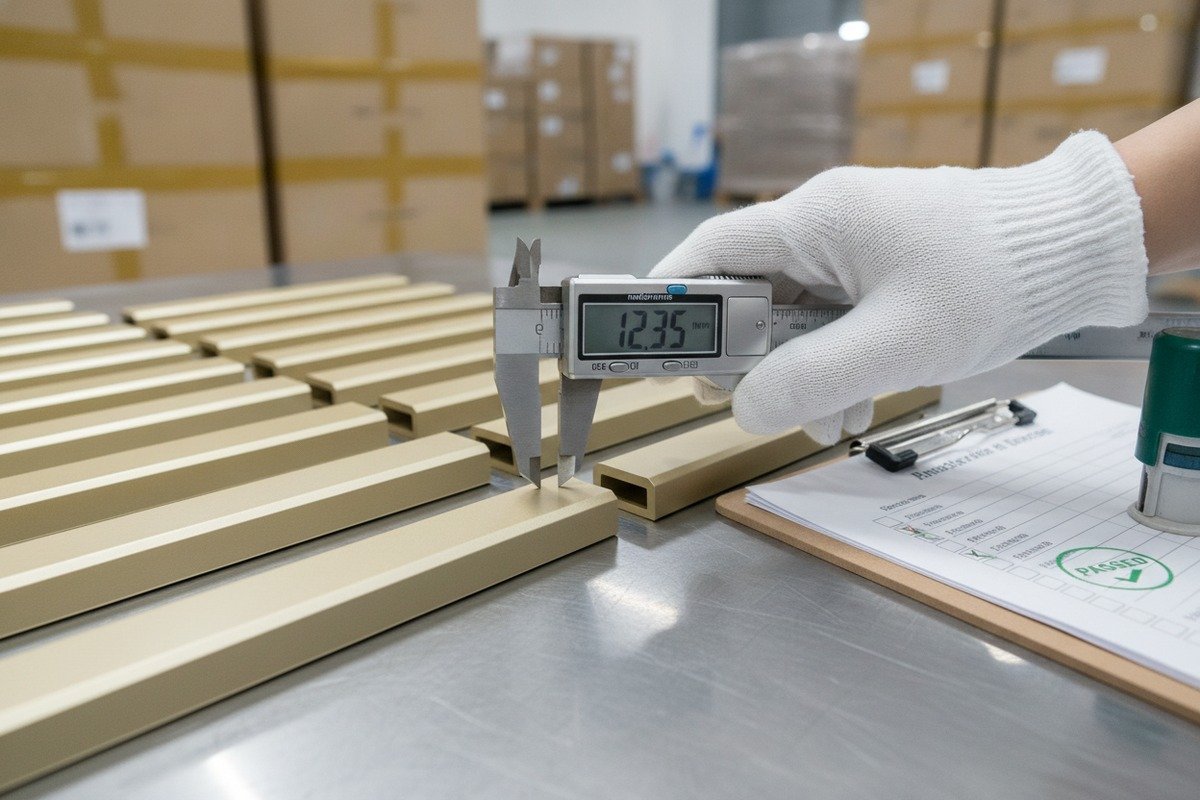
What a Pre-Shipment Inspection Covers
A proper pre-shipment inspection is not a casual glance at a few boxes. The inspector follows a structured checklist. They pull random samples from finished cartons. They measure dimensions with calipers. They check surface finish for scratches, color inconsistency, or anodizing defects. They count cartons and verify quantities. They test packaging strength. They photograph everything.
When to Schedule the Inspection
Timing matters. Schedule the inspection when the supplier confirms that at least 80% of the order is packed and ready. If you inspect too early, you only see partial production. If you inspect too late, the supplier may pressure you to pay before the inspector arrives.
Inspection Companies You Can Use
Several well-known firms operate throughout China:
| Inspection Company | Coverage in China | Typical Cost per Inspection |
|---|---|---|
| SGS 10 | Nationwide | $250–$350 USD per man-day |
| Bureau Veritas | Nationwide | $250–$350 USD per man-day |
| TÜV | Major manufacturing regions | $300–$400 USD per man-day |
| Asia Inspection (QIMA) | Nationwide | $200–$300 USD per man-day |
| Local freelance inspectors | Regional | $100–$200 USD per man-day |
For a small order of aluminum furniture handles, a single man-day inspection is usually enough. The cost is minor compared to the value of the goods you are protecting.
Video Audits as a Supplement
If your order is too small to justify a physical inspection, ask the supplier for a live video call during packing. Ask them to show carton counts, product close-ups, and labels. This is not as reliable as a professional inspector, but it is far better than trusting a few staged photos. During the call, ask the supplier to pick up random handles and show them to the camera. Ask them to measure a handle on screen. These small requests reveal whether the goods actually exist and match your specifications.
What to Do if Inspection Fails
If the inspection report shows problems, do not release payment. Send the report to the supplier. Give them a deadline to fix the issues. Schedule a re-inspection. This is exactly why you held back the balance. Without this leverage, you would be begging for corrections after the supplier already has your money.
Inspection Is Your Last Checkpoint
Think of supplier verification as your first defense and pre-shipment inspection as your last defense. Everything in between — samples, contracts, communication — supports these two pillars. A sample proves capability. Inspection proves execution. Both are necessary.
What red flags should I watch out for during the negotiation phase that might suggest a supplier is unreliable or a potential scammer?
Over 18 years in this industry, our team has seen every trick in the book. We have watched competitors disappear overnight. We have heard buyer stories that would make you close your laptop and never source again. But most of these disasters had early warning signs that the buyer ignored.
Watch for these red flags: insistence on 100% upfront payment, refusal to provide business registration or factory tour access, vague or constantly changing lead times, unwillingness to accept third-party inspection, requests to pay into personal bank accounts, and aggressive pressure to finalize the deal before you finish your due diligence.

The Most Dangerous Red Flags
Not all red flags carry equal weight. Some are deal-breakers. Others are yellow warnings that require further investigation. Here is how to categorize them:
| Red Flag | Severity | What It Suggests |
|---|---|---|
| Demands 100% payment upfront | Deal-breaker | No accountability after payment |
| Refuses to share business license | Deal-breaker | Possibly unregistered or fraudulent |
| Asks you to pay to a personal account | Deal-breaker | Likely a scam or off-books operation |
| Prices far below market average | High warning | May cut corners or bait-and-switch |
| Cannot show photos of your specific product type | High warning | May not actually produce furniture handles |
| Vague or shifting delivery dates | Medium warning | Poor planning or overcommitted capacity |
| Refuses third-party inspection | High warning | Hiding quality or production problems |
| Pressures you to decide quickly | Medium warning | Wants to lock you in before you verify |
| No references or previous export history | Medium warning | Unproven track record |
Pressure Tactics Are a Warning
A legitimate supplier will never pressure you to skip your verification process. When we receive inquiries about our aluminum recessed pulls, we encourage buyers to request samples, check our credentials, and ask questions. A factory that is confident in its product does not need to rush you. If a supplier says things like "this price is only valid today" or "we cannot hold stock unless you pay now," step back and think carefully.
Inconsistency Is a Signal
Pay attention to inconsistencies. Does the supplier's website show industrial parts, but they claim to specialize in furniture hardware? Do their factory photos look like stock images? Does the contact person's email domain match the company website? Small details add up. A real furniture handle manufacturer will have consistent branding, product-specific photos, and technical knowledge about extrusion tolerances, anodizing finishes, and mounting dimensions.
Trust Your Instincts — But Verify with Data
If something feels wrong, it probably is. But do not rely on gut feeling alone. Every concern should be tested with a specific verification step. If you doubt the factory exists, request a video call. If you doubt production capability, ask for a sample of the exact handle finish you need. If you doubt their export experience, ask for a redacted copy of a previous Bill of Lading. Data beats gut feeling every time.
Build a Communication Trail
Keep every important conversation in writing. Email and WhatsApp messages with timestamps create a record you can use later if a dispute arises. Avoid making critical agreements over voice calls unless you follow up with a written summary that the supplier confirms. If you ever need to file a dispute on a trade platform or pursue legal action, your written trail is your evidence.
Know When to Walk Away
Walking away from a suspicious supplier costs you nothing. Continuing with one can cost you everything. There are thousands of aluminum handle suppliers in China. You do not need to settle for one that makes you uncomfortable. The best protection is patience and process.
Conclusion
Sourcing aluminum furniture handles from China does not have to be a gamble. Verify before you pay, structure payments around milestones, inspect before you release the balance, and watch for red flags. These controls turn trust-based sourcing into process-based sourcing. If you need a supplier who welcomes inspection, offers staged payments, and ships from 300 tons of ready stock, reach out to our team at lilitonghardware.com.
Footnotes
1. Explains China’s official company database for verifying business registration and credit. ↩︎
2. Authoritative source (BSI) explaining ISO 9001 Quality Management Systems. ↩︎
3. Authoritative source detailing ISO 9001 certification and its benefits for quality management. ↩︎
4. Government resource detailing China’s export license requirements and application process. ↩︎
5. Official Alibaba explanation of the Gold Supplier membership program and its features. ↩︎
6. Authoritative inspection company explaining the process and benefits of pre-shipment inspections. ↩︎
7. Wikipedia provides a comprehensive definition and functions of a Bill of Lading. ↩︎
8. Government resource explaining Letters of Credit as a secure payment mechanism in trade. ↩︎
9. Wikipedia offers a general definition and explanation of how escrow services work. ↩︎
10. Official website providing information about SGS, a leading inspection and certification company. ↩︎