
Every week, our sales team in Foshan fields calls from Vietnamese furniture factory owners 1 asking the same question: which hole spacing should I order? It sounds simple, but getting this wrong means handles that don’t fit, cabinets that need re-drilling, and frustrated end customers.
For the Vietnamese market, prioritize stocking aluminum handles in 96mm, 128mm, and 160mm hole spacings, as these cover the majority of standard cabinet and drawer applications. Supplement with 90mm, 120mm, and 180mm for niche and custom projects. Metal hardware demand is rising fast in Vietnam, with the kitchen furniture segment alone projected to reach USD 401.30 million by 2031.
This article breaks down exactly which hole spacing sizes matter most, how to manage your inventory, and what to expect from a reliable Chinese supplier 2. Let’s get into the details.
Which standard hole spacing sizes should I prioritize for my Vietnamese furniture factory clients?
Over the past 18 years of shipping aluminum handles across Southeast Asia 3, our production records show clear patterns in what Vietnamese buyers reorder most often. The wrong hole spacing doesn't just sit in your warehouse — it costs you client trust.
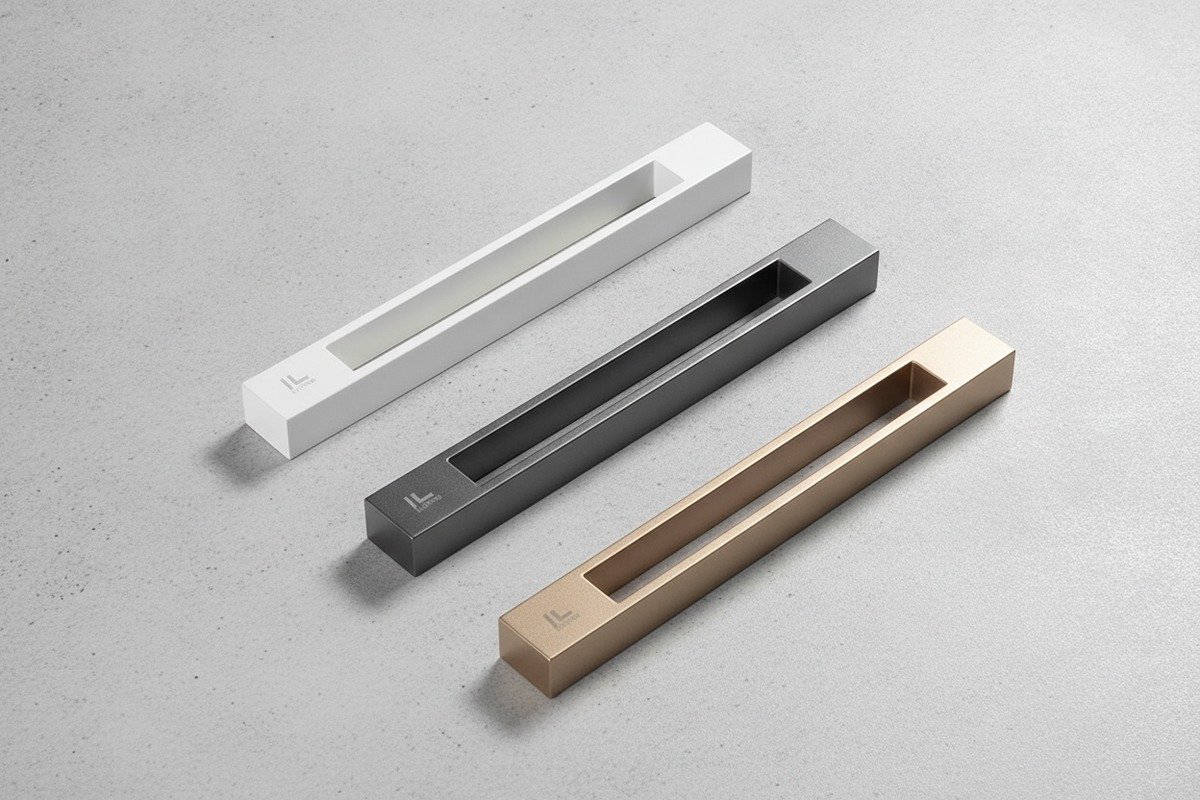
Vietnamese furniture factories most frequently order aluminum handles in 96mm, 128mm, and 160mm hole spacings. These three sizes fit the vast majority of locally produced kitchen cabinets, bathroom vanities, and bedroom wardrobes. Secondary sizes like 90mm, 120mm, and 180mm serve specialized or premium cabinetry projects.
Why These Three Sizes Dominate
The reason is straightforward. Most cabinet doors and drawer fronts manufactured in Vietnam follow dimensional standards that originated from European and East Asian kitchen systems. A standard base cabinet drawer, for example, is typically 400mm to 600mm wide. A 128mm handle sits perfectly centered on these drawers. A 96mm handle works well on narrower drawers and upper cabinets. A 160mm handle suits wider kitchen base units and wardrobe doors.
Vietnamese cabinet makers rarely design from scratch. They reference popular Korean and Japanese minimalist styles 4, which favor clean lines and proportional handle placement. This means the hole spacing is often decided before the handle style is even chosen.
Mapping Hole Spacing to Furniture Applications
| Hole Spacing | Primary Application | Typical Furniture Type | Demand Level in Vietnam |
|---|---|---|---|
| 90mm | Compact drawers, small cabinets | Bathroom vanities, bedside tables | Moderate |
| 96mm | Standard drawers, upper cabinets | Kitchen wall cabinets, office furniture | High |
| 120mm | Mid-size drawers | Modular kitchens, custom storage | Moderate |
| 128mm | Standard drawers and doors | Kitchen base cabinets, wardrobes | Very High |
| 160mm | Wide drawers, tall doors | Kitchen islands, large wardrobes | High |
| 180mm | Oversized panels, premium projects | Luxury wardrobes, commercial fit-outs | Moderate |
The Market Behind the Numbers
Vietnam's kitchen furniture market 5 is projected to grow from USD 339.64 million in 2026 to USD 401.30 million by 2031, with a steady 3.39% CAGR. Metal is the fastest-growing material category in that segment, expanding at 4.17% CAGR. This growth is driven by durability requirements and hygiene concerns in Vietnam's humid climate 6. Aluminum handles resist corrosion, clean easily, and look modern — three qualities Vietnamese homeowners increasingly demand.
The broader domestic household furniture market 7 hit $474 million in 2025 and is expected to grow at 8.66% CAGR from 2026 to 2031. That means more cabinets, more drawers, and more handles. For distributors, the practical takeaway is simple: stock the sizes that fit the most cabinets, and you capture the most orders.
Don't Overlook Regional Preferences
Ho Chi Minh City and Hanoi drive different aesthetics. Southern Vietnamese projects tend to lean toward longer, sleeker pulls — 160mm and above. Northern projects sometimes favor more compact, understated handles in the 96mm to 128mm range. If you serve both regions, your inventory should reflect this split.
How can I balance my stock between popular 96mm/128mm spacings and custom lengths for the local market?
When we review reorder data from our Vietnamese distributor partners, one pattern is consistent: roughly 70% of repeat orders fall on just two or three standard spacings. But the remaining 30% — the custom and less-common sizes — often carry the highest margins and strongest client loyalty.
Balance your inventory by allocating 60–70% of stock to high-turnover sizes like 96mm and 128mm, and reserve 30–40% of your budget for 160mm, 180mm, and custom-length handles. Partner with a manufacturer that offers 3–7 day turnaround on custom orders so you never need to overstock niche sizes.
The 70/30 Inventory Rule
This is a principle we recommend to nearly every new Vietnamese distributor we work with. The logic is practical. Standard sizes sell fast and consistently. They pay for your warehouse rent and keep cash flowing. Custom sizes sell slower but at higher price points. They differentiate you from competitors who only stock basics.
Here's how it looks in practice:
| Inventory Category | Hole Spacing Sizes | Stock Allocation | Margin Profile | Reorder Frequency |
|---|---|---|---|---|
| Core Stock | 96mm, 128mm | 40% | Standard | Weekly to biweekly |
| Strong Sellers | 160mm | 20% | Standard to moderate | Biweekly to monthly |
| Specialty Stock | 90mm, 120mm, 180mm | 20% | Moderate to high | Monthly |
| Custom / Project-Based | Non-standard lengths | 20% (made to order) | High | Per project |
Why You Shouldn't Over-Invest in Custom Inventory
Custom hole spacings — say, 110mm or 200mm — are usually tied to specific projects: a hotel renovation, a luxury condo development, or a bespoke kitchen line. These orders are lumpy and unpredictable. If you stock 500 pieces of a 200mm handle and the project gets delayed, that capital is frozen.
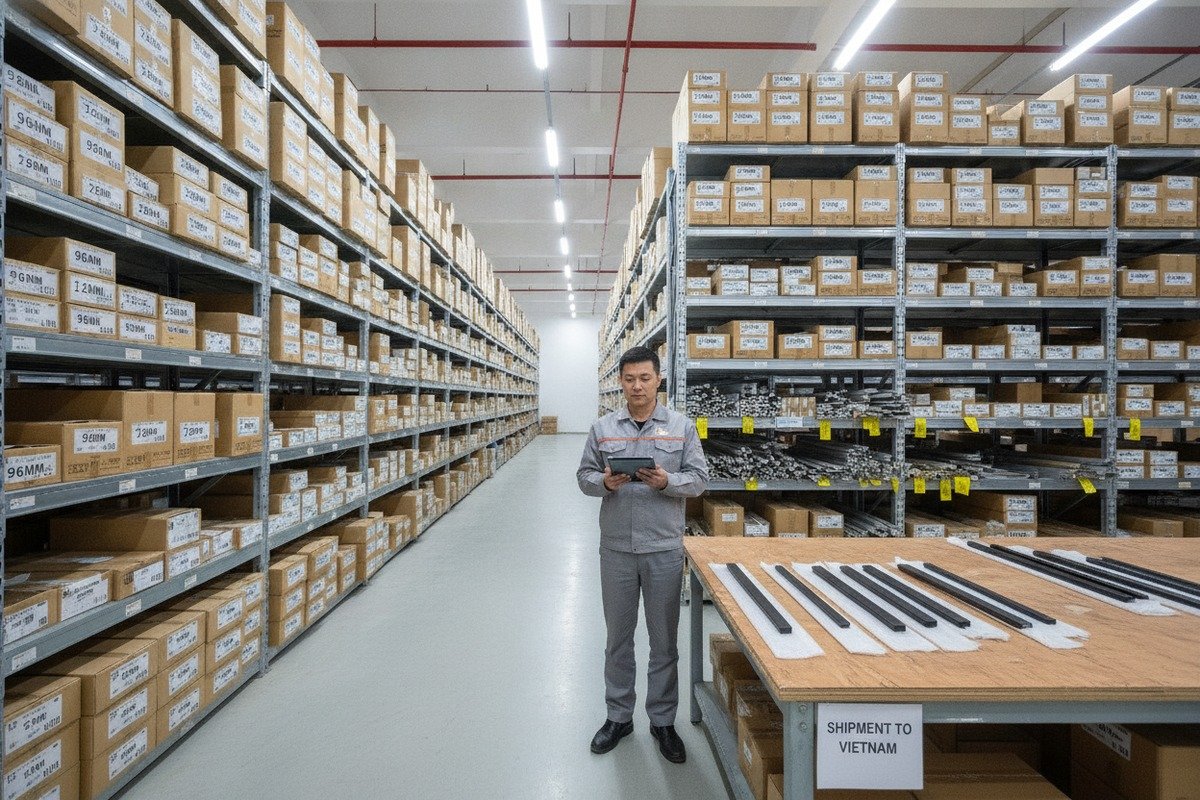
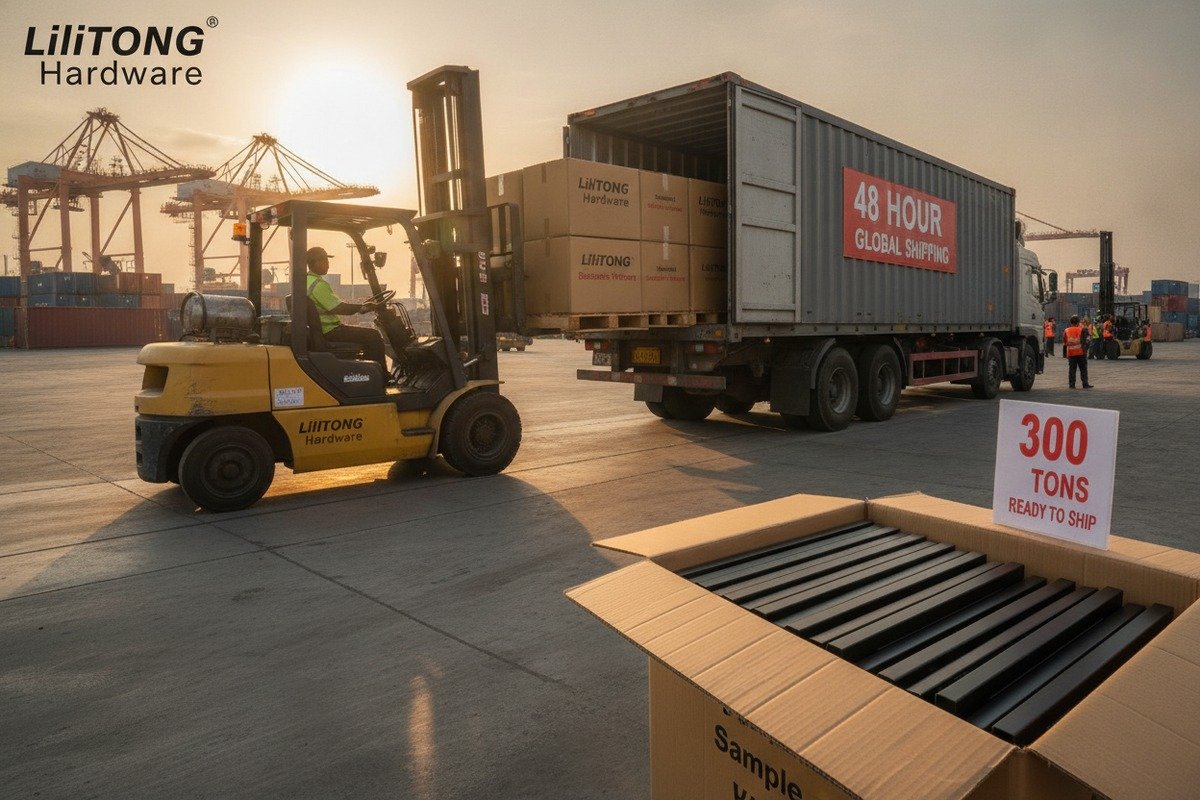
The smarter approach is to keep your custom pipeline lean. Our facility in Foshan maintains 300 tons of ready-to-ship stock across standard sizes. For custom orders, we turn them around in 3 to 7 days. This means your Vietnamese clients can confirm a project, place the order, and receive goods before installation begins — without you holding dead stock.
How to Negotiate with Your Supplier for Flexibility
Ask three questions before placing your first order:
- What is the MOQ for standard sizes? A good supplier keeps this low — sometimes as few as 100 pieces per SKU for stocked items.
- What is the lead time for custom hole spacings? Anything over 10 days is too slow for project-based work in Vietnam. Aim for 3–7 days.
- Can I mix sizes in a single shipment? Consolidating multiple SKUs into one container or LCL shipment reduces your per-unit logistics cost and helps you test new sizes without committing to large volumes.
Seasonal and Project-Based Demand Shifts
Vietnamese furniture demand spikes before Tet (Lunar New Year) and during the Q3–Q4 construction season. During these peaks, standard sizes sell out fastest. Plan your core stock replenishment 6–8 weeks ahead of these periods. For custom orders, communicate early with your manufacturer so production slots are reserved.
The rise of bespoke interior design projects in urban Vietnam — particularly in Ho Chi Minh City's premium residential towers — is steadily increasing demand for non-standard handle lengths. But these projects are best served through made-to-order arrangements, not speculative stocking.
What impact does hole spacing have on the installation efficiency of my custom cabinetry projects in Vietnam?
Our engineering team has seen it happen too many times: a furniture factory orders beautiful handles, but when the installer holds one up to the cabinet, the holes don't match. Re-drilling costs time, damages surfaces, and sometimes ruins entire door panels.
Correct hole spacing directly determines installation speed and quality. When handles match pre-drilled cabinet holes, installation takes under 60 seconds per handle. A mismatch forces re-drilling, adding 5–10 minutes per handle and risking panel damage — a costly problem at scale in Vietnamese factory production lines.
The Hidden Cost of a 2mm Error
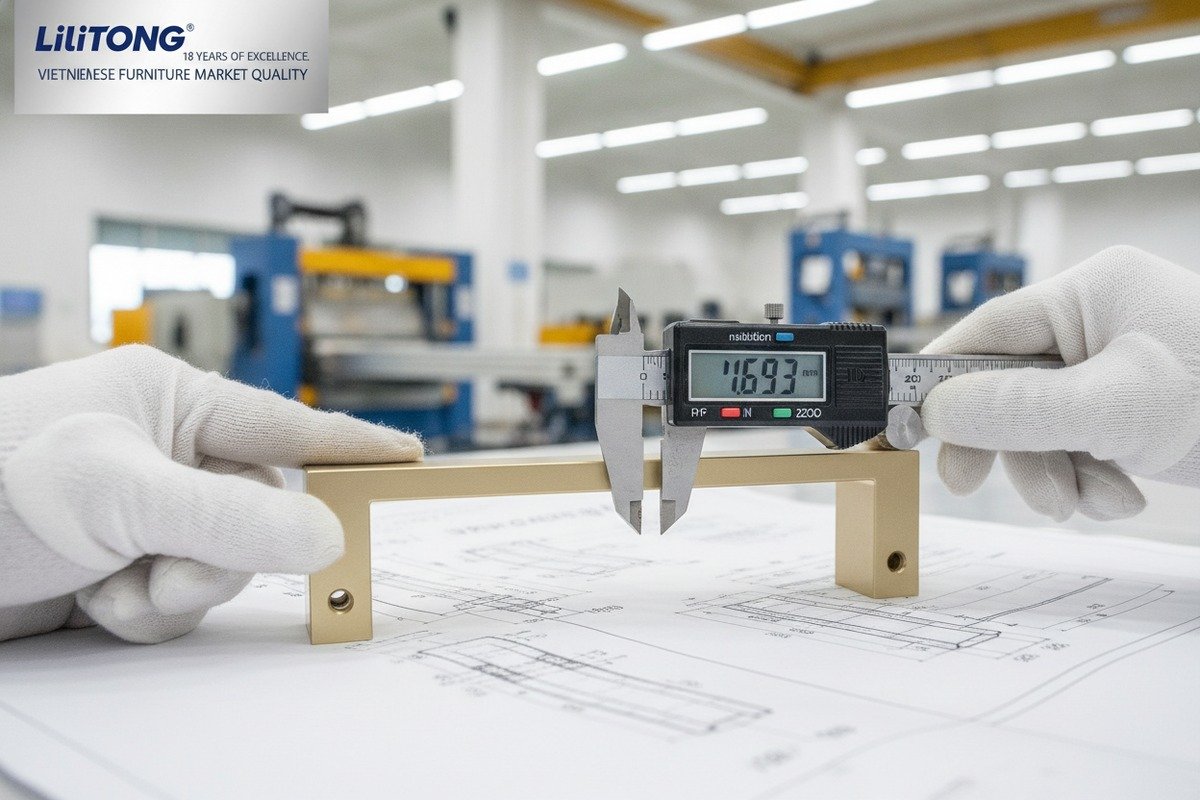
Hole spacing is measured center-to-center between the two screw holes on a handle. If a cabinet factory drills at 128mm and your handle is actually 126mm, the screws won't align. The installer must either enlarge the holes (weakening the panel) or re-drill entirely (creating visible damage on the cabinet face).
In a typical Vietnamese furniture factory producing 200 cabinets per day, even a small mismatch can cascade into hours of lost productivity. Let's look at the numbers:
| Scenario | Time Per Handle | Handles Per Day (200 cabinets) | Total Installation Time | Rework Cost |
|---|---|---|---|---|
| Perfect hole spacing match | 45–60 seconds | 600 | ~8–10 hours | $0 |
| Slight mismatch (re-drill needed) | 6–10 minutes | 600 | ~60–100 hours | Significant |
| Wrong spacing (replacement needed) | Full replacement cycle | 600 | Production halt | Very high |
Why Vietnamese Factories Are Particularly Sensitive to This
Vietnam's furniture manufacturing sector is scaling fast. Factories are investing in CNC drilling machines 8 that pre-drill cabinet panels at precise, programmed hole spacings. Once the CNC is set to 128mm, every panel on that production run has 128mm holes. If the handles arrive at 130mm, there is no quick fix.
This is why experienced procurement managers in Vietnam always confirm hole spacing — down to the millimeter — before placing a bulk order. They know that a seemingly minor specification error translates to real money on the factory floor.
Ergonomics and End-User Satisfaction
Hole spacing also affects how a handle feels in use. A handle with 160mm spacing mounted on a narrow 350mm drawer will overhang awkwardly and feel unbalanced. A 96mm handle on a wide 800mm wardrobe door looks undersized and requires the user to reach for a small grip area.
Vietnamese consumers are increasingly influenced by Korean and Japanese minimalist design trends, where proportion matters. The handle should look intentional on the door, not like an afterthought. This means your factory clients need to match hole spacing not just to the drill pattern, but to the visual and ergonomic proportions 9 of the final product.
Practical Tips for Avoiding Installation Problems
- Always request a dimensional drawing from your handle supplier that shows exact hole spacing, screw diameter, and screw length.
- Order samples before bulk production. Test-fit them on actual cabinet panels from your factory line.
- Standardize your factory's drill patterns around the three to four most common handle spacings. This reduces changeover time on CNC machines.
- Communicate handle specs to your supplier in millimeters, not inches. The Vietnamese and Chinese markets both use metric. Avoid conversion errors.
The growing emphasis on ergonomics in Vietnamese interior design means that handles are no longer just functional. They contribute to the user experience of opening and closing cabinets daily. A well-fitted handle with correct hole spacing feels solid, aligns perfectly, and enhances the perceived quality of the entire piece of furniture.
Can I rely on a Chinese manufacturer to provide flexible hole spacing options for my unique handle designs?
When we first started exporting to Vietnam over a decade ago, most buyers only asked for catalog items. Today, nearly 40% of our orders involve some level of customization — a different hole spacing, a unique anodized color, or a modified profile depth. The market has shifted, and the best Chinese manufacturers have shifted with it.
Yes, established Chinese aluminum handle manufacturers offer highly flexible hole spacing options, including non-standard custom lengths. Look for suppliers with in-house extrusion and CNC capabilities, ready stock for standard sizes, and a proven 3–7 day turnaround for custom specifications. This combination gives Vietnamese buyers both speed and design freedom.
What Makes a Chinese Supplier Truly Flexible
Not all factories are equal. Some claim customization but actually outsource cutting and drilling to third parties, adding time and quality risk. Here is what to look for:
- In-house aluminum extrusion: The factory controls the base profile shape and can modify it for new designs.
- CNC cutting and drilling on-site: Hole spacing is programmed digitally. Switching from 128mm to 145mm takes minutes, not days.
- Anodizing and finishing in-house: Custom colors (champagne gold, matte charcoal, light beige) are done without sending parts to another factory.
- Dedicated sample production: A good supplier sends confirmed samples within 48 hours for standard items and within 5 days for custom pieces.
OEM/ODM Capability Comparison
| Capability | Basic Supplier | Mid-Level Supplier | Full-Service Manufacturer |
|---|---|---|---|
| Standard hole spacings (96mm, 128mm, 160mm) | ✔ | ✔ | ✔ |
| Custom hole spacings | ✘ (outsourced) | ✔ (limited range) | ✔ (any specification) |
| Custom profile shapes | ✘ | ✘ | ✔ (OEM/ODM) |
| In-house anodizing | ✘ | ✔ | ✔ |
| Sample turnaround | 7–14 days | 5–7 days | 48 hours (stock) / 3–7 days (custom) |
| MOQ flexibility | High (500+ pcs) | Moderate (200+ pcs) | Low (100+ pcs for stock items) |
| Technical support for design | ✘ | Basic | Full engineering guidance |
The Customization Process Step by Step
Here is how a typical custom handle order works when you partner with a capable manufacturer:
- You share your design concept — a sketch, a photo, or a CAD file. Include the desired hole spacing, handle length, profile shape, and finish.
- The manufacturer reviews feasibility within 24 hours. They check whether the spacing works with the chosen profile and flag any structural concerns.
- A sample is produced in 3–7 days using the actual aluminum alloy and anodizing process. This is not a 3D-printed mockup — it is a real, functional piece.
- You test-fit the sample on your cabinet panels. If adjustments are needed, the manufacturer revises and sends a second sample.
- Bulk production begins once the sample is approved. For standard modifications (like a new hole spacing on an existing profile), production typically completes in 7–15 days depending on quantity.
Why Flexibility Matters More Than Ever in Vietnam
The Vietnamese market is evolving rapidly. Urbanization and rising disposable incomes 10 are pushing demand for premium, differentiated interiors. Furniture brands want handles that look unique — not the same generic pulls available in every hardware market. Smart functionalities, such as compatibility with push-to-open mechanisms or integrated LED lighting channels, are emerging in premium developments.
For Vietnamese distributors and factory owners, partnering with a Chinese manufacturer who can move quickly between standard and custom orders is a competitive advantage. You can say yes to any project brief, knowing your supplier can deliver.
One important caution: always verify custom dimensions with physical samples. Digital renders and spec sheets can contain rounding errors. A physical sample eliminates surprises on the production floor.
The relationship between a Vietnamese buyer and a Chinese handle manufacturer works best when both sides communicate clearly, confirm specifications in writing, and treat the sample approval step as non-negotiable. This discipline turns customization from a risk into a strength.
Conclusion
Vietnam's furniture market is growing fast, and aluminum handle demand is growing with it. Prioritize 96mm, 128mm, and 160mm hole spacings for core stock. Partner with a flexible manufacturer for custom needs. Get the spacing right, and everything else — installation, aesthetics, client satisfaction — falls into place.
Footnotes
1. Replaced with an updated and relevant guide on furniture manufacturing in Vietnam from a reputable source. ↩︎
2. Replaced with a working guide on finding reliable suppliers from China, from the same authoritative domain as the original failed link. ↩︎
3. Information about the ASEAN Economic Community. ↩︎
4. Overview of Korean minimalist interior design principles. ↩︎
5. Market overview and growth of Vietnam’s home furniture sector. ↩︎
6. Overview of the climate conditions in Vietnam. ↩︎
7. Overview of the domestic furniture market in Vietnam. ↩︎
8. Replaced with the original article, which is now accessible and directly relevant to the benefits of CNC machining for wood products. ↩︎
9. General principles and definition of ergonomics. ↩︎
10. Overview of economic factors and income trends in Vietnam. ↩︎