
Every week, our sales team receives RFQs that are missing half the details we need to quote accurately material alloy 1. The result? Buyers get inconsistent responses from different factories, and comparing those quotes becomes nearly impossible. If you have ever gathered five quotes for aluminum furniture handles 2 only to realize each supplier quoted on different terms, different finishes, and different shipping bases, you know the frustration.
To request quotes from multiple Chinese suppliers and compare cost-effectiveness, send a standardized RFQ with identical specs, quantity tiers, finish requirements, and Incoterm basis to every shortlisted manufacturer, then evaluate total landed cost—not just unit price—using a structured comparison spreadsheet.
This guide walks you through the entire process, from building your supplier shortlist to building a comparison framework that prevents apples-to-oranges mistakes dimensional tolerance 3. Let us start with the foundation: writing an RFQ that forces comparable answers.
How can I efficiently send a standardized RFQ to multiple Chinese aluminum handle manufacturers to ensure comparable results?
Most buyers lose time because their RFQ is too vague payment terms 4. Suppliers fill in the gaps with their own assumptions, and suddenly every quote looks different. Our quoting team processes dozens of inquiries daily, and the clearest ones always get the fastest and most accurate responses.
Create one detailed RFQ document that specifies material alloy, dimensions, hole spacing, finish type, quantity tiers, packaging needs, and preferred Incoterm, then send this identical package to every supplier on your shortlist with a firm reply deadline.
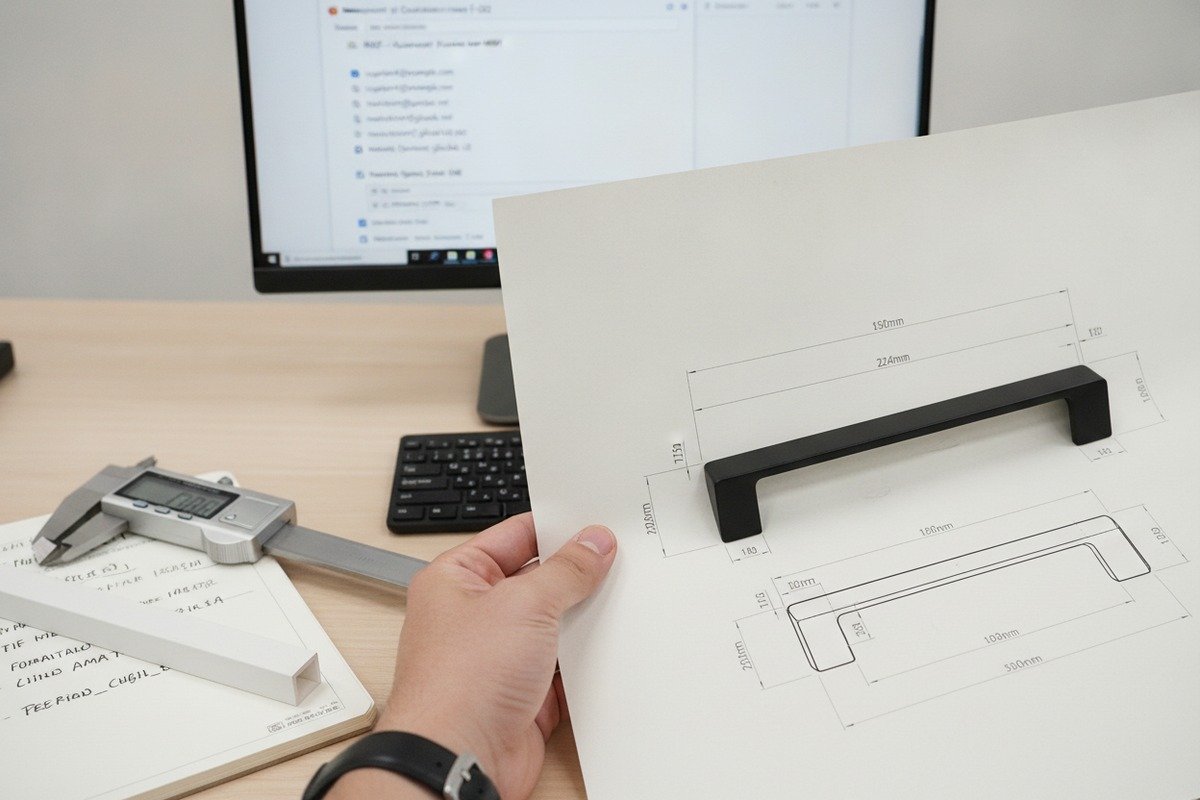
Why Standardization Matters
When you send different descriptions to different factories, you get quotes for different products. One supplier may quote a 6063 aluminum alloy 5 handle with anodized finish. Another may quote a recycled aluminum handle with spray paint. Both call it an "aluminum furniture handle," but the cost structure and quality are worlds apart.
A standardized RFQ 6 removes ambiguity. It forces every supplier to price the exact same product, which is the only way to make a fair comparison.
What Your RFQ Should Include
Here is a checklist you can copy directly into your next sourcing email:
| RFQ Field | Example Detail | Why It Matters |
|---|---|---|
| Product name | Recessed cabinet handle / drawer pull | Prevents confusion with other handle types |
| Material | 6000-series aluminum 7 alloy (e.g., 6063-T5) | Ensures consistent material quality across quotes |
| Dimensions | 128 mm hole spacing, 150 mm total length, 25 mm width | Eliminates size-related price differences |
| Finish | Matte anodized, champagne gold | Finish type heavily affects unit cost |
| Quantity tiers | 300 / 1,000 / 5,000 pcs | Shows volume pricing breakpoints |
| Packaging | Individual poly bag + inner box + export carton | Standardizes packaging cost component |
| Incoterm 8 | FOB Foshan or CIF destination port | Makes shipping cost comparable |
| Sample request | 2 pcs, state whether sample cost is refundable | Lets you compare sample policies |
| Quote deadline | 5 business days from email date | Ensures replies arrive in the same window |
| Drawing or photo | Attach a 2D drawing or reference photo | Removes guesswork about design |
How to Send It Efficiently
Write one email template. Change only the supplier name and a brief personalized line. Attach the same drawing, the same spec sheet, and the same quantity schedule to every email. If you are using Alibaba or Made-in-China, copy-paste the same inquiry text into each supplier's message box.
Ask every supplier to reply in a simple table format. This saves you hours of reformatting later. A sample line in your email could read: "Please quote unit price, tooling cost, MOQ, lead time, and sample cost for each quantity tier in a table."
A Practical Tip from Our Factory Floor
We often see buyers ask for "best price" without specifying finish or alloy. On our production line, an anodized champagne gold finish on 6063 aluminum costs noticeably more than a simple powder-coated finish on standard aluminum. If your RFQ does not state the finish, you will get a mix of cheap and premium quotes that mean nothing side by side.
What specific criteria should I use to evaluate the price-to-quality ratio when comparing different furniture handle quotes?
Once quotes start arriving, the temptation is to sort by unit price and pick the lowest number. We have seen buyers do this and then face quality complaints from their own customers months later. Aluminum furniture handles sit on the front face of cabinets and wardrobes—they are touched daily and judged visually.
Evaluate quotes using total landed cost, which includes unit price, tooling, packaging, shipping, and duties, alongside quality indicators such as alloy grade, surface finish consistency, dimensional tolerance, and defect rate guarantees from each supplier.

Breaking Down Total Landed Cost
Unit price is just the starting point. The real number you care about is how much each handle costs when it arrives at your warehouse, ready to sell or install. Here is how to build that number:
| Cost Component | Supplier A (Example) | Supplier B (Example) |
|---|---|---|
| Unit price (FOB, 1,000 pcs) | $2.50 | $2.20 |
| Tooling / mold cost | $0 (stock design) | $800 (custom mold) |
| Sample cost (2 pcs) | Free | $30 |
| Export packaging | Included | $0.05 / pc extra |
| Shipping (FOB to CIF) | $0.30 / pc | $0.30 / pc |
| Import duty (est. 5%) | $0.13 / pc | $0.11 / pc |
| Total landed cost / pc | $2.93 | $3.41 |
In this example, Supplier B has a lower unit price but a much higher total cost once tooling is amortized over 1,000 pieces. The cheaper quote is actually the more expensive deal.
Quality Indicators to Compare
Price alone never tells the full story for decorative hardware. Consider these quality factors:
- Alloy grade: 6000-series aluminum (like 6063 or 6061) is stronger, more corrosion-resistant, and better for anodizing than generic recycled aluminum. Ask every supplier to confirm the alloy.
- Surface finish consistency: Request a sample batch of 5–10 pieces, not just one. Check for color variation, scratches, and anodizing uniformity.
- Dimensional tolerance: For recessed handles with precise geometric channels, even 0.2 mm of deviation can cause fitment problems. Ask what tolerance standard the factory follows.
- Defect rate commitment: Some factories will state an acceptable defect rate in their quote. A rate below 1% is good. Above 3% should raise a red flag.
When the Cheapest Quote Is Not the Best Deal
Aluminum furniture handles are visible, tactile components. If you supply handles for premium wardrobes or kitchen cabinets, a rough finish or inconsistent color will generate returns and damage your reputation. On our production line, we use precision extrusion and controlled anodizing baths to achieve the smooth, matte champagne gold finish that high-end markets demand. This costs more per piece than a basic spray-painted handle, but the reject rate drops significantly and the end product looks noticeably better.
For budget furniture lines, a lower-cost handle may be perfectly acceptable. The key is to match your price-quality expectations to your target market before you compare quotes.
How do I account for lead times and customization capabilities when determining the true cost-effectiveness of a supplier?
A quote that looks perfect on paper means nothing if the goods arrive two months late and miss your product launch window. In our warehouse, we keep over 300 tons of ready-to-ship aluminum profiles and handles in stock precisely because we know lead time is a dealbreaker for furniture factories running tight production schedules.
Factor lead time into cost-effectiveness by calculating inventory holding costs, potential lost sales from late delivery, and the premium value of suppliers who offer fast turnaround, ready stock, and flexible customization with low MOQs and short production cycles.
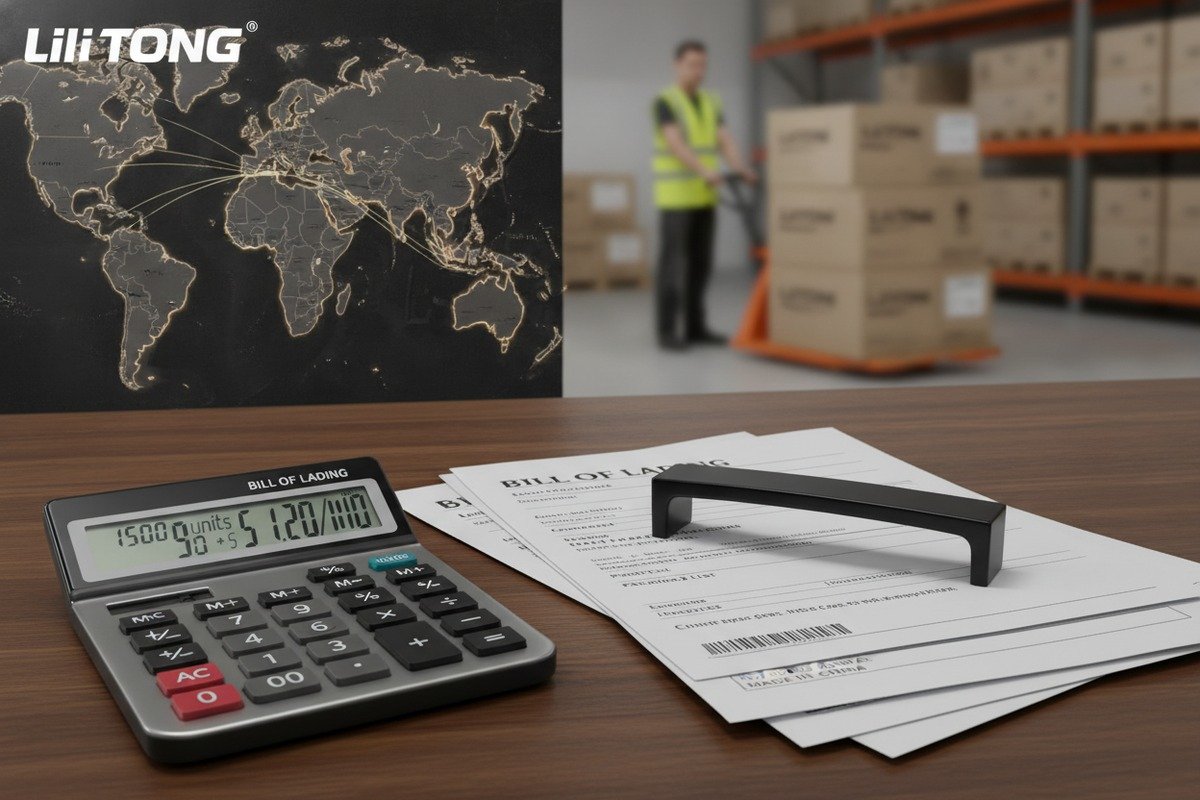
Why Lead Time Is a Hidden Cost
Imagine two suppliers: one delivers in 7 days, the other in 45 days. If you need to place orders 45 days in advance, you must hold more safety stock, tie up more working capital, and risk overordering if demand changes. The "cheaper" supplier with 45-day lead time may cost you more in warehousing and capital lock-up than a slightly pricier factory that ships within a week.
Customization Capabilities Affect Long-Term Value
Not every project uses a stock handle design. If you sell to custom home builders, your clients will request unique finishes, specific lengths, or branded packaging. A supplier who can only offer three standard finishes is a dead end for those projects.
Here is how to compare customization capabilities:
| Capability | Questions to Ask | Why It Matters |
|---|---|---|
| Custom finishes | Can you match a Pantone color? Do you offer brushed, polished, anodized, and powder-coated options? | Limits or expands your product catalog |
| Custom dimensions | Can you cut to non-standard lengths? What is the MOQ for a custom size? | Determines whether you can serve niche orders |
| Custom mold / tooling | Do you offer OEM/ODM? What is the tooling lead time? | Critical for proprietary handle designs |
| Packaging customization | Can you print my logo on boxes? Can you use specific inner packaging? | Affects your brand presentation |
| Low MOQ flexibility | What is the minimum for stock items vs. custom items? | Lower MOQ means less risk on new designs |
| Sample turnaround | How fast can you produce a custom sample? | Faster samples mean faster decision cycles |
A Real-World Scenario
A furniture factory in Vietnam needed a recessed matte black handle in a non-standard 200 mm length. Two suppliers quoted similar prices. Supplier A required a 5,000-piece MOQ and 30-day production time. Supplier B—our team—offered a 500-piece MOQ with a 5-day turnaround because the base profile was already in stock and only needed cutting and finishing. The buyer chose the lower MOQ option, tested the market, and scaled to 5,000 pieces on the second order with confidence.
Scoring Lead Time and Customization
Add these two factors to your comparison spreadsheet as weighted scores. For example, if speed-to-market matters most, give lead time a 30% weight. If your business is heavily custom, give customization capability a 25% weight. Multiply each supplier's score by the weight, and you get a composite number that reflects real-world value, not just price.
What are the best strategies for negotiating better terms once I have gathered quotes from several aluminum profile factories?
After years of fielding negotiations from buyers across Vietnam, the Middle East, and beyond, our team has noticed clear patterns in what works and what backfires. The best negotiations feel like problem-solving sessions, not price battles.
Once you have multiple quotes, negotiate better terms by using transparent price benchmarking, offering volume commitments or longer-term partnerships, asking for bundled value instead of just lower prices, and being willing to adjust MOQ, payment terms, or delivery schedules to create a win-win deal.
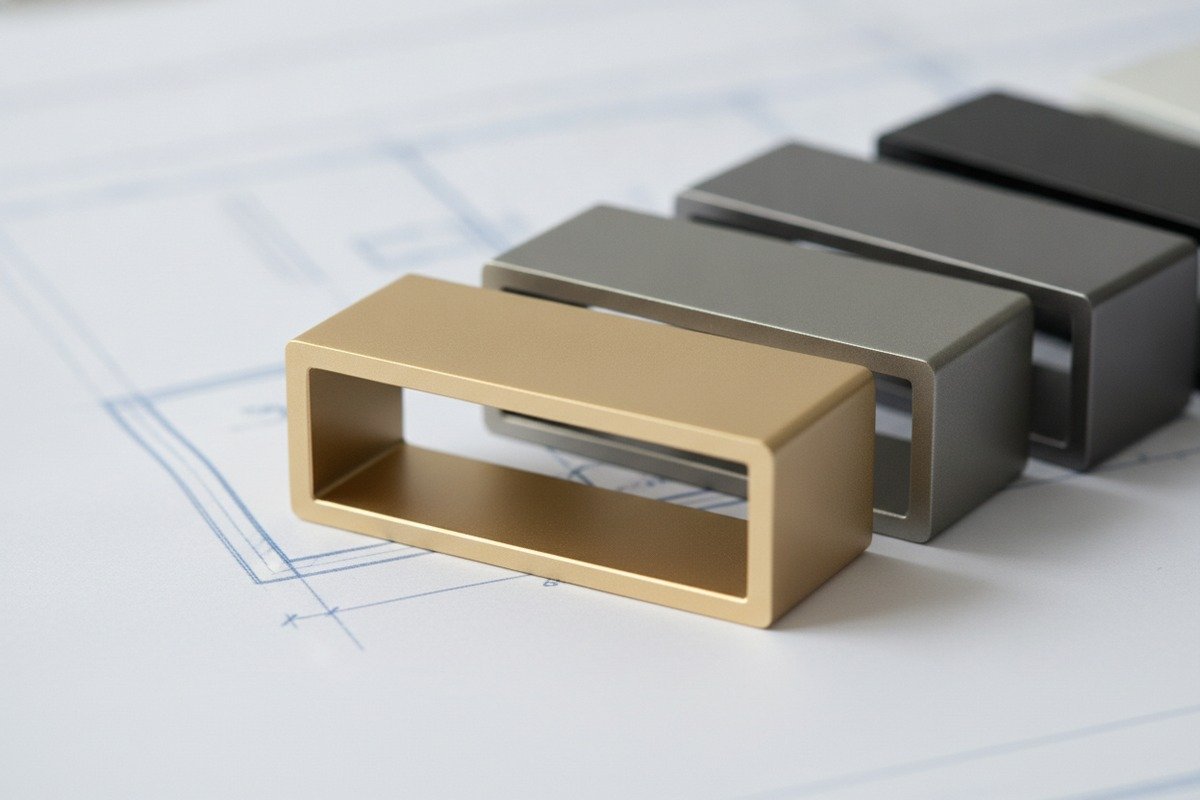
Start with Data, Not Demands
Show the supplier you have done your homework. You can say, "I received five quotes ranging from $2.20 to $3.00 per piece for the same spec. Your quote is at $2.80. Can you help me understand the difference, or adjust to be more competitive?" This approach is respectful and gives the factory room to explain or adjust.
Never share another supplier's quote document directly. That breaks trust. Just reference the range.
Negotiate Value, Not Just Price
Pushing for the absolute lowest price often backfires. The factory may cut corners on finish quality, use a cheaper alloy, or reduce packaging protection. Instead, negotiate for added value:
- Free samples on orders above a certain quantity.
- Reduced tooling cost if you commit to a multi-order contract.
- Better payment terms, such as 30% deposit and 70% before shipment instead of 50/50.
- Free packaging upgrades, like branded inner boxes.
- Priority production scheduling for repeat orders.
Volume Leverage and Long-Term Commitments
If you plan to order aluminum furniture handles regularly, say so. A factory is far more likely to sharpen pricing for a buyer who commits to quarterly orders of 5,000 pieces than for a one-time buyer of 300 pieces. You can formalize this with a framework agreement that locks in pricing for 6–12 months in exchange for volume guarantees.
Common Negotiation Mistakes
Avoid these traps:
- Comparing EXW quotes with CIF quotes — this is like comparing the price of a car with and without delivery. Always normalize to the same Incoterm before negotiating.
- Pushing below production cost — if a supplier accepts a price that seems impossibly low, expect quality problems. Sustainable pricing benefits both sides.
- Ignoring payment term negotiation — sometimes a better payment split is worth more than a $0.10 price reduction.
- Negotiating only once — revisit terms after your first successful order. Proven buyers always get better deals on the second round.
When to Walk Away
If a supplier refuses to provide an itemized cost breakdown, cannot send samples, or quotes a price far below every competitor without explanation, consider it a warning sign. The best suppliers are transparent about what drives their pricing and confident in the value they offer.
Conclusion
Sourcing aluminum furniture handles from China becomes far simpler when you use a standardized RFQ, compare total landed costs, weigh lead times and customization, and negotiate with data. If you need a reliable partner with ready stock and fast turnaround, reach out to our team at Al**************@********************************************te.com.
Footnotes
1. Provides a general overview of aluminum alloys and their properties. ↩︎
2. Explains the manufacturing process and properties of aluminum alloy handles. ↩︎
3. Defines dimensional tolerance and its critical role in manufacturing and assembly. ↩︎
4. Explains the definition and importance of payment terms in business agreements. ↩︎
5. Details the properties, composition, and common uses of 6063 aluminum alloy. ↩︎
6. Defines Request for Quotation (RFQ) and emphasizes the importance of standardization. ↩︎
7. Explains the composition, properties, and applications of 6000 series aluminum alloys. ↩︎
8. Official source defining Incoterms and their role in international trade. ↩︎
9. Defines total landed cost and outlines its key components for supply chain evaluation. ↩︎