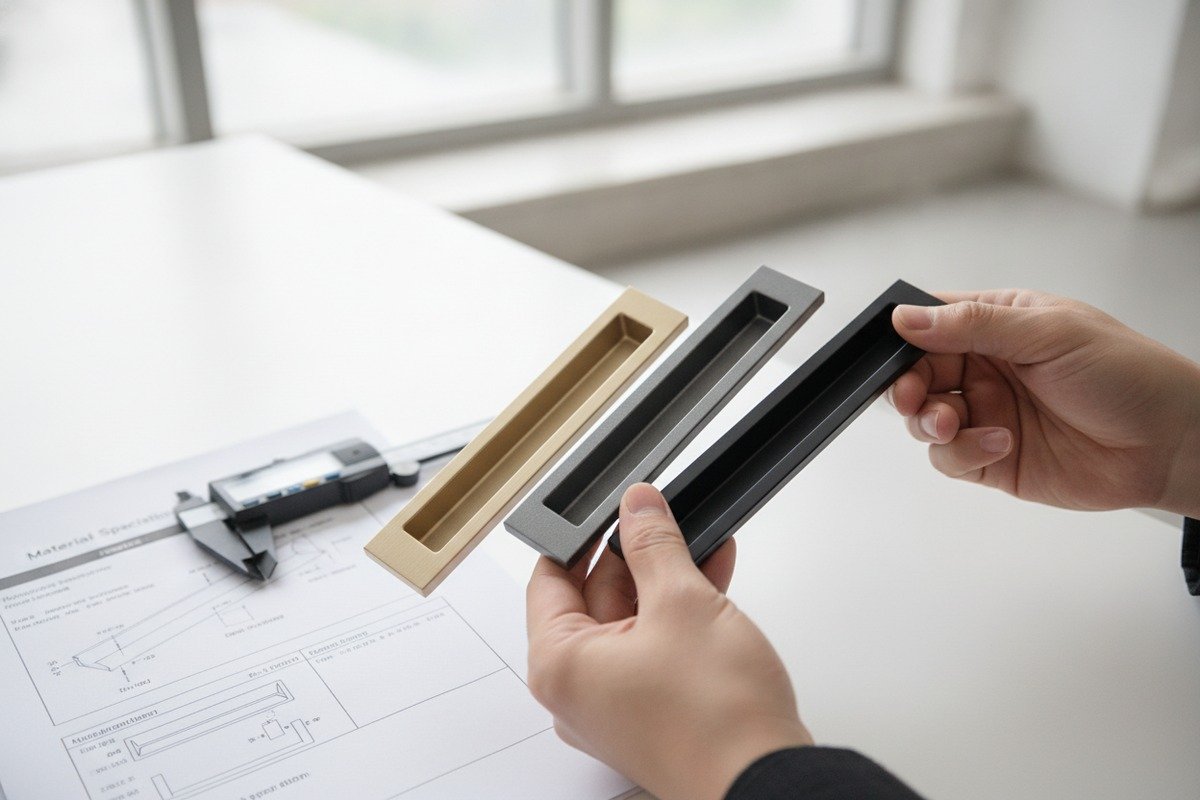
Over the past 18 years on our production lines in Foshan, one question keeps coming back from first-time buyers: “Isn’t all aluminum the same?”
No, all aluminum is not equal. To distinguish performance differences between aluminum alloy grades for furniture handles, compare four key properties: strength and dent resistance, corrosion resistance, formability for complex designs, and finish compatibility. For most applications, 6061 is the versatile default, 6063 excels in surface finish, and 5052 leads in corrosion resistance.
This guide breaks down grade-by-grade differences so you can make confident sourcing decisions, even if you have never purchased aluminum hardware before aluminum alloy grades 1. Let us walk through each factor that matters.
How Can I Identify Which Aluminum Alloy Grades Are Best Suited for High-End Furniture Handles?
When we ship handles to furniture factories in Vietnam and the Middle East, the first thing they ask is which grade looks and feels premium enough for their end customers.
The best aluminum alloy grades for high-end furniture handles are 6063 and 6061. 6063 delivers superior surface smoothness and anodizing response, making it ideal for premium decorative finishes. 6061 offers higher strength while still accepting quality finishes, suitable for heavy-duty premium applications.
What "Alloy Grade" Actually Means
An aluminum alloy grade 2 is a four-digit number. The first digit tells you the main alloying element. The remaining digits narrow down the exact chemistry. This chemistry changes how the metal behaves during extrusion, machining, finishing, and daily use.
Here is the key point: two handles can look identical on the outside. But if one is made from 6063 3 and the other from a generic 1000-series alloy, the difference in scratch resistance, dent resistance, and finish longevity will be dramatic.
Wrought vs. Cast Alloys
Before you compare grades, understand that aluminum alloys fall into two camps: wrought and cast.
- Wrought alloys are shaped by extrusion, rolling, or forging. They are stronger and resist fatigue better. Most furniture handles use wrought alloys 4.
- Cast alloys are poured into molds. They allow more complex shapes but are generally weaker and more brittle.
For slim, architectural-style recessed handles — the kind we produce daily with clean geometric channels and sharp edges — wrought extrusions are the standard. Cast alloys 5 rarely deliver the dimensional precision or surface quality that high-end furniture demands.
The Grade Families That Matter for Handles
| Series | Primary Alloying Element | Strength Level | Corrosion Resistance 6 | Typical Use in Handles |
|---|---|---|---|---|
| 1000 | Pure aluminum (99%+) | Very low | Excellent | Rarely used; too soft |
| 3000 | Manganese | Moderate | Good | Budget/entry-level hardware |
| 5000 | Magnesium | Medium-high | Excellent | Humid or coastal environments |
| 6000 | Magnesium + Silicon | Medium-high | Good to excellent | Most furniture handles |
| 7000 | Zinc | Very high | Moderate | Aerospace; overkill for handles |
Why 6063 Dominates High-End Handles
On our extrusion lines, 6063 is the most requested grade for decorative furniture hardware. The reason is simple: it extrudes smoothly, accepts anodizing 7 beautifully, and holds tight dimensional tolerances. When you see those sleek matte champagne gold or charcoal grey recessed pulls with crisp edges, chances are high they are 6063.
6061 8 is the runner-up. It is slightly stronger, which matters if the handle design is very slim or if it will be used in commercial furniture that takes heavy daily use. But for pure visual refinement and finish consistency, 6063 wins.
A Red Flag for Novice Buyers
If a supplier quotes you "aluminum handles" without specifying the alloy grade, treat that as a warning sign. The performance gap between a 1050 alloy and a 6063 alloy is enormous. Always ask for the grade, the temper designation (like T5 or T6), and ideally a material test certificate.
What Are the Main Performance Differences I Should Look for When Comparing 6063 and Other Aluminum Alloys?
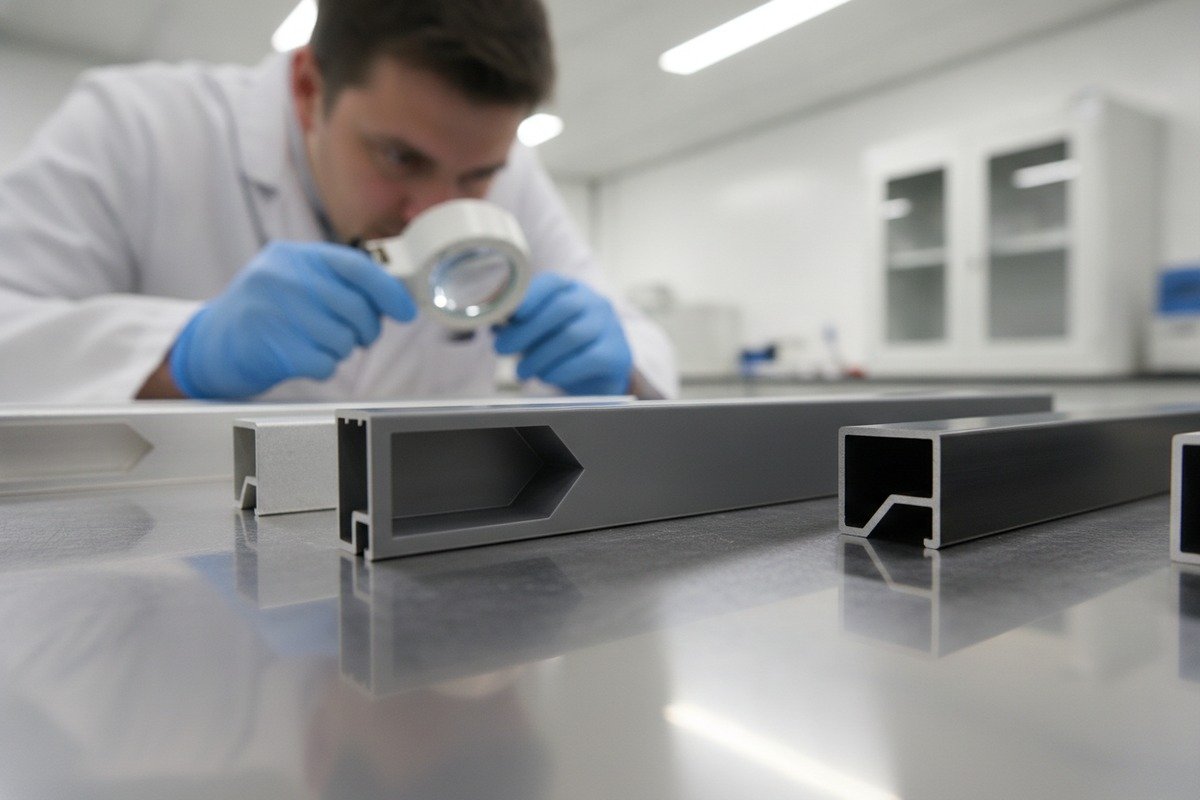
During our quality testing each week, we run side-by-side comparisons on extruded profiles. The differences between 6063 and its closest competitors are measurable and practical, not just theoretical.
When comparing 6063 to other alloys, focus on four differences: 6063 offers the smoothest extrusion surface and best anodizing quality; 6061 provides roughly 30–40% higher tensile strength; 5052 delivers superior corrosion resistance in wet environments; and 7075 offers extreme strength but poor weldability and higher cost.
Head-to-Head: 6063 vs. Key Competitors
| Property | 6063-T5 | 6061-T6 | 5052 9-H32 | 7075-T6 |
|---|---|---|---|---|
| Tensile Strength 10 (MPa) | ~185 | ~310 | ~230 | ~570 |
| Yield Strength (MPa) | ~145 | ~275 | ~195 | ~505 |
| Corrosion Resistance | Excellent | Good | Excellent | Moderate |
| Anodizing Quality | Excellent | Good | Fair | Fair |
| Extrudability | Excellent | Good | Poor (sheet alloy) | Poor |
| Relative Cost | Low-medium | Medium | Medium | High |
| Typical Temper for Handles | T5, T6 | T6 | H32 | T6 |
Strength: How Much Do You Actually Need?
A furniture handle is not a structural beam. It needs to resist dents from daily contact, hold its shape when pulled thousands of times, and not bend if someone leans on a drawer. For these demands, 6063-T5 is more than adequate for most indoor cabinet and furniture pulls.
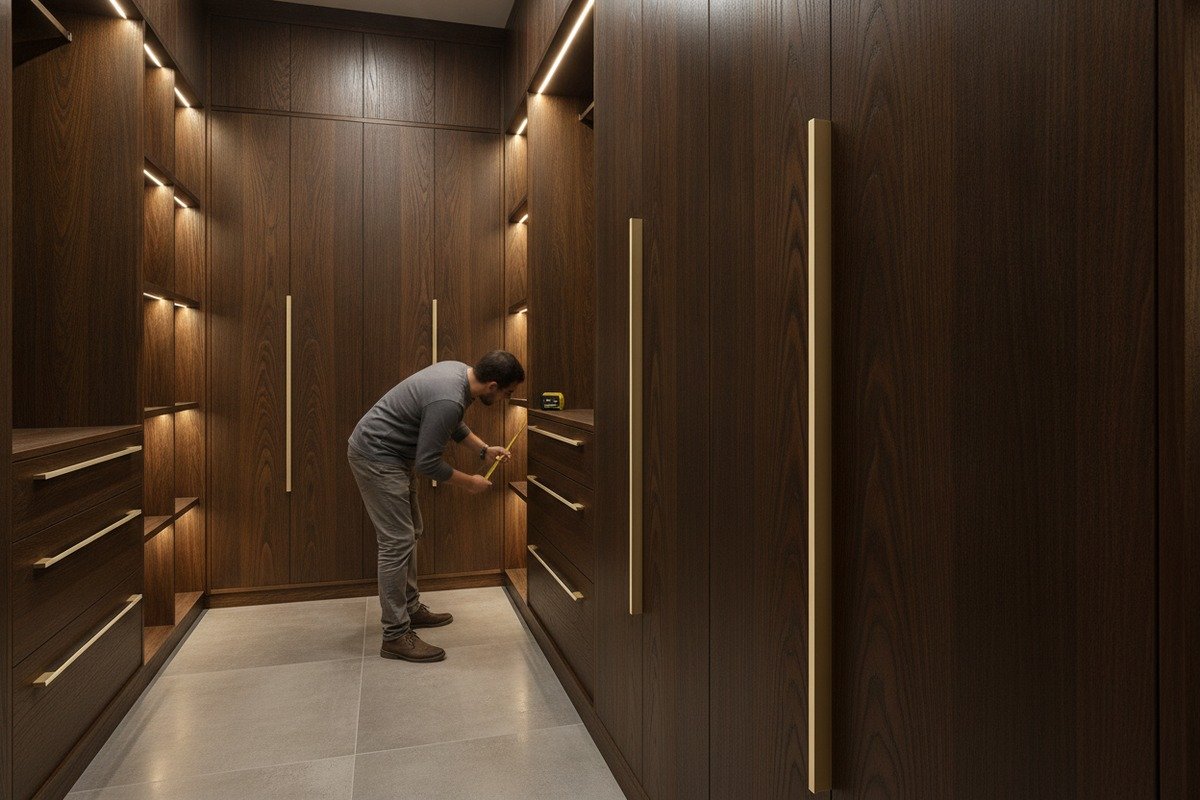
6061-T6 makes sense when handles are unusually long and slim. A 600 mm recessed pull with a narrow cross-section benefits from higher yield strength to prevent flexing. We see this request often from furniture factories producing large wardrobes and tall pantry cabinets.
7075 is aerospace-grade aluminum. Its tensile strength nearly triples that of 6063. But for a kitchen drawer pull? It is like using a race car engine to power a golf cart. The cost is higher, the machinability is harder, and the corrosion resistance is actually worse. We almost never recommend it for furniture hardware.
Corrosion Resistance: Where Environment Decides
If your handles go into kitchens, bathrooms, or coastal homes, corrosion resistance jumps to the top of the priority list. Here, 5052 stands out. Its magnesium content gives it outstanding resistance to saltwater and humidity.
6063 also performs well in most indoor environments, especially when anodized. But in high-humidity settings without climate control — think warehouses in the Middle East or seaside apartments — 5052 paired with a powder coat finish provides an extra layer of protection.
Formability and Extrusion Quality
This is where 6063 truly shines. Its alloy chemistry allows it to flow smoothly through extrusion dies, producing clean edges, tight radii, and consistent wall thicknesses. That deep geometric channel you see in modern recessed pulls — the kind with a crisp L-shaped cross-section — requires excellent extrudability.
5052 is primarily a sheet and plate alloy. It is formed by bending, stamping, or rolling, not extruding. So if your handle design is an extruded profile, 5052 is not the right starting point.
The Temper Designation Matters Too
Do not overlook the letters and numbers after the alloy grade. The temper tells you how the metal was heat-treated or work-hardened. For example:
- 6063-T5: Air-cooled after extrusion, then artificially aged. Good balance of strength and finish.
- 6063-T6: Solution heat-treated and artificially aged. Slightly stronger and harder than T5.
- 6061-T6: The most common temper for this alloy. Maximizes strength.
A 6063-T5 handle and a 6063-T6 handle look almost identical, but the T6 version resists scratches and dents slightly better. For premium applications, we often recommend T6.
How Does the Choice of Aluminum Grade Impact the Final Surface Finish and Durability of My Products?
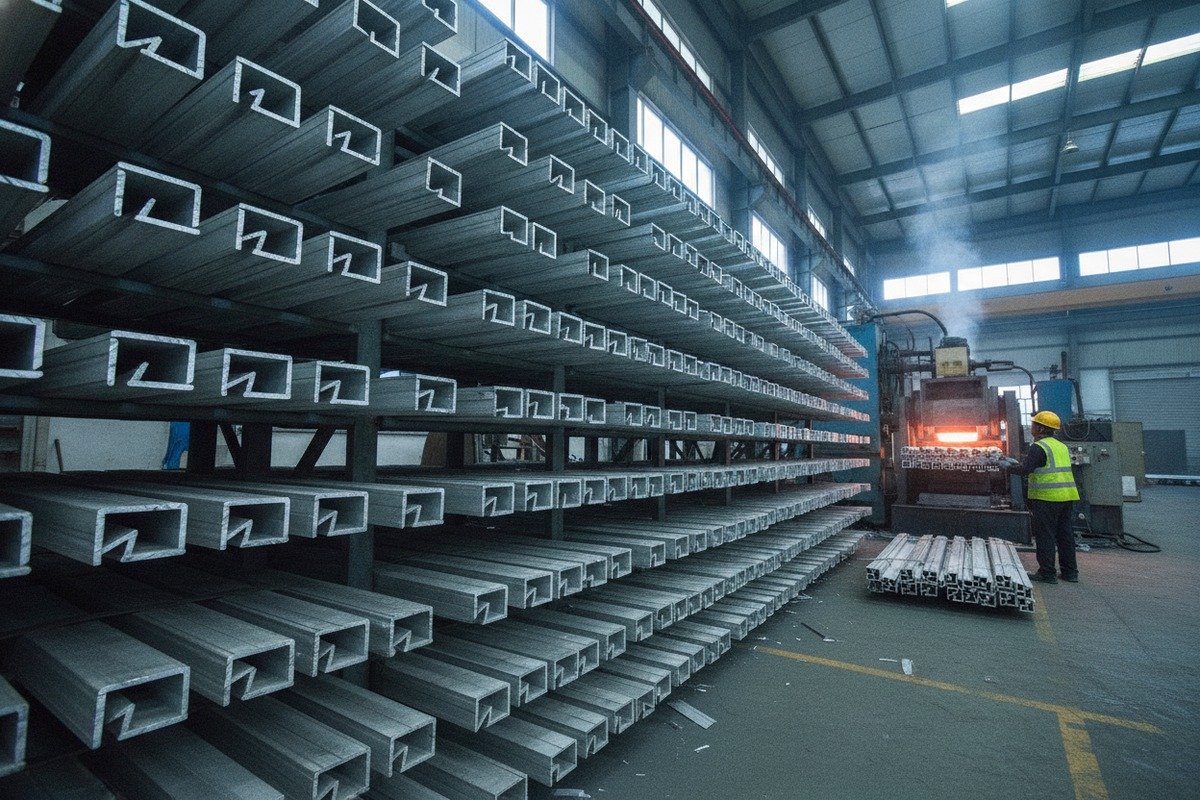
In our finishing workshop, we process thousands of handles every day through anodizing and powder coating lines. The alloy grade determines at least half of the final outcome before any surface treatment even begins.
The aluminum grade directly impacts surface finish and durability. 6063 produces the smoothest, most uniform anodized surfaces with consistent color. 6061 anodizes well but may show slight grain differences. 5052 can appear streaky after anodizing. The right grade-finish combination extends product life and perceived quality significantly.
How Anodizing Responds to Different Grades
Anodizing is the most popular finish for aluminum furniture handles. It builds a hard oxide layer on the surface that resists scratches, corrosion, and UV fading. But the quality of that oxide layer depends heavily on the base alloy.
6063 produces the most consistent anodized finish. The grain structure is fine and uniform, so the color appears even across the entire handle. This is why those sleek matte champagne gold and charcoal grey recessed pulls look so refined — the 6063 substrate is doing most of the work.
6061 also anodizes well, but its slightly different alloy chemistry can produce a marginally less smooth appearance on close inspection. For most commercial applications, the difference is negligible. But for high-end residential markets where buyers inspect handles up close under showroom lighting, 6063 is the safer choice.
5052 and 7075 are less ideal for decorative anodizing. They can develop streaks, color inconsistencies, or a slightly milky appearance. If you must use these grades, powder coating is a better finishing strategy.
Powder Coating: The Great Equalizer?
Powder coating applies a thick, opaque layer of color. It hides surface imperfections better than anodizing. So in theory, you could use a less expensive alloy and rely on powder coating to deliver the visual quality.
In practice, this works up to a point. A 3003 alloy handle with a quality powder coat can look fine. But the coating does not change the underlying strength or dent resistance. A dent in a powder-coated 3003 handle will crack the coating and expose bare metal, leading to corrosion. A dent in a powder-coated 6061 handle is less likely to happen in the first place.
Surface Finish Options and Grade Compatibility
| Finish Type | Best Alloy Match | Appearance Quality | Durability Boost | Cost Impact |
|---|---|---|---|---|
| Clear anodizing | 6063 | Excellent | High | Low-medium |
| Color anodizing | 6063, 6061 | Excellent to good | High | Medium |
| Powder coating | Any (6061, 6063 preferred) | Good to excellent | Very high | Medium |
| Brushed + anodized | 6063 | Excellent | High | Medium |
| Electrophoretic coating | 6063, 6061 | Good | Very high | Medium-high |
| Raw/mill finish | 6063 | Good | Low | Low |
Weight and Perceived Quality
Aluminum is about one-third the weight of steel. This is usually a benefit — lighter handles mean less stress on cabinet doors and easier installation. But some end users interpret lightweight as cheap.
The alloy grade does not dramatically change the weight. All aluminum alloys have roughly similar densities (around 2.7 g/cm³). The real lever for perceived quality is wall thickness and cross-section design. A well-designed 6063 extrusion with adequate wall thickness feels solid and substantial. A thin-walled generic extrusion feels flimsy regardless of grade.
This is why we always discuss profile design alongside alloy selection with our factory clients. The combination of the right grade, the right wall thickness, and the right finish creates a handle that feels premium in hand.
Lifecycle Value: Beyond Unit Price
Some buyers focus only on per-piece cost. But the smarter approach is total lifecycle value. A handle that costs 15% more upfront but lasts twice as long without finish failure, denting, or corrosion is the cheaper option over time. For wholesale distributors, fewer returns and complaints also protect your reputation with your own customers.
How Can I Ensure the Aluminum Alloy Grade I Choose Will Meet My Factory's Specific Customization Requirements?
When our team sits down with a new furniture factory client, the conversation always starts with their specific product line, not with alloy datasheets. The right grade depends on your design, your market, and your production workflow.
To ensure your chosen aluminum alloy grade meets customization requirements, start by defining your handle's design complexity, target environment, required finish, and mechanical loads. Then request material certificates, sample production runs, and physical testing. A qualified supplier will guide grade selection based on your specific product needs, not generic recommendations.

Start With Your Application, Not the Alloy
Many novice buyers ask us, "What grade should I use?" before they have defined their handle design. The better approach is to work backwards:
- Where will the handle be installed? Indoor bedroom furniture, kitchen cabinets, bathroom vanities, or commercial office furniture?
- What is the design? A slim 400 mm recessed pull, a short 96 mm knob, or a curved profile?
- What finish do you need? Matte anodized, glossy powder coat, brushed metallic, or a specific color like champagne gold?
- What forces will it face? Light residential use, heavy commercial traffic, or outdoor exposure?
The answers to these questions narrow the grade selection quickly.
A Practical Decision Matrix
| Application Scenario | Recommended Grade | Recommended Finish | Key Reason |
|---|---|---|---|
| Budget indoor furniture | 3003 or 6063-T5 | Powder coat | Cost-effective with decent durability |
| Premium decorative cabinets | 6063-T6 | Color anodized or brushed + anodized | Best surface quality and finish consistency |
| Humid kitchen / bathroom | 6063-T6 or 5052-H32 | Anodized + sealed or powder coat | Strong corrosion resistance |
| Coastal / high-corrosion | 5052-H32 | Powder coat (marine grade) | Excellent salt and moisture resistance |
| Heavy-duty commercial | 6061-T6 | Anodized or electrophoretic | Higher strength for repeated heavy use |
Request Material Certificates
A reliable supplier can provide a mill test certificate (MTC) for the aluminum billets used in production. This certificate lists the alloy composition, mechanical properties, and temper. If a supplier cannot or will not provide this, consider it a red flag.
On our side, we keep MTC records for every billet batch. When a client in the UAE needed documentation for a government project, we provided full traceability from raw material to finished handle. This level of transparency should be the norm, not the exception.
Sample Before You Commit
Never place a bulk order without samples. A sample run reveals things that specifications alone cannot:
- Does the handle feel solid in hand, or does it flex?
- Is the finish uniform under different lighting?
- Do the mounting holes align correctly with your cabinet hardware?
- Does the color match your furniture panel samples?
We offer sample production within 3–7 days for custom profiles. This short turnaround lets you evaluate the real product before committing to volume.
Fastener and Mounting Compatibility
Different alloys can interact differently with fasteners. If you use steel screws in an aluminum handle in a humid environment, galvanic corrosion can occur where the two metals contact each other. Using stainless steel fasteners or adding an insulating washer prevents this.
Also consider the handle's wall thickness at mounting points. A thinner wall in a softer alloy may strip out threads over time. 6061-T6 holds threads better than 3003 in thin-wall applications. Discuss mounting details with your supplier during the design phase, not after production.
Supplier Consistency Is Part of the Equation
Even the best alloy grade means nothing if your supplier switches materials between orders. Establish clear specifications in your purchase agreement: alloy grade, temper, dimensional tolerances, finish type, and finish thickness. A good supplier will welcome this specificity because it reduces disputes and returns.
With our 300-ton ready-to-ship inventory, we maintain consistent alloy sourcing from verified smelters. This means the 6063-T6 handle you order today matches the one you reorder six months from now. For wholesalers building a product catalog, this consistency is essential.
Sustainability as a Sourcing Factor
Aluminum is one of the most recyclable materials on Earth. It can be recycled repeatedly without losing quality. If your brand or your customers value sustainability, choosing a supplier with verified recycling practices adds value beyond the product itself. This is increasingly important in Middle Eastern and Southeast Asian markets where green building certifications are gaining traction.
Conclusion
Choosing the right aluminum alloy grade is a practical decision that directly affects your furniture handles' strength, finish, durability, and customer satisfaction. Use this guide to ask the right questions and source with confidence.
Footnotes
1. Wikipedia offers a comprehensive overview of aluminum alloy grades. ↩︎
2. The Wikipedia article on aluminum alloys covers the general definition of an aluminum alloy grade. ↩︎
3. Wikipedia offers a comprehensive article on 6063 aluminum alloy. ↩︎
4. The Wikipedia article on aluminum alloys includes a dedicated section on wrought alloys. ↩︎
5. Provides information on cast aluminum alloys and their characteristics. ↩︎
6. The Wikipedia article on Aluminium includes a section detailing its corrosion resistance. ↩︎
7. Wikipedia provides a detailed explanation of the anodizing process. ↩︎
8. Wikipedia provides detailed information on 6061 aluminum alloy. ↩︎
9. Describes the composition, properties, and benefits of 5052 aluminum. ↩︎
10. Wikipedia’s article on ultimate tensile strength defines and explains this property, which is commonly referred to as tensile strength. ↩︎