Every month, our Foshan warehouse ships hundreds of cartons of aluminum furniture handles to Vietnam General Department of Customs 1. And every month, we hear from buyers who lost time and money because their customs broker 2 got the HS code wrong or missed a document.
To choose a reliable local customs broker in Vietnam for aluminum furniture handle imports, verify their customs license, confirm experience with furniture hardware HS codes, demand transparent fee breakdowns, and check their operational presence at your arrival port. The right broker prevents costly delays, wrong duty payments, and cargo holds.
This article walks you through the exact steps to vet a Vietnamese customs broker. We will cover licensing, HS code 3 expertise, pricing transparency, and logistics capability. Think of this as your buyer’s guide to reducing customs risk, not just a logistics explainer. Let’s get into it.
What specific qualifications should I look for when vetting a Vietnamese customs broker for my aluminum handle imports?
When we prepare export documents for our Vietnamese buyers, we always ask who handles clearance on their end. The answer matters more than most importers realize. A wrong broker choice can turn a smooth shipment into a week-long headache.
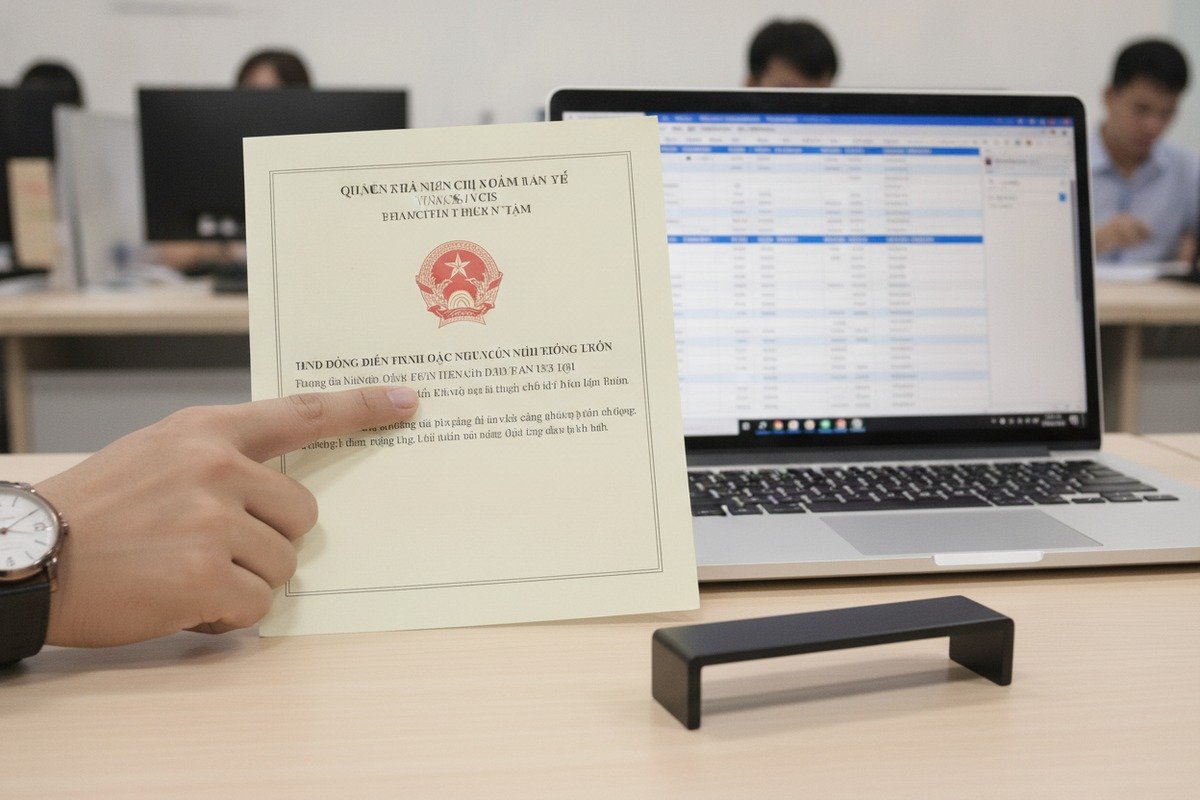
A qualified Vietnamese customs broker must hold a valid business registration, employ certified customs brokerage staff, and operate electronic customs declaration systems. These are legal requirements set by Vietnam's General Department of Customs. Without all three, the broker cannot legally clear your goods.
Why Licensing Is Non-Negotiable
In Vietnam, customs brokerage is a regulated activity. There are two categories of people who handle clearance. The first is a licensed customs brokerage company. The second is a customs clearance agent hired directly by the importer or exporter. The licensed brokerage must meet strict requirements. They need a formal business registration. They need staff who have passed the customs broker certification exam. They need IT infrastructure that connects to the electronic customs system.
If a broker cannot show you proof of licensing, walk away. It does not matter how cheap their fees are. An unlicensed operator puts your shipment and your business at legal risk.
What Certified Staff Actually Means
Vietnam requires that customs brokerage companies have employees who hold a customs brokerage practice certificate. This is not a generic logistics credential. It is a specific certification that proves the person understands customs law, tariff classification, and declaration procedures. When you vet a broker, ask how many certified staff they employ. One or two is a minimum. Larger operations may have dozens.
The IT Infrastructure Requirement
Vietnam's customs system runs on VNACCS/VCIS 4, an electronic declaration platform. Your broker must be fully set up on this system. This matters because electronic submission determines how fast your shipment clears. Green-lane shipments can clear in hours. Yellow-lane shipments need document review. Red-lane shipments require physical inspection and can take two to five days. A broker without proper system access cannot even submit your declaration.
Key Qualifications at a Glance
| Qualification | Why It Matters | How to Verify |
|---|---|---|
| Business registration for customs brokerage | Legal requirement to operate | Request a copy of the registration certificate |
| Certified customs brokerage staff | Ensures staff understand tariff law and procedures | Ask for staff certification numbers |
| VNACCS/VCIS electronic system access | Required for declaration submission | Ask for a screenshot or demo of their system |
| Operating presence at relevant port | Ensures they can physically manage your shipment | Confirm which ports, airports, or ICDs they cover |
| Experience with import clearance specifically | Customs work is different from freight forwarding 5 | Ask for references from import clients |
Do not confuse freight forwarding with customs brokerage. Many freight forwarders offer customs clearance as an add-on, but customs work is a separate compliance function. A company that mainly moves containers may not have the depth of knowledge to handle tariff classification or government-agency coordination for your aluminum furniture handles.
How can I verify if a broker has experience handling the specific HS codes for my furniture hardware shipments?
From our production floor in Foshan, we ship aluminum handles in dozens of profiles, finishes, and sizes. Each variation can affect how the product is classified at customs. We have seen cases where a broker classified a recessed aluminum handle under a generic metal fitting code, and the buyer ended up paying a higher duty rate than necessary.
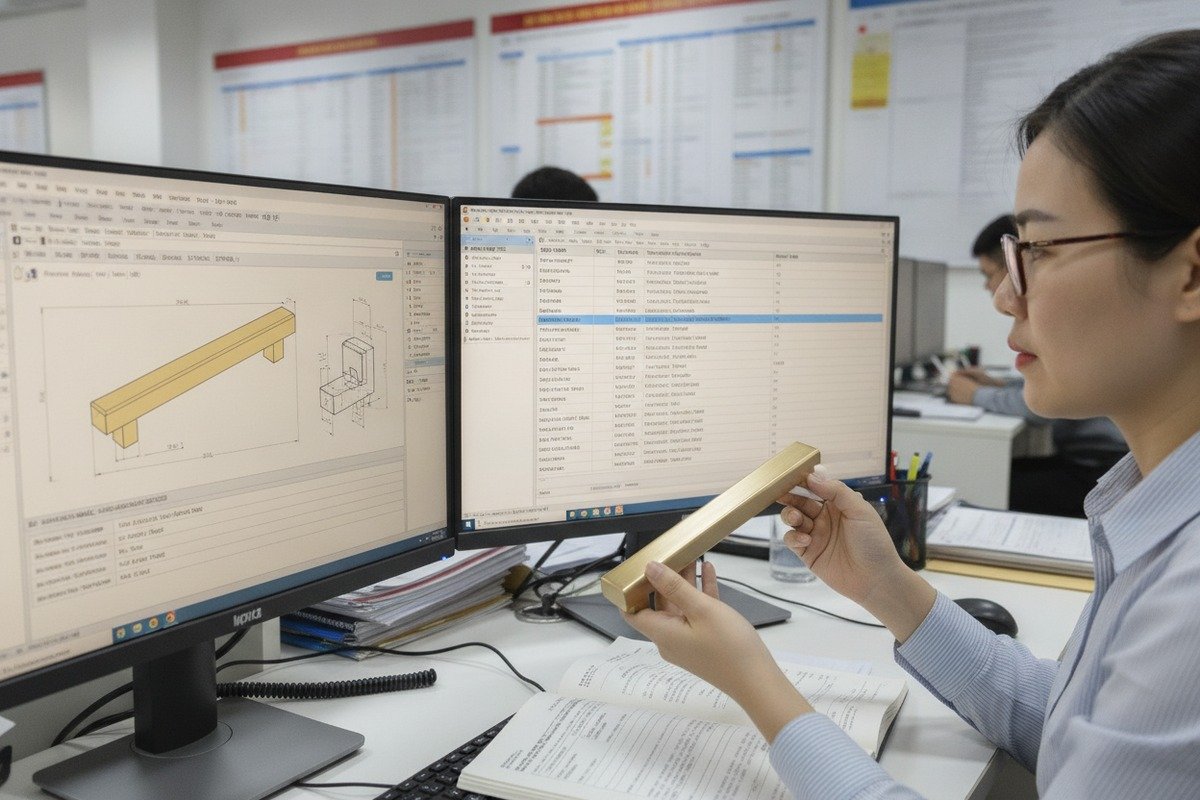
To verify HS code experience, ask the broker to explain exactly how they would classify your aluminum furniture handles, including which heading and subheading they would use and why. A competent broker will reference product material, function, and end use. They should also know whether your goods qualify for FTA preferential tariff rates.
Why HS Code Accuracy Matters for Aluminum Handles
Aluminum furniture handles seem like a simple product. But "simple" does not mean "easy to classify." The Harmonized System 6 has multiple headings that could apply. Is it an aluminum article? A furniture fitting? A builder's hardware item? The answer depends on the product's material composition, its intended use, and how it is described in the commercial invoice.
A wrong HS code can trigger several problems. You might pay too much duty. You might pay too little and face a penalty later during a post-clearance audit. You might miss out on a preferential tariff rate under the ASEAN-China Free Trade Agreement (ACFTA) 7. Or your shipment might get flagged for inspection because the declared code does not match the physical goods.
What a Good Broker Should Review
When you send product details to a prospective broker, they should ask about more than just the product name. A thorough broker will want to know:
- The exact material (e.g., extruded aluminum alloy 6063)
- The surface finish (e.g., anodized, powder-coated, electrophoretic)
- The dimensions and weight per piece
- The intended use (furniture handle, cabinet pull, architectural trim)
- The packaging method (bulk, individual polybag, retail box)
These details affect classification. For example, an anodized aluminum handle classified as a furniture fitting may carry a different duty rate than the same handle classified as an aluminum article. A broker who does not ask these questions is guessing, not classifying.
How to Test Their Knowledge
Before you sign any agreement, give the broker a sample commercial invoice and packing list for your aluminum handles. Ask them to provide a preliminary HS code classification and explain their reasoning. Compare their answer with what your Chinese supplier uses on the export side. If there is a discrepancy, the broker should be able to explain why.
HS Code Verification Checklist
| Test | What to Look For | Red Flag |
|---|---|---|
| Ask for HS code classification of your product | Specific 8-digit code with explanation | Vague answer like "we will figure it out later" |
| Ask about FTA eligibility (ACFTA) | Broker mentions certificate of origin requirements | No mention of preferential tariffs |
| Ask about participating government agencies | Broker checks if any inspection or testing applies | Broker says "no problem, it will clear fast" without checking |
| Compare with supplier's export HS code | Broker explains any difference between export and import codes | Broker blindly copies the supplier's code without review |
The FTA Factor
Vietnam and China are both members of ACFTA. This means your aluminum furniture handles may qualify for a reduced or zero duty rate if the correct certificate of origin is provided. A good broker will proactively ask whether you have a Form E 8 (the ACFTA certificate of origin) and will verify that the HS code on the Form E matches the code they plan to declare. If these codes do not match, the preferential rate will be rejected. This is one of the most common and costly mistakes in Vietnam customs clearance.
Over the years, our team has helped many Vietnamese distributors troubleshoot customs issues. One of the most common complaints is not about delays. It is about unexpected costs. A broker quotes a low clearance fee, and then the final invoice includes charges the buyer never agreed to.
Ask your broker to provide a written, itemized fee schedule that separates their service fee from government charges, port fees, inspection costs, and any third-party expenses. A transparent broker will break down every line item and explain which costs are fixed and which are variable based on customs channel assignment.

The Anatomy of Customs Clearance Costs
When you import aluminum furniture handles into Vietnam, the total clearance cost includes several components. Some are paid to the government. Some are paid to the port or terminal. Some are paid to the broker. Understanding this breakdown is the first step to avoiding surprises.
Government charges include import duty and VAT 10. These are calculated based on the declared value and the HS code. They are not negotiable. Port and terminal charges include container handling, storage, and delivery order fees. These vary by port and by how long the container sits before clearance. The broker's service fee covers declaration preparation, submission, coordination with customs, and document handling.
Questions That Reveal Hidden Fees
Here are specific questions to ask every prospective broker:
- What is your service fee per shipment, and what does it include?
- Are there extra charges for yellow-lane or red-lane shipments?
- Do you charge separately for inspection coordination or sampling?
- Who pays for container transport from the port to our warehouse?
- Are there surcharges for weekend or holiday clearance?
- Do you charge for document amendment if customs requests a correction?
- Is there a fee for HS code consultation or duty estimation?
If a broker cannot answer these questions clearly, they are not transparent enough to trust with your shipments.
Fee Structure Comparison
| Cost Component | Paid To | Fixed or Variable | What to Confirm |
|---|---|---|---|
| Customs brokerage service fee | Broker | Usually fixed per shipment | Ask if it covers all channels (green, yellow, red) |
| Import duty | Vietnam Customs | Variable (based on HS code and value) | Confirm the duty rate they plan to apply |
| VAT | Vietnam Customs | Fixed percentage (usually 10%) | Confirm VAT base calculation method |
| Delivery order fee | Shipping line or agent | Fixed per BL | Ask if this is included in their quote |
| Container handling/THC | Port terminal | Fixed per container | Ask if this is included or billed separately |
| Storage/demurrage | Port terminal | Variable (time-based) | Ask how many free days you get |
| Inspection fee | Customs or testing lab | Variable (if triggered) | Ask what happens if your shipment is red-lane |
| Document amendment fee | Broker | Variable | Ask if corrections are included in the base fee |
Why "Cheap" Clearance Often Costs More
Some brokers quote a very low service fee to win the contract. Then they recover margin through add-on charges. Others underdeclare the value of your goods to lower the duty payment. This might seem like a savings, but it creates serious compliance risk. Vietnam customs conducts post-clearance audits. If they find undervaluation, you face fines, back taxes, and potential blacklisting.
Our advice to buyers is always the same: the cheapest broker is not the best broker if they cut corners on classification or compliance. The true cost of clearance includes the risk of fines and delays, not just the line items on an invoice.
How do I determine if a local agent can effectively manage the logistics and documentation for my bulk orders from China?
We ship bulk orders of aluminum furniture handles from our Foshan factory to Vietnam every week. A standard order might include 20 to 50 cartons of recessed cabinet pulls in multiple finishes — matte black, champagne gold, charcoal grey, light beige. Each finish may have a different anodizing process. Each order has its own packing list, commercial invoice, and sometimes a Form E certificate of origin. The broker on the Vietnam side needs to manage all of this without errors.
To determine if a local agent can manage your bulk import logistics, confirm their physical presence at your arrival port, their experience handling multi-SKU shipments, their ability to coordinate documentation across suppliers and freight forwarders, and their contingency plan for inspection or customs holds. Ask for references from clients who import similar product volumes.
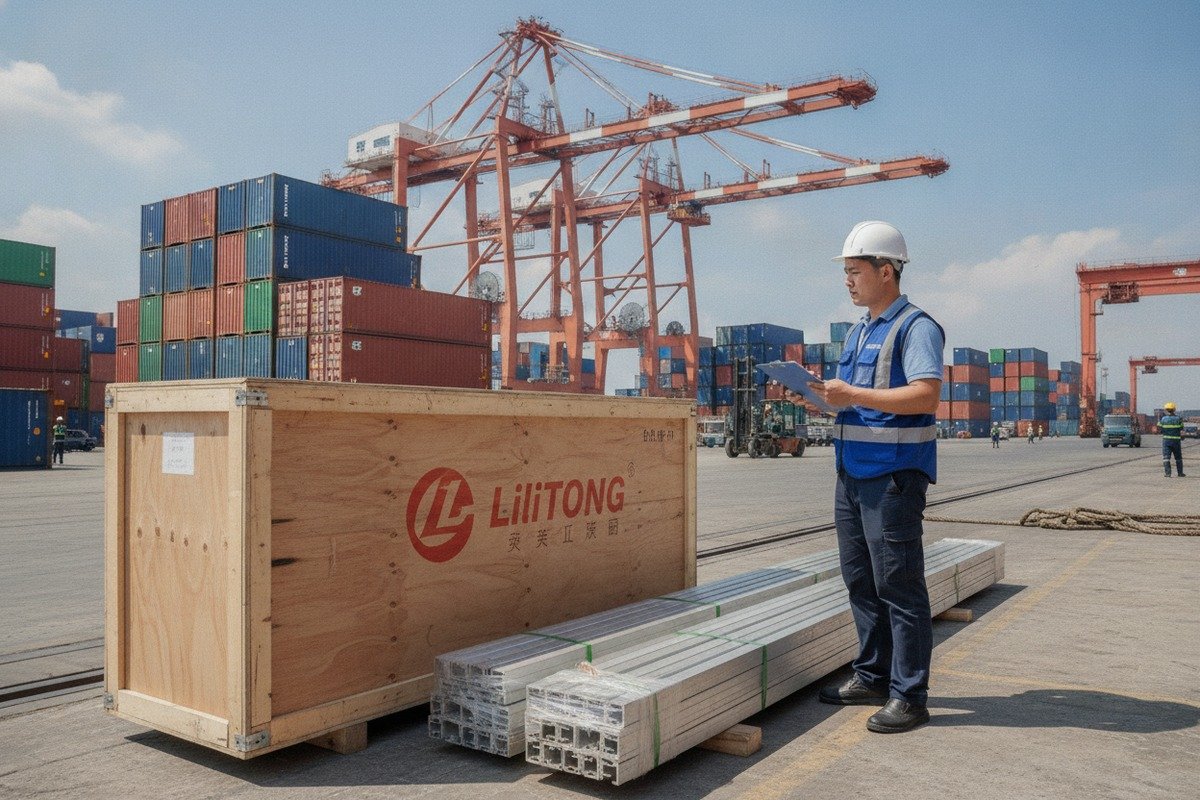
Port Coverage and Local Presence
Vietnam has several major import gateways. Ho Chi Minh City (Cat Lai port), Hai Phong, Da Nang, and Cai Mep are among the busiest. If your shipment arrives at Cat Lai but your broker's office and operations are based in Hai Phong, there will be coordination gaps. Response times will be slower. Inspection attendance will be delayed. Problems that could be solved in an hour might take a day.
Ask your broker which ports they clear at regularly. "Regularly" means at least several times per week, not once a month. A broker with a branch office or a permanent team at your arrival port is ideal. Some brokers claim nationwide coverage, but in practice their coverage is thin outside their home base.
Document Management for Multi-SKU Shipments
Aluminum furniture handles come in many variations. A single shipment might include recessed pulls in five finishes, two lengths, and three packaging configurations. Each variation needs to be accurately described in the commercial invoice, packing list, and customs declaration. A broker who handles only simple, single-product shipments may struggle with multi-SKU orders.
Here is what to look for:
- Can the broker cross-check the packing list against the commercial invoice and the bill of lading?
- Will they verify that the product descriptions match what customs expects for the declared HS code?
- Can they handle shipments that include both stock items and custom-order items in the same container?
Handling Inspection and Red-Lane Situations
Not every shipment gets green-lane treatment. Vietnam customs uses a risk-based channel system. Green lane means automatic clearance. Yellow lane means document review. Red lane means physical inspection. If your shipment is assigned to the red lane, the broker must coordinate the inspection process. This includes scheduling the inspection, being present at the port, presenting the goods, and responding to any questions from the customs officer.
A broker who promises "everything will be green lane" is either inexperienced or dishonest. No broker controls channel assignment. What a good broker does is prepare thorough, accurate documentation that reduces the chance of yellow or red assignment. And when inspection happens, they handle it calmly and efficiently.
Operational Capability Assessment
Ask the broker these practical questions:
- How many import shipments do you clear per month?
- What is your average clearance time for green-lane shipments?
- What is your average clearance time for red-lane shipments?
- Do you have staff stationed at Cat Lai / Hai Phong / your relevant port?
- Can you handle container drayage from the port to our warehouse?
- Do you support contract liquidation or post-clearance reporting if required?
A broker who answers these with specific numbers and details — not vague reassurances — is a broker worth considering.
Communication and Responsiveness
In our experience shipping to Vietnam, the best brokers are the ones who communicate proactively. They notify you when the declaration is submitted. They alert you if customs requests additional documents. They tell you immediately if there is an inspection. They do not wait for you to call and ask.
Ask about their communication channels. Do they use WhatsApp, Zalo, or email? How quickly do they respond during working hours? Can they provide real-time status updates on your shipment? For bulk orders with tight delivery schedules, communication speed is not a luxury. It is a necessity.
Red Flags That Signal Poor Logistics Capability
Watch out for these warning signs:
- The broker cannot name the specific port terminals where they operate.
- They give identical clearance time estimates for green, yellow, and red lanes.
- They have no process for handling inspection or sampling.
- They cannot describe how they manage multi-SKU declarations.
- They do not ask about your product details before quoting a price.
Any of these signals should make you pause and look elsewhere.
Conclusion
Choosing the right customs broker in Vietnam is not about finding the cheapest option. It is about finding a partner who protects your business from classification errors, hidden fees, and clearance delays. Verify their license, test their HS code knowledge, demand transparent pricing, and confirm they operate where your cargo arrives. When you get the broker decision right, every shipment of aluminum furniture handles moves faster, costs less, and stays compliant. If you need help preparing export documents or product specifications that make clearance smoother on the Vietnam side, reach out to our team at LiliTONG. We are here to support the full supply chain, from our Foshan production line to your warehouse door.
Footnotes
1. Official website of Vietnam’s national customs authority. ↩︎
2. Defines a customs broker as a professional facilitating customs clearance for shipments. ↩︎
3. Explains HS codes as a global product classification system for trade. ↩︎
4. Describes VNACCS as Vietnam’s online customs clearance system. ↩︎
5. Defines freight forwarding as coordinating shipment movement on behalf of a shipper. ↩︎
6. Defines the Harmonized System as a WCO-developed international product nomenclature. ↩︎
7. Defines ACFTA as a free-trade area between ASEAN members and China. ↩︎
8. Explains Form E as the preferential certificate of origin for ACFTA trade. ↩︎
9. Explains preferential tariffs as reduced customs duties for imports from specific countries. ↩︎
10. Details import duty and VAT as key customs charges in Vietnam. ↩︎