Anodized VS Powder Coated Aluminum Handles: Which Should You Choose for Your Market?
You're standing in your warehouse looking at two sample handles that look nearly identical. One is anodized, the other powder coated. Your customer needs 5,000 pieces for a coastal hotel project in Dubai. You pick the cheaper option to win the bid. Three months later, your phone rings with corrosion complaints. This scenario has played out in my office more times than I want to count.
Anodized and powder coated aluminum handles differ fundamentally in how they resist corrosion and handle color requirements. Anodized aluminum integrates the protective layer into the metal itself, making it superior for humid and salt-exposed environments. Powder coating applies a separate layer on top, offering wider color choices but depending entirely on adhesion strength that can fail when moisture penetrates the coating.
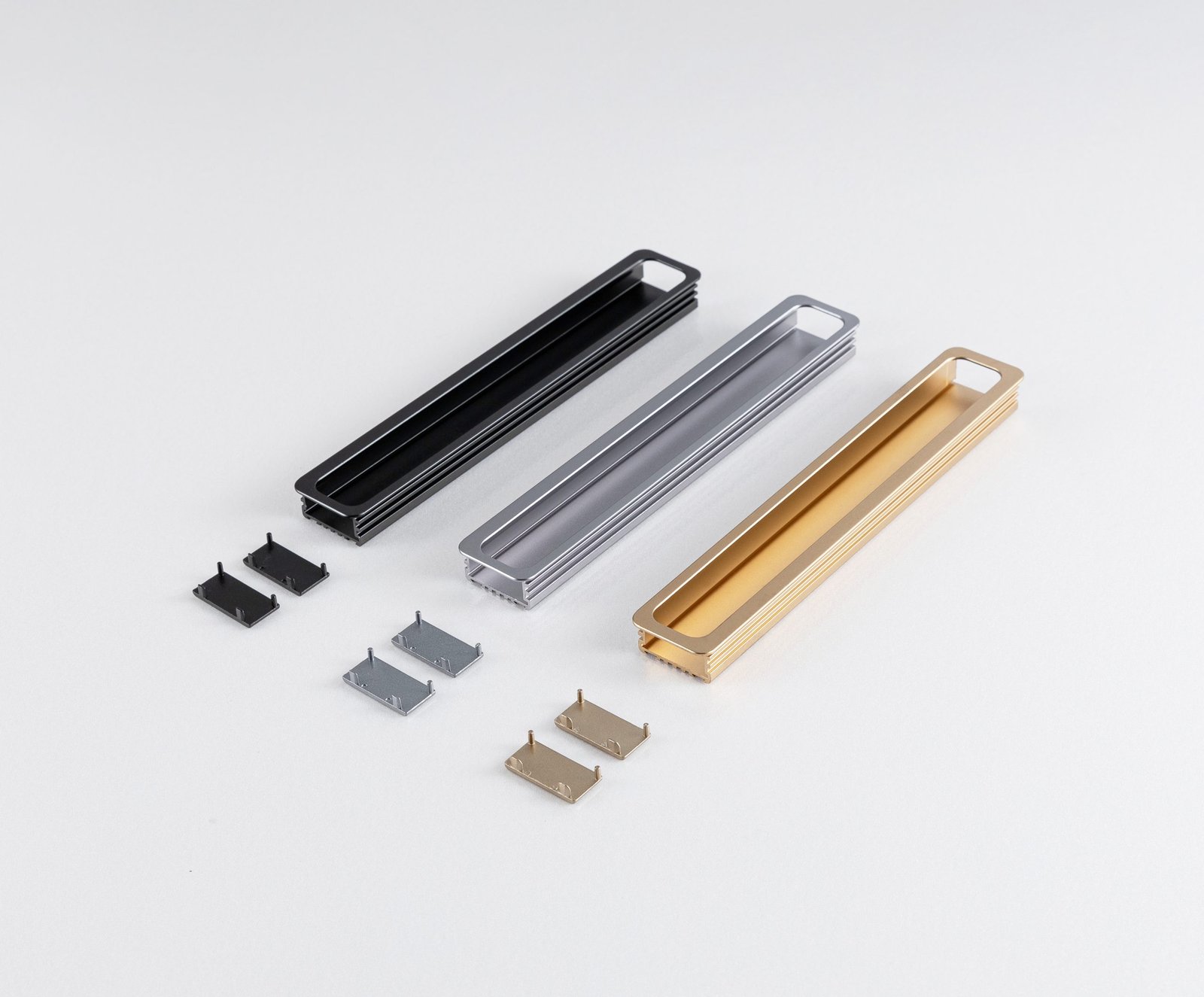
Most buyers I talk to don't lose sleep over surface treatment choices until the complaints arrive. But here's what I've learned from years of customer calls: the wrong finish selection creates preventable failures that damage your reputation with downstream furniture makers. Let me walk you through what actually matters when you're choosing between these two treatments.
What Makes Anodized Aluminum Different From Powder Coating?
Your customers probably think powder coating is just fancy paint. I thought the same thing when I started in this business. Then I visited our production floor and saw the actual process. The difference explains why these two finishes perform so differently in real-world conditions.
Anodized aluminum creates a protective oxide layer that becomes part of the metal structure through an electrochemical process. Powder coating applies a polymer layer onto the aluminum surface through electrostatic spray and heat curing. The anodized layer cannot peel or flake off because it is integrated into the base material, while powder coating relies on mechanical and chemical adhesion to stay attached.
 "How anodized aluminum handle
Anodizing works by immersing aluminum in an acid electrolyte bath and passing electric current through it. This converts the surface aluminum into aluminum oxide.1 The pores in this oxide layer can absorb dye before we seal them, which is how we create colors beyond natural silver. I've watched this process dozens of times, and what strikes me is how the metal itself transforms rather than just getting coated.
Powder coating follows a completely different path. We spray charged powder particles onto the aluminum surface. The particles stick through electrostatic attraction. Then we bake the coated handles in an oven. The heat melts the powder into a continuous film that flows and cures into a hard finish. This finish sits on top of the aluminum like a protective shell.
The key difference shows up when the finish gets damaged. When an anodized handle gets scratched deep enough to reach base metal, you see silver aluminum underneath because the color penetrated only 10-25 microns deep. When a powder coated handle gets scratched through to the metal, moisture can creep under the coating from that breach point. I've seen powder coated handles where a single deep scratch led to coating separation across a 3-inch diameter area after six months in a humid bathroom.
Here's what confuses buyers: both processes make the handles harder and more scratch-resistant than bare aluminum. But they achieve this in different ways. The anodized layer tests harder on the Mohs scale than powder coating.2 Yet customers complain more about visible scratches on anodized handles. Why? Because the color layer is thinner, so even shallow scratches expose the silver aluminum underneath. Powder coating is thicker (50-100 microns typically), so it hides minor scratches better. But when it fails, it fails catastrophically.
| Feature | Anodized Aluminum | Powder Coated Aluminum |
|---|---|---|
| Process type | Electrochemical conversion | Electrostatic application + heat cure |
| Layer integration | Becomes part of metal | Applied on surface |
| [Typical thickness | 10-25 microns | 50-100 microns](https://www.nasa.gov/wp-content/uploads/2023/03/prc-5006-current.pdf)%%%FOOTNOTE_REF_3%%% |
| Color penetration | Throughout oxide layer | Only in coating layer |
| Failure mode | Gradual wear | Delamination from breach points |
How Does Climate Affect Your Choice Between Anodized and Powder Coated Handles?
Last year a distributor in Ho Chi Minh City called me furious. He'd specified powder coated handles for a condo project near the coast. Eight months after installation, residents reported bubbling and flaking around the handle mounting screws. He asked why we didn't warn him. I pulled up our emails. We had recommended anodized handles for coastal installations. He'd switched to powder coating to save $0.30 per handle.
Climate determines which finish survives in your target market. In environments with both high humidity and salt exposure—like coastal areas in Vietnam or Middle Eastern gulf regions—anodized aluminum resists corrosion better because moisture cannot penetrate behind the protective layer. Powder coating performs adequately in dry or moderately humid inland areas but risks adhesion failure when moisture reaches the coating-metal interface in humid, salt-laden environments.
 "Aluminum handles in humid
I need to be specific about what I mean by climate risk. Humidity alone doesn't automatically disqualify powder coating. I've seen powder coated handles perform fine in humid but non-coastal areas of Vietnam where salt concentration stays low. The problem emerges when you combine sustained humidity above 70% with salt exposure from ocean air or cleaning chemicals.
Here's what happens at the molecular level based on what our technical consultants have explained to me: When humid salt air contacts a powder coated surface, any microscopic coating imperfection or scratch becomes a moisture entry point. Salt water is conductive. It can cause galvanic corrosion at the coating-aluminum interface.4 The corrosion products occupy more volume than the original aluminum, creating pressure that lifts the coating.5 This is why you see those characteristic bubbles around fastener holes where the coating got slightly damaged during installation.
Anodized aluminum responds differently to the same conditions. The oxide layer is aluminum oxide—already fully oxidized. It cannot corrode further in the traditional sense.6 Salt water can potentially penetrate the sealed pores in lower-quality anodizing, but it reaches aluminum that has already been converted to oxide. The worst case I've seen with properly anodized handles in marine environments is some dulling of the surface finish, never the delamination failures we see with powder coating.
The Middle East presents a different climate challenge than Vietnam. You get intense UV exposure plus humidity in coastal areas like Dubai or Jeddah, but very dry heat inland. UV degrades the polymer chains in powder coating over years of exposure.7 I've received complaints about powder coated handles on south-facing balconies becoming chalky after 2-3 years. Anodized handles don't suffer from UV degradation because the oxide layer is inorganic—there are no chemical bonds for UV to break.8
Temperature swings matter too. Aluminum expands and contracts with temperature changes. Powder coating must flex with this movement while maintaining adhesion. In the Middle East where handles might reach 60°C (140°F) in direct sun then cool to 20°C (68°F) overnight, this thermal cycling stresses the coating-metal bond.9 Anodized finishes move with the metal because they are part of the metal.
| Climate Condition | Anodized Performance | Powder Coated Performance |
|---|---|---|
| High humidity + low salt (inland Vietnam) | Excellent | Good to Excellent |
| High humidity + high salt (coastal areas) | Excellent | Poor to Fair (failure risk) |
| Dry heat + intense UV (inland Middle East) | Excellent | Good (may chalk over years) |
| Humid heat + UV (coastal Middle East) | Excellent | Fair (combined stress risk) |
| Temperature cycling (all arid regions) | Excellent | Good (thermal stress exists) |
I tell my customers to map their actual installation environments, not just country names. A handle going into a kitchen in Hanoi faces different risks than one in a beach resort bathroom in Da Nang. The Da Nang installation needs anodized handles. The Hanoi kitchen could use either finish based on other factors like color requirements and budget.
What Color Options Can You Actually Get With Each Finish?
A furniture factory owner from Riyadh visited our showroom last month. He wanted rose gold handles to match imported Italian fixtures. I showed him our powder coating color chart with 200+ options including metallic rose gold. Then he asked about anodized options. I had to explain we could get close with champagne anodized finish, but not the exact warm rose gold tone he wanted. He looked disappointed until I showed him photos of powder coated rose gold handles that had faded to pinkish-brown after 18 months on a previous Middle East project.
Powder coating offers dramatically wider color choice than anodizing, including custom color matching to any RAL or Pantone reference. Standard anodized colors are limited to clear (silver), black, bronze, champagne, and gold because the dyeing process relies on how different dyes absorb into the oxide layer. However, anodized metallic finishes have a depth and consistency that powder coating struggles to replicate, especially for colors that mimic brushed or polished metal appearances.
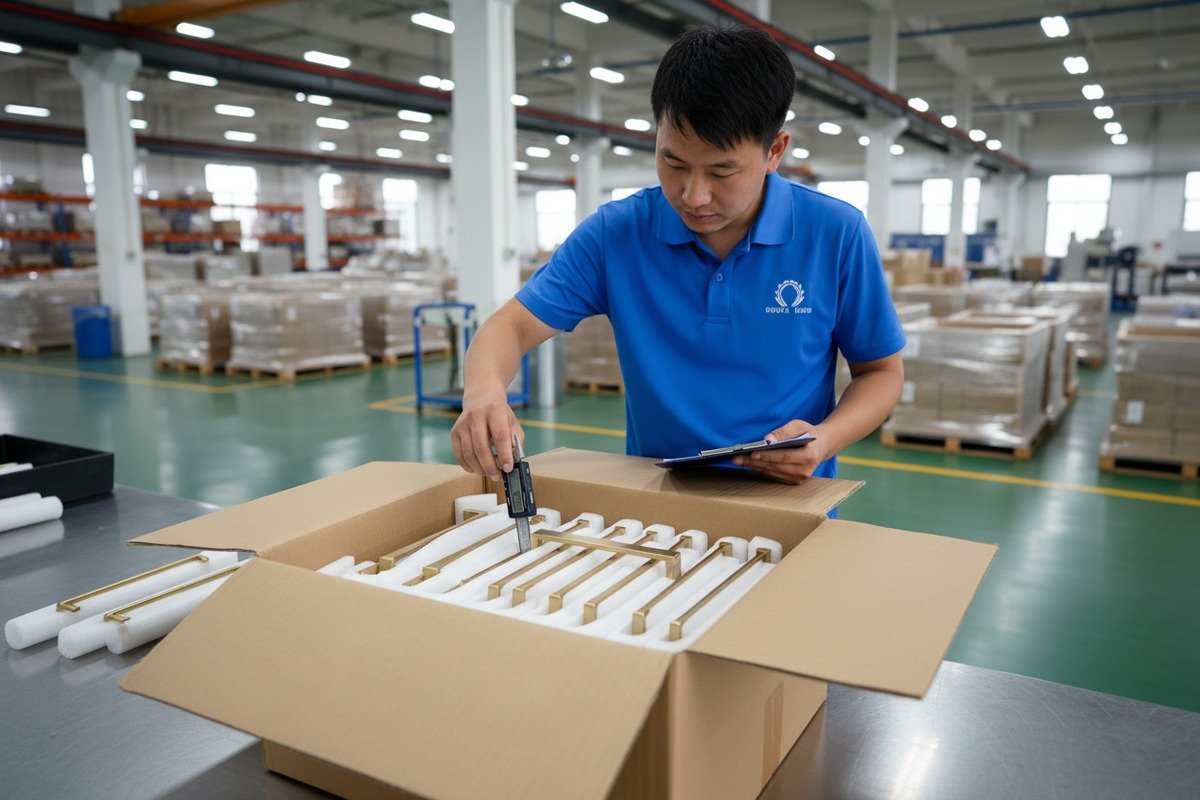
I need to break down what "limited anodized colors" really means because customers often misunderstand. Yes, we can only produce about 8-12 standard anodized colors reliably at commercial scale. But within those colors, the finish quality is exceptional. An anodized black handle has a deep, even color that goes into the metal. A powder coated black sits on top and can show tiny orange peel texture if you look closely.
The color limitation comes from the anodizing chemistry. When we create the porous oxide layer, we dye it by immersing the parts in dye solution. The dye molecules fit into the oxide pores. Then we seal the pores to lock in the color.10 Only certain dye types withstand the sealing process and outdoor exposure. Organic dyes that would give us bright reds or vivid blues fade rapidly in sunlight.11 The colorfast dyes are mostly blacks, bronzes, and golds.
Powder coating has no such limitation. The color comes from pigments mixed into the powder formulation. We can match virtually any color specification. I've had customers bring in tile samples, fabric swatches, even painted wood pieces for us to match. Our powder coating supplier can create custom colors for orders above 1,000 pieces. Below that quantity, custom colors become expensive because we need to clean the spray equipment between colors to avoid contamination.
Here's the trade-off: powder coating gives you color flexibility but the color is only as durable as the coating adhesion. I've seen powder coated handles where the color stays perfect in some areas but completely disappears where the coating delaminated. Anodized colors are limited but they cannot delaminate because the color is in the oxide layer. If the anodized finish wears down, the color fades evenly across the surface rather than peeling off in patches.
Metallic finishes deserve special mention. Many buyers want handles that look like brushed stainless steel or polished brass. Anodized aluminum can be polished or brushed before anodizing to create these effects. The anodizing preserves the brushed texture while adding color and protection. The result looks like solid metal because it is solid metal with a transparent protective layer.
Powder coating metallic finishes uses metallic flake pigments in the powder. These can look good initially, but I've noticed they don't age as gracefully. The metallic flakes can shift during application, creating uneven sparkle. After a few years of handling, the high points where people grip the handle can wear differently than recessed areas, making the metallic effect look patchy.
Custom color needs often drive the decision. If your customer needs handles to match a specific brand color for a chain restaurant rollout, you probably need powder coating. If they want a premium brushed gold finish that will maintain its appearance for 10+ years in a humid climate, anodized gold is the better choice.
| Color Requirement | Anodized Solution | Powder Coating Solution |
|---|---|---|
| Exact RAL/Pantone match | Not possible (limited palette) | Possible with custom order |
| Brushed metal appearance | Excellent (preserves metal texture) | Good but texture is simulated |
| Bright/vivid colors | Very limited (red, blue fade) | Excellent (any color possible) |
| Metallic finishes | Excellent depth and consistency | Good but can show unevenness |
| Color durability outdoors | Excellent (color in oxide layer) | Depends on coating adhesion |
| Custom color MOQ | Not applicable | Typically 1,000-5,000 pieces |
How Do Batch Size and Order Volume Impact Your Surface Treatment Choice?
I remember a conversation with a new distributor in Dubai who wanted to order 200 handles in five different colors. I quoted him powder coating pricing. He was shocked at the per-piece cost. Then I explained the setup process. Each color change requires cleaning the spray booth and guns, purging the system, and doing test sprays. For a 40-piece batch, those setup costs get divided among just 40 handles. The math doesn't work in his favor.
Powder coating becomes cost-effective at larger batch sizes because the setup costs spread across more pieces.12 Anodizing can handle small mixed batches more economically because we can dye multiple small baskets in different colors during the same anodizing run. If you typically order 5,000+ pieces in 1-2 colors, powder coating costs become competitive. If you order 200-1,000 pieces across multiple colors, anodizing usually delivers better economics.
Let me walk through the actual cost structure so you understand where these batch size effects come from. For anodizing, our main cost is the electrochemical processing time. We hang handles on racks, process an entire rack through the anodizing bath, then dye and seal. A single rack might hold 500 handles. We can run racks with different handles sizes mixed together as long as they need similar anodizing time. The dyeing happens in separate tanks, so we can run five racks through anodizing, then dye them five different colors in parallel dyeing tanks.
Powder coating requires dedicated spray time for each color. We load handles onto a conveyor line, spray them, then cure them in the oven. Before switching colors, we must either spray the remaining handles of the current color or clean the entire system. Small batches mean we're constantly stopping to clean. The powder itself isn't expensive, but the labor and time for color changes add up quickly.
I quote anodizing with minimal price breaks based on quantity because our process scales linearly. Whether we process 200 or 2,000 handles in a color, the per-piece cost stays relatively stable. I quote powder coating with significant volume discounts. A 5,000-piece order in a single color might cost $0.40 per handle to powder coat. The same handle in a 100-piece order could cost $1.20 because the setup costs dominate.
This creates interesting dynamics for customers with diverse product lines. Furniture factories that need handles in many SKUs (different sizes, colors, styles) often prefer anodized finishes because they can order smaller quantities of each SKU economically. Hardware distributors serving contractors who buy in bulk often prefer powder coating because they can order large quantities in popular colors and achieve lower costs.
Lead time follows similar patterns. I can turn around a 500-piece anodized order in mixed colors within two weeks because we batch it with other anodizing work. A 500-piece powder coating order in a custom color might need four weeks because we schedule it only when we have enough volume to justify a color run.
There's also a minimum order consideration. Our powder coating facility won't even accept orders below 500 pieces in a custom color. The setup cost makes it unprofitable. For standard colors like black or silver, we maintain inventory of pre-coated handles, but color availability varies. Anodizing has no such limitation—we've processed batches as small as 50 pieces when customers needed specific colors for samples or prototype projects.
| Order Characteristic | Anodized Economics | Powder Coating Economics |
|---|---|---|
| Small mixed-color orders (100-500 pcs, 3+ colors) | Cost-effective | Expensive due to setup |
| Large single-color orders (5,000+ pcs, 1-2 colors) | Standard pricing | Competitive with discounts |
| Custom colors | No additional charge (within standard palette) | Setup fees or MOQ requirements |
| Lead time for mixed colors | Faster (parallel processing) | Slower (sequential color runs) |
| Minimum order quantity | Very low (even 50 pcs possible) | 500-1,000 pcs for custom colors |
| Inventory stocking | Any standard color | Only popular colors |
Should You Choose Anodized or Powder Coated Handles for Your Next Order?
A purchasing manager from a furniture factory in Binh Duong called me last week. He'd been ordering powder coated handles for two years with no complaints. Now he's expanding to a coastal resort project in Nha Trang. Should he stick with powder coating? I asked him three questions before answering: What is the salt exposure level at the installation site? Does
"Progress in Nano-Engineered Anodic Aluminum Oxide Membrane ...", https://pmc.ncbi.nlm.nih.gov/articles/PMC5448500/. The anodizing process uses an electrochemical reaction in an acidic electrolyte solution to convert the aluminum surface into a porous aluminum oxide layer, which can then be sealed to provide corrosion resistance. Evidence role: mechanism; source type: encyclopedia. Supports: the electrochemical mechanism by which anodizing converts aluminum surface to aluminum oxide. ↩
"Aluminium oxide - Wikipedia", https://en.wikipedia.org/wiki/Aluminium_oxide. Anodized aluminum oxide layers typically exhibit hardness values between 5.5-7 on the Mohs scale, significantly harder than organic polymer coatings which generally measure 2-4, though this advantage applies primarily to scratch resistance rather than impact resistance. Evidence role: statistic; source type: research. Supports: the relative hardness of anodized aluminum oxide compared to polymer powder coatings. Scope note: hardness measurements vary with anodizing type and powder coating formulation ↩
"[PDF] Process Specification for the Anodizing of Aluminum Alloys - NASA", https://www.nasa.gov/wp-content/uploads/2023/03/prc-5006-current.pdf. Industry standards specify anodized coatings typically range from 5-25 microns for architectural applications, while powder coatings are generally applied at 50-150 microns, with the thicker powder coating providing greater impact resistance but the thinner anodized layer offering superior wear resistance per unit thickness. Evidence role: statistic; source type: institution. Supports: the typical thickness ranges for anodized and powder coated aluminum finishes. Scope note: actual thickness varies by application requirements and coating specifications ↩
"[PDF] Understanding the Coating-Substrate Interface Changes and ...", https://aquila.usm.edu/cgi/viewcontent.cgi?article=1600&context=honors_theses. When electrolyte solutions penetrate organic coatings through defects, galvanic corrosion and filiform corrosion can occur at the coating-metal interface, with corrosion products creating volume expansion that causes coating disbondment, particularly in chloride-containing environments. Evidence role: mechanism; source type: research. Supports: the electrochemical corrosion mechanism that occurs when moisture penetrates organic coatings on aluminum. ↩
"[PDF] CORROSION MECHANISMS OF PAINTED METAL", https://www.waru.edu/sites/default/files/Migrated/CopDocuments/Corrosion%20mechanism%20of%20painted%20metal.pdf. Aluminum corrosion products, particularly aluminum hydroxides and oxyhydroxides, occupy significantly greater volume than the parent metal (with Pilling-Bedworth ratios exceeding 1), creating expansive forces that can cause coating blistering and delamination when corrosion occurs at the coating-metal interface. Evidence role: mechanism; source type: education. Supports: the volume expansion that occurs when aluminum corrodes and forms corrosion products. ↩
"Corrosion Resistance of Aluminum against Acid Activation - PMC - NIH", https://pmc.ncbi.nlm.nih.gov/articles/PMC6337598/. Aluminum oxide (Al₂O₃) represents aluminum in its highest stable oxidation state and forms a passive, chemically stable barrier that resists further oxidation under most environmental conditions, though it can be attacked by strong acids or bases. Evidence role: mechanism; source type: encyclopedia. Supports: the chemical stability of aluminum oxide and its resistance to further oxidation. Scope note: aluminum oxide can degrade in extreme pH environments ↩
"Photo-oxidation of polymers - Wikipedia", https://en.wikipedia.org/wiki/Photo-oxidation_of_polymers. UV radiation causes photodegradation of polymer coatings through chain scission and cross-linking reactions, leading to chalking, gloss loss, and color fading over time, with degradation rates depending on polymer type, pigmentation, and UV stabilizer content. Evidence role: mechanism; source type: research. Supports: the mechanism by which UV radiation degrades organic polymer coatings. ↩
"Aluminium oxide - Wikipedia", https://en.wikipedia.org/wiki/Aluminium_oxide. Inorganic oxide materials like aluminum oxide exhibit excellent UV stability because they lack the carbon-hydrogen and carbon-carbon bonds that undergo photochemical degradation in organic materials, making them suitable for long-term outdoor exposure. Evidence role: mechanism; source type: education. Supports: the UV stability of inorganic oxide materials compared to organic polymers. ↩
"[PDF] The mechanics of coating delamination in thermal gradients", https://groups.seas.harvard.edu/hutchinson/papers/TBC-CMASdelam.pdf. Thermal cycling creates interfacial stress between coatings and metal substrates due to differences in coefficients of thermal expansion, with repeated expansion and contraction cycles potentially leading to coating fatigue, microcracking, and adhesion loss, particularly when temperature differentials exceed 30-40°C. Evidence role: mechanism; source type: research. Supports: how thermal cycling creates stress at coating-substrate interfaces due to differential expansion. ↩
"Anodizing - Wikipedia", https://en.wikipedia.org/wiki/Anodizing. Anodized aluminum coloring involves absorbing organic or inorganic dyes into the porous oxide structure, followed by a sealing process (typically hot water or steam) that hydrates the aluminum oxide, causing the pores to close and trap the colorant within the oxide layer. Evidence role: mechanism; source type: encyclopedia. Supports: the process by which anodized aluminum is colored through dye absorption and pore sealing. ↩
"Anodizing for Architectural Light Fastness - Finishing and Coating", https://finishingandcoating.com/index.php/anodizingcat/877-anodizing-for-architectural-light-fastness. Organic dyes used for bright colors in anodized aluminum exhibit poor lightfastness due to photochemical degradation of their chromophoric structures under UV exposure, while inorganic pigments and certain metal complex dyes used for blacks, bronzes, and golds demonstrate superior outdoor durability. Evidence role: mechanism; source type: research. Supports: the photostability limitations of organic dyes used in anodized aluminum coloring. ↩
"Powder Coating Cost: A Guide to Pricing and Calculation", https://cannonindustrialplastics.com/blog/powder-coating-cost-guide/. In batch manufacturing processes like powder coating, fixed setup costs (equipment preparation, color changes, quality testing) are amortized across the production run, making per-unit costs decrease as batch size increases—a standard economy of scale effect in industrial finishing operations. Evidence role: general_support; source type: education. Supports: the economic principle that fixed setup costs in batch manufacturing processes are distributed across production volume. Scope note: actual cost structures vary by facility and process specifics ↩