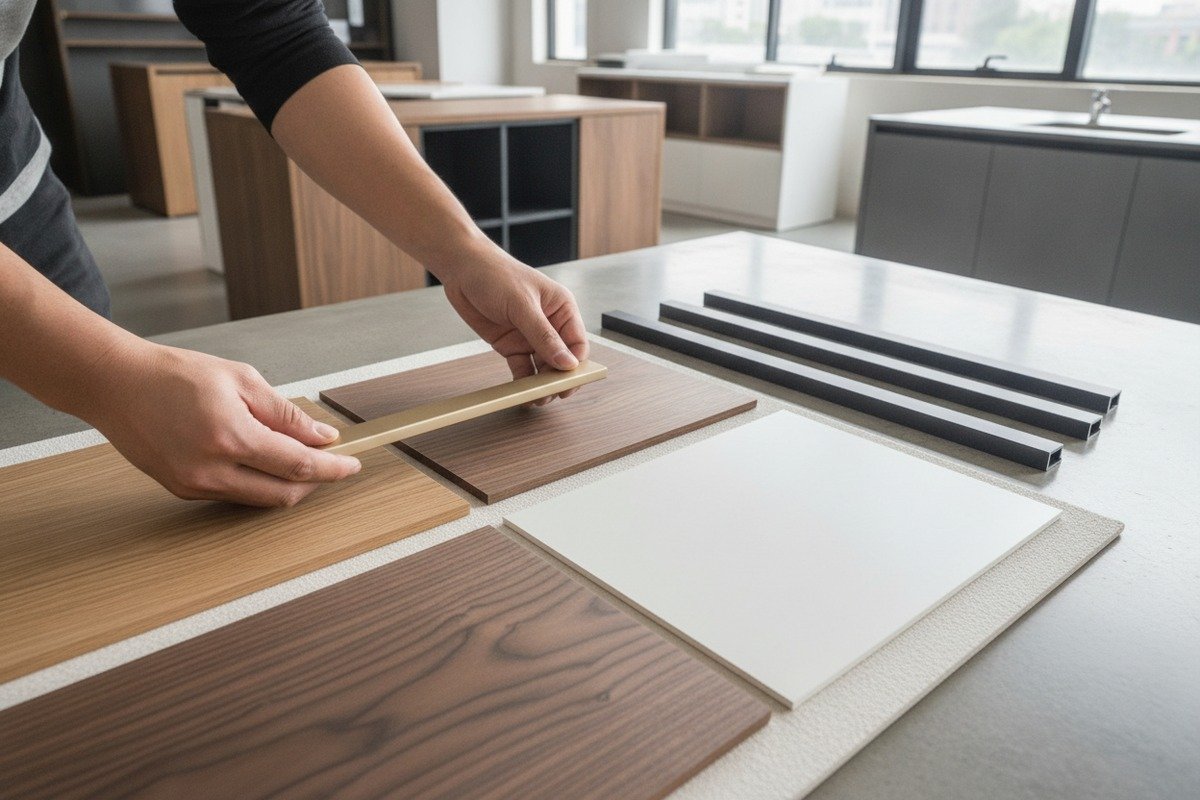
Picking the wrong handle for your furniture material is one of the most costly sourcing mistakes we see on our production floor every week.
To choose aluminum furniture handles for different furniture materials, match handle profile shape to solid wood’s visual weight, prioritize screw retention and lightweight design for panel furniture, and select slim linear profiles for metal frames. Finish, mounting method, and proportion must align with each material’s unique structural and aesthetic demands.
The following sections break down exactly how to approach handle selection for each furniture material MDF, melamine, plywood, particleboard 1. Whether you are a wholesaler stocking inventory or a furniture factory owner finalizing a new product line, these guidelines will help you avoid mismatches and source smarter.
How can I select the right aluminum handle finish to complement my high-end solid wood furniture?
When we ship aluminum handles to furniture makers working with oak, walnut, or ash, the finish choice often determines whether the final product looks cohesive or awkward.
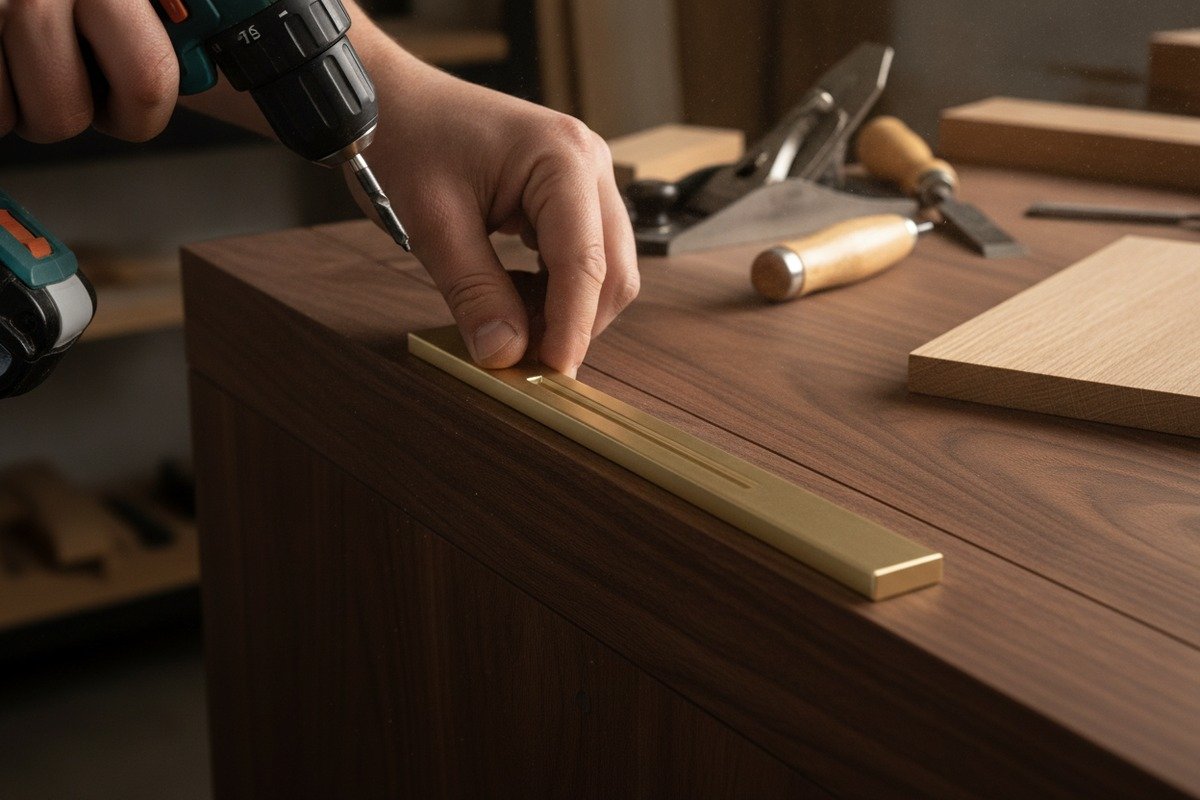
To complement high-end solid wood furniture, choose aluminum handle finishes that echo the wood's warmth—brushed champagne gold, matte black, or satin nickel work best. Avoid overly glossy or chrome finishes that create visual conflict with natural wood grain. Match handle proportion to the door's profile and size.
Why Finish Temperature Matters on Wood
Solid wood 2 has a natural warmth. It has grain, texture, and depth. When you place a cold, shiny chrome handle on a warm walnut door, the result feels disconnected. The handle looks like it belongs to a different piece of furniture.
In our experience exporting handles to furniture factories in Vietnam and the Middle East, we have seen this problem many times. A factory orders a beautiful polished silver handle. It looks great in the catalog. But once installed on a teak or oak cabinet door, it feels harsh. The solution is simple: choose a finish with warmth. Brushed aluminum, champagne gold anodized, and matte black are the three safest choices for solid wood.
Recommended Finishes by Wood Type
| Wood Species | Recommended Handle Finish | Finish to Avoid |
|---|---|---|
| Oak (light) | Brushed silver, champagne gold, matte white | High-gloss chrome |
| Walnut (dark) | Matte black, satin bronze, brushed gold | Bright polished silver |
| Ash (medium) | Brushed aluminum, light champagne | Glossy black |
| Teak (warm) | Matte black, warm bronze anodized | Cool-toned polished finishes |
| Cherry (reddish) | Satin nickel, brushed champagne | Bright white or raw silver |
Proportion and Profile Shape
For solid wood furniture, the handle should not overpower the door. A good rule: use handles between 5 and 7 inches for standard cabinet doors. Oversized handles can work on tall pantry doors or wardrobes, but they risk looking thin and stretched on smaller fronts.
Rounded or slightly curved profiles tend to suit wood better than sharp geometric shapes. Sharp edges and deep channels look modern—but they can clash with the organic feel of natural wood grain 3. If the design goal is transitional (mixing classic wood with modern hardware), a clean rectangular pull with a subtle radius on the edges is a strong middle ground.
Maintenance Considerations
Brushed and matte finishes hide fingerprints far better than polished ones. This is practical for kitchen cabinets and wardrobes that get touched dozens of times a day. Our clients who supply high-end kitchen furniture almost always choose brushed or matte finishes for this reason. Glossy finishes look beautiful in a showroom but require constant wiping in daily use.
One more point: aluminum resists corrosion 4 naturally. For solid wood furniture used in kitchens or bathrooms where humidity is higher, aluminum handles will not tarnish or rust. This gives them an edge over some iron or zinc alloy 5 alternatives, especially in tropical climates like Vietnam or coastal regions of the Middle East.
What are the best aluminum handle styles for my panel-based furniture to ensure both durability and a modern look?
Panel furniture 6—MDF, melamine, plywood, particleboard—is the backbone of mass-market and mid-range furniture production, and it has specific hardware demands our engineering team addresses daily.
For panel-based furniture, choose lightweight aluminum handles with simple linear profiles and secure bolt-through mounting. Slim recessed pulls or flat bar handles in brushed or matte finishes work best, as they reduce stress on the panel substrate, support modern aesthetics, and minimize maintenance in high-use environments like kitchens and wardrobes.
The Core Challenge: Screw Retention in Panels
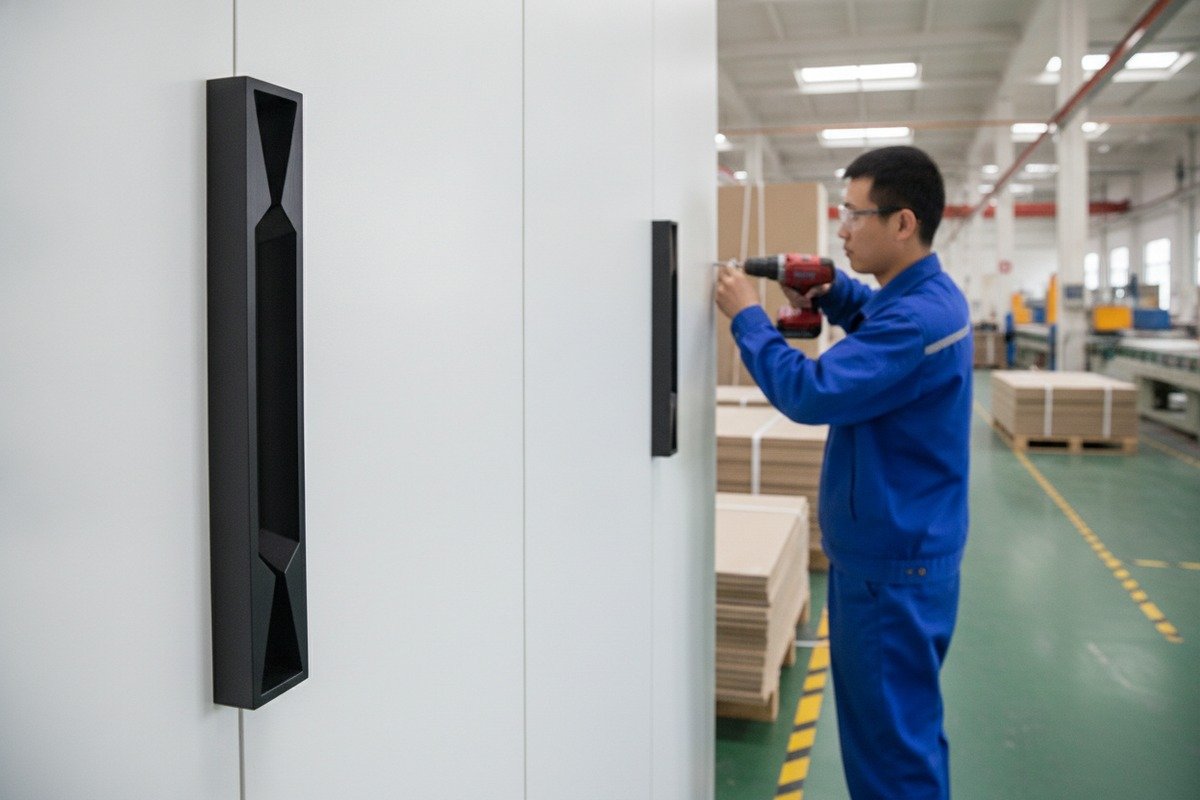
This is the biggest difference between sourcing handles for solid wood and sourcing handles for panels. Solid wood grips screws well. Panels do not—at least not in the same way. MDF and particleboard have weaker internal structure. If you use a heavy handle with short screws, the handle can loosen over time. If you drill too close to the edge, the panel can chip or crack.
That is why aluminum handles are ideal for panel furniture. Aluminum is light. A typical aluminum bar pull weighs significantly less than a zinc alloy or stainless steel handle of the same size. Less weight means less pull force on the screw joints, which means longer life for the panel.
Best Handle Styles for Panels
| Handle Style | Best Panel Application | Why It Works |
|---|---|---|
| Slim bar pull (128mm–192mm CC) | Kitchen cabinets, wardrobes | Low profile, even weight distribution |
| Recessed/flush pull | Sliding doors, minimalist fronts | No protrusion, zero snag risk |
| Edge pull (L-shaped profile) | Handleless cabinet designs | Clean lines, integrated look |
| T-bar pull | Bathroom vanities, utility cabinets | Comfortable grip, lightweight |
| Long linear pull (256mm+) | Tall doors, pantry units | Distributes force over wider area |
Finish Selection for Panels
Panel furniture surfaces are smooth and uniform. Melamine and laminate finishes are often solid colors—white, grey, wood-look. This means the handle finish must complement a flat, consistent background.
Brushed silver and matte black are the two most popular finishes we produce for panel furniture orders. They are neutral. They work across dozens of panel colors. And they age well. Champagne gold has grown in demand recently, especially for Middle Eastern markets where warmer tones are preferred.
Avoid glossy handles on matte panel surfaces. The contrast in sheen makes the handle look like an afterthought rather than a design choice.
Fixing Hardware Matters
When we prepare orders for panel furniture factories, we always confirm the panel thickness first. Standard fixing bolts are designed for 16mm to 18mm panels. If the panel is thinner—say 12mm for a lightweight wardrobe door—we adjust the bolt length accordingly. This small detail prevents the bolt from protruding through the back of the panel, which is both an aesthetic and a safety issue.
For edge pulls and recessed handles, the routing depth into the panel also needs to be specified. MDF can be routed cleanly. Particleboard is more prone to crumbling at routed edges. We recommend edge pulls with a minimum 2mm wall thickness around the routed channel to maintain panel integrity.
Practical Sourcing Tip
Always request a sample handle with the actual panel material before placing a bulk order. Mount the handle. Open and close the door 50 times. Check for wobble. Check the screw holes. This simple test saves thousands of dollars in returns and complaints.
How do I choose the most compatible aluminum profiles for my glass door and metal frame furniture designs?
Metal frame and glass door furniture systems are growing fast in our order books, especially from clients building modern kitchens, display cabinets, and commercial fixtures.
For glass door and metal frame furniture, choose slim aluminum handle profiles that visually integrate with the frame's geometry. Linear pulls, edge-mounted trim handles, and flush profiles in matching anodized finishes create a seamless look. Ensure the handle's mounting system is compatible with the frame's channel or clamp structure rather than requiring through-bolt fixing.
The Design Principle: The Handle Should Feel Like Part of the Frame
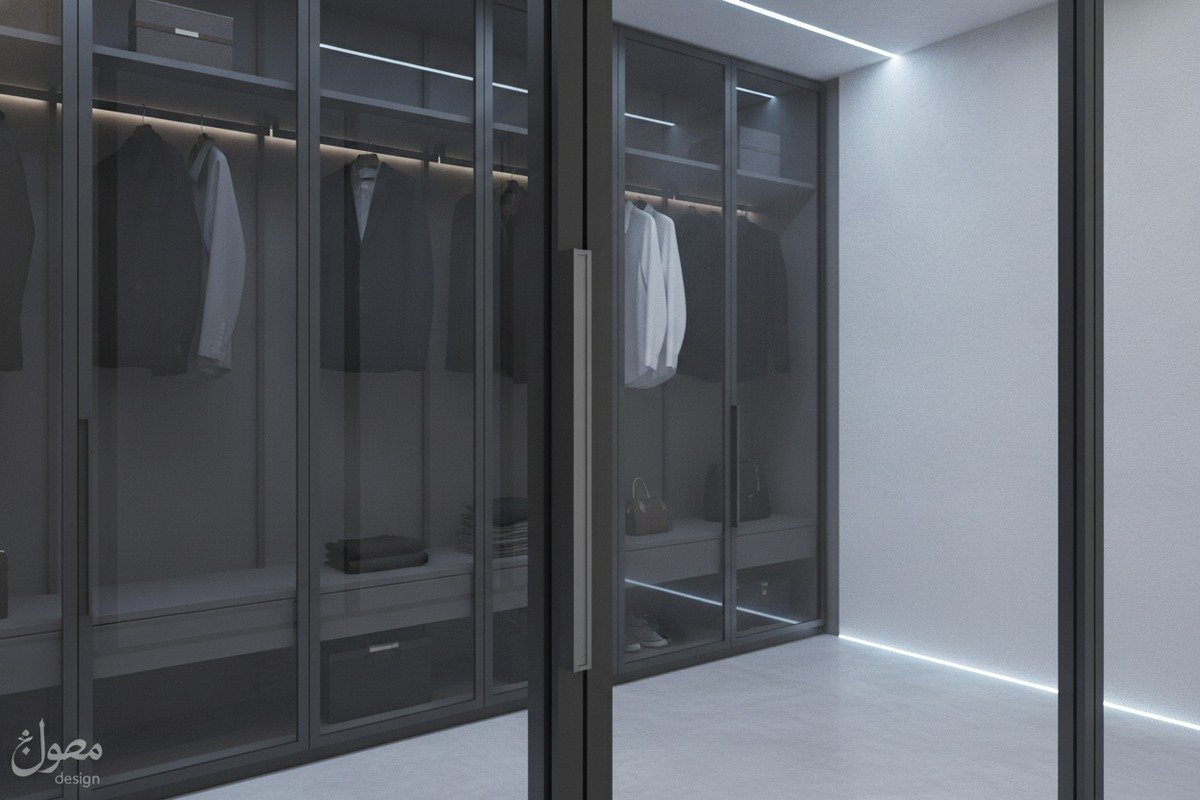
This is the key idea. On a wooden cabinet, the handle is clearly a separate element. On a metal-framed glass door, the best handles do not look like handles at all. They look like an extension of the frame itself.
When we design aluminum handle profiles for metal frame systems, we start by studying the frame's cross-section. The handle should share a similar visual language—similar edge radius, similar line weight, similar surface finish. If the frame is a narrow 20mm aluminum profile with a brushed silver finish, then a chunky 40mm matte black bar pull would look completely wrong.
Profile Compatibility Guide
| Frame Type | Recommended Handle Profile | Mounting Method |
|---|---|---|
| Narrow aluminum frame (15–25mm) | Slim edge pull or integrated trim | Channel clip or adhesive |
| Wide aluminum frame (30–50mm) | Recessed linear pull | Channel or bolt-through |
| Steel frame (painted) | Thin bar pull in matching color | Bolt-through or weld stud |
| Aluminum-framed glass door | Flush trim handle | Friction fit or channel insert |
| Mixed metal-wood frame | Transitional flat bar | Bolt-through |
Finish Matching Is Critical
Metal frames 8 already have a defined finish. If the frame is anodized silver, the handle should be anodized silver—ideally from the same anodizing batch or using the same color code. Even small differences in silver tone are visible when the handle sits directly on the frame.
Our factory maintains color reference samples for common anodized finishes 9: natural silver, champagne gold, light bronze, matte black, and dark grey. When a client sends us their frame profile sample, we match the handle finish to the frame before production begins. This step alone eliminates most color mismatch complaints.
For painted steel frames, powder-coated aluminum handles offer a good match. We can powder coat handles in RAL colors 10 to align precisely with the frame color.
Mounting Challenges on Metal Frames
Through-bolt mounting—the standard method for wood and panel furniture—does not always work on metal frames. Some frames are hollow. Some are too thin. Some have internal channels designed for clip-in accessories.
We produce handles with multiple mounting options for this reason. Our trim-style handles, for example, can be installed using friction-fit clips that slide into a standard aluminum frame channel. No drilling. No bolts. This simplifies factory assembly and reduces the chance of damage to the frame or glass.
For thicker steel frames, weld studs or threaded inserts are sometimes necessary. We work with furniture factories to confirm the mounting approach before finalizing the handle design. Getting this right early saves everyone time on the production line.
When Glass Is Involved
Glass door furniture adds another layer of complexity. The handle must not put excessive point pressure on the glass. Aluminum's light weight is an advantage here. A heavy stainless steel handle on a tempered glass door creates more stress at the mounting points than a lightweight aluminum pull of the same size.
If the handle mounts through the glass, rubber or silicone gaskets are essential to prevent glass-to-metal contact. We supply gasket kits with our glass-mount handles as standard. If the handle mounts to the frame only, this is not a concern—but the frame must be rigid enough to support the handle without flexing.
Can I customize aluminum handle dimensions and finishes to match my specific furniture material sourcing needs?
One of the most frequent questions we hear from new clients is whether they can adjust a standard handle to fit their exact project—and the answer almost always starts with "yes, but let us walk through the details."
Yes, aluminum handles are highly customizable in dimensions, finishes, and mounting configurations. Reputable manufacturers offer OEM and ODM services to adjust handle length, center-to-center spacing, cross-section profile, anodized color, and surface treatment. Customization ensures perfect material compatibility, whether your furniture uses solid wood, panels, or metal frames.

What Can Be Customized?
Almost everything. Here is what we adjust regularly for our wholesale and factory clients:
- Length: From 64mm center-to-center pulls for small drawers up to 1200mm continuous profiles for tall wardrobe doors.
- Cross-section shape: We extrude custom aluminum profiles. If a client needs a unique finger groove depth or a specific edge radius, we create a new die.
- Finish: Anodizing in any standard color. Powder coating in RAL colors. Brushed, sandblasted, matte, or polished surface treatments.
- Mounting hole spacing: We drill to any center-to-center specification. Standard spacings are 64mm, 96mm, 128mm, 160mm, 192mm, and 256mm—but custom spacings are no problem.
- Mounting method: Bolt-through, channel clip, adhesive backing, threaded insert—whatever the furniture material requires.
Customization Timelines and Minimums
| Customization Type | Typical Lead Time | Minimum Order Quantity |
|---|---|---|
| Custom length (existing profile) | 3–5 days | 200 pieces |
| Custom anodized color | 5–7 days | 300 pieces |
| Custom powder coat (RAL color) | 5–7 days | 300 pieces |
| New extrusion die + production | 15–20 days | 500 pieces |
| Custom mounting hole pattern | 3–5 days | 200 pieces |
| Full OEM (new profile + finish + packaging) | 20–30 days | 500 pieces |
These numbers reflect our standard workflow. For clients who need faster turnaround, we maintain over 300 tons of ready-to-ship stock in common profiles and finishes. Stock items ship within 48 hours. This hybrid model—stock for speed, custom for precision—helps our clients manage both urgent orders and planned product launches.
How Customization Solves Material Compatibility Problems
Here is a real example. A furniture factory in Vietnam was producing melamine-faced wardrobes with 16mm panels. They ordered a standard 160mm bar pull from another supplier. The handle looked fine, but the mounting bolts were 25mm long—designed for 18mm panels. The bolts pushed through the back of the panel.
They came to us. We shortened the bolts to 20mm, adjusted the handle's mounting plate to sit flush on 16mm panels, and added a thin nylon washer to prevent the bolt head from cracking the melamine surface. Problem solved. The modification took two days. No new die. No long wait.
This kind of targeted adjustment is what separates a generic hardware supplier from a manufacturing partner. We do not just sell handles. We solve installation problems before they reach the assembly line.
Finish Sampling Before Bulk Orders
We always recommend ordering finish samples before committing to a bulk run. Colors look different under factory fluorescent lights versus showroom spotlights. A champagne gold that looks perfect on screen may look too yellow under warm lighting or too pale under cool white LEDs.
We send sample sets with 5–8 finish options on the actual aluminum profile the client will use. This lets procurement managers and designers evaluate the handle on their specific furniture material—hold the brushed silver pull against the oak door, press the matte black edge pull onto the grey melamine panel. Tactile testing on real materials reveals things that photos and catalogs cannot.
Sustainability and Material Sourcing
More clients now ask about recycled aluminum content and end-of-life recyclability. Aluminum is one of the most recyclable metals on earth. Our extrusion process uses a significant percentage of recycled aluminum billets. Handles that reach the end of their service life can be fully recycled into new aluminum products. For clients building sustainability credentials into their furniture brands, this is a meaningful selling point.
Conclusion
Sourcing aluminum furniture handles is a material compatibility decision, not just a style choice. Match your handle's profile, finish, and mounting method to the specific demands of solid wood, panel, or metal frame furniture—and you will build better products with fewer sourcing headaches.
Footnotes
1. Provides an overview of common engineered wood products used in furniture panels. ↩︎
2. Authoritative definition and characteristics of solid wood. ↩︎
3. Authoritative explanation of wood grain patterns and their characteristics. ↩︎
4. Explains how aluminum naturally forms a protective oxide layer, inhibiting further oxidation. ↩︎
5. Describes the composition, properties, and applications of zinc alloys. ↩︎
6. Explains what panel furniture is and the materials used in its construction. ↩︎
7. Explains the function and application of wood screws in various materials. ↩︎
8. Provides information on aluminum alloys, a common material for metal frames. ↩︎
9. Details the process and benefits of anodizing for aluminum finishes. ↩︎
10. Explains the RAL color matching system and its application in various industries. ↩︎